Introduction
Three-time-in-a-week, I found myself standing over the stove, the sizzling sound of thinly sliced beef hitting the hot pan filling the kitchen with a familiar hum. The spicy gochujang sauce bubbled softly, its deep red color promising that fiery kick I couldn’t resist. Honestly, I wasn’t planning on making this Korean-style beef bowl again so soon, but something about how the flavors melded just kept pulling me back in. Each time, I tweaked the sauce balance a little, sometimes adding an extra splash of soy sauce, sometimes a touch more sweetness, but the core of it—the way the tender beef soaked up that spicy, savory sauce—remained the same.
It’s odd how some recipes latch onto you like that, right? This Korean-style beef bowl wasn’t just a meal; it felt like a small obsession spiraling out of control, every Friday night for a month. The crispness of fresh scallions, the slight chew of perfectly cooked rice, and that addictive heat from the gochujang—there’s a rhythm to it that just clicks. I’ve always been drawn to dishes where every bite tells a story, and here, the story unfolded in layers of flavors and textures that I swear I tasted differently each time I pulled it together.
What’s funny is how this recipe stuck—not just because it’s delicious, but because it’s a comforting little culinary puzzle. It invites you to play with it, change it, and still come back to the same satisfying place. It’s the kind of bowl you want to savor quietly, knowing you’ve nailed something special but never quite the same as before. I guess that’s why I keep making it—because it’s as much about the experience as the food itself.
Why You’ll Love This Recipe
- Quick & Easy: Comes together in under 30 minutes, perfect for busy weeknights or those last-minute cravings when you want something hearty and flavorful without the fuss.
- Simple Ingredients: No exotic supermarket runs here; this recipe uses pantry staples and fresh basics you probably already have on hand, making it incredibly accessible.
- Perfect for Any Occasion: Whether you’re whipping up a solo dinner or feeding a small crowd, this Korean-style beef bowl fits the bill for casual meals or impressing guests with minimal effort.
- Crowd-Pleaser: The balance of savory, sweet, and spicy notes makes it a hit with both adults and kids, especially those who enjoy a little heat with their meals.
- Unbelievably Delicious: The tender, thinly sliced beef paired with the robust gochujang sauce creates a texture and flavor combo that’s pure comfort food — without feeling heavy.
- Unique Touch: This isn’t just another beef bowl recipe. The secret lies in the spicy gochujang sauce, carefully balanced with a hint of sweetness and acidity, creating a flavor depth that stands out from the usual stir-fries.
- Emotionally Satisfying: It’s the kind of bowl that makes you pause and close your eyes after the first bite, that warm, spicy feeling spreading instantly.
If you’ve enjoyed quick and flavorful dishes like the 30-minute beef tacos or crave something equally simple but with a Korean twist, this recipe is your new go-to. It’s comfort food with a kick — straightforward, satisfying, and just a little addictive.
What Ingredients You Will Need
This Korean-style beef bowl recipe relies on simple, wholesome ingredients that come together to deliver bold flavor and satisfying texture without too much fuss. Most are pantry staples, with a few fresh touches that make all the difference.
- Beef: 1 pound (450 g) thinly sliced flank steak or sirloin (look for pre-sliced beef for stir-fry or ask your butcher to slice it thinly)
- Gochujang Sauce:
- 2 tablespoons gochujang (Korean fermented chili paste) – adds that signature spicy, umami punch
- 1 tablespoon soy sauce (I recommend Kikkoman for balanced saltiness)
- 1 tablespoon sesame oil (toasted for nuttiness)
- 1 tablespoon honey or brown sugar (balances heat with a touch of sweetness)
- 2 cloves garlic, minced (fresh is best for pungency)
- 1 teaspoon freshly grated ginger (adds brightness)
- 1 tablespoon rice vinegar or apple cider vinegar (for acidity)
- Vegetables & Garnishes:
- 1 cup shredded carrots (adds crunch and color)
- 2 scallions, thinly sliced (fresh, sharp bite)
- 1 teaspoon toasted sesame seeds (optional but recommended for texture)
- 1 small cucumber, thinly sliced or julienned (for freshness)
- Base: 3 cups cooked jasmine rice or short grain rice (warm and fluffy)
- Oil for cooking: Neutral oil like vegetable or canola oil (for searing beef)
Pro tip: If you want a gluten-free option, swap soy sauce for tamari. For a dairy-free version, everything here is naturally free of dairy, so you’re good to go! I like using authentic Korean gochujang from brands like CJ or Mother In Law for that perfect depth of flavor.
Equipment Needed
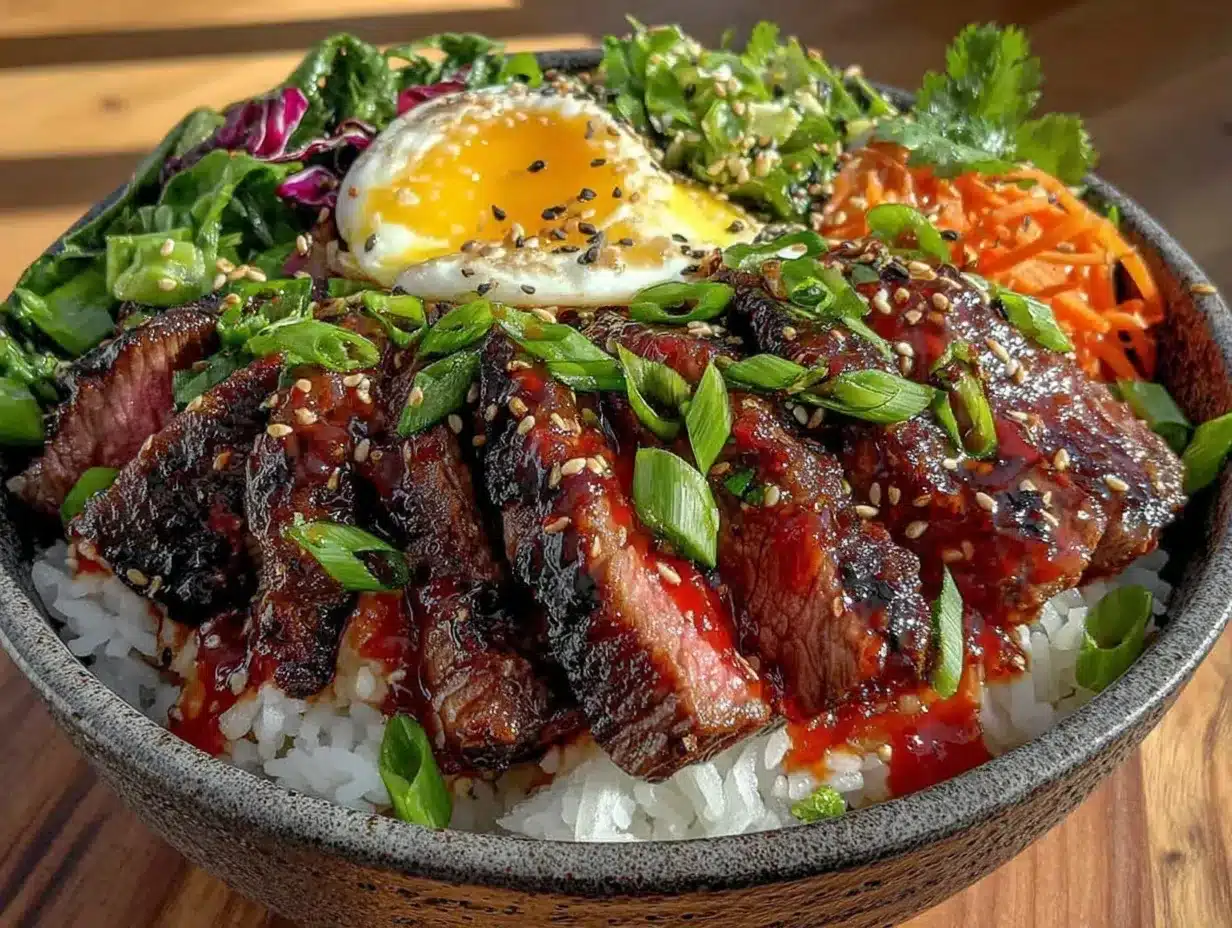
- Large non-stick or cast iron skillet – essential for getting a good sear on the beef without sticking
- Sharp knife and cutting board – for thinly slicing beef and preparing veggies
- Mixing bowl – to whisk together the sauce ingredients
- Measuring spoons and cups – for precise seasoning balance
- Rice cooker or pot with lid – to prepare fluffy rice
If you don’t have a cast iron skillet, a heavy-bottomed stainless steel pan works fine, though you might lose some of that signature crust on the beef. I once used a regular non-stick pan in a pinch, and while the beef didn’t get as crispy, the flavors were still spot on. For budget-friendly options, many stores carry decent non-stick skillets for under $30 that do the job well. To keep your cast iron in top shape, avoid soap when cleaning—just wipe it out with a paper towel and re-season with a little oil after cooking.
Preparation Method
- Prepare the rice: Start by cooking 3 cups (about 600 g) of jasmine or short grain rice according to package instructions. This usually takes about 15-20 minutes. Fluff with a fork and keep warm while you prepare the beef and sauce.
- Make the gochujang sauce: In a medium mixing bowl, whisk together 2 tablespoons gochujang, 1 tablespoon soy sauce, 1 tablespoon toasted sesame oil, 1 tablespoon honey, 2 minced garlic cloves, 1 teaspoon grated ginger, and 1 tablespoon rice vinegar. Taste and adjust sweetness or acidity if needed. The sauce should be balanced—spicy but not overwhelming, slightly sweet, and tangy. Set aside.
- Slice and prep beef: If not pre-sliced, use a sharp knife to slice 1 pound (450 g) flank steak or sirloin against the grain into thin strips about 1/4 inch thick. Thin slices cook quickly and absorb the sauce better.
- Cook the beef: Heat 1 tablespoon neutral oil in a large skillet over medium-high heat. Once hot (you should see a slight shimmer), add the beef strips in a single layer—don’t overcrowd the pan or the meat will steam instead of sear. Sear for about 2-3 minutes per side, until browned but still tender. If your skillet is small, cook in batches and keep the beef warm on a plate.
- Add the sauce: Pour the prepared gochujang sauce over the browned beef in the skillet. Toss to coat evenly and cook together for another 2 minutes, allowing the sauce to thicken slightly and cling to the beef.
- Prepare vegetables: While the beef cooks, shred 1 cup carrots, slice 2 scallions thinly, and julienne or thinly slice 1 small cucumber. Set aside.
- Assemble the bowl: Spoon warm rice into bowls. Top with the spicy beef mixture, then arrange shredded carrots, cucumber slices, and scallions artistically on top. Sprinkle with toasted sesame seeds for a final touch.
- Serve immediately: This dish is best enjoyed fresh while the beef is warm and juicy, and the rice is fluffy.
Note: If the sauce thickens too much while resting, stir in a splash of water or broth to loosen it up before serving. Also, don’t rush the searing step; a good crust on the beef adds incredible flavor and texture contrast.
Cooking Tips & Techniques
One of the trickiest parts of this Korean-style beef bowl is getting the beef just right. Too thick or overcrowded in the pan, and you’ll end up steaming instead of searing, losing that delicious caramelized crust. I learned this the hard way after a few attempts, which is why I recommend slicing thin and cooking in batches if you need to.
When mixing the gochujang sauce, taste as you go — that balance between spicy, sweet, and tangy is personal. Some days I like it hotter, so I add a touch more gochujang or a pinch of chili flakes. On others, a little more honey helps mellow the heat. Don’t be shy about tweaking it.
Another tip: toast your sesame seeds in a dry pan for a minute or so before adding them. It releases their oils and gives a nutty pop that makes a big difference. Also, make sure your garlic and ginger are freshly minced or grated; pre-minced versions often lack that vibrant punch.
Timing is key — prep your veggies before cooking the beef so everything comes together smoothly. This also prevents overcooking the beef while you slice carrots or scallions.
If you’re short on time, you might want to try the quick zesty lemon chicken or the quick and flavorful fried rice to keep your weeknight dinners exciting and speedy.
Variations & Adaptations
- Vegetarian option: Swap beef for firm tofu or tempeh. Press and cube tofu, then pan-fry until golden before tossing with the gochujang sauce. The flavor holds up beautifully!
- Seasonal veggies: In spring or summer, add fresh snap peas, bell peppers, or thinly sliced radishes for crunch and color. Winter calls for sautéed mushrooms or steamed broccoli.
- Spice level: Adjust the heat by adding more or less gochujang. For a milder sauce, mix in a little plain yogurt or coconut milk to tone down the spice without losing flavor.
- Alternative grains: Try brown rice, quinoa, or cauliflower rice for different textures and nutritional profiles.
- Cooking method: If you have a grill or grill pan, try cooking the beef over high heat for a smoky flavor. Just be sure to baste with the sauce afterward.
One variation I love is adding a fried egg on top for extra richness and a silky yolk that mixes into the sauce. It’s like a little luxury, perfect when I’m craving something indulgent but still quick.
Serving & Storage Suggestions
This Korean-style beef bowl is best served hot, fresh from the pan to the bowl. The contrast of warm, saucy beef with crisp fresh veggies and fluffy rice is what makes it so satisfying. Garnish with extra scallions or a sprinkle of sesame seeds to brighten the presentation.
Pair it with a simple side like steamed bok choy or a light cucumber salad to keep the meal balanced. For drinks, a cold Korean beer or a lightly sweetened iced tea works great to cool down the spice.
Leftovers keep well in an airtight container in the fridge for up to 3 days. When reheating, add a splash of water or broth to the beef and gently warm in a skillet to avoid drying out the meat. You can also microwave it covered, but the skillet method preserves texture better.
Flavors tend to deepen after sitting overnight, so if you can resist, the next-day bowl is just as good—sometimes even better. Just add fresh veggies or a squeeze of lime to revive brightness before serving again.
Nutritional Information & Benefits
This recipe is a solid source of lean protein thanks to the flank steak, which supports muscle repair and keeps you full longer. Gochujang brings probiotics from the fermentation process, which can aid digestion and gut health. Plus, the garlic and ginger offer anti-inflammatory benefits.
Using jasmine rice provides quick energy, though swapping in brown rice or quinoa ups the fiber content for better blood sugar control. The fresh veggies add vitamins and minerals, making this bowl a balanced, nutrient-dense meal.
If you’re watching sodium, consider using low-sodium soy sauce or tamari. The recipe is naturally gluten-free if you choose those options, and dairy-free by default.
Conclusion
This Korean-style beef bowl with spicy gochujang sauce has earned its spot in my weekly rotation for good reason. It’s straightforward, flavorful, and hits that perfect note of comfort mixed with a little excitement. You can make it your own by adjusting spice levels, swapping proteins, or adding your favorite veggies.
Honestly, it’s the kind of meal that feels like a warm hug after a long day—simple but packed with personality. I hope it becomes a staple in your kitchen like it did in mine. And if you try it, I’d love to hear how you made it your own.
Happy cooking and eating!
FAQs about Korean-Style Beef Bowl with Spicy Gochujang Sauce
What cut of beef is best for this recipe?
Flank steak or sirloin sliced thinly works best due to their tenderness and quick cooking time. Avoid tougher cuts unless you plan to marinate longer.
Can I make this dish gluten-free?
Absolutely. Use tamari instead of regular soy sauce to keep it gluten-free without sacrificing flavor.
How spicy is gochujang sauce?
Gochujang has a moderate heat level with a sweet, fermented depth. You can adjust the amount to suit your taste or mellow it by mixing in honey or a little coconut milk.
Can I prepare this dish ahead of time?
You can prep the sauce and slice the beef ahead, but cooking is best done fresh. Leftovers store well and reheat nicely for quick next-day meals.
What can I serve with this Korean-style beef bowl?
Simple sides like steamed greens, kimchi, or a light cucumber salad complement the bowl nicely. For a heartier meal, pair it with crispy chicken fried rice for a Korean-inspired feast.
Pin This Recipe!
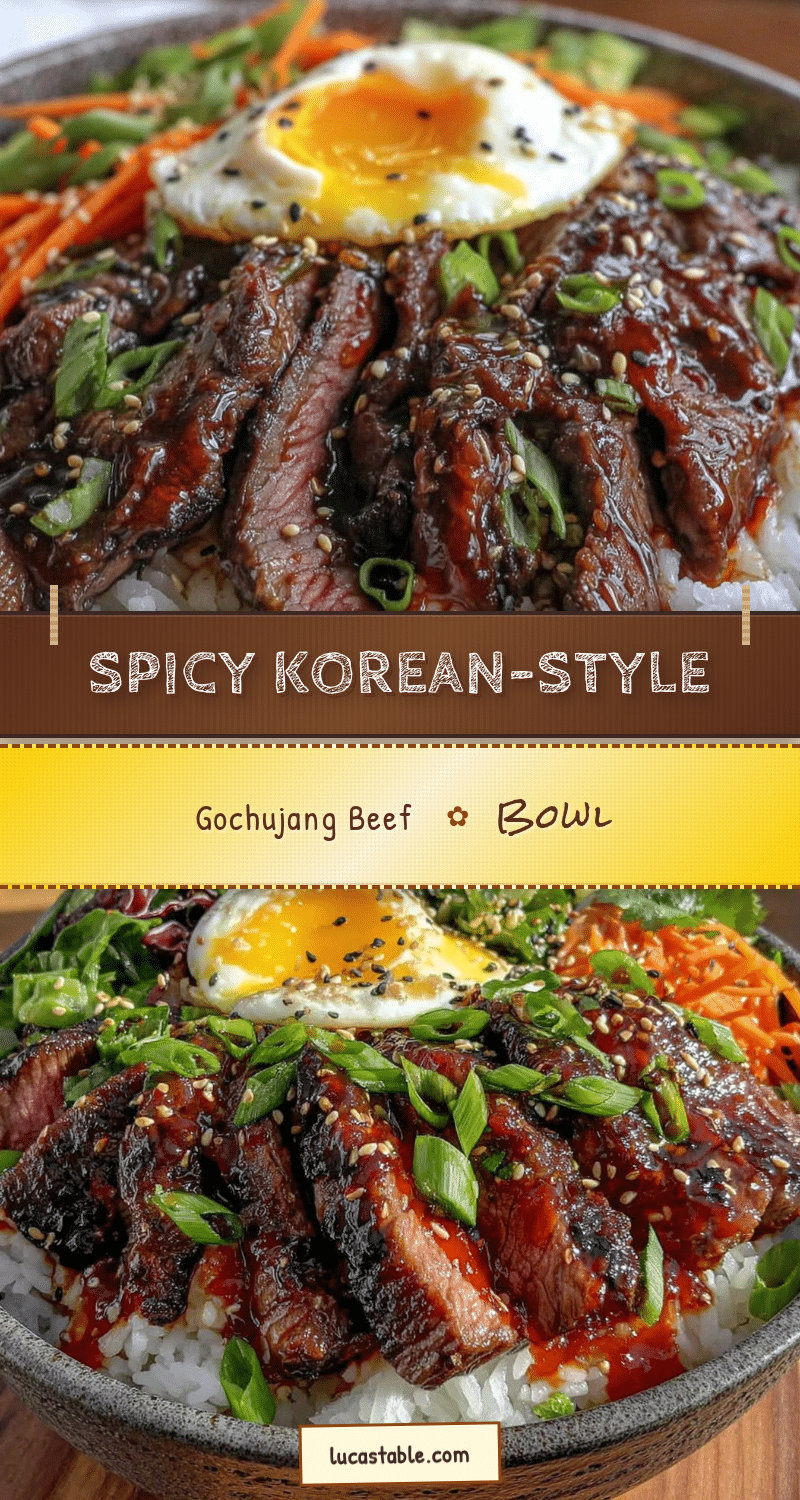
Flavorful Korean-Style Beef Bowl Recipe with Spicy Gochujang Sauce
A quick and easy Korean-style beef bowl featuring tender thinly sliced beef in a spicy, savory gochujang sauce, served over fluffy jasmine rice with fresh vegetables and garnishes.
- Prep Time: 10 minutes
- Cook Time: 15 minutes
- Total Time: 25 minutes
- Yield: 4 servings 1x
- Category: Main Course
- Cuisine: Korean
Ingredients
- 1 pound thinly sliced flank steak or sirloin
- 2 tablespoons gochujang (Korean fermented chili paste)
- 1 tablespoon soy sauce (or tamari for gluten-free)
- 1 tablespoon toasted sesame oil
- 1 tablespoon honey or brown sugar
- 2 cloves garlic, minced
- 1 teaspoon freshly grated ginger
- 1 tablespoon rice vinegar or apple cider vinegar
- 1 cup shredded carrots
- 2 scallions, thinly sliced
- 1 teaspoon toasted sesame seeds (optional)
- 1 small cucumber, thinly sliced or julienned
- 3 cups cooked jasmine rice
- 1 tablespoon neutral oil (vegetable or canola) for cooking
Instructions
- Cook 3 cups (about 600 g) of jasmine or short grain rice according to package instructions. Fluff with a fork and keep warm.
- In a medium mixing bowl, whisk together gochujang, soy sauce, toasted sesame oil, honey, minced garlic, grated ginger, and rice vinegar. Adjust sweetness or acidity if needed and set aside.
- If not pre-sliced, slice the flank steak or sirloin thinly against the grain into strips about 1/4 inch thick.
- Heat 1 tablespoon neutral oil in a large skillet over medium-high heat until shimmering.
- Add beef strips in a single layer without overcrowding. Sear for 2-3 minutes per side until browned but still tender. Cook in batches if necessary and keep beef warm.
- Pour the prepared gochujang sauce over the beef in the skillet. Toss to coat evenly and cook for another 2 minutes to thicken the sauce.
- While beef cooks, shred carrots, slice scallions, and julienne or thinly slice cucumber.
- Assemble bowls by spooning warm rice, topping with spicy beef mixture, then arranging carrots, cucumber, and scallions on top. Sprinkle with toasted sesame seeds.
- Serve immediately while warm and juicy.
Notes
To avoid steaming the beef, do not overcrowd the pan; cook in batches if needed. Toast sesame seeds before sprinkling for enhanced flavor. Adjust gochujang and honey to balance spice and sweetness. If sauce thickens too much, loosen with a splash of water or broth before serving. For gluten-free, use tamari instead of soy sauce.
Nutrition
- Serving Size: 1 bowl (approximatel
- Calories: 450
- Sugar: 8
- Sodium: 700
- Fat: 18
- Saturated Fat: 3
- Carbohydrates: 40
- Fiber: 3
- Protein: 30
Keywords: Korean beef bowl, gochujang sauce, spicy beef bowl, quick Korean recipe, easy weeknight dinner, Korean comfort food