My partner took one bite of the fresh cold soba noodle lunch jar with peanut ginger sauce I’d packed and immediately said, “This is exactly what I needed today.” I remember watching him pause, the slight tang of ginger hitting his taste buds followed by the creamy peanut richness that somehow felt comforting and refreshing at the same time. The cool noodles tangled with crisp veggies made the whole jar feel like a little moment of calm on a hectic afternoon. Honestly, it was one of those rare lunches where the flavors just locked in perfectly, and I was glad I’d put in the effort to prepare it the night before.
That reaction stuck with me because, you know, getting a meal that’s both satisfying and easy to eat on the go isn’t always simple. This particular soba noodle lunch jar became my go-to for busy days when I wanted something light yet filling, and the peanut ginger sauce? Let’s just say it’s the unsung hero that keeps everything together. I’ve tried lots of noodle salads and jars over time, but this one has that quiet balance of sweet, savory, and tangy that makes you almost close your eyes mid-bite (and that’s a win, right?).
What I realized is that this recipe isn’t just about throwing ingredients into a jar. It’s about layering textures and flavors carefully — cold soba noodles providing that chewy base, crunchy veggies for freshness, and that luscious peanut ginger sauce tying it all up. The simple act of mixing it at lunchtime feels a little like a small celebration of flavors, even on the busiest days. It’s the kind of recipe that quietly earns its place in your meal rotation because it just works, no fuss, no heavy feeling afterward.
Why You’ll Love This Recipe
- Quick & Easy: This fresh cold soba noodle lunch jar comes together in under 20 minutes — perfect if you’re juggling work, errands, or just want a fuss-free meal option.
- Simple Ingredients: Most of what you need are pantry staples or easy-to-find fresh veggies. No specialty store runs required.
- Perfect for On-the-Go: The jar format makes it ideal for packed lunches, picnics, or even a light office meal that feels homemade.
- Crowd-Pleaser: The peanut ginger sauce is a hit with both kids and adults — it’s creamy, nutty, with just the right zing from fresh ginger.
- Unbelievably Delicious: The combination of cold soba noodles, crisp veggies, and that vibrant sauce creates a texture and flavor profile that’s anything but boring.
This isn’t your typical noodle lunch — the peanut ginger sauce is made with a little secret: a touch of lime juice and a hint of honey that balances the earthiness of the peanuts and the bite of ginger perfectly. Unlike many peanut sauces that can be heavy or cloying, this one stays light and fresh, which is why it pairs so well with the cold noodles and crunchy veggies. I’ve also found that the noodles don’t get soggy when tossed with the sauce last-minute, so your lunch jar stays inviting until it’s time to eat.
What Ingredients You Will Need
This recipe uses simple, wholesome ingredients to deliver bold flavor and satisfying texture without fuss. Most of these are pantry staples or fresh veggies you can find year-round, and they work wonderfully together to create a balanced lunch jar.
- Soba noodles: 6 ounces (170g), cooked and cooled — I recommend 100% buckwheat soba for authentic flavor and texture.
- Peanut butter: ¼ cup (60ml), smooth or crunchy depending on your texture preference. I like a natural peanut butter with no added sugar.
- Fresh ginger: 1 tablespoon, finely grated — this adds a zingy, warming note.
- Soy sauce: 2 tablespoons (30ml), low sodium preferred for better control over saltiness.
- Rice vinegar: 1 tablespoon (15ml), for that subtle tang that brightens the sauce.
- Honey or maple syrup: 1 teaspoon (5ml), to balance acidity and spice.
- Lime juice: From half a lime, freshly squeezed for brightness.
- Garlic: 1 small clove, minced — adds depth to the sauce.
- Sesame oil: 1 teaspoon (5ml), toasted for a nutty aroma.
- Carrot: 1 medium, julienned or shredded — for crunch and sweetness.
- Cucumber: 1 small, thinly sliced — cooling and fresh contrast.
- Red bell pepper: Half, thinly sliced — adds color and crispness.
- Green onions: 2 stalks, sliced — for mild onion flavor and a little crunch.
- Cilantro or fresh basil: A handful, chopped (optional) — adds a fresh herbal note.
- Chopped peanuts: For garnish — adds texture and extra peanut flavor.
- Optional chili flakes: For a little heat if you like things spicy.
If you want a gluten-free version, make sure to grab gluten-free soba noodles (buckwheat-only) and tamari instead of soy sauce. Also, swapping peanut butter for almond or sunflower seed butter works if allergies are a concern. The fresh lime juice is key here — it lifts the whole sauce and keeps the flavors lively.
Equipment Needed
- Large pot: For boiling the soba noodles. A heavy-bottomed pot works best to prevent water from boiling over.
- Fine grater or microplane: To grate fresh ginger and garlic finely, which helps them blend smoothly into the sauce.
- Mixing bowls: One medium bowl for whisking the peanut ginger sauce, and a larger one for tossing the noodles and veggies.
- Measuring spoons and cups: For precise ingredient amounts, especially helpful with the sauce balance.
- Glass lunch jars with lids: Ideally wide-mouth for easy layering and mixing at lunchtime. I prefer reusable mason jars for their sturdiness and size variety.
- Whisk or fork: To combine the sauce ingredients smoothly without lumps.
If you don’t have a microplane, a small grater or finely chopping the ginger and garlic works just fine. For the noodles, a colander with a fine mesh helps rinse them well under cold water to stop cooking and keep them cool. Also, if you don’t have glass jars, any container with a tight lid suitable for lunch packing will do.
Preparation Method
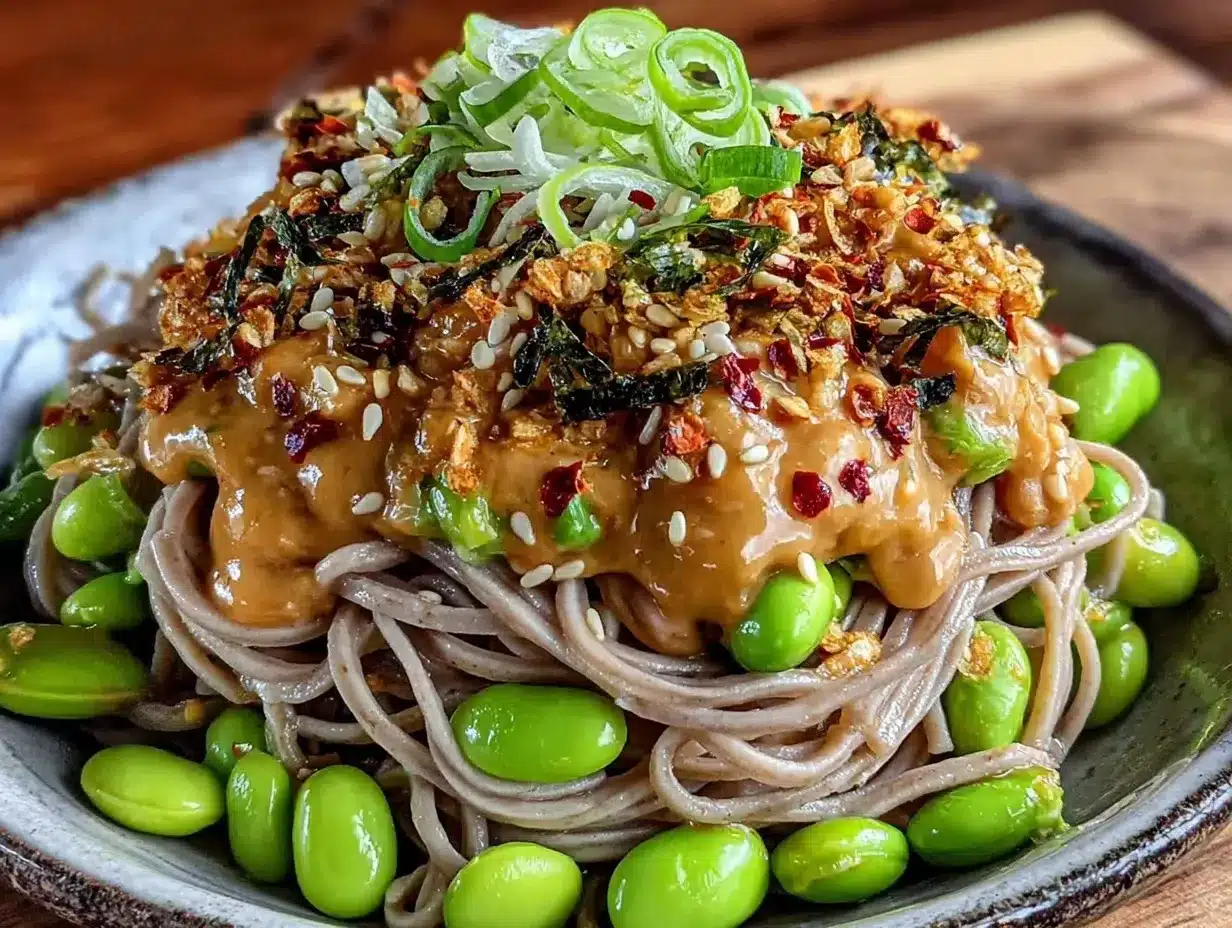
- Cook the soba noodles: Bring a large pot of water to a boil. Add 6 ounces (170g) of soba noodles and cook according to package instructions, usually 4-5 minutes. Stir occasionally to prevent sticking. Once al dente, drain and rinse thoroughly under cold running water to chill and remove excess starch. Set aside to drain completely (about 5 minutes). This keeps the noodles from getting mushy in the jar.
- Prepare the peanut ginger sauce: In a medium bowl, whisk together ¼ cup (60ml) smooth peanut butter, 1 tablespoon (15ml) soy sauce, 1 tablespoon (15ml) rice vinegar, 1 teaspoon (5ml) honey or maple syrup, juice from half a lime, 1 tablespoon freshly grated ginger, 1 small minced garlic clove, and 1 teaspoon (5ml) toasted sesame oil. Whisk until smooth and creamy. If the sauce is too thick, add water a teaspoon at a time until it reaches a pourable but thick consistency. Taste and adjust seasoning—more lime for tang, more honey for sweetness, or more soy sauce for saltiness.
- Prepare the vegetables: Julienne or shred 1 medium carrot, thinly slice 1 small cucumber, half a red bell pepper, and 2 green onions. Chop a handful of fresh cilantro or basil if using. Having the veggies prepped and ready makes assembly quick.
- Assemble the lunch jar: Start by placing about ⅓ cup of the peanut ginger sauce at the bottom of each glass jar. Add a layer of soba noodles (about 1 cup or 70g per jar), then top with a mix of the prepared veggies. Repeat if your jar is large enough, finishing with a small drizzle of sauce on top and a sprinkle of chopped peanuts and optional chili flakes for some heat.
- Seal and refrigerate: Close the jars tightly and refrigerate for at least 30 minutes before eating. This helps the flavors meld without the noodles getting soggy. The sauce stays separate at the bottom, so give the jar a good shake or stir before eating to coat everything evenly.
Pro tip: If you want to save time in the morning, prep the sauce and veggie layers the night before, but keep the noodles separate until ready to eat. That way, the noodles stay perfectly firm and fresh.
Cooking Tips & Techniques
Getting the peanut ginger sauce just right is the trickiest part here. I’ve learned that fresh ginger — not powdered — gives the sauce its bright, slightly spicy zing. Also, whisking the sauce ingredients well (or using a small blender) keeps it creamy and lump-free. If your sauce feels too thick, add cold water little by little to loosen it until it’s pourable but still clings to the noodles.
Don’t overcook the soba noodles! They only need a few minutes, and rinsing them in cold water immediately stops the cooking process, which keeps their texture pleasantly chewy. Letting the noodles drain well before layering prevents the jar from becoming watery.
For layering, putting the sauce at the bottom and noodles next keeps the noodles from soaking up too much sauce too early. You want to mix it just before eating. It’s a little like how I prepare the dressing for my chicken lo mein, where the sauce waits until last to keep everything fresh.
Another tip: chop your veggies small and uniform so every bite has a mix of flavors and textures. The crunch from fresh bell pepper and cucumber plays beautifully against the chewy noodles and creamy sauce. Also, toasted sesame oil is a must — it adds that irresistible nutty aroma that makes the whole jar sing.
Variations & Adaptations
- Protein Boost: Add cooked, shredded chicken or tofu cubes for extra protein. This turns the lunch jar into a more filling meal perfect for longer days. For a quick protein option, I sometimes toss in leftover grilled chicken from my zesty lemon chicken.
- Spicy Kick: Stir in a teaspoon of chili garlic sauce or sprinkle red pepper flakes into the peanut ginger sauce for a spicy twist that wakes up the palate.
- Seasonal Veggies: Swap the bell pepper and cucumber for shredded cabbage, snap peas, or blanched asparagus in spring and summer. In winter, try roasted sweet potato cubes for a warm contrast.
- Nut-Free Version: Use sunflower seed butter instead of peanut butter and omit chopped peanuts to keep it allergy-friendly while still creamy and flavorful.
- Alternative Noodles: If you want a gluten-free or lower-carb option, try zucchini noodles or shirataki noodles instead of soba. Keep in mind the cooling and texture will be different but still delicious.
I once made this with spiralized zucchini for a friend who’s avoiding gluten, and while it wasn’t the same chewy noodle experience, the peanut ginger sauce still brought the whole bowl together beautifully.
Serving & Storage Suggestions
This lunch jar is best served cold or at room temperature. Before eating, shake or stir well to coat noodles and veggies with the peanut ginger sauce evenly. The fresh crunch of the veggies contrasts nicely with the creamy sauce and tender noodles.
If you want to turn it into a dinner side, serve alongside grilled chicken or fish. The jar’s tangy, nutty flavors pair well with simple proteins like salmon or even the quick and flavorful 15-minute spaghetti aglio e olio recipe from this site for a light dinner option.
Store the assembled jars in the refrigerator for up to 2 days. The noodles hold up well, and the sauce keeps everything tasty. Avoid storing longer than that to maintain freshness and texture. When reheating, it’s best to warm the noodles separately and add the sauce cold to keep the flavors vibrant.
Flavors tend to meld more if you leave the jar in the fridge overnight, so it’s great for meal prep. Just remember to keep the sauce at the bottom or in a separate container if you’re prepping too early — no one likes soggy noodles!
Nutritional Information & Benefits
Each serving of this fresh cold soba noodle lunch jar provides approximately 400-450 calories, with a good balance of carbohydrates, protein, and healthy fats thanks to the peanut butter and fresh veggies. Soba noodles are a source of complex carbs and contain some protein and fiber, especially if you choose 100% buckwheat versions.
Ginger and garlic add anti-inflammatory and digestive benefits, while the fresh vegetables contribute vitamins A and C, plus antioxidants. The peanut butter provides heart-healthy monounsaturated fats and protein, making this a satisfying and wholesome meal.
This recipe is naturally gluten-free if you use pure buckwheat soba and tamari, and can be adapted for vegan diets by ensuring the sauce uses maple syrup instead of honey. Just keep in mind the peanuts are a common allergen, so sunflower seed butter is an excellent alternative.
Conclusion
This fresh cold soba noodle lunch jar with peanut ginger sauce has quietly become my favorite quick meal for busy days. It’s the kind of recipe that feels thoughtfully crafted without requiring hours in the kitchen. The balance of chewy noodles, crisp veggies, and that creamy, tangy peanut ginger sauce makes every bite enjoyable and refreshing.
What I love most is how customizable it is — whether you add chicken, switch up the veggies, or turn up the heat with chili flakes, it always comes together beautifully. If you’re looking for a lunch that’s both nourishing and exciting, this jar fits the bill. I’d love to hear how you make it your own!
Frequently Asked Questions
Can I make the peanut ginger sauce ahead of time?
Yes, the sauce keeps well in an airtight container in the fridge for up to 4 days. Just whisk it again before assembling your lunch jar.
How do I prevent the noodles from getting soggy?
Rinse the soba noodles under cold water right after cooking and drain well. Keep the sauce at the bottom of the jar and mix it with the noodles right before eating.
Can I use another type of noodle?
Absolutely! Rice noodles, zucchini noodles, or even whole wheat pasta can work, but the texture and flavor will vary slightly.
Is this recipe suitable for meal prepping?
Yes! Assemble the jars up to a day in advance, keeping the sauce separate if you’re prepping more than 12 hours ahead to maintain noodle texture.
What can I substitute for peanut butter if I have allergies?
Sunflower seed butter or almond butter are great alternatives. Just choose a mild-flavored nut or seed butter to keep the sauce balanced.
Pin This Recipe!
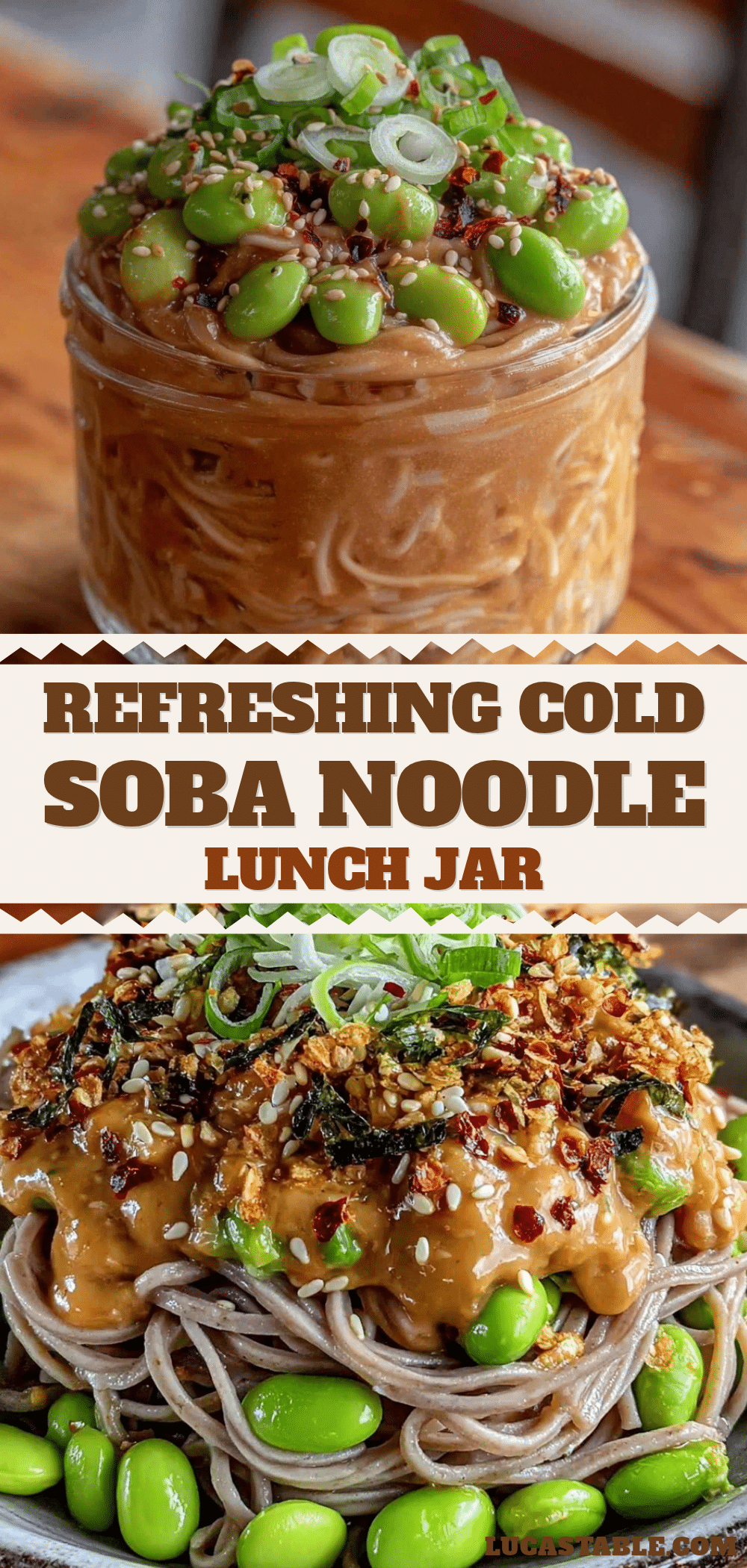
Fresh Cold Soba Noodle Lunch Jar with Peanut Ginger Sauce
A quick and easy fresh cold soba noodle lunch jar layered with crisp veggies and a creamy, tangy peanut ginger sauce, perfect for on-the-go meals.
- Prep Time: 10 minutes
- Cook Time: 5 minutes
- Total Time: 15 minutes
- Yield: 2 servings 1x
- Category: Main Course
- Cuisine: Japanese
Ingredients
- 6 ounces (170g) soba noodles, cooked and cooled (100% buckwheat recommended)
- 1/4 cup (60ml) peanut butter, smooth or crunchy
- 1 tablespoon (15ml) fresh grated ginger
- 2 tablespoons (30ml) soy sauce, low sodium preferred
- 1 tablespoon (15ml) rice vinegar
- 1 teaspoon (5ml) honey or maple syrup
- Juice from half a lime
- 1 small garlic clove, minced
- 1 teaspoon (5ml) toasted sesame oil
- 1 medium carrot, julienned or shredded
- 1 small cucumber, thinly sliced
- 1/2 red bell pepper, thinly sliced
- 2 green onions, sliced
- A handful of cilantro or fresh basil, chopped (optional)
- Chopped peanuts for garnish
- Optional chili flakes for heat
Instructions
- Bring a large pot of water to a boil. Add soba noodles and cook according to package instructions (4-5 minutes). Stir occasionally to prevent sticking.
- Drain noodles and rinse thoroughly under cold running water to chill and remove excess starch. Drain completely (about 5 minutes).
- In a medium bowl, whisk together peanut butter, soy sauce, rice vinegar, honey or maple syrup, lime juice, grated ginger, minced garlic, and toasted sesame oil until smooth. Add water a teaspoon at a time if sauce is too thick.
- Prepare vegetables: julienne or shred carrot, thinly slice cucumber, red bell pepper, and green onions. Chop cilantro or basil if using.
- Assemble the lunch jar by placing about 1/3 cup of peanut ginger sauce at the bottom, then add about 1 cup (70g) soba noodles, followed by a layer of veggies. Repeat if jar size allows. Finish with a drizzle of sauce on top and sprinkle with chopped peanuts and optional chili flakes.
- Seal jars tightly and refrigerate for at least 30 minutes before eating. Shake or stir well before eating to coat noodles and veggies evenly.
Notes
Use gluten-free soba noodles and tamari for gluten-free version. Substitute peanut butter with almond or sunflower seed butter for nut allergies. Prepare sauce and veggies the night before but keep noodles separate until ready to eat to avoid sogginess. Sauce keeps well refrigerated for up to 4 days.
Nutrition
- Serving Size: 1 lunch jar (approxi
- Calories: 425
- Sugar: 6
- Sodium: 600
- Fat: 18
- Saturated Fat: 3
- Carbohydrates: 50
- Fiber: 5
- Protein: 15
Keywords: soba noodles, peanut ginger sauce, lunch jar, cold noodle salad, easy lunch, on-the-go meal, healthy lunch, gluten-free option