My husband took one bite, went completely still, then looked at me with this expression I still can’t quite describe. “This is it,” he said, quietly. “This is the soup we should make every New Year’s.” And honestly? I knew he was right before the spoon even left his mouth. It wasn’t just the warmth of the broth or the way the collards softened into something almost silky. It was the feeling that came with it—like we were doing something right by eating it.
I’d been tinkering with a lucky black-eyed pea & collard soup for a few weeks, trying to capture that traditional Southern good-luck magic without spending all day in the kitchen. You know how it goes. Some recipes promise prosperity but deliver bland broth and mushy peas. Not this one. This one actually tastes like something you’d crave in the middle of February, not just on January 1st.
The thing about this soup is it doesn’t try too hard. It’s humble—black-eyed peas, collard greens, a little smoked meat for depth, some aromatics doing their thing in the background. But when it all comes together, there’s this moment where the flavors just click. The peas stay tender but intact. The greens soften without turning into sad, limp ribbons. And the broth? It gets this rich, slightly peppery character that makes you want to keep dipping your spoon in long after you’re full.
I’m not saying a bowl of soup can guarantee you a good year. But I am saying that when you sit down to something this satisfying, made with your own two hands, it feels like a pretty solid start to anything.
Why You’ll Love This Recipe
This isn’t just another black-eyed pea soup recipe. I tested this thing six times before I got it right. Six times of either mushy peas or bitter greens or broth that tasted like nothing. So trust me when I say this version is the one worth your time.
- Quick & Easy : Comes together in about an hour, most of which is hands-off simmering. Perfect for a weeknight when you want something that feels like a Sunday project.
- Simple Ingredients : No fancy grocery trips needed. Dried black-eyed peas, fresh collards, onion, garlic, a ham hock or smoked turkey leg, and basic pantry staples. That’s it.
- Perfect for New Year’s (and Every Day After) : Sure, it’s traditional for luck and prosperity on January 1st. But honestly? It’s also perfect for cold winter nights, meal prep Sundays, or any time you need a bowl of something that feels like a hug.
- Crowd-Pleaser : My picky-eating nephew asked for seconds. My father-in-law, who “doesn’t like greens,” cleaned his bowl. Even my neighbor, who swore she hated black-eyed peas, came back for the recipe.
- Unbelievably Delicious : The texture here is everything. Creamy peas, tender greens, and a broth that’s smoky, savory, and just a little bit peppery. It’s comfort food that actually delivers.
What makes this recipe different from the rest? It’s the technique. Most recipes either overcook the peas or undercook the greens. I figured out the timing so everything lands perfectly at the same moment. Plus, I add a splash of apple cider vinegar at the end—it brightens the whole pot and keeps the collards from tasting flat. Little things, but they make all the difference.
This is the kind of soup that makes you close your eyes after the first bite. It’s tradition reimagined—faster, more flavorful, but with the same soul-soothing satisfaction your grandmother would approve of.
What Ingredients You Will Need
This recipe uses simple, humble ingredients to build something genuinely special. Most of these are pantry staples or easy to find at any grocery store. Here’s what you’ll need:
For the Soup Base
- 1 tablespoon olive oil (or any neutral cooking oil)
- 1 large yellow onion, diced (about 1.5 cups)
- 3 cloves garlic, minced (adds that aromatic backbone)
- 2 celery ribs, diced (for subtle earthy flavor)
- 2 medium carrots, diced (adds a touch of sweetness)
- 1 smoked ham hock or smoked turkey leg (this is where the magic happens—the smokiness infuses everything)
For the Peas & Greens
- 1 cup dried black-eyed peas, rinsed and picked over (no need to soak overnight—we’ll do a quick soak)
- 6 cups low-sodium chicken broth (or vegetable broth for a vegetarian version)
- 2 cups water (adjust as needed during simmering)
- 1 bunch collard greens, stems removed and leaves chopped (about 6-8 cups chopped—look for firm, dark green leaves without yellow spots)
- 1 teaspoon smoked paprika (reinforces that smoky flavor)
- 1/2 teaspoon dried thyme (earthy and subtle)
- 1 bay leaf (adds background depth)
- 1/2 teaspoon black pepper, plus more to taste
- 1/2 teaspoon salt, plus more to taste (wait until the end to adjust—ham hocks can be salty)
For Finishing
- 1-2 tablespoons apple cider vinegar (this is non-negotiable in my book—it brightens everything)
- Optional: hot sauce for serving (I like Tabasco or Crystal)
- Optional: chopped fresh parsley for garnish
Ingredient Tips: I prefer Camellia Brand black-eyed peas for consistent texture, but any dried brand works. For the collards, try to find bunches with smaller leaves—they tend to be more tender. If you can’t find a ham hock, smoked turkey legs are an excellent substitute and actually my preferred choice these days. They’re leaner but still pack that deep, smoky flavor.
Substitution Guidance: For a vegetarian version, skip the smoked meat and use vegetable broth. Add 1-2 teaspoons of liquid smoke and an extra tablespoon of smoked paprika to mimic that smoky depth. You can also swap collard greens for kale or Swiss chard, though the cooking time will be shorter—add them in the last 10 minutes instead.
Equipment Needed
You don’t need a fancy kitchen to make this soup. Here’s what you’ll actually use:
- Large Dutch oven or heavy-bottomed pot (5-6 quart capacity is ideal—I use my trusty Lodge enameled cast iron and it distributes heat beautifully)
- Cutting board and sharp chef’s knife (for dicing the veggies and chopping collards)
- Wooden spoon or silicone spatula (for stirring without scratching your pot)
- Measuring cups and spoons
- Colander (for rinsing the black-eyed peas)
- Ladle (for serving)
Budget-Friendly Tip: If you don’t own a Dutch oven, a regular stockpot works just fine. Just keep an eye on the heat—thin-bottomed pots can scorch the soup. Stir more frequently if using one. And honestly, I’ve made this in a slow cooker too (see the variations section below).
Maintenance Note: If you’re using a cast iron Dutch oven, avoid sudden temperature changes—don’t run cold water into a hot pot. Let it cool naturally before washing. Your pot will thank you, and your soup will taste better for it.
Preparation Method
Let me walk you through this step by step. I’ve organized it so you can multitask without feeling overwhelmed.
Step 1: Quick-Soak the Black-Eyed Peas
Rinse 1 cup of dried black-eyed peas in a colander under cold water. Pick out any tiny stones or shriveled peas (trust me, you don’t want to bite into a stone). Place the peas in a large bowl and cover with 3 inches of cold water. Let them soak for 1 hour. If you’re short on time, you can do a quick-soak: bring the peas and water to a boil, remove from heat, cover, and let sit for 1 hour. Drain and rinse before using. This step helps the peas cook evenly and reduces simmering time.
Step 2: Sauté the Aromatics
Heat 1 tablespoon olive oil in your Dutch oven over medium heat. Add the diced onion, celery, and carrots. Cook for 5-7 minutes, stirring occasionally, until the onions turn translucent and the carrots start to soften. The kitchen will start smelling amazing right about now. Add the minced garlic and cook for another 30 seconds—just until fragrant. Don’t let the garlic burn, or it’ll turn bitter.
Step 3: Build the Broth
Add the smoked ham hock (or turkey leg) to the pot along with the drained black-eyed peas. Pour in 6 cups of chicken broth and 2 cups of water. Add the smoked paprika, dried thyme, bay leaf, and 1/2 teaspoon black pepper. Stir everything together, scraping up any browned bits from the bottom of the pot. Bring the mixture to a boil over high heat, then reduce the heat to low, cover, and let it simmer.
Step 4: Simmer the Soup
Let the soup simmer gently for 30-35 minutes. The peas should be tender but not falling apart. You want them to hold their shape while still being creamy on the inside. Check the liquid level halfway through—if it looks too thick, add another cup of water or broth. If it looks too thin, leave the lid slightly cracked to let some steam escape.
Step 5: Add the Collard Greens
While the soup simmers, prep your collard greens. Stack several leaves on top of each other, roll them up tightly like a cigar, and slice crosswise into thin ribbons. This is called a chiffonade, and it’s the easiest way to get tender, evenly-sized pieces. After the peas have cooked for 30 minutes, stir in the chopped collards. They’ll look like a mountain of green at first, but they’ll wilt down significantly. Cover and simmer for another 20-25 minutes, until the greens are tender but still have a little texture.
Step 6: Remove the Smoked Meat & Season
Carefully remove the ham hock or turkey leg from the pot. If using a ham hock, let it cool slightly, then pull off any meat and shred it. Discard the bone, skin, and fat. Stir the shredded meat back into the soup. If using a turkey leg, do the same—the meat should fall off easily. Now taste the broth. Add salt if needed (remember, the smoked meat already adds saltiness). Add another pinch of black pepper if you like.
Step 7: Finish with Vinegar
This is the step that makes the soup sing. Stir in 1-2 tablespoons of apple cider vinegar, starting with 1 tablespoon and tasting. The vinegar brightens the whole pot and cuts through the richness of the broth. It also helps the collards taste their best. Remove the bay leaf and discard it.
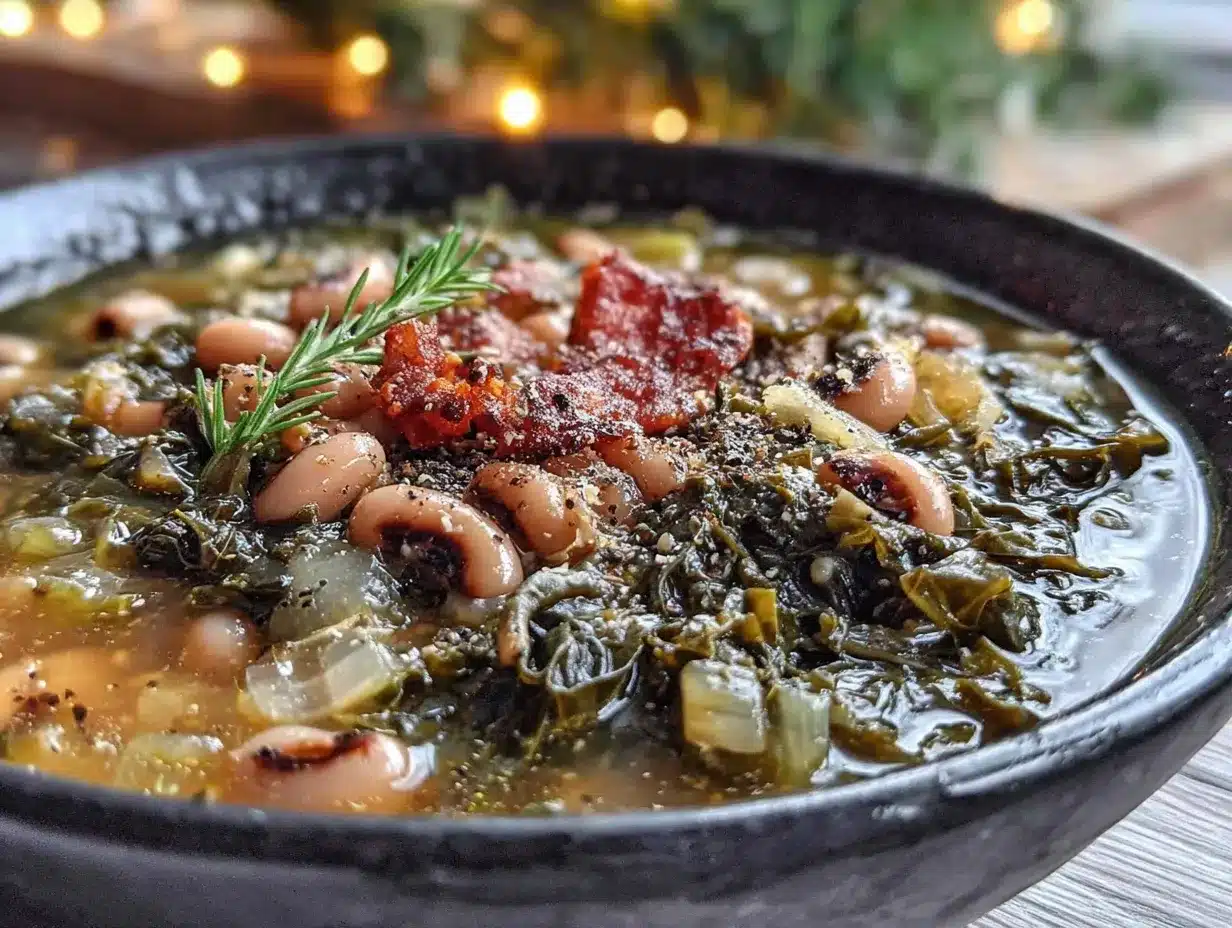
Sensory Cue: At this point, your soup should look rich and slightly creamy, with tender peas floating in a deep, amber-colored broth. The collards should be dark green and silky, not limp or mushy. Take a deep breath—you should smell smoke, earth, and a hint of tangy brightness.
Step 8: Rest and Serve
Turn off the heat and let the soup sit for 5-10 minutes before serving. This allows the flavors to meld together even more. Ladle into bowls and garnish with fresh parsley if you’re feeling fancy. Pass the hot sauce at the table—I promise, a few dashes of Tabasco take this over the top.
Cooking Tips & Techniques
I learned most of these the hard way—by making mistakes and eating mediocre soup. Let me save you the trouble.
Don’t skip the quick soak. I know, I know, it adds an extra hour. But here’s the thing: unsoaked black-eyed peas cook unevenly. Some will be mushy while others stay hard. The quick soak ensures they all cook at the same rate and gives you that perfect creamy-but-intact texture. If you’re really pressed for time, you can skip it, but plan to simmer for an extra 20-30 minutes and check frequently.
Salt at the end, not the beginning. This is a rule I broke for years and regretted every time. Smoked ham hocks and turkey legs are already salty. If you salt the broth early, you might end up with soup that’s way too salty after the liquid reduces. Wait until the meat is removed and the peas are tender, then adjust. Your taste buds will thank you.
Watch your heat. Low and slow is the name of the game here. A vigorous boil will break the peas apart and turn your soup into mush. You want a gentle simmer—small bubbles breaking the surface, not a rolling boil. If you see it bubbling aggressively, turn the heat down immediately.
The vinegar trick isn’t optional. I once forgot to add the apple cider vinegar and served the soup anyway. It was fine. But it wasn’t great. The vinegar doesn’t make the soup taste sour—it just wakes everything up. It’s like turning on a light in a dim room. Don’t skip it.
Multitasking strategy: While the peas are quick-soaking, prep all your vegetables. Dice the onion, celery, and carrots. Mince the garlic. Chop the collards. This way, once the soaking is done, you can move through the steps without stopping. It makes the whole process feel effortless.
Variations & Adaptations
This soup is flexible. Here are some ways I’ve adapted it over the years:
Vegetarian/Vegan Version
Skip the smoked meat entirely. Use vegetable broth instead of chicken broth. To get that smoky flavor, add 1-2 teaspoons of liquid smoke along with the broth, and increase the smoked paprika to 1.5 tablespoons. I’ve made this version for my vegetarian sister-in-law, and she swears it’s better than the original. (Don’t tell my husband I said that.)
Slow Cooker Adaptation
This works beautifully in a slow cooker. Sauté the aromatics on the stovetop first, then transfer everything except the collards to the slow cooker. Cook on low for 6-8 hours or high for 3-4 hours. Add the collards in the last 30 minutes of cooking. Remove the meat, shred it, stir it back in, and finish with the vinegar. It’s a great set-it-and-forget-it option for busy days.
Spicy Southern Twist
Add 1-2 diced jalapeños (seeds removed if you want less heat) along with the onions. Or stir in 1/2 teaspoon of cayenne pepper with the smoked paprika. I did this once when I had a cold, and it was exactly what I needed—spicy, smoky, and deeply comforting. You could also serve it with pickled jalapeños on top for extra zing.
Greens Swap
Not a collard fan? No problem. Kale works beautifully—just add it in the last 10-15 minutes since it cooks faster. Swiss chard is even quicker (5 minutes). Mustard greens add a peppery bite that’s lovely if you like bold flavors. Each green brings its own personality to the soup, so feel free to experiment based on what’s at the market.
Rice or Grain Addition
For a heartier soup, stir in 1 cup of cooked rice (brown or white) or farro just before serving. It stretches the soup further and adds a chewy texture that contrasts nicely with the creamy peas. I’ve done this on meal prep Sundays, and it makes the leftovers even more satisfying.
Serving & Storage Suggestions
Serving Temperature: Serve this soup piping hot. It’s at its best when the steam rises off the bowl and you can smell the smoky broth before you take your first bite. I like to let it cool for just a minute or two so I don’t burn my tongue—patience is hard when it smells this good.
Presentation: Ladle the soup into wide, shallow bowls so you can see all the components—the creamy peas, the dark green collards, the rich broth. Sprinkle a little fresh parsley on top if you have it. A drizzle of good olive oil or a few cracks of black pepper also works beautifully. Serve with crusty bread or cornbread on the side for dipping. Honestly, the bread is essential—you’ll want to soak up every last drop of that broth.
Complementary Dishes: This soup pairs beautifully with a simple side salad dressed with lemon vinaigrette (the acidity cuts through the richness). Cornbread is the classic choice, and for good reason—the sweetness balances the smoky, savory soup. If you’re serving this for a crowd, a platter of roasted vegetables or a simple coleslaw works too.
Storage: Store leftovers in an airtight container in the refrigerator for up to 5 days. The flavors actually get better after a day or two as they meld together. This is one of those soups that tastes even better the next day—the peas absorb more broth and the greens soften beautifully.
Freezing: This soup freezes like a dream. Let it cool completely, then transfer to freezer-safe containers or zip-top bags. Leave about an inch of headspace for expansion. Freeze for up to 3 months. Thaw overnight in the refrigerator before reheating.
Reheating: Reheat gently on the stovetop over medium-low heat, stirring occasionally. Add a splash of water or broth if the soup has thickened too much. You can also microwave individual portions in 1-minute intervals, stirring between each. A note: the peas will soften further upon reheating, but that’s not a bad thing—it makes the soup even creamier.
Nutritional Information & Benefits
This soup isn’t just lucky—it’s pretty good for you too. Here’s a rough estimate per serving (based on 6 servings):
- Calories: ~285
- Protein: 18g
- Fat: 8g
- Carbohydrates: 35g
- Fiber: 12g
- Sugar: 5g
- Sodium: 680mg (varies based on broth and smoked meat)
Health Benefits: Black-eyed peas are packed with fiber and plant-based protein, which help keep you full and support digestive health. They’re also rich in folate, iron, and potassium. Collard greens are a powerhouse of vitamins A, C, and K, plus calcium and antioxidants. Together, they make a soup that’s as nourishing as it is delicious.
Dietary Considerations: This recipe is naturally gluten-free and dairy-free. With the smoked turkey leg version, it’s also relatively low in saturated fat. If you’re watching your sodium, use low-sodium broth and skip the salt until the end—you might not need any. For a lower-carb option, reduce the peas by half and add extra greens or zucchini.
Allergen Note: This recipe is free of the top 8 allergens (dairy, eggs, peanuts, tree nuts, soy, wheat, fish, shellfish) when made with vegetable broth and a smoked turkey leg. Always check your broth and smoked meat labels if you have specific allergies.
Conclusion
This lucky black-eyed pea & collard soup is one of those recipes that feels like a secret weapon. It’s humble enough for a quiet Tuesday night but special enough to anchor a New Year’s Day gathering. The smoky broth, the tender peas, the silky greens—it all comes together in a way that feels both familiar and surprising.
I love this recipe because it doesn’t demand perfection. You can tweak it based on what’s in your fridge, swap the meat, change the greens, and it still works. It’s forgiving and generous, like any good tradition should be. And honestly? It tastes like the kind of luck you can actually count on—the kind that comes from sitting down to a warm bowl of something made with care.
If you give this soup a try, I’d love to hear how it turns out. Did you add your own twist? Serve it with cornbread or a crusty baguette? Let me know in the comments below. And if you’re looking for more cozy, soul-warming meals, you might enjoy this quick creamy butter chicken or this spicy blackened salmon for another night. Happy cooking, and here’s to a year full of good food and good luck!
Frequently Asked Questions
Do I really need to soak the black-eyed peas?
Technically, no—you can cook them straight from the bag. But the quick soak (1 hour) makes a noticeable difference. It helps the peas cook more evenly and reduces the simmering time by about 20 minutes. If you’re in a rush, skip the soak and just simmer longer, but check frequently to avoid mushy peas.
Can I use canned black-eyed peas instead of dried?
Absolutely. Use two 15-ounce cans, drained and rinsed. Add them in the last 15-20 minutes of cooking since they’re already cooked. This cuts the total simmering time significantly—just make sure the collards are tender before serving. The texture will be slightly softer than dried, but it’s a great shortcut.
How do I make this soup less salty?
Use low-sodium broth and hold off on adding salt until the very end. The smoked ham hock or turkey leg already contributes plenty of saltiness. If you’re still worried, soak the smoked meat in cold water for 30 minutes before adding it to the pot—this draws out some of the excess salt.
Can I make this soup ahead of time?
Yes, and I actually recommend it. This soup tastes even better the next day after the flavors have had time to meld. Make it a day ahead, let it cool, and refrigerate overnight. Reheat gently on the stovetop, adding a splash of broth or water if it’s too thick. The peas will soften a bit more, but that just makes it creamier.
What’s the best way to reheat leftovers?
Stovetop is best. Reheat over medium-low heat, stirring occasionally, until piping hot. Add a little water or broth if the soup has thickened. Microwave works in a pinch—heat in 1-minute intervals, stirring between each. The soup will keep in the fridge for up to 5 days or in the freezer for 3 months.
Pin This Recipe!
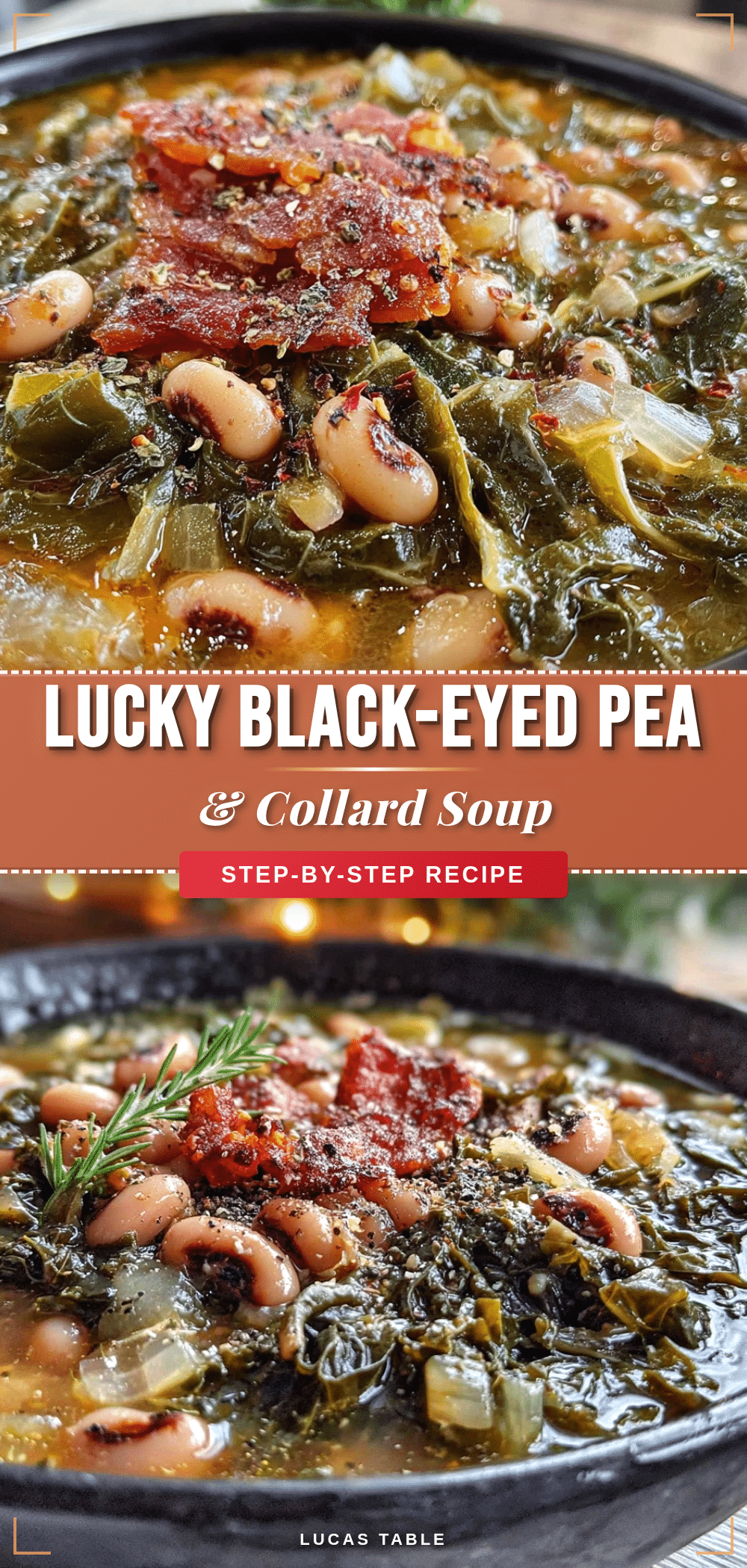
Easy Lucky Black-Eyed Pea & Collard Soup
A quick and easy Southern-inspired soup featuring tender black-eyed peas, silky collard greens, and a smoky broth. Perfect for New Year’s luck or any cold winter night.
- Prep Time: 15 minutes
- Cook Time: 1 hour 5 minutes
- Total Time: 1 hour 20 minutes
- Yield: 6 servings 1x
- Category: Soup
- Cuisine: Southern
Ingredients
- 1 tablespoon olive oil
- 1 large yellow onion, diced (about 1.5 cups)
- 3 cloves garlic, minced
- 2 celery ribs, diced
- 2 medium carrots, diced
- 1 smoked ham hock or smoked turkey leg
- 1 cup dried black-eyed peas, rinsed and picked over
- 6 cups low-sodium chicken broth
- 2 cups water
- 1 bunch collard greens, stems removed and leaves chopped (about 6–8 cups chopped)
- 1 teaspoon smoked paprika
- 1/2 teaspoon dried thyme
- 1 bay leaf
- 1/2 teaspoon black pepper, plus more to taste
- 1/2 teaspoon salt, plus more to taste
- 1–2 tablespoons apple cider vinegar
- Optional: hot sauce for serving
- Optional: chopped fresh parsley for garnish
Instructions
- Quick-soak the black-eyed peas: Rinse 1 cup dried black-eyed peas in a colander under cold water. Pick out any stones or shriveled peas. Place in a large bowl and cover with 3 inches of cold water. Let soak for 1 hour. Alternatively, bring peas and water to a boil, remove from heat, cover, and let sit for 1 hour. Drain and rinse before using.
- Sauté the aromatics: Heat 1 tablespoon olive oil in a Dutch oven over medium heat. Add diced onion, celery, and carrots. Cook for 5-7 minutes, stirring occasionally, until onions are translucent and carrots start to soften. Add minced garlic and cook for 30 seconds until fragrant.
- Build the broth: Add the smoked ham hock or turkey leg to the pot along with the drained black-eyed peas. Pour in 6 cups chicken broth and 2 cups water. Add smoked paprika, dried thyme, bay leaf, and 1/2 teaspoon black pepper. Stir, scraping up any browned bits. Bring to a boil over high heat, then reduce heat to low, cover, and simmer.
- Simmer the soup: Let the soup simmer gently for 30-35 minutes until peas are tender but not falling apart. Check liquid level halfway through; add another cup of water or broth if too thick.
- Add the collard greens: While soup simmers, prepare collards by stacking leaves, rolling tightly, and slicing crosswise into thin ribbons (chiffonade). After peas have cooked for 30 minutes, stir in chopped collards. Cover and simmer for another 20-25 minutes until greens are tender but still have texture.
- Remove the smoked meat and season: Carefully remove ham hock or turkey leg from pot. If using ham hock, let cool slightly, then pull off meat and shred. Discard bone, skin, and fat. Stir shredded meat back into soup. Taste broth and add salt if needed (remember smoked meat adds saltiness). Add more black pepper if desired.
- Finish with vinegar: Stir in 1-2 tablespoons apple cider vinegar, starting with 1 tablespoon and tasting. Remove bay leaf and discard.
- Rest and serve: Turn off heat and let soup sit for 5-10 minutes before serving. Ladle into bowls and garnish with fresh parsley if desired. Pass hot sauce at the table.
Notes
For a vegetarian version, skip the smoked meat and use vegetable broth. Add 1-2 teaspoons liquid smoke and an extra tablespoon of smoked paprika. You can also swap collard greens for kale or Swiss chard (add in last 10 minutes). The soup tastes even better the next day. Freezes well for up to 3 months.
Nutrition
- Serving Size: 1 bowl (about 1.5 cu
- Calories: 285
- Sugar: 5
- Sodium: 680
- Fat: 8
- Saturated Fat: 2
- Carbohydrates: 35
- Fiber: 12
- Protein: 18
Keywords: black-eyed pea soup, collard greens, New Year's soup, Southern soup, lucky soup, comfort food, easy soup recipe