An older woman at the farmers’ market named Rosa watched me picking through a bin of apples, turning each one over like I was searching for buried treasure. She didn’t say anything at first, just smiled a little and went back to arranging her pears. I was clearly overthinking it, you know, trying to find the absolute perfect fruit for a salad I hadn’t even planned yet. After a minute, she reached over and placed a slightly bruised Bosc pear into my hand. “This one,” she said, her voice soft but sure, “is the sweetest. The others, they look pretty, but they’re not ready to talk to you yet.”
I laughed, honestly, because who talks to fruit? But I bought that pear, along with a few more of her favorites, and a bunch of apples from the stall next door. I went home with a bag full of autumn’s best and no real plan, just a feeling that something good needed to happen. I stood in my kitchen, the late afternoon light coming in all golden and low, and I remembered a simple dressing my friend Maria used to make—just honey, lime, and a whisper of something warm. I didn’t have a recipe for it, just a memory of how it tasted on a hot summer day. But this was autumn, and the fruit needed something different. Something that let the apples and pears sing without covering them up.
That afternoon, this Fresh Autumn Fruit Salad with Honey Lime Dressing was born. I chopped the fruit, tossed it with a bit of lime juice so it wouldn’t brown, and whisked together a dressing that felt like the season itself—sweet, a little tart, and grounded. The first bite was a surprise. I mean, I’ve made fruit salad a hundred times, but this one felt different. It felt like the moment when the air turns crisp and you finally pull out your favorite sweater. Maybe you’ve been there, standing over a bowl of something simple, wondering why it feels so special. That’s what this salad is. It’s simple, but it has a story. And honestly, it’s the kind of recipe that stays with you because it’s not trying to be anything other than what it is: perfectly ripe fruit, treated with a little respect, and a dressing that makes it all make sense. I’ve been making it every autumn since, and it never gets old.
Why You’ll Love This Recipe
This isn’t just another fruit salad thrown together at the last minute. This is the one that people actually remember. I’ve tested this combination more times than I can count, tweaking the dressing ratio and the fruit mix until it felt just right. It’s the kind of recipe that makes you look like you put in a ton of effort, when really, it comes together in about fifteen minutes flat.
- Quick & Easy: From cutting board to table in under 20 minutes. Perfect for those busy weeknights when you need a side dish that doesn’t require any actual cooking.
- Simple Ingredients: You probably have the honey and lime in your fridge right now. The fruit is whatever looks best at the market or in your own kitchen.
- Perfect for Autumn Gatherings: This salad is made for Thanksgiving, Friendsgiving, or any cozy fall dinner where you want something light and refreshing alongside all the heavy, savory dishes.
- Crowd-Pleaser: I’ve brought this to potlucks and watched it disappear before the main course even hit the table. Kids love the sweetness, and adults appreciate the balance.
- Unbelievably Delicious: The texture combination is what gets me every time. The crunch of the apple, the softness of the pear, the pop of the pomegranate seeds, all held together by a dressing that’s bright and cozy at the same time.
What makes this recipe different from every other fruit salad out there is the dressing. Most fruit salads drown in sugary syrup or get lost in a pool of juice. This honey lime dressing is light, almost delicate, and it clings to the fruit without making it soggy. The lime zest is the secret here—it adds a fragrance that you just can’t get from juice alone. I’ve tried it with lemon, with orange, even with grapefruit, and nothing works quite like lime. It’s the perfect bridge between the sweet honey and the earthy fruit.
This is the kind of dish that makes you close your eyes after the first bite. It’s comfort food, but for your lighter side. It’s healthy, but it doesn’t taste like it’s trying to be. And it’s impressive enough to serve to guests, but simple enough to make on a random Tuesday just because you deserve something beautiful.
What Ingredients You Will Need
This recipe uses simple, seasonal ingredients that come together to create something truly special. The fruit is the star here, so picking the right ones makes all the difference. I’ve tested this with various combinations, and this is the mix that delivers the best balance of flavor and texture.
- For the Fruit Salad:
- 2 medium apples, cored and diced (I prefer Honeycrisp or Fuji for their sweet-tart balance and crisp texture; Granny Smith works if you want more tartness)
- 2 medium Bosc pears, cored and diced (Bosc holds its shape well and has a lovely honeyed sweetness; Anjou or Bartlett also work, but they’re softer)
- 1 cup pomegranate arils (from about 1 large pomegranate; adds a pop of color and a juicy crunch that’s just perfect)
- 1 cup red seedless grapes, halved (Concord or Red Globe grapes add a burst of sweetness; feel free to use green grapes for a tarter note)
- 1/2 cup dried cranberries (unsweetened if you prefer; adds a chewy texture and a hint of tartness that complements the fresh fruit)
- 1/4 cup chopped pecans, toasted (optional, but highly recommended; adds a warm, nutty crunch; walnuts are a great substitute)
- 1 tablespoon fresh lime juice (to toss with the fruit and prevent browning; bottled lime juice works in a pinch, but fresh is noticeably better)
- For the Honey Lime Dressing:
- 3 tablespoons honey (a mild honey like clover or orange blossom works best; avoid strong-flavored honey like buckwheat which can overpower the fruit)
- 2 tablespoons fresh lime juice (from about 1 large lime; zest the lime before juicing for extra flavor)
- 1 teaspoon lime zest (this is the secret ingredient—don’t skip it; it adds a fragrant, citrusy note that makes the dressing sing)
- 1/2 teaspoon ground ginger (adds a gentle warmth that’s perfect for autumn; fresh grated ginger works too, but use only 1/4 teaspoon as it’s stronger)
- 1/4 teaspoon ground cinnamon (a classic fall spice that ties everything together; Ceylon cinnamon is milder and sweeter if you have it)
- Pinch of sea salt (just a tiny pinch; it balances the sweetness and brightens all the flavors)
Ingredient Tips from My Kitchen: When choosing apples, look for ones that feel heavy for their size and have no soft spots. For the pears, give them a gentle squeeze near the stem—they should yield slightly but not feel mushy. If your pears are still hard, let them sit on the counter for a day or two. I’ve made the mistake of using under-ripe pears before, and the salad just wasn’t the same. For the pomegranate, I recommend buying the arils already separated if you can find them. It saves a ton of time and mess. If you’re doing it yourself, cut the pomegranate in half and whack the back of it with a wooden spoon over a bowl—it works, I promise.
Substitution Guidance: For a vegan version, swap the honey with maple syrup or agave nectar. The flavor will change slightly, but it’s still delicious. If you’re avoiding nuts, simply leave out the pecans or replace them with toasted pumpkin seeds. For a lower-sugar option, use a sugar-free honey substitute and reduce the dried cranberries to 1/4 cup. You can also swap the grapes for chopped kiwis or cubed mango if you want a different fruit profile. The beauty of this salad is its flexibility.
Equipment Needed
You don’t need a fancy kitchen to make this salad, which is part of its charm. Here’s what you’ll need:
- Cutting board and a sharp chef’s knife: A good knife makes dicing fruit a breeze. A dull knife will just frustrate you and bruise the fruit.
- Large mixing bowl: Big enough to toss everything without spilling. I use a glass bowl so I can see the colors.
- Small bowl or jar: For whisking the dressing. A mason jar works perfectly—just shake it up.
- Microplane or zester: For getting that fine lime zest. A box grater works too, but the microplane is easier and gives you a fluffier zest.
- Citrus juicer: Not essential, but it makes juicing limes much easier. A fork works in a pinch—just roll the lime on the counter first to soften it.
- Measuring spoons: For accurate dressing measurements. I eyeball the fruit, but the dressing needs precision.
- Wooden spoon or spatula: For gently tossing the salad. A rubber spatula is great for folding without crushing the fruit.
If you don’t have a microplane, you can use the fine side of a box grater. Just be careful not to grate your knuckles—I’ve done that more times than I’d like to admit. For the citrus juicer, I’ve used a pair of tongs to squeeze limes before, and it works, but it’s messy. Honestly, a $5 handheld juicer is worth the investment if you cook with citrus often.
Preparation Method
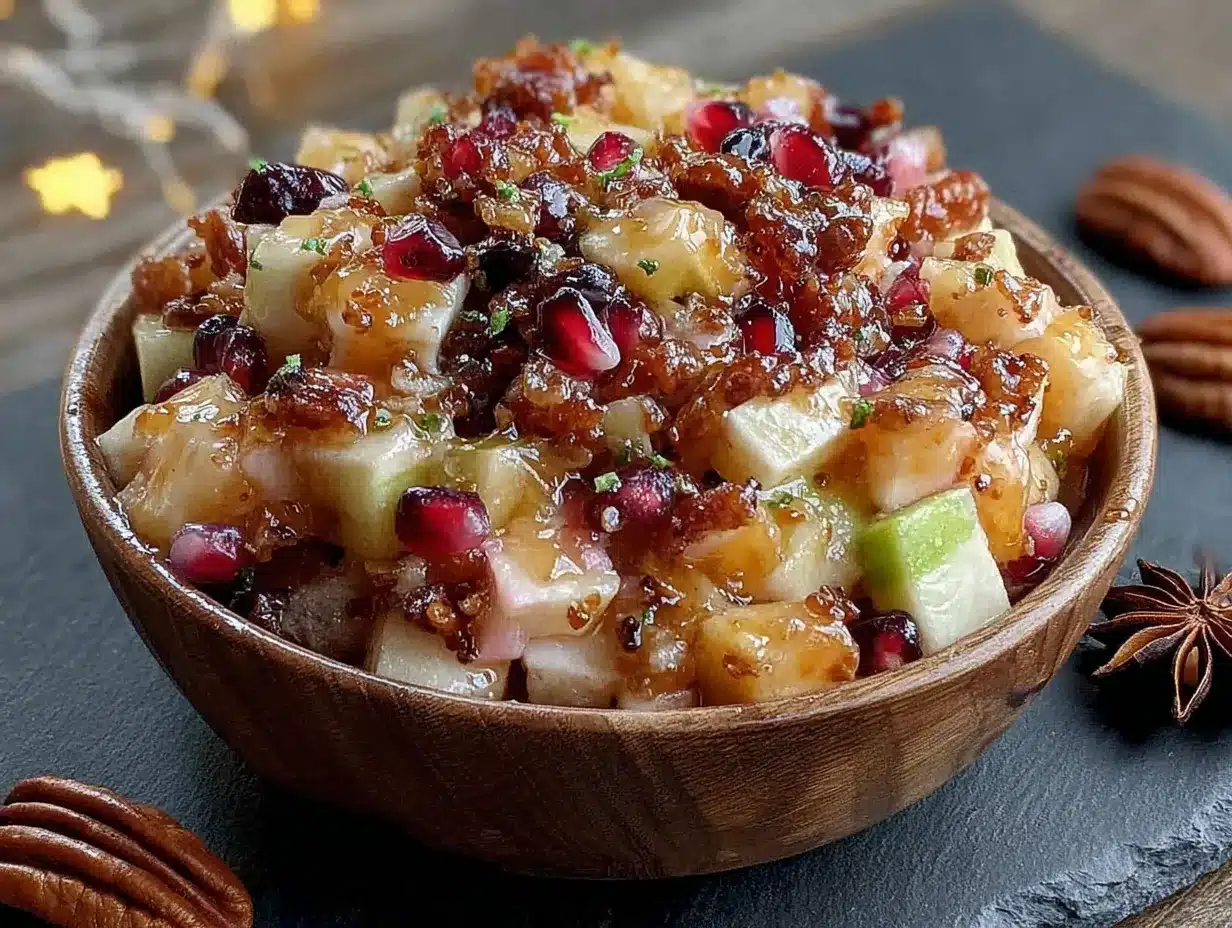
This salad comes together quickly, so I like to have everything prepped and ready before I start. It makes the whole process feel smooth and relaxed, not rushed.
- Prepare the fruit: Start by washing all the fruit thoroughly. Core and dice the apples into bite-sized pieces, about 1/2-inch cubes. I leave the skin on because it adds color and fiber, but you can peel them if you prefer. Do the same with the pears. Place the diced apples and pears in the large mixing bowl and immediately toss them with 1 tablespoon of fresh lime juice. This prevents browning and adds a little tang. This step is non-negotiable, trust me—I’ve forgotten it before, and the fruit turned brown and sad within an hour.
- Prep the remaining fruit: Halve the grapes lengthwise. If you’re using a whole pomegranate, score the skin around the middle, then break it apart over a bowl of water. The arils sink, and the pith floats, making it easy to separate. Drain the arils and add them to the bowl. Add the dried cranberries and the halved grapes. If you’re adding the pecans, toast them in a dry skillet over medium heat for 3-4 minutes until fragrant, then let them cool before adding. Toasted nuts make a huge difference—raw pecans are fine, but toasted ones are incredible.
- Make the dressing: In a small bowl or mason jar, combine the honey, 2 tablespoons fresh lime juice, lime zest, ground ginger, ground cinnamon, and a pinch of sea salt. Whisk vigorously until the honey is fully incorporated and the dressing is smooth. If you’re using a jar, just screw the lid on tight and shake it like you mean it. Taste the dressing and adjust if needed—more honey for sweetness, more lime for tang. It should be balanced, not cloying.
- Combine and toss: Pour the dressing over the fruit mixture. Use a wooden spoon or rubber spatula to gently fold everything together, making sure every piece of fruit gets a little coating. Be gentle here—you don’t want to break up the pomegranate arils or mush the pears. The dressing should cling to the fruit, not pool at the bottom of the bowl.
- Chill (optional but recommended): Cover the bowl with plastic wrap and refrigerate for at least 15-20 minutes before serving. This allows the flavors to meld together. The fruit will release a little juice, which mixes with the dressing and creates a light syrup. Don’t let it sit too long, though—more than 2 hours, and the fruit starts to get soft. I usually make it right before I need it.
- Garnish and serve: Just before serving, give the salad a gentle stir. If you reserved a few pomegranate arils and a sprinkle of toasted pecans, add them on top for a beautiful presentation. Serve chilled or at room temperature. The contrast of the cold fruit and the warm spices in the dressing is really lovely.
Sensory Cues: When you’re toasting the pecans, you’ll know they’re ready when the kitchen smells warm and nutty, and the nuts have darkened just a shade. The dressing should look like a golden, slightly opaque syrup. When you toss the salad, listen for the gentle crunch of the apples and the soft thud of the pears. The colors should be vibrant—deep reds, bright greens, and warm golds.
Cooking Tips & Techniques
I’ve made this salad more times than I can count, and I’ve learned a few things along the way. Some of these tips came from mistakes, and some came from happy accidents. Either way, they’ll help you get the best results.
Don’t overdress the salad. The dressing is meant to lightly coat the fruit, not drown it. Start with about three-quarters of the dressing, toss, and then add more if needed. I once dumped the whole batch in, and the salad was swimming in liquid. It was still tasty, but the fruit got soggy fast. Less is more here.
Cut the fruit uniformly. This isn’t just about looks, though that matters too. When the pieces are roughly the same size, they all get an even coating of dressing, and the texture is consistent in every bite. I aim for 1/2-inch cubes for the apples and pears, and I halve the grapes lengthwise so they’re roughly the same size as the other fruit.
Toast your nuts. I cannot stress this enough. Raw nuts are fine, but toasted nuts are a game-changer. The heat brings out their natural oils and deepens their flavor. Just watch them closely—they go from perfectly toasted to burnt in about 30 seconds. I learned this the hard way when I walked away to answer a text and came back to a smoky kitchen.
Use room temperature honey. If your honey is crystallized or thick, it won’t mix well with the lime juice. Microwave it for 10-15 seconds, or place the jar in a bowl of warm water for a few minutes. It’ll whisk right in. Cold honey just clumps up and refuses to cooperate.
Make it ahead (with a caveat). You can prep the fruit and the dressing separately up to a day in advance. Keep the fruit in an airtight container in the fridge, and store the dressing in a jar at room temperature. Combine them no more than an hour before serving. I’ve tried making the whole salad the night before, and the fruit gets weepy and loses its crunch. Not ideal.
Balance your flavors. The dressing should be sweet, tart, and just a little warm from the spices. Taste it before you add it to the fruit. If it’s too sweet, add a squeeze more lime. If it’s too tart, add a drizzle more honey. Your taste buds are the best guide.
Variations & Adaptations
One of the best things about this salad is how easy it is to adapt. I’ve tried several variations over the years, and each one feels like a new discovery.
Citrus Burst Variation: Add segments of 1-2 mandarin oranges or a blood orange to the mix. The citrus adds a juicy brightness that pairs beautifully with the honey lime dressing. I tried this one Thanksgiving when I had extra oranges lying around, and it was a hit. Just make sure to remove all the white pith, or it’ll be bitter.
Warm Spiced Version: For a cozier take, warm the dressing slightly before tossing it with the fruit. Add a pinch of nutmeg and a dash of allspice to the dressing along with the ginger and cinnamon. The warm dressing softens the fruit just a little, making it feel more like a compote. I serve this version over Greek yogurt or vanilla ice cream for a quick dessert.
Herb-Infused Twist: Add a tablespoon of finely chopped fresh mint or basil to the salad. The herbs add a fresh, unexpected note that cuts through the sweetness. I was skeptical the first time I tried this, but it works surprisingly well. Mint is my go-to, but basil gives it a slightly peppery kick that’s lovely with the pears.
Low-Sugar Adaptation: Use a sugar-free honey substitute or monk fruit syrup in the dressing. Reduce the dried cranberries to 1/4 cup, or use unsweetened dried cranberries. You can also swap the grapes for diced green apple, which is less sweet. This version is just as satisfying, and it’s great for anyone watching their sugar intake.
Protein-Packed Version: Add 1/2 cup of crumbled feta or goat cheese and a handful of toasted pumpkin seeds. The salty, tangy cheese balances the sweet fruit perfectly, and the seeds add extra crunch. This turns the salad into a more substantial side dish or even a light lunch. I’ve made this for brunch, and it’s always the first bowl to empty.
Serving & Storage Suggestions
This salad is versatile enough to fit into almost any meal. Here’s how I like to serve and store it.
Serving Temperature: I prefer this salad chilled, but it’s also lovely at room temperature. If you’re serving it at a gathering, take it out of the fridge about 15 minutes before serving to take the chill off. The flavors are more pronounced when it’s not ice-cold.
Presentation Ideas: Serve the salad in a beautiful glass bowl so the colors can shine through. Garnish with a few extra pomegranate arils, a sprinkle of toasted pecans, and a thin slice of lime on the side. For individual servings, use small mason jars or dessert cups—they look adorable and make portion control easy.
Complementary Dishes: This salad pairs beautifully with roasted meats like turkey, chicken, or pork. It’s also fantastic alongside savory dishes like creamy butternut squash soup or a classic herb stuffing. For a lighter meal, serve it with a simple green salad and some crusty bread. It also works as a topping for yogurt, oatmeal, or even pancakes.
Beverage Pairings: A crisp white wine like Sauvignon Blanc or a dry Riesling complements the citrus and honey notes. For a non-alcoholic option, try sparkling water with a splash of pomegranate juice and a lime wedge. It’s refreshing and festive.
Storage Instructions: Store any leftovers in an airtight container in the refrigerator for up to 2 days. The fruit will soften and release more juice over time, so the texture won’t be as crisp as when it’s fresh. Give it a gentle stir before serving. I don’t recommend freezing this salad—the fruit becomes mushy and unappealing when thawed.
Reheating: This salad is meant to be served cold or at room temperature, so no reheating is needed. If you’ve made the warm spiced version, you can gently warm it in a saucepan over low heat for a few minutes, but it’s best enjoyed fresh.
Flavor Development: The flavors actually get better after about an hour in the fridge. The fruit absorbs the dressing, and the spices meld together. But don’t let it sit overnight—the fruit will start to break down, and the salad will lose its vibrant texture. I’ve found that 30 minutes to 1 hour is the sweet spot.
Nutritional Information & Benefits
This salad is as good for you as it is delicious. Here’s a rough breakdown per serving (based on 6 servings):
| Nutrient | Amount per Serving |
|---|---|
| Calories | 180-200 |
| Total Fat | 5g |
| Saturated Fat | 0.5g |
| Carbohydrates | 35g |
| Fiber | 5g |
| Sugar | 25g (naturally occurring) |
| Protein | 2g |
| Vitamin C | 20% DV |
| Potassium | 250mg |
Health Benefits: Apples and pears are packed with fiber, which supports digestive health and helps you feel full longer. Pomegranate arils are rich in antioxidants, particularly punicalagins, which are known for their anti-inflammatory properties. The honey in the dressing provides natural energy and contains trace amounts of beneficial enzymes. The lime juice adds a healthy dose of vitamin C, which supports your immune system—especially important during the autumn and winter months.
Dietary Considerations: This recipe is naturally gluten-free, dairy-free (if you skip the cheese variation), and vegetarian. It can easily be made vegan by substituting maple syrup for honey. It’s also low in sodium and contains no added refined sugars—the sweetness comes entirely from the fruit and honey.
Potential Allergens: The pecans are a tree nut, so omit them if you have a nut allergy. The salad is otherwise free of common allergens like dairy, eggs, soy, and wheat.
Personal Wellness Perspective: I love that this salad feels indulgent without being heavy. It’s the kind of dish that satisfies my sweet tooth while also giving me a boost of nutrients. I often make it when I’m feeling a little run down or when I need something bright and fresh in the middle of a busy week. It’s a reminder that healthy food can be genuinely joyful.
Conclusion
This Fresh Autumn Fruit Salad with Honey Lime Dressing is more than just a recipe—it’s a celebration of the season. It’s the kind of dish that captures the essence of autumn in every bite, from the crisp apples to the juicy pears to the warm, fragrant dressing. It’s simple enough for a weekday snack and impressive enough for a holiday table.
I hope you’ll make this salad your own. Add your favorite fruits, adjust the spices to your taste, or try one of the variations I’ve shared. The beauty of this recipe is that it’s a starting point, not a rigid set of rules. Cooking should be about joy and creativity, not stress and perfection.
I’d love to hear how it turns out for you. Did you try a different fruit combination? Did you add a secret ingredient? Drop a comment below and let me know. And if you share a photo on Pinterest or Instagram, tag me—I always love seeing your creations. Until next time, happy cooking, and may your kitchen always smell like honey and citrus.
Frequently Asked Questions
Can I make this fruit salad the night before?
You can prep the fruit and dressing separately the night before, but I don’t recommend combining them until about an hour before serving. The fruit will release moisture and become soft if it sits in the dressing overnight. Store the chopped fruit in an airtight container in the fridge and the dressing in a jar at room temperature.
What’s the best way to cut a pomegranate without making a mess?
Score the pomegranate around the middle, then break it apart over a bowl of cold water. The arils sink to the bottom, and the white pith floats to the top. Skim off the pith, drain the arils, and you’re done. It’s much less messy than trying to pick the seeds out by hand.
Can I use frozen fruit for this salad?
I don’t recommend it. Frozen fruit releases a lot of water when it thaws, which will make the salad watery and the fruit mushy. Fresh fruit is really the way to go here. If you’re in a pinch, you can use frozen pomegranate arils, but let them thaw completely and drain them first.
How do I keep the apples and pears from turning brown?
Toss them immediately with fresh lime juice after dicing. The acid in the lime juice slows down the oxidation process. You can also use lemon juice in a pinch. Just make sure every piece gets a light coating. I’ve found that this method keeps the fruit looking fresh for several hours.
Is this salad suitable for a diabetic-friendly diet?
With some modifications, yes. Use a sugar-free honey substitute or monk fruit syrup in the dressing, and reduce the dried cranberries to 1/4 cup or use unsweetened ones. You can also swap the grapes for a lower-sugar fruit like diced green apple. The natural sugars in the fruit are balanced by the fiber, which helps slow down sugar absorption. As always, consult with your healthcare provider for personalized advice.
Pin This Recipe!
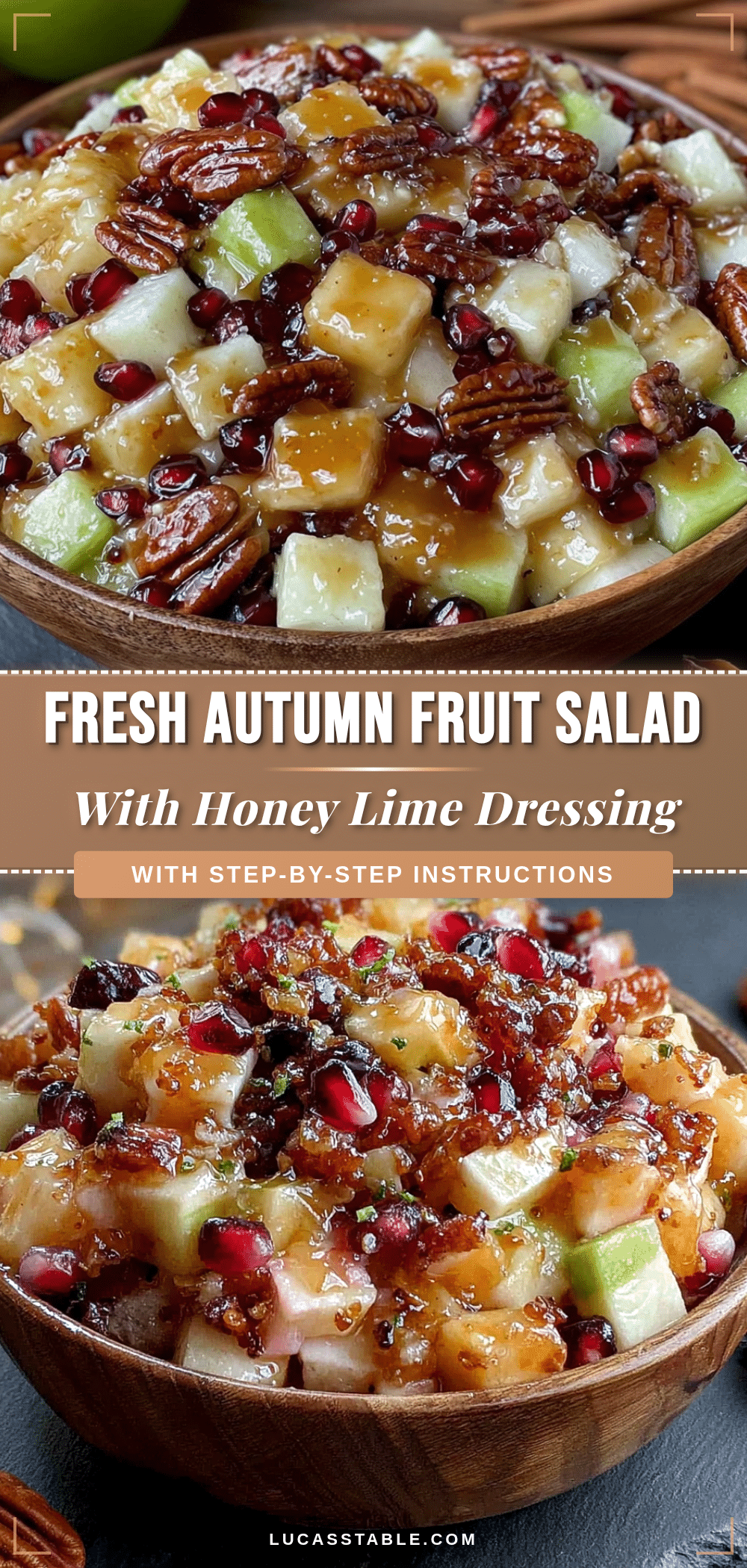
Easy Autumn Fruit Salad with Honey Lime Dressing
A simple yet elegant autumn fruit salad featuring crisp apples, juicy pears, and pomegranate arils, all tossed in a light honey lime dressing with warm spices. Perfect for fall gatherings or a quick, healthy side dish.
- Prep Time: 15 minutes
- Cook Time: 0 minutes
- Total Time: 15 minutes
- Yield: 6 servings 1x
- Category: Side Dish
- Cuisine: American
Ingredients
- 2 medium apples, cored and diced (Honeycrisp or Fuji recommended)
- 2 medium Bosc pears, cored and diced
- 1 cup pomegranate arils (from about 1 large pomegranate)
- 1 cup red seedless grapes, halved
- 1/2 cup dried cranberries (unsweetened if preferred)
- 1/4 cup chopped pecans, toasted (optional)
- 1 tablespoon fresh lime juice (for tossing fruit)
- 3 tablespoons honey (mild variety like clover or orange blossom)
- 2 tablespoons fresh lime juice (for dressing)
- 1 teaspoon lime zest
- 1/2 teaspoon ground ginger
- 1/4 teaspoon ground cinnamon
- Pinch of sea salt
Instructions
- Wash all fruit thoroughly. Core and dice apples into 1/2-inch cubes (skin on or off as desired). Do the same with pears. Place diced apples and pears in a large mixing bowl and immediately toss with 1 tablespoon fresh lime juice to prevent browning.
- Halve grapes lengthwise. If using a whole pomegranate, score the skin around the middle, break apart over a bowl of water, separate arils (they sink, pith floats), and drain. Add arils, dried cranberries, and halved grapes to the bowl. If using pecans, toast in a dry skillet over medium heat for 3-4 minutes until fragrant, then let cool before adding.
- In a small bowl or mason jar, combine honey, 2 tablespoons fresh lime juice, lime zest, ground ginger, ground cinnamon, and a pinch of sea salt. Whisk or shake until honey is fully incorporated and dressing is smooth. Taste and adjust sweetness or tang as desired.
- Pour dressing over fruit mixture. Gently fold with a wooden spoon or rubber spatula until all fruit is evenly coated. Be careful not to break pomegranate arils or mush pears.
- Cover bowl with plastic wrap and refrigerate for at least 15-20 minutes before serving to allow flavors to meld. Do not let sit longer than 2 hours to maintain texture.
- Just before serving, give salad a gentle stir. Garnish with reserved pomegranate arils and toasted pecans if desired. Serve chilled or at room temperature.
Notes
For a vegan version, substitute honey with maple syrup or agave nectar. To keep fruit from browning, toss apples and pears immediately with lime juice. Toast nuts for best flavor. Dressing can be made ahead and stored at room temperature; combine with fruit no more than an hour before serving. For a lower-sugar option, use sugar-free honey substitute and reduce dried cranberries to 1/4 cup.
Nutrition
- Serving Size: 1 serving (about 1 c
- Calories: 190
- Sugar: 25
- Sodium: 50
- Fat: 5
- Saturated Fat: 0.5
- Carbohydrates: 35
- Fiber: 5
- Protein: 2
Keywords: autumn fruit salad, honey lime dressing, fall salad, fruit salad recipe, easy fruit salad, Thanksgiving side dish, healthy fruit salad