The farmer’s market vendor watched me pawing through her pile of butternut squash, probably looking as lost as I felt. It was late October, and I had this grand vision of making soup from scratch, but honestly, I had no idea which squash to pick. She didn’t laugh at me, though. She just reached over, tapped the fattest one with her fingernail, and said, “That one. It’s been sitting in the sun the longest. It’ll be the sweetest.”
I took it home, along with a bundle of sage she practically forced into my hands. “Don’t you dare use dried,” she called after me. I didn’t even know her name, but that conversation changed how I approach fall cooking. That first batch of soup was a revelation—the squash was so sweet it barely needed seasoning, and the sage, well, it just made everything feel like a warm blanket in a bowl. I’ve made it every autumn since, tweaking and testing until I got it just right.
This cozy roasted butternut squash soup with sage is the result of that chance encounter. It’s not complicated, and it doesn’t need to be. The roasting does most of the heavy lifting, bringing out a deep, caramelized sweetness that no stovetop method can match. Maybe you’ve been there, standing in a grocery aisle, wondering if the soup you’re about to make will actually taste like anything. I promise you, this one delivers. It’s become my go-to for chilly evenings, and I think it’s about to become yours, too.
Why You’ll Love This Recipe
Let me tell you why this soup has earned a permanent spot in my fall rotation. It’s not just another squash soup recipe—it’s the one I keep coming back to, and here’s why you will too.
- Quick & Easy: From start to finish, you’re looking at about 45 minutes of mostly hands-off time. The oven does the work while you relax.
- Simple Ingredients: You’ll find everything at a regular grocery store. No hunting for exotic spices or hard-to-find produce.
- Perfect for Cozy Nights: This soup was made for those evenings when you just want to curl up with something warm and satisfying.
- Crowd-Pleaser: I’ve served it to everyone from picky kids to dinner guests, and it always gets the same reaction—silence, followed by a request for seconds.
- Unbelievably Delicious: The combination of roasted squash and fragrant sage is pure comfort. It’s the kind of soup that makes you close your eyes after the first spoonful.
What sets this apart from other recipes is the roasting technique. Instead of boiling the squash, which can make it watery and bland, we roast it until it’s tender and caramelized. This concentrates the flavor and gives the soup a natural sweetness that doesn’t need much help. I also add a touch of coconut milk at the end for creaminess without the dairy. It’s comfort food reimagined—healthier, faster, but with the same soul-soothing satisfaction. Perfect for impressing guests without stress, or turning a simple Tuesday night into something memorable.
What Ingredients You Will Need
This recipe uses simple, wholesome ingredients to deliver bold flavor and satisfying texture without the fuss. Most of these are pantry staples or easy fall finds.
- 1 medium butternut squash (about 2-3 pounds), peeled, seeded, and cut into 1-inch cubes (look for one that feels heavy for its size)
- 2 tablespoons olive oil, for roasting (I prefer a good quality extra-virgin for better flavor)
- 1 medium yellow onion, chopped
- 3 cloves garlic, minced (fresh is best here, not the jarred stuff)
- 1 tablespoon fresh sage leaves, finely chopped (plus extra for garnish—don’t skip this)
- 4 cups vegetable broth, low-sodium (I like Imagine Foods for its clean taste)
- 1/2 cup coconut milk, full-fat (adds creaminess without dairy; use canned for best results)
- 1/2 teaspoon salt, plus more to taste
- 1/4 teaspoon black pepper, freshly ground
- Pinch of nutmeg, freshly grated if possible (it makes a difference)
- Optional: 1 tablespoon maple syrup, if your squash isn’t sweet enough (I rarely need it, but it’s good to have on hand)
For the sage, fresh is non-negotiable here. Dried sage just doesn’t have the same aromatic punch, and it can turn bitter. If you can’t find fresh, you could try a pinch of dried thyme instead, but honestly, the sage is what makes this soup sing. I also recommend using full-fat coconut milk for the creamiest texture—light coconut milk will work, but the soup won’t be as velvety.
Equipment Needed
You don’t need a fancy kitchen to make this soup. Here’s what you’ll need:
- Baking sheet, rimmed (for roasting the squash without making a mess)
- Parchment paper (optional, but makes cleanup a breeze)
- Large pot or Dutch oven (I use my Le Creuset, but any heavy-bottomed pot works)
- Immersion blender (my preferred tool for pureeing soup—less cleanup than a countertop blender)
- Vegetable peeler (a good one makes peeling squash much easier)
- Sharp chef’s knife (for cutting the squash safely)
- Cutting board
If you don’t have an immersion blender, a regular blender works too. Just let the soup cool slightly before blending, and work in batches to avoid hot soup exploding everywhere. I learned that lesson the hard way, let me tell you.
Preparation Method

- Preheat your oven to 400°F (200°C). While it’s heating up, prepare the squash. Peel it with a vegetable peeler, cut it in half lengthwise, and scoop out the seeds with a spoon. Then cut it into 1-inch cubes. This is the most time-consuming part, but it goes faster if you have a sharp knife.
- Toss the squash with 1 tablespoon of olive oil and a pinch of salt. Spread it in a single layer on a parchment-lined baking sheet. Roast for 25-30 minutes, flipping halfway through, until the squash is tender and the edges are starting to brown. The caramelization is what gives the soup its deep flavor, so don’t rush this step.
- While the squash roasts, heat the remaining 1 tablespoon of olive oil in a large pot over medium heat. Add the chopped onion and cook for 5-6 minutes, until it’s soft and translucent. Stir occasionally so it doesn’t burn.
- Add the minced garlic and chopped sage to the pot. Cook for another minute, until the garlic is fragrant. The smell at this point is incredible—earthy, warm, and inviting.
- Pour in the vegetable broth and bring it to a gentle simmer. Let it bubble away while the squash finishes roasting.
- Once the squash is done, add it to the pot with the broth mixture. Stir everything together, then add the salt, pepper, and a pinch of nutmeg. Let it simmer for 5 minutes so the flavors meld.
- Remove the pot from the heat. Using an immersion blender, puree the soup until it’s completely smooth. If you’re using a countertop blender, let the soup cool for 10 minutes first, then blend in batches. Be careful—hot liquid expands in a blender, so only fill it halfway.
- Stir in the coconut milk. Taste and adjust seasoning. If the soup tastes flat, add a pinch more salt. If it’s not sweet enough, add the maple syrup. The coconut milk adds a lovely richness without overpowering the squash.
- Ladle the soup into bowls. Garnish with a drizzle of coconut milk, a few fresh sage leaves, and a crack of black pepper. Serve hot.
Pro tip: If your soup is too thick, thin it with a little extra broth or water. If it’s too thin, let it simmer uncovered for a few minutes to reduce.
Cooking Tips & Techniques
I’ve made this soup dozens of times, and I’ve learned a few things along the way. Here are my best tips to ensure success:
- Don’t skip the roasting step. I know it’s tempting to just boil the squash to save time, but roasting concentrates the flavor and adds a sweetness you just can’t get any other way. Trust me on this one.
- Cut the squash into even cubes. This ensures they cook at the same rate. If some pieces are much smaller than others, they’ll burn before the larger ones are tender.
- Use fresh sage. I’ve tried this recipe with dried sage, and it’s just not the same. Fresh sage has a bright, almost citrusy note that dried sage lacks. It’s worth the extra effort to find it.
- Season gradually. Start with less salt than you think you need, then adjust at the end. Different broths have different sodium levels, and you can always add more salt, but you can’t take it out.
- Let the soup rest before serving. The flavors deepen as it sits. If you can, make it an hour ahead and reheat it just before serving. It’s even better the next day.
- Don’t burn the garlic. Garlic goes from fragrant to bitter very quickly. Keep an eye on it when you add it to the pot, and stir constantly for that first minute.
One time, I was in a hurry and forgot to flip the squash halfway through roasting. Half of it came out perfectly caramelized, and the other half was pale and undercooked. The soup was still good, but it lacked that deep, roasted flavor. So set a timer—it makes a difference.
Variations & Adaptations
This recipe is flexible, so feel free to make it your own. Here are some variations I’ve tried and loved:
- Make it vegan. It already is! The coconut milk keeps it creamy without any dairy.
- Add a kick of heat. Stir in a pinch of red pepper flakes or a small minced jalapeño when you cook the onion. It adds a subtle warmth that pairs beautifully with the sage.
- Swap the sage for rosemary. If you can’t find fresh sage, try fresh rosemary instead. Use about 1 teaspoon of finely chopped rosemary, and add it with the garlic. It gives the soup a more piney, savory flavor.
- Try a different squash. Kabocha or acorn squash work well here. Kabocha is naturally sweeter, so you might not need the maple syrup. Acorn squash is a bit less sweet, so taste and adjust.
- Make it a meal. Add a can of drained and rinsed chickpeas after blending for extra protein and texture. Or top the soup with crispy fried sage leaves and toasted pumpkin seeds for crunch.
- Use an air fryer for the squash. If you don’t want to heat up the oven, roast the squash in an air fryer at 375°F (190°C) for 15-20 minutes, shaking the basket halfway through. It works surprisingly well.
My personal favorite variation is adding a tablespoon of white miso paste at the end, just before the coconut milk. It adds an umami depth that makes the soup even more satisfying. I stumbled on this by accident when I was out of salt, and it’s been my secret weapon ever since.
Serving & Storage Suggestions
This soup is best served hot, with a drizzle of coconut milk and a few fresh sage leaves on top. For a heartier meal, serve it with crusty bread, a side salad, or even a grilled cheese sandwich. It’s also fantastic with a dollop of Greek yogurt or a sprinkle of toasted pumpkin seeds for crunch.
Storage: Let the soup cool completely, then transfer it to an airtight container. It will keep in the refrigerator for up to 5 days. The flavors actually improve after a day or two, so don’t be afraid to make it ahead.
Freezing: This soup freezes beautifully. Pour it into freezer-safe containers or bags, leaving a little room for expansion. It will keep for up to 3 months. Thaw it overnight in the refrigerator before reheating.
Reheating: Warm the soup gently on the stovetop over medium-low heat, stirring occasionally. If it’s too thick after freezing, add a splash of broth or water to thin it out. You can also reheat individual portions in the microwave—just cover the bowl and heat in 30-second bursts, stirring between each.
One thing I’ve noticed is that the soup thickens as it sits, especially after being refrigerated. That’s normal—just add a little liquid when you reheat it. And don’t worry if the coconut milk separates slightly; a good stir will bring it back together.
Nutritional Information & Benefits
This soup is as good for you as it is delicious. Here’s an approximate nutritional breakdown per serving (based on 4 servings):
| Nutrient | Amount per Serving |
|---|---|
| Calories | 220 |
| Total Fat | 12g |
| Saturated Fat | 4g |
| Carbohydrates | 28g |
| Fiber | 6g |
| Sugar | 8g |
| Protein | 4g |
| Sodium | 450mg |
Butternut squash is packed with vitamin A, vitamin C, and fiber, making it a great choice for immune support and digestion. The sage adds antioxidants, and the coconut milk provides healthy fats that help your body absorb the fat-soluble vitamins. This soup is naturally gluten-free, dairy-free, and vegan, so it works for a variety of dietary needs. Just be aware that the sodium content can vary depending on your broth—use low-sodium broth to keep it in check.
Conclusion
This cozy roasted butternut squash soup with sage is the kind of recipe that feels like a hug in a bowl. It’s simple enough for a weeknight, but impressive enough for company. The roasting brings out the squash’s natural sweetness, the sage adds an earthy warmth, and the coconut milk makes it luxuriously creamy without any dairy.
I love this recipe because it reminds me of that chance conversation at the farmer’s market—how a stranger’s kindness led to a dish I’ve made year after year. It’s proof that the best recipes often come from the simplest moments. So go ahead, make it your own. Swap in rosemary if that’s what you have. Add a pinch of cayenne if you like heat. The beauty of this soup is that it’s forgiving and adaptable.
I’d love to hear how it turns out for you. Did you try a variation? Did it become a fall favorite in your house? Drop a comment below and share your experience. And if you loved it, don’t forget to share this recipe with a friend who needs a little warmth in their life. Happy cooking!
Frequently Asked Questions
Can I use frozen butternut squash for this soup?
Yes, you can use frozen butternut squash, but you’ll need to adjust the roasting time. Frozen squash releases more water, so it won’t caramelize as well. Roast it at 425°F (220°C) for about 35-40 minutes, and drain off any excess liquid before adding it to the pot. The texture will still be good, but the flavor won’t be as deep.
How do I make this soup without an immersion blender?
No problem! Use a regular countertop blender. Let the soup cool for 10-15 minutes first to prevent splattering. Then blend in batches, filling the blender no more than halfway. Hold the lid down with a kitchen towel while blending to be safe. You can also use a food processor, but you’ll need to work in smaller batches.
Can I substitute the coconut milk with something else?
Absolutely. For a dairy version, use heavy cream or half-and-half. For a lighter option, try plain unsweetened almond milk or oat milk. Just keep in mind that these alternatives won’t be as creamy. If you’re avoiding coconut, cashew cream is a great substitute—just soak 1/4 cup of cashews in hot water for 15 minutes, then blend with a little water until smooth.
How do I know when the butternut squash is fully roasted?
The squash is done when it’s fork-tender and the edges are golden brown. You should be able to pierce a cube easily with a fork. If it’s still firm in the center, give it another 5-10 minutes. The caramelized edges are a good sign—they add a ton of flavor to the soup.
Can I make this soup ahead of time for a party?
Yes, and I actually recommend it! This soup tastes even better the next day after the flavors have melded. Make it up to two days in advance, store it in the refrigerator, and reheat it gently on the stovetop before serving. Just add a splash of broth or water if it’s too thick. It’s a great stress-free option for entertaining.
Pin This Recipe!
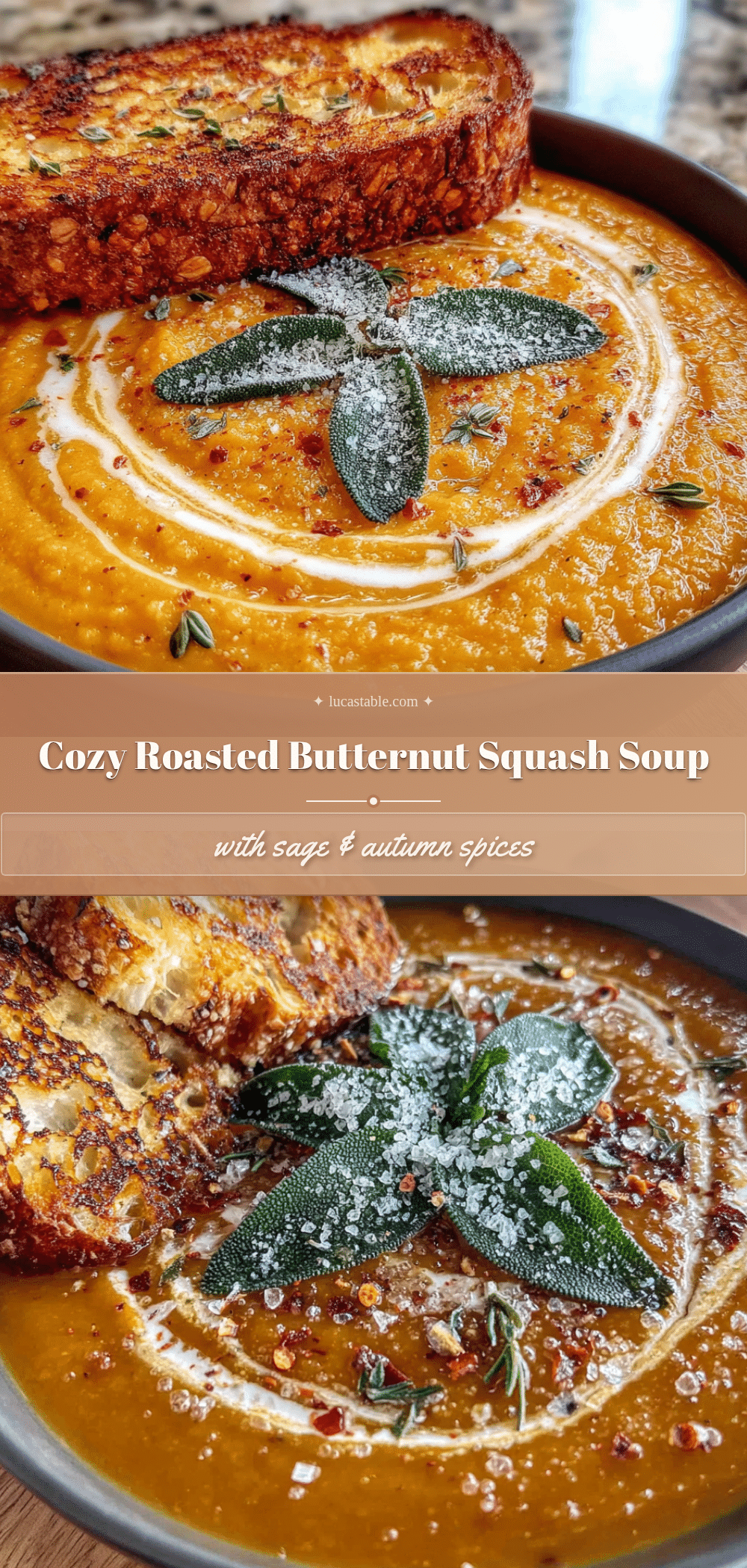
Cozy Roasted Butternut Squash Soup With Sage Recipe

This cozy roasted butternut squash soup with sage is the result of a chance encounter at a farmer’s market. It’s not complicated, and it doesn’t need to be. The roasting does most of the heavy lifting, bringing out a deep, caramelized sweetness that no stovetop method can match.
- Prep Time: 15 minutes
- Cook Time: 30 minutes
- Total Time: 45 minutes
- Yield: 4 servings 1x
- Category: Soup
- Cuisine: American
Ingredients
- 1 medium butternut squash (about 2–3 pounds), peeled, seeded, and cut into 1-inch cubes
- 2 tablespoons olive oil
- 1 medium yellow onion, chopped
- 3 cloves garlic, minced
- 1 tablespoon fresh sage leaves, finely chopped (plus extra for garnish)
- 4 cups vegetable broth, low-sodium
- 1/2 cup coconut milk, full-fat
- 1/2 teaspoon salt, plus more to taste
- 1/4 teaspoon black pepper, freshly ground
- Pinch of nutmeg, freshly grated if possible
- Optional: 1 tablespoon maple syrup
Instructions
- Preheat your oven to 400°F (200°C). While it’s heating up, prepare the squash. Peel it with a vegetable peeler, cut it in half lengthwise, and scoop out the seeds with a spoon. Then cut it into 1-inch cubes.
- Toss the squash with 1 tablespoon of olive oil and a pinch of salt. Spread it in a single layer on a parchment-lined baking sheet. Roast for 25-30 minutes, flipping halfway through, until the squash is tender and the edges are starting to brown.
- While the squash roasts, heat the remaining 1 tablespoon of olive oil in a large pot over medium heat. Add the chopped onion and cook for 5-6 minutes, until it’s soft and translucent.
- Add the minced garlic and chopped sage to the pot. Cook for another minute, until the garlic is fragrant.
- Pour in the vegetable broth and bring it to a gentle simmer. Let it bubble away while the squash finishes roasting.
- Once the squash is done, add it to the pot with the broth mixture. Stir everything together, then add the salt, pepper, and a pinch of nutmeg. Let it simmer for 5 minutes so the flavors meld.
- Remove the pot from the heat. Using an immersion blender, puree the soup until it’s completely smooth. If using a countertop blender, let the soup cool for 10 minutes first, then blend in batches.
- Stir in the coconut milk. Taste and adjust seasoning. If the soup tastes flat, add a pinch more salt. If it’s not sweet enough, add the maple syrup.
- Ladle the soup into bowls. Garnish with a drizzle of coconut milk, a few fresh sage leaves, and a crack of black pepper. Serve hot.
Notes
Don’t skip the roasting step—it concentrates the flavor. Use fresh sage for the best aroma. Season gradually and adjust at the end. Let the soup rest before serving for deeper flavor. If the soup is too thick, thin with extra broth; if too thin, simmer uncovered to reduce.
Nutrition
- Serving Size: 1 serving (about 1.5
- Calories: 220
- Sugar: 8
- Sodium: 450
- Fat: 12
- Saturated Fat: 4
- Carbohydrates: 28
- Fiber: 6
- Protein: 4
Keywords: butternut squash soup, roasted butternut squash, sage, fall soup, vegan soup, gluten-free soup, dairy-free soup