I was wrestling a frozen lasagna into the grocery cart, already dreading the three-hour bake time, when the woman behind me in line—the one with the sensible shoes and a reusable bag full of kale—started talking about Thanksgiving. Not the usual “are you hosting this year” small talk, but a full-on, detailed description of how she cooks her turkey in under ninety minutes. I almost dropped the lasagna. She was a retired home economics teacher, and she looked at my frozen dinner with what I can only describe as polite pity. “Spatchcock it,” she said, like it was the most obvious thing in the world. “Butter under the skin. High heat. You’ll never go back.”
I nodded, mentally filing her advice under “things I’ll try when I have a free weekend,” and promptly forgot about it. That is, until the following Tuesday, when my in-laws announced they were coming for dinner on Saturday. Suddenly, that frozen lasagna felt less like a plan and more like a surrender. I remembered the kale lady. I remembered her confidence. And honestly, I was desperate enough to try anything.
That Saturday, I made my first spatchcock turkey. It was, without exaggeration, a revelation. The bird cooked evenly, the skin turned crackling-golden, and the whole thing was done before I even had a chance to stress about it. The gravy came together in the same pan, soaking up all those browned bits of butter and herbs. My father-in-law, a man of few compliments, asked for seconds. My mother-in-law asked for the recipe. And me? I sat there, a little stunned, realizing that the best turkey I’d ever made came from advice I got in the checkout line from a stranger who probably thought I needed help. She wasn’t wrong.
Why You’ll Love This Recipe
This isn’t just another roast turkey recipe. This is the one that changes how you think about cooking a big bird. Let me tell you why this Quick Herb-Butter Spatchcock Turkey with Pan Gravy is going to become your new go-to, whether it’s for a holiday or a random Tuesday craving.
- Fast and Foolproof: Spatchcocking (removing the backbone) lets the turkey lie flat, so it cooks in about half the time of a traditional roast. We’re talking roughly 80 minutes for a 12-pound bird. That’s faster than most hams.
- Incredibly Juicy Meat: The herb butter gets slathered both under the skin and all over the outside. This does two things: it keeps the breast meat from drying out (the biggest turkey tragedy) and it infuses every bite with garlic, rosemary, and thyme.
- No-Fuss Pan Gravy: While the turkey rests, you use the same pan—with all those caramelized drippings—to make a rich, savory gravy. No extra pots, no flour slurry lumps. It’s almost embarrassingly easy.
- Simple Ingredients: You probably already have butter, garlic, and dried herbs in your kitchen. No need for a specialty grocery run or obscure spices. This is about making something extraordinary from what’s on hand.
- Crowd-Pleasing Results: I’ve served this to picky eaters, serious foodies, and my own skeptical self. Everyone, and I mean everyone, raves about the crispy skin and the moist meat. It’s the kind of recipe that makes you look like you spent all day in the kitchen, when really, you had time to watch a movie.
Honestly, what makes this recipe different is the sheer efficiency of it. You’re not tending to a bird for hours, basting and worrying. You’re getting a stunning, delicious centerpiece with a fraction of the effort. It’s the recipe that lets you actually enjoy the meal you’re cooking.
What Ingredients You Will Need
This recipe relies on a handful of high-impact ingredients to build deep, savory flavor without a lot of fuss. Here’s what you’ll need and why each one matters.
- 1 whole turkey (10-14 pounds), thawed if frozen: Aim for a bird in this range. A 12-pounder is the sweet spot—big enough to feed a crowd, but small enough to cook quickly. Look for a turkey that hasn’t been brined or injected with a solution, as that can make the skin soggy. If you can, ask your butcher for a natural, air-chilled bird. The flavor difference is noticeable.
- 1/2 cup (1 stick) unsalted butter, softened: This is the vehicle for all that flavor. Softened butter spreads easily under the skin, creating a barrier that keeps the breast meat moist. I use unsalted so I can control the salt level, but if you only have salted, just back off on the added salt a bit.
- 4 cloves garlic, minced: Fresh garlic is non-negotiable here. The jarred stuff won’t give you the same punch. It mellows as it roasts, leaving behind a sweet, savory depth that is the backbone of the herb butter.
- 2 tablespoons fresh rosemary, finely chopped: Rosemary is bold and piney, and it stands up beautifully to the richness of the turkey. If you only have dried, use 2 teaspoons, but fresh really does make a difference in the butter.
- 2 tablespoons fresh thyme leaves: Thyme is more subtle than rosemary, with a slightly lemony, earthy note. It blends perfectly with the garlic and butter. Again, use 2 teaspoons dried if that’s what you have.
- 1 tablespoon fresh sage, finely chopped (optional but recommended): Sage adds that classic poultry seasoning vibe. It’s earthy and a little peppery. If you can find it, throw it in. If not, the recipe still works beautifully.
- 2 teaspoons kosher salt: Don’t skimp on the salt. It’s not just for flavor; it helps the skin crisp up. Kosher salt is easier to control than fine table salt, and it dissolves more evenly.
- 1 teaspoon black pepper, freshly ground: Freshly ground pepper has a floral heat that pre-ground stuff just can’t match. It adds a little kick that balances the richness of the butter and drippings.
- 1 large yellow onion, quartered: The onion goes into the cavity of the turkey (and the pan) to add sweetness and aroma to the drippings. It’s mostly for the gravy, but it also steams the inside of the bird slightly, keeping it extra moist.
- 2 cups low-sodium chicken or turkey broth: This is the base for your pan gravy. Low-sodium is key because you’ll be reducing it, and you don’t want it to become salty. Use a good-quality broth—it makes a real difference in the final flavor.
- 3 tablespoons all-purpose flour: This thickens the gravy. You can substitute a gluten-free flour blend if needed, but all-purpose gives the smoothest, most classic result.
Equipment Needed
You don’t need a ton of fancy gear for this recipe, but a few specific tools make the job much easier. Here’s what I use and what you can substitute.
- Sharp kitchen shears or poultry shears: These are your best friend for spatchcocking. A good pair of shears makes cutting out the backbone a breeze. If you don’t have shears, a sharp chef’s knife will work, but it’s a bit more awkward. I’ve used a cheap pair of kitchen scissors for years and they do the job just fine.
- Large, sturdy baking sheet or roasting pan: You need a rimmed pan to catch all the drippings. A half-sheet pan (18×13 inches) is perfect. Avoid using a pan with high sides, as it can trap steam and prevent the skin from crisping. A shallow roasting pan with a rack is also great, but a simple sheet pan works.
- Wire rack (optional but helpful): Placing the turkey on a wire rack set inside the pan allows hot air to circulate underneath, ensuring the bottom of the bird gets crispy too. If you don’t have one, you can skip it—just know the bottom skin might be a little less crisp.
- Instant-read thermometer: This is non-negotiable for food safety and perfect doneness. You need to know the thickest part of the breast hits 160°F and the thigh hits 175°F. A digital thermometer is fast and accurate. I have a cheap one that’s never let me down.
- Small bowl for the herb butter: Just something to mix the butter, garlic, and herbs together. A cereal bowl works perfectly.
- Whisk: For making the gravy on the stovetop. A flat whisk is great for getting into the corners of the pan, but a regular balloon whisk is fine.
Preparation Method
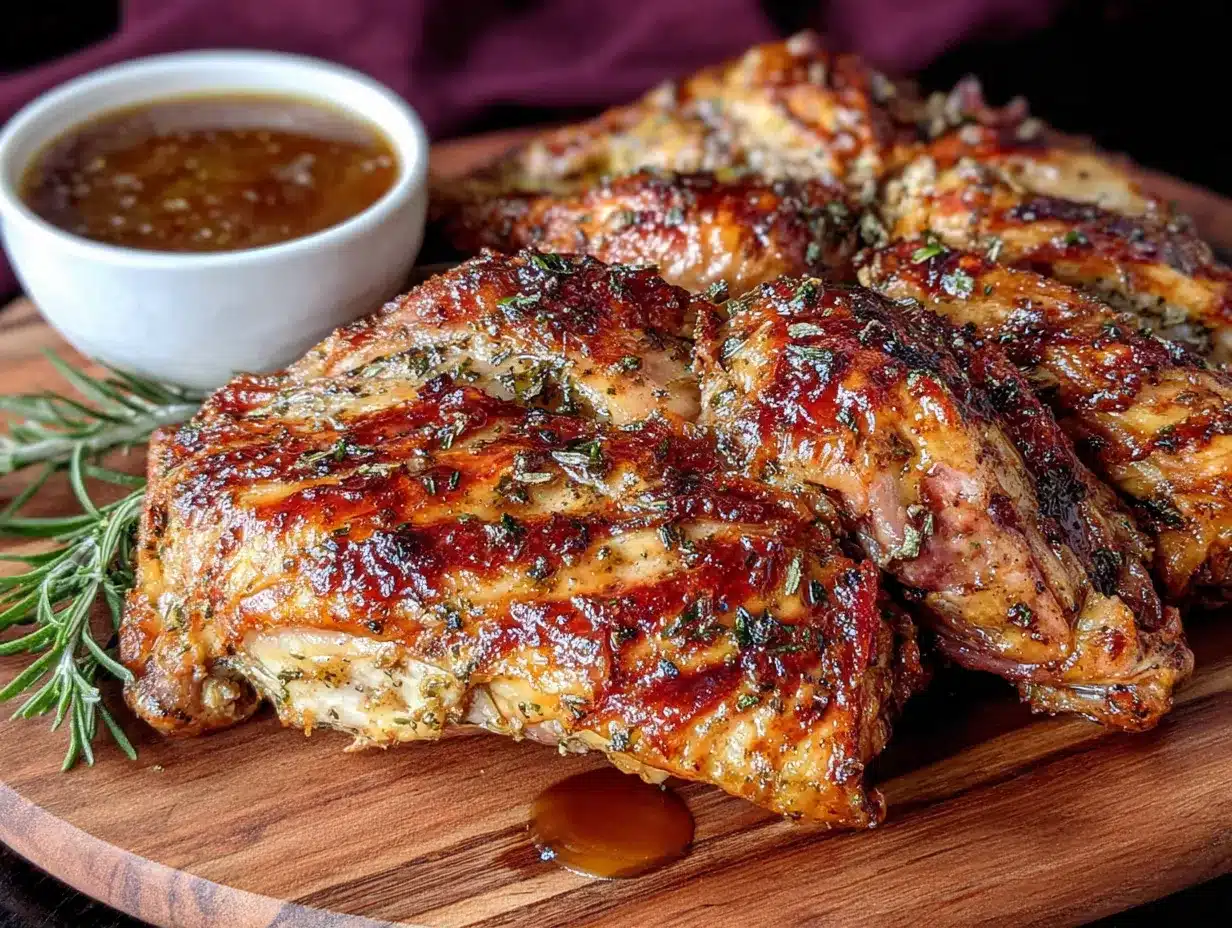
Alright, let’s get cooking. This method is broken down into clear steps, with a few notes from my own kitchen disasters so you can avoid them.
- Prepare the turkey: First, make sure your turkey is fully thawed. A partially frozen bird will cook unevenly. Remove the giblets and neck from the cavity (save them for stock if you’re ambitious). Pat the turkey completely dry with paper towels—inside and out. This is crucial for crispy skin. Let it sit on the counter for about 30 minutes to take the chill off. It helps it cook more evenly.
- Make the herb butter: In a small bowl, combine the softened butter, minced garlic, chopped rosemary, thyme, sage (if using), salt, and pepper. Mix it all together with a fork until it’s well combined. It should look like a fragrant, green-flecked paste. Taste a tiny bit—it should be savory and delicious. Set aside.
- Spatchcock the turkey: Place the turkey breast-side down on your cutting board. Using your sharp kitchen shears, cut along one side of the backbone, from the tail to the neck. Repeat on the other side to completely remove the backbone. You can save the backbone for stock. Flip the turkey over and press down firmly on the breastbone with the heel of your hand until you hear a crack. The turkey should now lie flat. Don’t be shy about the pressing—it needs to be flat to cook evenly.
- Apply the herb butter: This is the most important step. Gently loosen the skin over the turkey breast with your fingers. Be careful not to tear it. Slide about half of the herb butter under the skin, spreading it evenly over each breast half. Rub the remaining butter all over the outside of the turkey, including the legs and wings. Don’t forget the underside of the legs. This butter is your flavor and moisture insurance.
- Set up the roasting pan: Place the quartered onion in the center of your baking sheet or roasting pan. If you’re using a wire rack, place it over the onion. If not, just scatter the onion on the pan. Place the spatchcocked turkey on top of the onion (or on the rack), breast-side up. Tuck the wing tips under the thighs to keep them from burning.
- Roast the turkey: Preheat your oven to 425°F (220°C). Yes, that’s high heat. It’s the secret to crispy skin and a fast cook time. Roast the turkey for about 70-90 minutes for a 12-pound bird. The exact time will vary. Start checking the temperature at the 60-minute mark. The skin should be deep golden brown and crispy.
- Check for doneness: Insert your instant-read thermometer into the thickest part of the breast, avoiding the bone. You’re looking for 155°F to 160°F. Then check the thigh—it should be around 170°F to 175°F. The turkey will continue to cook as it rests, so pulling it at 155°F in the breast is perfectly safe and ensures it stays juicy. If the skin is getting too dark before the meat is done, tent it loosely with foil.
- Rest the turkey: Carefully transfer the turkey to a cutting board. Let it rest, uncovered, for at least 20 minutes. This is not optional. The juices need to redistribute. If you cut into it too soon, they’ll run all over the board and leave you with dry meat. Use this time to make the gravy.
- Make the pan gravy: While the turkey rests, place the baking sheet (with the drippings and cooked onion) over two burners on your stovetop over medium heat. Sprinkle the flour over the drippings and whisk constantly for about 1 minute, until the flour is absorbed and starting to turn golden. Slowly pour in the chicken or turkey broth, whisking continuously to break up any lumps. Bring the gravy to a simmer and cook for 2-3 minutes, until it thickens. Season with additional salt and pepper to taste. If you want a smoother gravy, you can strain it into a serving bowl, but I like it rustic with the little bits of onion and herbs.
- Serve: Carve the turkey into pieces (it’s easier when it’s flat) and arrange on a platter. Pour the hot gravy into a serving boat. Serve immediately.
Cooking Tips & Techniques
I’ve made this recipe more times than I can count, and I’ve learned a few things the hard way. Here are my best tips to make sure your first attempt is a smashing success.
Don’t skip drying the turkey. I know it seems like a small step, but moisture is the enemy of crispy skin. Pat it dry, let it air-dry in the fridge for a few hours if you have time, and definitely don’t cover it with foil while it roasts. Wet skin steams; dry skin crisps. It’s that simple.
Use a thermometer, not a timer. Ovens vary wildly. A 12-pound turkey might take 75 minutes in my oven and 95 in yours. The only way to know for sure is to use an instant-read thermometer. I’ve pulled a turkey at 70 minutes that was perfect, and one at 90 minutes that was overdone. Trust the temperature, not the clock.
Let the butter come to room temperature. Cold butter won’t spread under the skin. It will just tear it. Leave your butter out for an hour before you start. If you forget, you can microwave it for 10-second bursts, but be careful not to melt it. You want it soft, not liquid.
Multitask wisely. While the turkey is roasting, you have a solid hour of free time. Use it to set the table, make a side dish, or just sit down with a glass of wine. Don’t hover over the oven. The whole point of this recipe is that it’s hands-off. I once spent the entire roasting time worrying and opening the oven door, which let out all the heat and added 20 minutes to the cook time. Don’t be me.
Don’t skip the rest. I know you’re hungry. I know the house smells amazing. But cutting into a turkey that hasn’t rested is a tragedy. Those juices need time to settle back into the meat fibers. Twenty minutes minimum. Trust the process.
Variations & Adaptations
This recipe is a fantastic base, but it’s also incredibly flexible. Here are a few ways to change it up based on what you have or who you’re feeding.
Citrus-Herb Butter: Add the zest of one lemon and one orange to the herb butter mixture. The citrus cuts through the richness of the turkey and adds a bright, fresh note. I tried this last Christmas and it was a huge hit. Just be careful not to add the juice—it will make the butter too wet and prevent it from crisping.
Spicy Chipotle Version: For a smoky, spicy kick, mix 1-2 teaspoons of chipotle powder or minced chipotle peppers in adobo sauce into the butter. This is fantastic if you’re serving a crowd that likes a little heat. The smokiness pairs beautifully with the garlic and herbs. I made this for a Friendsgiving once and it disappeared in minutes.
Gluten-Free Gravy: If you need to avoid gluten, simply swap the all-purpose flour for a gluten-free all-purpose blend or use cornstarch. For cornstarch, mix 2 tablespoons with 2 tablespoons of cold water to make a slurry, then whisk it into the simmering drippings instead of the flour. It thickens just as well and has a nice glossy finish.
Herb Swap: Don’t have rosemary or thyme? No problem. Use whatever fresh herbs you have on hand. Tarragon adds a lovely anise-like flavor, oregano is earthy and robust, and parsley gives a fresh, clean taste. You can even use a dried Italian seasoning blend in a pinch—just use 1 tablespoon instead of the fresh herbs.
Make it a Weeknight Meal: This might sound crazy, but I’ve made a spatchcock turkey on a regular Wednesday. The key is to spatchcock the turkey the night before. Do the cutting and buttering, then store it covered in the fridge. The next day, just take it out, let it sit for 30 minutes, and roast it. It feels like a cheat code for a fancy dinner with almost no day-of effort.
Serving & Storage Suggestions
This turkey is a showstopper, so serve it with pride. Here’s how to make the most of it.
Serving: Carve the turkey into pieces—legs, thighs, wings, and sliced breast. Arrange it on a large platter, pour a little of the hot gravy over the top, and serve the rest on the side. The turkey is best served hot, right after resting. It pairs beautifully with classic sides like mashed potatoes, green bean casserole, or a simple salad. For drinks, a crisp white wine like Sauvignon Blanc or a light red like Pinot Noir works wonderfully.
Storage: Leftover turkey should be stored separately from the gravy. Place the carved meat in an airtight container and refrigerate for up to 4 days. The gravy can be stored in a separate container for the same amount of time. The flavors actually deepen overnight, so leftovers are a real treat.
Reheating: The best way to reheat turkey is to place it in a baking dish with a splash of broth or gravy, cover with foil, and warm in a 300°F oven for about 15-20 minutes. This prevents it from drying out. For the gravy, reheat it gently on the stovetop or in the microwave, adding a splash of water or broth if it’s too thick.
Freezing: You can freeze cooked turkey for up to 3 months. Wrap it tightly in plastic wrap and then foil, or use a freezer bag. Thaw it overnight in the fridge before reheating. The gravy freezes well too—just pour it into a freezer-safe container. I often make a double batch of gravy just to have on hand for quick meals.
Nutritional Information & Benefits
Turkey is a fantastic source of lean protein, making this a relatively healthy centerpiece for a big meal. A typical serving of this recipe (about 6 ounces of meat with gravy) provides approximately:
- Calories: 350-400
- Protein: 45-50 grams
- Fat: 18-22 grams (from the butter and skin)
- Carbohydrates: 5-8 grams (mostly from the gravy)
The turkey breast is particularly lean and high in protein, which helps keep you full and supports muscle health. The herbs (rosemary, thyme, sage) are packed with antioxidants and anti-inflammatory compounds. Garlic is known for its immune-boosting properties. Even the butter, in moderation, provides fat-soluble vitamins like A and E. This isn’t a “diet” recipe by any means, but it’s a nourishing, balanced meal that fits well into a healthy lifestyle. If you’re watching your sodium, use unsalted butter and low-sodium broth, and go easy on the added salt.
Conclusion
I still think about that woman in the grocery store. I never got her name, but she gave me a gift that keeps on giving. This Quick Herb-Butter Spatchcock Turkey with Pan Gravy has become my secret weapon for holidays, dinner parties, and even the occasional random Tuesday. It’s proof that the best recipes don’t have to come from a famous chef or a complicated cookbook. Sometimes, they come from a stranger who saw a tired person with a frozen lasagna and decided to help.
I hope you give this recipe a try. I promise it’s easier than it sounds, and the results are genuinely spectacular. Play around with the herbs, make it your own, and don’t stress about perfection. The first time I made it, I forgot to tuck the wing tips and they burned. The second time, I spilled half the drippings on the stove. It still tasted incredible. That’s the beauty of this recipe—it’s forgiving, it’s fast, and it’s absolutely delicious.
So go on, spatchcock that bird. You won’t regret it. And if you do make it, I’d love to hear how it turned out. Drop a comment below, share your own twist, or just tell me about the strangest place you’ve ever gotten a recipe. Happy cooking!
Frequently Asked Questions
Can I use this method for a chicken?
Absolutely! This same technique works perfectly for a whole chicken. Just reduce the cooking time to about 45-55 minutes at 425°F, depending on the size. The herb butter and pan gravy method is just as delicious with a smaller bird.
Do I have to remove the backbone?
Yes, removing the backbone is what defines spatchcocking. It allows the turkey to lie flat, which is the key to even, fast cooking. You can ask your butcher to do it for you if you’re not comfortable using kitchen shears. Most butchers will do it for free.
Can I prepare the turkey in advance?
Definitely. You can spatchcock the turkey and apply the herb butter up to 24 hours in advance. Keep it covered in the refrigerator. Just take it out 30 minutes before roasting to let it come to room temperature. This is a huge time-saver on the day you’re serving it.
What if my turkey is bigger than 14 pounds?
You can still use this method, but the cooking time will increase. A 16-18 pound turkey might take 90-110 minutes. The key is to rely on your instant-read thermometer rather than the clock. Also, a very large bird might not fit flat on a standard sheet pan, so you may need to use a larger roasting pan.
Can I use dried herbs instead of fresh?
Yes, you can substitute dried herbs for fresh. Use about one-third of the amount. For example, if the recipe calls for 2 tablespoons of fresh rosemary, use 2 teaspoons of dried. Just know that dried herbs are more concentrated, so the flavor might be slightly different—still delicious, but less bright.
Pin This Recipe!
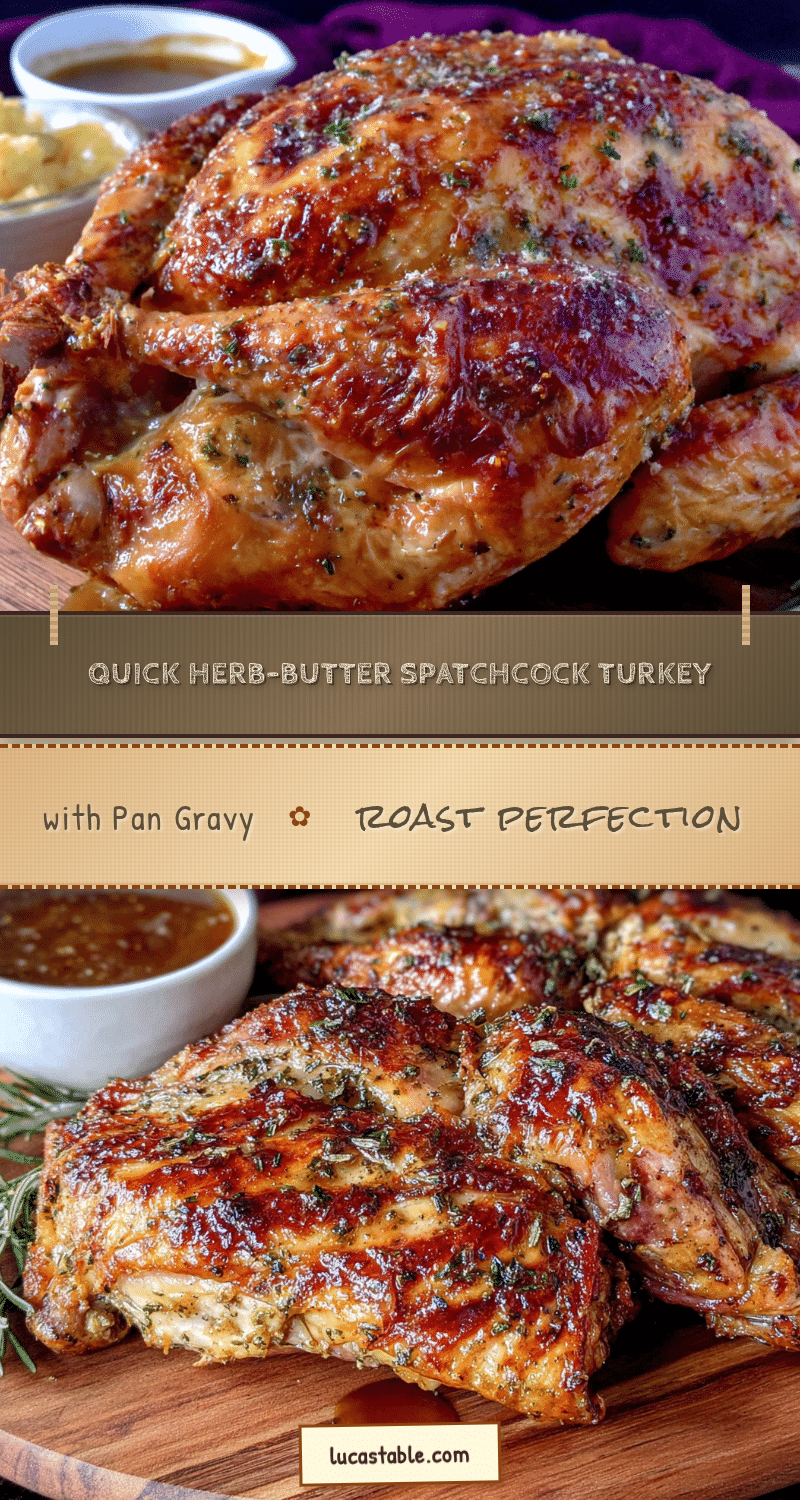
Easy Best Spatchcock Turkey with Herb Butter
This Quick Herb-Butter Spatchcock Turkey with Pan Gravy cooks in about half the time of a traditional roast, delivering incredibly juicy meat and crispy, golden skin. It’s a foolproof, crowd-pleasing centerpiece for any occasion.
- Prep Time: 30 minutes
- Cook Time: 80 minutes
- Total Time: 1 hour 50 minutes
- Yield: 8 servings 1x
- Category: Main Course
- Cuisine: American
Ingredients
- 1 whole turkey (10–14 pounds), thawed if frozen
- 1/2 cup (1 stick) unsalted butter, softened
- 4 cloves garlic, minced
- 2 tablespoons fresh rosemary, finely chopped
- 2 tablespoons fresh thyme leaves
- 1 tablespoon fresh sage, finely chopped (optional but recommended)
- 2 teaspoons kosher salt
- 1 teaspoon black pepper, freshly ground
- 1 large yellow onion, quartered
- 2 cups low-sodium chicken or turkey broth
- 3 tablespoons all-purpose flour
Instructions
- Prepare the turkey: Ensure the turkey is fully thawed. Remove giblets and neck. Pat the turkey completely dry with paper towels. Let it sit on the counter for about 30 minutes to take the chill off.
- Make the herb butter: In a small bowl, combine the softened butter, minced garlic, chopped rosemary, thyme, sage (if using), salt, and pepper. Mix until well combined.
- Spatchcock the turkey: Place the turkey breast-side down on a cutting board. Using sharp kitchen shears, cut along one side of the backbone from tail to neck. Repeat on the other side to remove the backbone. Flip the turkey over and press down firmly on the breastbone until it lies flat.
- Apply the herb butter: Gently loosen the skin over the turkey breast with your fingers. Slide about half of the herb butter under the skin, spreading evenly. Rub the remaining butter all over the outside of the turkey.
- Set up the roasting pan: Place the quartered onion in the center of a large baking sheet or roasting pan. If using a wire rack, place it over the onion. Place the spatchcocked turkey on top, breast-side up. Tuck wing tips under the thighs.
- Roast the turkey: Preheat oven to 425°F (220°C). Roast for about 70-90 minutes for a 12-pound bird. Start checking temperature at the 60-minute mark. The skin should be deep golden brown and crispy.
- Check for doneness: Insert an instant-read thermometer into the thickest part of the breast (155°F to 160°F) and the thigh (170°F to 175°F). If the skin is getting too dark, tent loosely with foil.
- Rest the turkey: Transfer the turkey to a cutting board and let it rest, uncovered, for at least 20 minutes.
- Make the pan gravy: Place the baking sheet over two burners on medium heat. Sprinkle flour over the drippings and whisk constantly for about 1 minute. Slowly pour in the broth, whisking continuously. Bring to a simmer and cook for 2-3 minutes until thickened. Season with salt and pepper to taste.
- Serve: Carve the turkey and arrange on a platter. Pour the hot gravy into a serving boat. Serve immediately.
Notes
Don’t skip drying the turkey for crispy skin. Use a thermometer, not a timer. Let the butter come to room temperature. Don’t skip the rest time. For a citrus-herb variation, add lemon and orange zest to the butter. For a spicy version, add chipotle powder. For gluten-free gravy, use cornstarch slurry.
Nutrition
- Serving Size: 6 ounces of meat wit
- Calories: 375
- Sugar: 1
- Sodium: 600
- Fat: 20
- Saturated Fat: 10
- Carbohydrates: 6
- Protein: 47
Keywords: spatchcock turkey, herb butter turkey, quick turkey, Thanksgiving turkey, roasted turkey, crispy skin turkey, pan gravy