The Friendsgiving potluck was in six hours and I’d completely forgotten. Everyone else would be bringing their signature dishes—Megan’s famous mac and cheese with the three-cheese crust, Derek’s slow-braised brisket that he’d probably started marinating three days ago, and Sarah’s pumpkin cheesecake that looked like it belonged on a magazine cover. I had a loaf of sourdough that was going stale on my counter, some sad-looking celery in the crisper drawer, and honestly, a mild panic setting in.
I mean, what was I thinking? I’d volunteered to bring the stuffing weeks ago with all the confidence of someone who had never actually made stuffing before. Let me tell you, standing in my kitchen at 10 AM on a Saturday, staring at that hard sourdough loaf, I felt like the biggest fraud at the party that hadn’t even started yet. But here’s the thing about being under pressure—sometimes it brings out the best in you. Or at least, the best in your cooking.
I grabbed that sourdough, tore it into uneven chunks (no time for perfect cubes, honestly), and started pulling every herb I could find from my spice drawer. The sage was still fresh from my neighbor’s garden—she’d dropped off a bundle two days ago and I’d shoved it in the fridge without a plan. Maybe you’ve been there, staring at ingredients that seem like they don’t belong together, but something tells you to just go for it anyway. That morning, I threw together what I now call my Guest-Favorite Sourdough Herb Stuffing with Crispy Sage, and let me tell you, it wasn’t just good—it was the dish everyone asked about for weeks afterward. The one that got me invited back to every potluck since.
Why You’ll Love This Recipe
Look, I’ve tested this Sourdough Herb Stuffing more times than I care to admit. The first few batches were disasters—soggy, bland, or just plain sad. But after burning through about four loaves of sourdough and enough butter to make a cardiologist nervous, I cracked the code. This version? It’s the one that got my friend’s mom to actually ask for the recipe. Twice.
- Quick & Easy: Comes together in under an hour, most of which is hands-off baking time. Perfect for when you’re hosting and realize you forgot a side dish (we’ve all been there).
- Simple Ingredients: No truffle oil or exotic mushrooms here. You’ll find everything at your regular grocery store, and you probably already have most of it.
- Perfect for Gatherings: This stuffing was born for potlucks, Thanksgiving tables, and any dinner party where you want to look like you tried harder than you actually did.
- Crowd-Pleaser: I’ve served this to picky eaters, herb skeptics, and even someone who claimed they “didn’t like stuffing.” They all went back for seconds.
- Unbelievably Delicious: The contrast between the crispy sourdough edges and the soft, herb-infused center is honestly next-level comfort food.
What makes this different from every other stuffing recipe out there? It’s the sourdough. The tanginess cuts through the richness of the butter and broth in a way that regular bread just can’t match. Plus, that crispy sage on top? It’s not just garnish—it’s the crunchy, aromatic crown that makes people close their eyes after the first bite. This isn’t just another stuffing recipe. It’s the one you’ll pull out for every holiday, every gathering, every time you need to bring a dish that steals the show without stealing your sanity.
What Ingredients You Will Need
This recipe uses simple, wholesome ingredients that come together to create something truly special. The magic is in the combination, not in complicated ingredients you’ll never use again.
- For the Stuffing Base:
- 1 large loaf sourdough bread, cut into 1-inch cubes (about 10 cups) – Day-old or slightly stale works best; fresh sourdough can get mushy
- 1/2 cup unsalted butter (1 stick) – I use Kerrygold for the richness, but any good butter works
- 2 medium yellow onions, diced – About 2 cups; sweet onions work too if that’s what you have
- 3 celery stalks, diced – About 1 cup; include the leaves if they’re still attached
- 4 cloves garlic, minced – Fresh is non-negotiable here; don’t use the jarred stuff
- 2 cups low-sodium chicken or vegetable broth – Swanson’s is my go-to, but homemade is even better
- 2 large eggs, lightly beaten – Helps bind everything together without making it heavy
- For the Herb Blend:
- 1/4 cup fresh sage leaves, roughly chopped – Plus extra whole leaves for the crispy topping
- 2 tablespoons fresh rosemary, finely chopped – Strip the leaves from the woody stems first
- 2 tablespoons fresh thyme leaves – No need to chop these; just run your fingers down the stems
- 1 tablespoon fresh parsley, chopped – Flat-leaf or curly both work
- 1 teaspoon dried oregano – Adds a subtle earthiness that fresh herbs alone don’t provide
- For the Crispy Sage Topping:
- 2 tablespoons olive oil – Extra virgin gives better flavor
- 20-25 fresh sage leaves – Look for large, unblemished leaves for the prettiest presentation
- Flaky sea salt, for finishing – Maldon is my favorite; it adds that perfect crunch
- Seasonings:
- 1 teaspoon kosher salt – Plus more to taste
- 1/2 teaspoon black pepper – Freshly ground is always better
- 1/4 teaspoon red pepper flakes – Optional, but adds a nice warmth without heat
Ingredient Tips: For the best texture, look for a sourdough loaf with a sturdy crust and dense crumb. Artisan bakery loaves work perfectly. If your bread is fresh, spread the cubes on a baking sheet and toast at 300°F for 10 minutes to dry them out. And please, please use fresh herbs here—dried sage just doesn’t deliver the same aromatic punch.
Equipment Needed
You don’t need a professional kitchen to pull this off, but a few key tools will make your life easier.
- 9×13-inch Baking Dish: A ceramic or glass dish works best for even heat distribution. I use my grandmother’s old Pyrex, and it’s never let me down.
- Large Skillet: Cast iron is ideal for getting that perfect sauté on the vegetables, but any heavy-bottomed pan will do.
- Large Mixing Bowl: You need room to toss everything together without spilling. I learned this the hard way after my first attempt ended up half on the counter.
- Baking Sheet: For toasting the bread cubes and making the crispy sage. Line it with parchment for easier cleanup.
- Sharp Chef’s Knife: A good knife makes dicing onions and celery feel almost meditative. Almost.
- Wooden Spoon or Spatula: For stirring the vegetables and folding everything together without smashing the bread.
- Small Saucepan: For warming the broth before adding it to the stuffing. Cold broth can make the final dish unevenly moist.
If you don’t have a 9×13 dish, a 10-inch cast iron skillet works beautifully and actually gives you more crispy edges. Just adjust the baking time by about 5 minutes.
Preparation Method

- Preheat and Prep (10 minutes): Preheat your oven to 350°F. Spread the sourdough cubes on a large baking sheet in a single layer. Toast for 10-12 minutes, stirring halfway through, until the edges are golden and the cubes feel dry to the touch. Set aside to cool. This step is crucial—don’t skip it unless you want soggy stuffing.
- Sauté the Aromatics (8-10 minutes): While the bread toasts, melt the butter in a large skillet over medium heat. Add the diced onions and celery, stirring occasionally. Cook until the onions turn translucent and the celery softens, about 7 minutes. The kitchen should start smelling like Thanksgiving at this point. Add the minced garlic and cook for one more minute, just until fragrant. Don’t let the garlic brown or it’ll turn bitter.
- Build the Herb Base (2 minutes): Remove the skillet from heat and stir in the chopped sage, rosemary, thyme, parsley, and dried oregano. Let the residual heat wake up those herbs. The aroma at this stage is honestly intoxicating—I always stop and take a moment to breathe it in.
- Combine the Stuffing (5 minutes): Transfer the toasted sourdough cubes to a large mixing bowl. Pour the herb-butter mixture over the top and toss gently with your hands or a wooden spoon until the bread is evenly coated. In a separate small bowl, whisk together the eggs and warm broth (warm the broth slightly in the microwave or on the stovetop—cold broth will seize the eggs). Pour this mixture over the bread and fold gently until everything is moistened but not soggy. The bread should hold its shape when you squeeze a handful.
- Rest and Absorb (10 minutes): Let the mixture sit for 10 minutes. This allows the bread to absorb the liquid evenly. Use this time to wash a few dishes or make the crispy sage topping.
- Make the Crispy Sage (5 minutes): In a small skillet, heat the olive oil over medium heat. Add the whole sage leaves in a single layer (work in batches if needed). Fry for 20-30 seconds per side, until the leaves turn bright green and start to crisp. Transfer to a paper towel-lined plate and sprinkle immediately with flaky sea salt. They’ll crisp up further as they cool.
- Bake the Stuffing (30-35 minutes): Transfer the stuffing mixture to a greased 9×13 baking dish, spreading it into an even layer. Bake uncovered for 30-35 minutes, until the top is golden brown and the edges are crispy. For extra crunch, broil for the last 2 minutes—but watch it closely, because burnt sage is not a good look.
- Finish and Serve (5 minutes): Remove from the oven and let rest for 5 minutes. Top with the crispy sage leaves just before serving. The contrast between the soft, herbaceous stuffing and the crackly sage topping is what makes this dish unforgettable.
Cooking Tips & Techniques
I’ve made this Sourdough Herb Stuffing probably twenty times now, and I’ve learned a few things the hard way so you don’t have to.
The Bread Matters More Than You Think: Don’t use fresh, soft sourdough. It turns to mush. I made that mistake for a Christmas dinner once, and the result was more like bread pudding than stuffing. Day-old bread is ideal, but if yours is fresh, toast it longer. The drier the cubes, the better they’ll absorb the broth without falling apart.
Don’t Overmix: When you add the liquid, fold gently. Overmixing breaks down the bread cubes and gives you a dense, paste-like texture. You want distinct pieces of bread that are just barely held together. Think of it like a gentle handshake, not a wrestling match.
The Egg Trick: Beating the eggs before adding them to the warm broth ensures they incorporate evenly. If you pour raw eggs directly onto hot stuffing, you’ll end up with scrambled egg bits. Not the worst thing in the world, but not what we’re going for here.
Crispy Sage Timing: Make the crispy sage right before serving. If you make it too early, it’ll lose its crunch. I learned this when I tried to prep everything the night before and ended up with sad, limp sage leaves. They’re best fresh, just like the stuffing itself.
Multitasking Strategy: While the bread toasts, chop your vegetables. While the vegetables sauté, mix your herbs. While the stuffing rests, make the crispy sage. This recipe flows beautifully if you keep moving. The only thing you can’t rush is the resting step—that 10 minutes makes a real difference in texture.
Variations & Adaptations
One of the best things about this Sourdough Herb Stuffing is how flexible it is. Here are a few ways I’ve adapted it over the years:
- Vegetarian Version: Use vegetable broth instead of chicken broth. I like Pacific Foods brand for its rich flavor. Add a tablespoon of nutritional yeast for an extra savory depth that mimics the umami of chicken broth.
- Gluten-Free Option: Swap the sourdough for a good-quality gluten-free bread. I’ve had success with Against the Grain brand’s sourdough-style loaf. Toast it a little longer since gluten-free bread tends to be more delicate.
- Sausage Stuffing: Brown 1 pound of Italian sausage (casings removed) in the skillet before sautéing the vegetables. Drain excess fat, then proceed with the recipe. The sausage adds a savory richness that’s perfect for heartier meals.
- Mushroom Lover’s Version: Sauté 8 ounces of cremini mushrooms, sliced, with the onions and celery. The mushrooms release moisture, so cook them until all the liquid evaporates before adding the garlic. This version is earthy and deeply satisfying.
- Apple & Sage Combination: Add 1 diced Granny Smith apple to the skillet with the onions. The tartness cuts through the richness and adds a subtle sweetness that pairs beautifully with the sage. I tried this on a whim one fall and it’s become a seasonal favorite.
Serving & Storage Suggestions
This stuffing is best served warm, straight from the oven, with those crispy sage leaves gleaming on top. It pairs beautifully with roast chicken, turkey, pork chops, or even a simple green salad for a lighter meal. For holiday tables, I like to serve it alongside mashed potatoes and roasted Brussels sprouts for a complete spread.
Storage: Leftover stuffing keeps in an airtight container in the refrigerator for up to 4 days. The crispy sage will soften, but the flavor will still be fantastic. In fact, I sometimes think the leftovers are even better the next day, after all the flavors have had time to meld.
Reheating: For best results, reheat in a 350°F oven for 10-15 minutes, covered with foil to prevent drying. If you’re in a hurry, the microwave works too, but the texture won’t be as crispy. Add a splash of broth if it seems dry.
Freezing: You can freeze the unbaked stuffing for up to 3 months. Assemble the dish, cover tightly with foil, and freeze. To bake, thaw overnight in the refrigerator, then bake as directed, adding 10-15 minutes to the cooking time. The crispy sage should be made fresh after baking.
The flavors actually deepen over time, so don’t be afraid to make this a day ahead. Just hold the crispy sage until serving.
Nutritional Information & Benefits
Per serving (about 1 cup): Approximately 320 calories, 14g fat, 8g protein, 42g carbohydrates, 3g fiber, and 620mg sodium. These values will vary based on your specific ingredients and portion sizes.
This Sourdough Herb Stuffing offers more than just comfort. The sourdough bread contains beneficial probiotics from the fermentation process, which can support gut health. Fresh herbs like sage, rosemary, and thyme are packed with antioxidants and anti-inflammatory compounds. Sage, in particular, has been studied for its potential cognitive benefits. Celery provides vitamin K and potassium, while olive oil offers heart-healthy monounsaturated fats.
For those watching their sodium, use low-sodium broth and reduce the added salt. The herbs provide so much flavor that you honestly won’t miss the extra salt. This recipe can also be made dairy-free by substituting the butter with a high-quality vegan butter or additional olive oil.
Frequently Asked Questions
Can I use dried herbs instead of fresh?
You can, but the flavor won’t be as bright. If using dried herbs, reduce the amount by half. Dried sage, in particular, has a much more concentrated flavor, so use about 1 tablespoon instead of 1/4 cup. Fresh really does make a difference here.
Why is my stuffing soggy?
This usually happens when the bread isn’t dried out enough or too much liquid is added. Make sure your sourdough cubes are thoroughly toasted, and add the broth gradually. You want the bread to be moist but not swimming. If you’ve already baked it and it’s soggy, try spreading it on a baking sheet and baking for another 10 minutes to crisp it up.
Can I make this stuffing ahead of time?
Absolutely. Assemble the stuffing (without the crispy sage) up to 24 hours in advance, cover, and refrigerate. Take it out of the fridge 30 minutes before baking to come to room temperature. You may need to add 5-10 minutes to the baking time since you’re starting from cold.
What’s the best bread to use besides sourdough?
Ciabatta or a good French boule work well. The key is a bread with a sturdy crust and dense crumb. Avoid soft sandwich bread or brioche, which will fall apart. If you want to try a whole wheat version, look for a hearty, artisan-style loaf.
Can I double this recipe for a crowd?
Yes! Double all the ingredients and bake in two 9×13 dishes or one large roasting pan. You’ll need to increase the baking time by about 10 minutes. Just make sure the dishes aren’t overcrowded, or the stuffing won’t crisp up properly.
Conclusion
This Guest-Favorite Sourdough Herb Stuffing with Crispy Sage started as a panic-induced experiment and became the dish I’m most proud of. It’s proof that you don’t need elaborate plans or fancy ingredients to create something memorable—you just need a little creativity, a willingness to try, and maybe a neighbor with an overgrown sage plant.
I love this recipe because it’s forgiving. You can tweak the herbs, swap the broth, add sausage or mushrooms or apples, and it still works. It’s the kind of dish that makes you look like you spent hours in the kitchen when really, you just followed a few simple steps and let the ingredients do the heavy lifting.
So go ahead—make this for your next gathering. Watch people’s faces light up when they take that first bite. And when they ask for the recipe, tell them it was an accident. Honestly, the best ones usually are.
I’d love to hear how yours turns out! Drop a comment below and let me know what variations you tried, or tag me in your photos on social media. Happy cooking, friends!
Pin This Recipe!
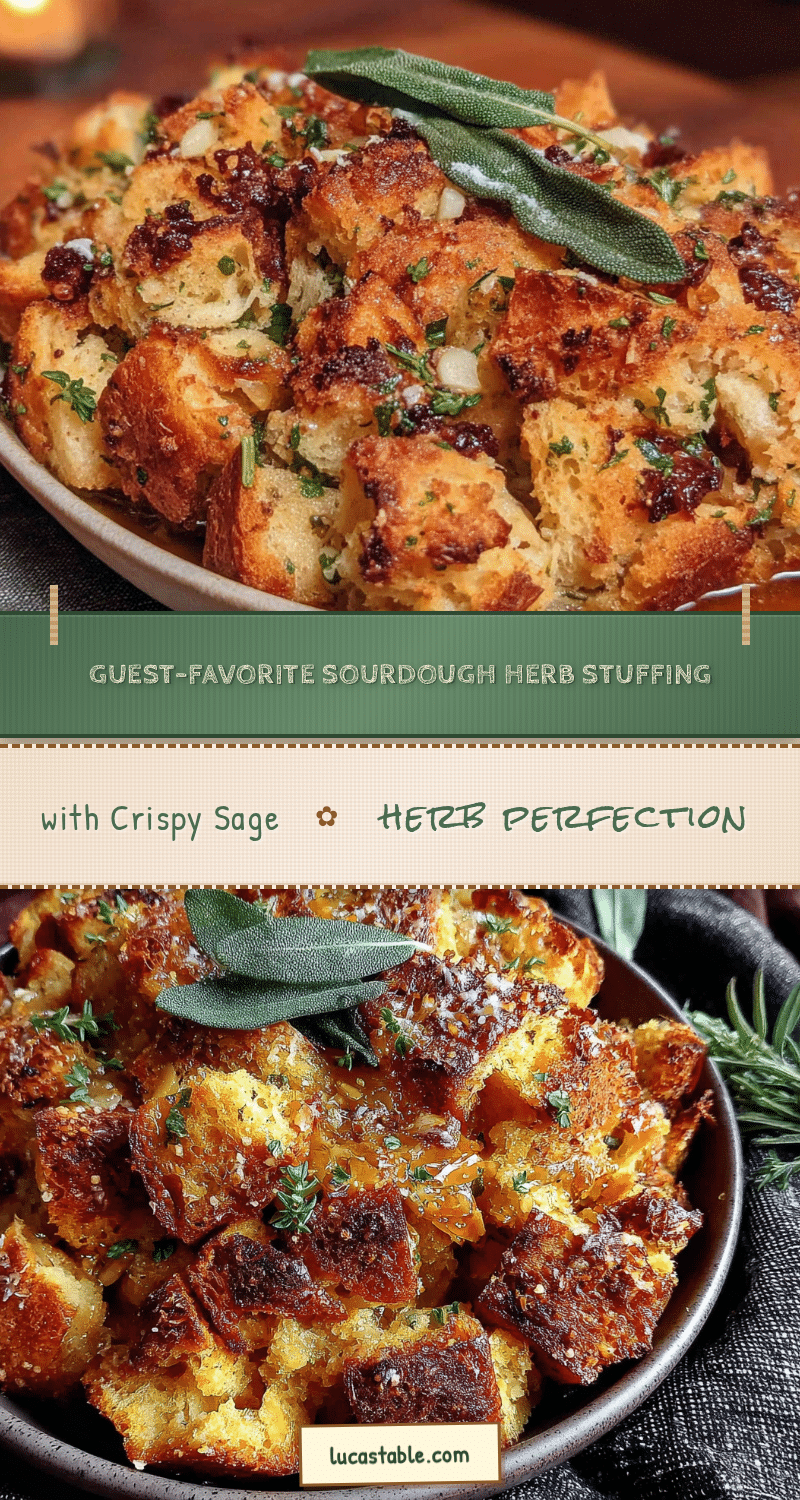
The Best Sourdough Herb Stuffing with Crispy Sage

This Guest-Favorite Sourdough Herb Stuffing with Crispy Sage is a quick and easy side dish perfect for potlucks and holiday tables. The tangy sourdough, aromatic herbs, and crispy sage topping create an unforgettable comfort food that will have everyone asking for the recipe.
- Prep Time: 15 minutes
- Cook Time: 35 minutes
- Total Time: 50 minutes
- Yield: 8 servings 1x
- Category: Side Dish
- Cuisine: American
Ingredients
- 1 large loaf sourdough bread, cut into 1-inch cubes (about 10 cups)
- 1/2 cup unsalted butter (1 stick)
- 2 medium yellow onions, diced (about 2 cups)
- 3 celery stalks, diced (about 1 cup)
- 4 cloves garlic, minced
- 2 cups low-sodium chicken or vegetable broth
- 2 large eggs, lightly beaten
- 1/4 cup fresh sage leaves, roughly chopped
- 2 tablespoons fresh rosemary, finely chopped
- 2 tablespoons fresh thyme leaves
- 1 tablespoon fresh parsley, chopped
- 1 teaspoon dried oregano
- 2 tablespoons olive oil
- 20–25 fresh sage leaves (for crispy topping)
- Flaky sea salt, for finishing
- 1 teaspoon kosher salt
- 1/2 teaspoon black pepper, freshly ground
- 1/4 teaspoon red pepper flakes (optional)
Instructions
- Preheat oven to 350°F. Spread sourdough cubes on a large baking sheet in a single layer. Toast for 10-12 minutes, stirring halfway, until edges are golden and cubes feel dry. Set aside to cool.
- While bread toasts, melt butter in a large skillet over medium heat. Add diced onions and celery, cook until onions are translucent and celery softens, about 7 minutes. Add minced garlic and cook for 1 minute until fragrant.
- Remove skillet from heat. Stir in chopped sage, rosemary, thyme, parsley, and dried oregano.
- Transfer toasted sourdough cubes to a large mixing bowl. Pour herb-butter mixture over top and toss gently until bread is evenly coated.
- In a small bowl, whisk together eggs and warm broth. Pour over bread mixture and fold gently until everything is moistened but not soggy.
- Let mixture rest for 10 minutes to allow bread to absorb liquid.
- Meanwhile, make crispy sage: In a small skillet, heat olive oil over medium heat. Add whole sage leaves in a single layer; fry for 20-30 seconds per side until bright green and crisp. Transfer to paper towel-lined plate and sprinkle with flaky sea salt.
- Transfer stuffing mixture to a greased 9×13 baking dish, spreading evenly. Bake uncovered for 30-35 minutes until top is golden brown and edges are crispy. For extra crunch, broil for last 2 minutes.
- Remove from oven and let rest for 5 minutes. Top with crispy sage leaves just before serving.
Notes
For best texture, use day-old sourdough with a sturdy crust. If bread is fresh, toast cubes at 300°F for 10 minutes to dry them out. Don’t overmix when adding liquid to avoid dense stuffing. Make crispy sage right before serving for maximum crunch. Leftovers keep in refrigerator for up to 4 days; reheat in 350°F oven for 10-15 minutes. Unbaked stuffing can be frozen for up to 3 months.
Nutrition
- Serving Size: 1 cup
- Calories: 320
- Sugar: 4
- Sodium: 620
- Fat: 14
- Saturated Fat: 7
- Carbohydrates: 42
- Fiber: 3
- Protein: 8
Keywords: sourdough stuffing, herb stuffing, crispy sage, Thanksgiving stuffing, potluck side dish, holiday stuffing, sourdough bread stuffing