I was trying to make candied pecans. That was the plan, anyway. A simple, straightforward batch of sugary, spiced nuts to toss over a salad or maybe package up as a tiny holiday gift. I had the sugar measured, the butter melting, and I was feeling pretty good about my afternoon plans. Then I grabbed the wrong bag from the pantry. Instead of the light corn syrup, I snagged a bottle of maple syrup that was nearly empty. I poured it in without thinking, realized my mistake about three seconds too late, and just stood there staring at the pan like it had personally betrayed me.
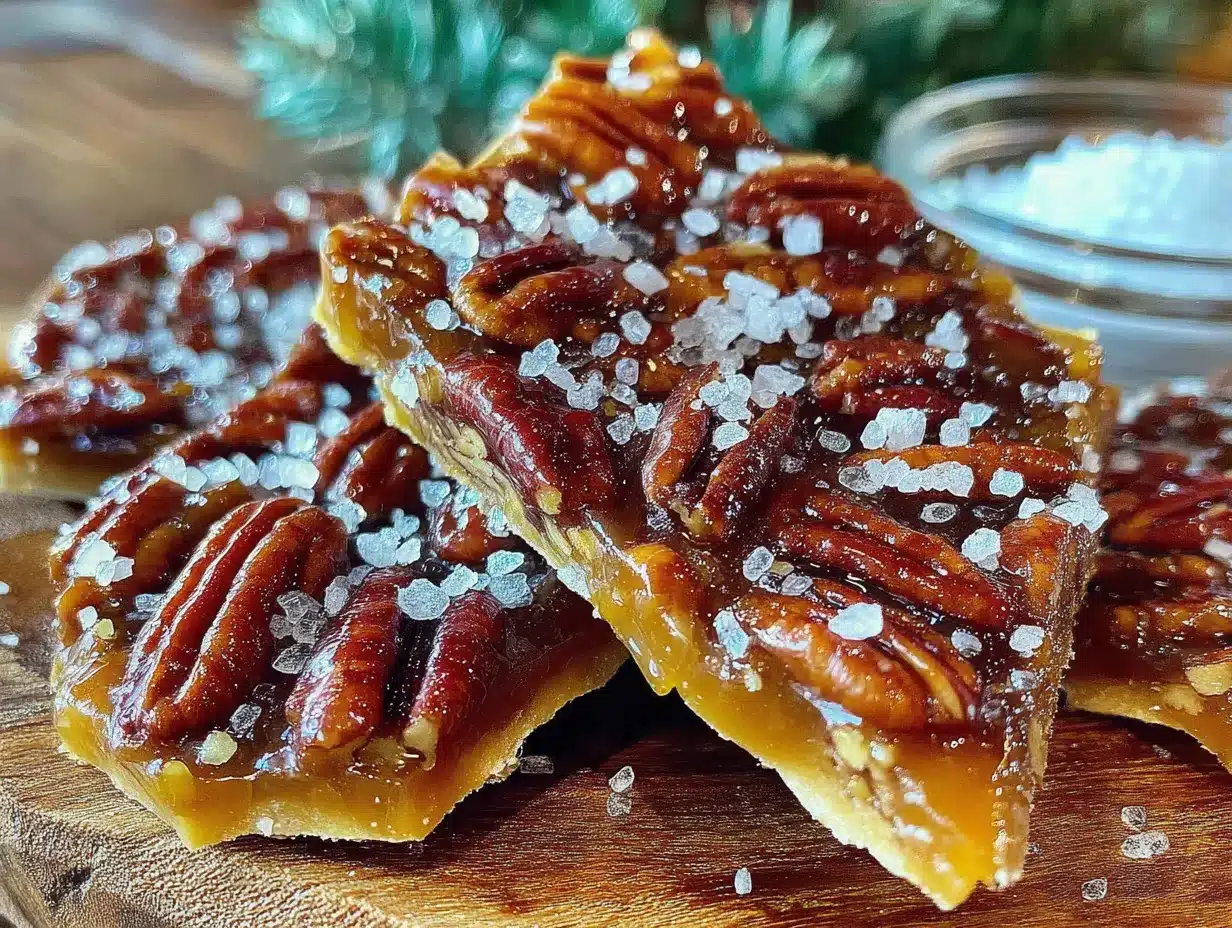
The mixture was thinner than it should have been. Way thinner. It bubbled and spread across the baking sheet in a way that was honestly alarming. I figured the whole thing was a write-off. I slid it into the oven anyway—partly out of stubbornness, partly because I had already made a mess and wasn’t about to clean up without getting something out of it. Twenty minutes later, I pulled out a sheet of something I had never seen before. The pecans were clustered together in a thin, crackly layer of caramel that had set into the most perfect, shatter-in-your-mouth bark. I stared at it. I broke off a piece. I stared at it some more.
Honestly, I didn’t know whether to be annoyed or thrilled. The candied pecans I wanted? Gone. The thing I accidentally made instead? Way better. It had that salty-sweet thing going on, a crunch that was almost absurd, and it took maybe fifteen minutes of actual work. I’ve made it about a dozen times since then, tweaking the ratios and testing different salts, and this version is the one. It’s the kind of happy accident that makes you wonder why you were trying so hard to do the other thing in the first place. Maybe you’ve had one of those kitchen moments where the mistake turned out to be the keeper. This is that recipe.
Why You’ll Love This Recipe
Let me tell you why this Light & Crunchy Pecan Pie Bark with Sea Salt has become my most-requested recipe. I’ve tested this thing more times than I care to admit, and every single batch disappears faster than I expect. It’s one of those recipes that makes people think you spent hours in the kitchen when you really just threw a few things together and let the oven do the work.
- Quick & Easy : We’re talking about 15 minutes of hands-on time. No candy thermometers, no fussy techniques, no standing over a stove stirring until your arm gives out.
- Simple Ingredients : You probably have everything in your pantry right now. Pecans, butter, brown sugar, maple syrup, vanilla, salt. That’s it.
- Perfect for Gifting : This bark breaks into beautiful, rustic pieces that look gorgeous in a little cellophane bag tied with twine. It’s my go-to for hostess gifts and holiday cookie exchanges.
- Crowd-Pleaser : I have yet to meet someone who doesn’t go back for a second piece. It hits that primal craving for something sweet, salty, and crunchy all at once.
- Unbelievably Delicious : The texture is what gets you. It’s not sticky like traditional pecan pie filling. It’s light, brittle, and shatters when you bite into it, with the pecans toasted to perfection and the sea salt cutting through the sweetness.
What makes this different from every other pecan bark recipe out there? It’s the ratio. Most versions use way too much butter or corn syrup, which makes them greasy or overly sticky. I spent a few batches figuring out the exact balance that gives you that clean, snappy break without any greasy residue on your fingers. It’s pecan pie flavor without the heavy, sit-in-your-stomach feeling. Honestly, it’s the kind of thing that makes you close your eyes after the first bite and forget you were ever trying to make something else in the first place.
What Ingredients You Will Need
This recipe uses simple, wholesome ingredients that come together to create something that tastes way more complicated than it is. Every component plays a specific role, and I’ve tested enough variations to know which ones really matter.
- Pecan Halves (2 cups / 200g) : Use whole pecan halves, not pieces. They create a better structure for the bark and look prettier when it breaks apart. I prefer buying raw pecans and toasting them myself—you get more control over the flavor. Look for pecans that are uniform in size so they toast evenly.
- Unsalted Butter (¼ cup / 57g) : Salted butter works in a pinch, but unsalted lets you control the salt level. I use Kerrygold for the richer flavor, but any good-quality unsalted butter will do. Cut it into small cubes so it melts evenly with the sugar.
- Light Brown Sugar (⅓ cup / 67g) : Pack it firmly into the measuring cup. Brown sugar brings that molasses-y depth that makes this taste like pecan pie filling. Dark brown sugar works too, but it will give the bark a deeper, slightly more intense flavor. I usually stick with light brown for the classic taste.
- Maple Syrup (3 tablespoons / 45ml) : Use real maple syrup, not pancake syrup. The real stuff has a cleaner sweetness that doesn’t get cloying. Grade A dark amber is my go-to for baking. If you only have honey, you can substitute it, but the flavor will be different—more floral, less woodsy.
- Vanilla Extract (1 teaspoon / 5ml) : Pure vanilla extract makes a noticeable difference here. Imitation vanilla has that artificial aftertaste that stands out in a simple recipe like this. I always have a bottle of Nielsen-Massey in my pantry.
- Flaky Sea Salt (½ teaspoon, plus more for finishing) : This is non-negotiable. The flaky salt on top creates those little bursts of salinity that make the sweetness pop. Maldon sea salt is my favorite—it has that delicate, pyramid-shaped flake that dissolves slowly on your tongue. Don’t use fine table salt for the finishing touch; it will just dissolve and you’ll lose that textural contrast.
- Baking Soda (¼ teaspoon) : This is the secret ingredient that keeps the bark light and crunchy instead of hard and tooth-breaking. It reacts with the acid in the brown sugar and maple syrup to create tiny air bubbles as the mixture bakes. Don’t skip it.
One thing I learned the hard way: measure everything before you start. This recipe moves fast once the butter starts melting, and you don’t want to be digging through the pantry for the vanilla while your sugar mixture is bubbling away. It’s a quick process, but it demands your full attention for those few minutes.
Equipment Needed
You don’t need anything fancy for this recipe. That’s part of the beauty of it. Here’s what you’ll need:
- Baking Sheet (half-sheet pan, 18×13 inches) : A rimmed baking sheet is essential. The rim catches any caramel that might bubble over, and it gives you a contained surface to spread the pecan mixture. Line it with parchment paper for easy cleanup.
- Medium Saucepan : You need a saucepan with a heavy bottom for even heat distribution. I use a 2-quart stainless steel saucepan. Avoid nonstick pans for this—the high heat can damage the coating, and you want the caramel to bubble freely without any interference.
- Silicone Spatula : A heat-resistant silicone spatula is your best friend here. It scrapes every last bit of caramel out of the pan and makes spreading the mixture on the baking sheet much easier than using a wooden spoon.
- Parchment Paper : Don’t skip this. The caramel will stick to anything it touches, and parchment paper is the only thing that releases it cleanly. Wax paper will melt in the oven, so don’t try that substitution.
- Cooling Rack : A wire cooling rack allows air to circulate under the baking sheet, which helps the bark set evenly. If you don’t have one, just let the pan cool on the counter—it will take a bit longer.
- Measuring Cups and Spoons : Accurate measurements matter here. The ratio of sugar to butter to syrup is what makes the bark crunchy instead of chewy or greasy.
If you don’t have a saucepan, you can actually make the caramel in a microwave-safe bowl in 30-second bursts, stirring between each one. It’s not my preferred method because you get less control over the temperature, but it works in a pinch. Just watch it carefully so it doesn’t burn.
Preparation Method
- Preheat your oven to 350°F (175°C). Line a baking sheet with parchment paper, making sure the paper extends slightly up the sides of the pan. Set it aside while you prepare the pecan mixture.
- Spread the pecan halves on a separate baking sheet and toast them for 5-7 minutes. Keep an eye on them—pecans go from perfectly toasted to burnt very quickly. You want them fragrant and slightly darkened, not smoking. Let them cool for a few minutes while you make the caramel.
- In a medium saucepan, combine the unsalted butter, light brown sugar, and maple syrup. Place the pan over medium heat and stir gently until the butter is completely melted and the sugar has dissolved. This should take about 2-3 minutes. Don’t rush this step—if the sugar isn’t fully dissolved, your bark will have a grainy texture.
- Bring the mixture to a gentle boil and let it cook for 1 minute without stirring. You’ll see the bubbles become larger and the mixture will thicken slightly. This is where the magic happens. The caramel needs to reach about 240°F (115°C) on a candy thermometer, but if you don’t have one, look for the bubbles to become slow and lazy, like thick lava.
- Remove the pan from the heat immediately. Stir in the vanilla extract and the baking soda. The mixture will foam up dramatically—this is normal and exactly what you want. The baking soda creates those tiny air bubbles that make the bark light and crunchy instead of dense and hard.
- Add the toasted pecans to the saucepan and stir until every piece is coated in the caramel. Work quickly here because the caramel will start to set as it cools. Make sure there are no dry spots on any of the pecans.
- Pour the pecan-caramel mixture onto the prepared baking sheet. Use your silicone spatula to spread it into an even layer. Don’t worry about making it perfect—rustic is the look we’re going for. Try to keep the pecans in a single layer so the bark breaks evenly later.
- Bake for 8-10 minutes, or until the caramel is bubbling all over and the edges are slightly darker. The mixture will spread more in the oven, so don’t be alarmed if it looks thin. The key is to bake it until the caramel is deep amber and the bubbles are concentrated in the center.
- Remove from the oven and immediately sprinkle with flaky sea salt. Don’t skip this step—the salt on top is what transforms this from a sweet snack into something addictive. Use a light hand; you can always add more, but you can’t take it away.
- Let the bark cool completely on the baking sheet, about 30-40 minutes. Don’t try to rush this by putting it in the fridge—it can cause the caramel to seize and become sticky instead of crisp. Once it’s completely cool and firm, break it into irregular pieces with your hands.
One thing I learned the hard way: if your bark turns out sticky instead of crunchy, it probably didn’t bake long enough. The caramel needs to reach that hard-crack stage, which happens around 300°F (150°C) in the oven. If your oven runs cool, add an extra minute or two to the baking time. Every oven is different, and I’ve burned a batch or two learning this lesson.
Cooking Tips & Techniques
I’ve made this recipe enough times to know exactly where things can go wrong. Here are the lessons I learned through trial and error, so you don’t have to make the same mistakes I did.
Watch your heat on the stovetop. Medium heat is perfect. If you crank it up to high, the sugar can burn before the butter even melts. I made that mistake once and ended up with a batch that tasted bitter and smoky. Low and slow is the way to go—let the butter melt gently and the sugar dissolve completely before you let it boil.
Don’t over-stir once it’s boiling. Stirring can cause the sugar to crystallize, which gives you a grainy texture instead of that smooth, glass-like snap. Once the mixture comes to a boil, just let it do its thing for that one minute. Trust the process.
Use a light hand with the baking soda. I know I said it’s essential, and it is—but too much will make the bark taste metallic and foam up so much it spills over the sides of the pan. A quarter teaspoon is the sweet spot. If you’re halving the recipe, use just a pinch.
Let the bark cool completely. This is the hardest part because your kitchen will smell incredible and you’ll want to dive in immediately. But warm bark is sticky bark. If you try to break it too soon, it will bend instead of snap and you’ll end up with a messy, caramel-covered disaster. Walk away. Do something else. Come back in 40 minutes.
Storage matters. Humidity is the enemy of crunchy bark. Store it in an airtight container at room temperature, layered between sheets of parchment paper. If you live in a humid climate, add a silica gel packet (the kind you find in shoe boxes) to the container—it really helps keep the crunch.
Variations & Adaptations
One of the best things about this recipe is how easy it is to adapt. I’ve played around with different combinations, and here are some of my favorites:
Chocolate Drizzle : After the bark has cooled and been broken into pieces, melt about ½ cup of dark chocolate chips with a teaspoon of coconut oil and drizzle it over the top. Let the chocolate set before serving. The combination of salty caramel, toasted pecans, and dark chocolate is absolutely ridiculous. I did this for a holiday party once and people literally fought over the last piece.
Spiced Pecan Bark : Add ½ teaspoon of cinnamon and a pinch of cayenne pepper to the caramel mixture before adding the pecans. The warmth of the cinnamon and the subtle heat from the cayenne make this version perfect for fall. I’ve also tried it with a pinch of cardamom, which gives it a slightly floral, exotic note that works beautifully with the maple syrup.
Gluten-Free and Vegan Adaptation : This recipe is naturally gluten-free, which makes it a great option for anyone with celiac disease or gluten sensitivity. For a vegan version, substitute the butter with a high-quality vegan butter stick (not the spreadable kind in a tub). Miyoko’s European-style cultured vegan butter works really well here. The texture will be slightly different—a bit less crisp—but the flavor is still fantastic.
Mixed Nut Bark : Swap half the pecans for walnuts, almonds, or cashews. Each nut brings its own texture and flavor. Walnuts add a slightly bitter note that balances the sweetness, while almonds give the bark an extra crunch. I made a batch with pistachios once, and the green color against the amber caramel was stunning.
Low-Sugar Version : For a less sweet version, reduce the brown sugar to ¼ cup and add an extra tablespoon of maple syrup. The bark won’t be quite as crunchy, but it will still be delicious. You can also use a sugar-free maple syrup substitute, but I haven’t tested that myself, so I can’t vouch for the results.
Serving & Storage Suggestions
This bark is incredibly versatile when it comes to serving. I love presenting it on a wooden board or a simple white plate, broken into irregular pieces that show off the toasted pecans and the glistening caramel. It’s gorgeous on a dessert table alongside cookies and brownies, and it makes an unexpected but welcome addition to a cheese board—the sweetness and crunch pair beautifully with sharp cheddar or creamy brie.
For gifting, I pack the pieces in clear cellophane bags tied with a piece of twine or a festive ribbon. Add a little tag with the recipe name and the date, and you have a homemade gift that looks like it came from a fancy bakery. I’ve also layered it in mason jars as a hostess gift, which is both practical and pretty.
Storage : Keep the bark in an airtight container at room temperature for up to two weeks. Layer the pieces between sheets of parchment paper to prevent them from sticking together. Do not refrigerate—the moisture in the fridge will make the bark sticky and soft. If you live in a particularly humid climate, you can store it in a sealed container with a silica gel packet to absorb excess moisture.
Freezing : This bark freezes beautifully. Place the pieces in a single layer on a baking sheet and freeze until solid, about 2 hours. Transfer the frozen pieces to a freezer-safe bag or container, layering with parchment paper. It will keep for up to 3 months. Thaw at room temperature for about 15 minutes before serving. The texture remains perfectly crunchy.
Reheating : If your bark has lost its crunch (which can happen if it’s exposed to humidity), spread the pieces on a baking sheet and warm them in a 300°F (150°C) oven for 3-5 minutes. Let them cool completely, and they’ll crisp right back up. I’ve done this multiple times, and it works like a charm.
One thing I’ve noticed: the flavor actually improves after a day or two. The salt mellows slightly and integrates with the caramel, and the pecans continue to toast subtly. If you can resist eating it all immediately, it’s even better the next day.
Nutritional Information & Benefits
Let’s be honest—this is a treat, not a health food. But that doesn’t mean it’s without its redeeming qualities. Pecans are packed with healthy monounsaturated fats, which are great for heart health and keeping you feeling satisfied. They’re also a good source of fiber, magnesium, and vitamin E. So while you shouldn’t eat the entire batch in one sitting (trust me, I’ve tried), a piece or two makes for a satisfying snack that’s a step above processed candy.
Here are the approximate nutritional values per serving (based on the recipe yielding about 12 pieces):
| Nutrient | Amount per Piece |
|---|---|
| Calories | 185 |
| Total Fat | 14g |
| Saturated Fat | 4g |
| Carbohydrates | 14g |
| Sugar | 11g |
| Fiber | 2g |
| Protein | 2g |
| Sodium | 120mg |
Dietary Considerations : This recipe is naturally gluten-free, nut-free (aside from the pecans themselves, obviously), and vegetarian. For a vegan version, use plant-based butter. It contains dairy in the form of butter, so it’s not suitable for those with dairy allergies unless you make the vegan substitution.
Potential Allergens : Tree nuts (pecans) and dairy (butter). If you’re serving this at a gathering, make sure to label it clearly so guests with allergies are aware.
My personal take: I love that this recipe lets me enjoy something that tastes indulgent without feeling like I’ve completely abandoned my healthy eating habits. A small piece satisfies that sweet-and-salty craving in a way that a handful of processed candy never does. It’s about balance, you know? Enjoy the treat, savor it, and move on with your day.
Conclusion
This Light & Crunchy Pecan Pie Bark with Sea Salt started as a mistake, but it’s become one of those recipes I make on repeat. It’s the kind of thing that makes you look like a kitchen genius without actually requiring any real skill—just a few simple ingredients, a little patience, and the willingness to let things go wrong sometimes. Honestly, that’s a good lesson for life in general, isn’t it?
I hope you give this recipe a try. Play around with the variations, add your own twist, and don’t stress if it’s not perfect the first time. The beauty of this bark is that even a “bad” batch is still pretty darn good. And if you make it and love it (or if you come up with a brilliant variation I haven’t thought of), I’d love to hear about it. Drop a comment below, share a photo, or tag me in your creation. There’s something special about knowing a recipe that started as a happy accident in my kitchen has found its way into yours.
Now go make some delicious mistakes. You might just discover your new favorite thing.
Frequently Asked Questions
Can I use pecan pieces instead of pecan halves?
You can, but the bark won’t have the same visual appeal or structural integrity. Pecan halves create a more cohesive bark that breaks into beautiful pieces. Pieces tend to fall apart more easily and don’t look as polished. If all you have are pieces, go ahead and use them—just expect a more rustic, crumbly result.
Why did my bark turn out sticky instead of crunchy?
This usually happens for one of two reasons: either the caramel didn’t cook long enough on the stovetop, or the bark didn’t bake long enough in the oven. The caramel needs to reach the hard-crack stage, which happens around 300°F (150°C) during baking. Next time, try adding an extra minute or two to the baking time. Also, make sure the bark cools completely before you try to break it—warm caramel is always sticky.
Can I make this without maple syrup?
Yes. You can substitute the maple syrup with an equal amount of honey, agave nectar, or light corn syrup. Each will change the flavor slightly. Honey adds a floral note, agave is milder and sweeter, and corn syrup gives a more neutral sweetness that’s closer to the original. If you use honey, reduce the baking time by a minute or two since honey caramelizes faster.
How do I keep the bark from sticking to the parchment paper?
If your bark is sticking, it likely didn’t bake long enough. Properly baked bark should release from parchment paper easily once it’s completely cool. If you’re still having trouble, try using a high-quality parchment paper (the cheap stuff can be less nonstick) or give the paper a light spray of cooking spray before adding the pecan mixture.
Can I double this recipe?
Absolutely. Double all the ingredients, but use two separate baking sheets instead of trying to fit everything on one. Overcrowding the pan will result in a thicker bark that doesn’t bake evenly and may end up chewy instead of crunchy. Keep the baking time the same for both sheets, and rotate them halfway through if your oven has hot spots.
Pin This Recipe!
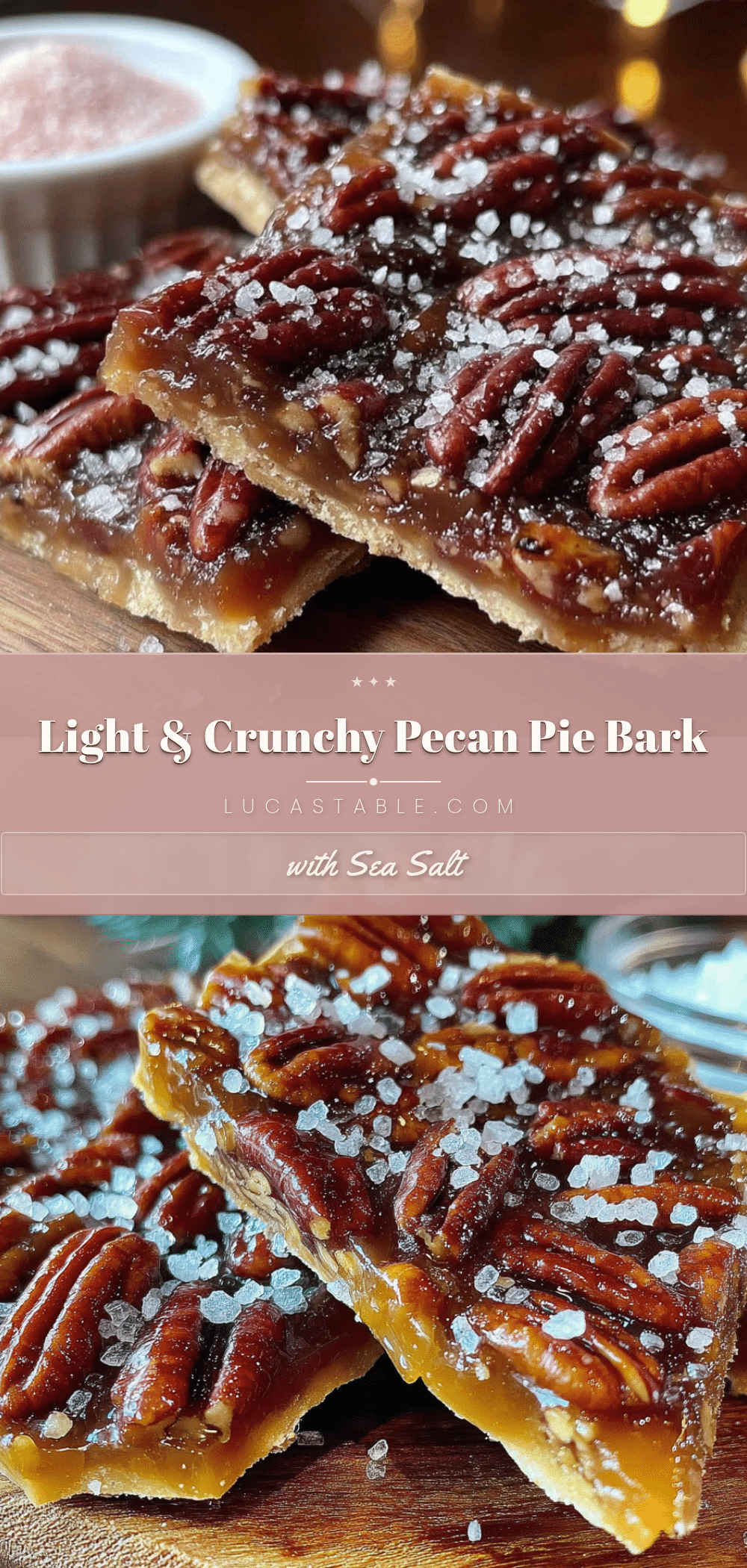
Light & Crunchy Pecan Pie Bark with Sea Salt
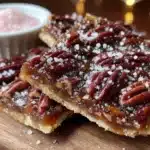
A happy accident turned into a perfect salty-sweet treat. This pecan pie bark is light, crunchy, and shatters with every bite, made with simple pantry ingredients in just 15 minutes of hands-on time.
- Prep Time: 15 minutes
- Cook Time: 10 minutes
- Total Time: 55 minutes
- Yield: 12 servings 1x
- Category: Dessert
- Cuisine: American
Ingredients
- 2 cups (200g) pecan halves
- ¼ cup (57g) unsalted butter
- ⅓ cup (67g) light brown sugar, firmly packed
- 3 tablespoons (45ml) maple syrup
- 1 teaspoon (5ml) vanilla extract
- ½ teaspoon flaky sea salt, plus more for finishing
- ¼ teaspoon baking soda
Instructions
- Preheat your oven to 350°F (175°C). Line a baking sheet with parchment paper, making sure the paper extends slightly up the sides of the pan. Set it aside while you prepare the pecan mixture.
- Spread the pecan halves on a separate baking sheet and toast them for 5-7 minutes. Keep an eye on them—pecans go from perfectly toasted to burnt very quickly. You want them fragrant and slightly darkened, not smoking. Let them cool for a few minutes while you make the caramel.
- In a medium saucepan, combine the unsalted butter, light brown sugar, and maple syrup. Place the pan over medium heat and stir gently until the butter is completely melted and the sugar has dissolved. This should take about 2-3 minutes. Don’t rush this step—if the sugar isn’t fully dissolved, your bark will have a grainy texture.
- Bring the mixture to a gentle boil and let it cook for 1 minute without stirring. You’ll see the bubbles become larger and the mixture will thicken slightly. This is where the magic happens. The caramel needs to reach about 240°F (115°C) on a candy thermometer, but if you don’t have one, look for the bubbles to become slow and lazy, like thick lava.
- Remove the pan from the heat immediately. Stir in the vanilla extract and the baking soda. The mixture will foam up dramatically—this is normal and exactly what you want. The baking soda creates those tiny air bubbles that make the bark light and crunchy instead of dense and hard.
- Add the toasted pecans to the saucepan and stir until every piece is coated in the caramel. Work quickly here because the caramel will start to set as it cools. Make sure there are no dry spots on any of the pecans.
- Pour the pecan-caramel mixture onto the prepared baking sheet. Use your silicone spatula to spread it into an even layer. Don’t worry about making it perfect—rustic is the look we’re going for. Try to keep the pecans in a single layer so the bark breaks evenly later.
- Bake for 8-10 minutes, or until the caramel is bubbling all over and the edges are slightly darker. The mixture will spread more in the oven, so don’t be alarmed if it looks thin. The key is to bake it until the caramel is deep amber and the bubbles are concentrated in the center.
- Remove from the oven and immediately sprinkle with flaky sea salt. Don’t skip this step—the salt on top is what transforms this from a sweet snack into something addictive. Use a light hand; you can always add more, but you can’t take it away.
- Let the bark cool completely on the baking sheet, about 30-40 minutes. Don’t try to rush this by putting it in the fridge—it can cause the caramel to seize and become sticky instead of crisp. Once it’s completely cool and firm, break it into irregular pieces with your hands.
Notes
If your bark turns out sticky instead of crunchy, it probably didn’t bake long enough. The caramel needs to reach the hard-crack stage, which happens around 300°F (150°C) in the oven. If your oven runs cool, add an extra minute or two to the baking time. Store in an airtight container at room temperature for up to two weeks. Do not refrigerate. For best results, let the bark cool completely before breaking.
Nutrition
- Serving Size: 1 piece
- Calories: 185
- Sugar: 11
- Sodium: 120
- Fat: 14
- Saturated Fat: 4
- Carbohydrates: 14
- Fiber: 2
- Protein: 2
Keywords: pecan pie bark, pecan bark, sea salt caramel, easy dessert, holiday gift, gluten-free dessert, crunchy bark