My friend Jen asked why I couldn’t just throw everything in one bowl and call it dinner. We were standing in her kitchen last July, the air thick with humidity and the sound of cicadas buzzing through the screen door. I had brought over ingredients for what I thought would be an elaborate Korean-inspired meal—separate components, multiple pans, a whole production. She looked at the pile of groceries on her counter and said, “Why don’t we just cook the chicken and rice together and dump the sauce on top?” I started to explain why that wouldn’t work—something about layering flavors and not overcrowding the pan. Then I stopped. She was holding a jar of gochujang like it was the most obvious answer in the world.
I’ll be honest, I felt a little embarrassed. Here I was, the one who writes about food for a living, getting schooled by a friend who once burned toast so badly we had to air out her apartment for two days. But she was right. That spicy gochujang chicken rice bowl became our go-to summer night dinner, and I’ve made it at least a dozen times since. The heat from the gochujang, the cool crunch of fresh vegetables, the way everything comes together in one bowl with minimal cleanup—it just works. Maybe you’ve been there, standing in your kitchen on a hot evening, not wanting to turn on the oven or wash a mountain of dishes. This recipe is for those nights. It’s the kind of meal that makes you wonder why you ever overcomplicated things in the first place.
Why You’ll Love This Recipe
Let me tell you why this spicy gochujang chicken rice bowl has earned a permanent spot in my summer rotation. I’ve tested this recipe more times than I care to admit, tweaking the sauce ratio, adjusting the heat level, and figuring out the fastest way to get dinner on the table without sacrificing flavor. Here’s what makes it special:
- Quick & Easy: From start to finish, you’re looking at about 30 minutes. The rice cooks while you prep the chicken, and everything comes together in one pan. Perfect for those evenings when you’d rather be outside than stuck in the kitchen.
- Simple Ingredients: Nothing fancy here. Gochujang is the star, and you can find it at most grocery stores now. The rest is pantry staples—chicken, rice, soy sauce, garlic, and whatever vegetables you have on hand.
- Perfect for Summer Nights: This bowl is designed for warm weather eating. It’s light enough to not weigh you down but hearty enough to satisfy a real dinner hunger. Plus, it’s delicious served at room temperature, which is a game-changer on hot days.
- Crowd-Pleaser: I’ve served this to friends who claimed they didn’t like spicy food, and they went back for seconds. The heat is balanced by the sweet and savory elements, making it approachable for most palates.
- Unbelievably Delicious: The combination of sticky rice, caramelized chicken coated in that fiery-sweet gochujang glaze, and fresh crunchy toppings—it’s the kind of bowl that makes you close your eyes after the first bite. Honestly, it’s comfort food that feels fresh and exciting.
What sets this apart from other chicken rice bowl recipes is the sauce technique. Instead of just brushing gochujang on the chicken, you create a glaze that caramelizes in the pan, creating these little crispy edges that are absolutely addictive. It’s not just another version—it’s the best version I’ve found, and I’ve tried plenty.
What Ingredients You Will Need
This recipe uses simple, wholesome ingredients to deliver bold flavor and satisfying texture without the fuss. Most of these are pantry staples or easy to find at your local grocery store.
- Gochujang paste (3 tablespoons) – This Korean chili paste is the heart of the dish. It’s spicy, slightly sweet, and deeply savory. I prefer the brand “Sempio” for its balanced heat, but any brand works. Look for it in the international aisle of your grocery store.
- Boneless, skinless chicken thighs (1.5 pounds, about 680g) – Thighs stay juicy and tender during cooking. If you only have chicken breasts, they’ll work, but reduce cooking time by a few minutes to avoid dryness.
- White rice (1 cup, 200g) – Short-grain or medium-grain rice works best for that slightly sticky texture that clings to the sauce. I use jasmine rice when I want something a little more fragrant.
- Soy sauce (2 tablespoons) – Adds saltiness and umami. Low-sodium soy sauce is fine if you’re watching your salt intake.
- Honey or brown sugar (1 tablespoon) – Balances the heat from the gochujang. Honey gives a more floral sweetness, while brown sugar adds depth. Both work great.
- Sesame oil (1 tablespoon) – Toasted sesame oil adds that nutty, aromatic quality that makes Korean food so distinctive. Don’t skip this one.
- Garlic (4 cloves, minced) – Fresh garlic is non-negotiable here. The pre-minced stuff in a jar just doesn’t have the same punch.
- Fresh ginger (1 teaspoon, grated) – Adds warmth and brightness. I keep a knob of ginger in the freezer and grate it directly into the pan.
- Cucumber (1 medium) – For that cool, crunchy contrast. English cucumbers work well because they have fewer seeds.
- Carrots (2 medium) – Adds sweetness and color. You can julienne them or use a vegetable peeler to make ribbons.
- Green onions (4-5 stalks) – For freshness and a mild onion bite. Save the green parts for garnish.
- Sesame seeds (1 tablespoon, toasted) – Adds a nutty crunch and makes the bowl look restaurant-worthy.
- Rice vinegar (1 tablespoon) – For a quick pickle on the vegetables. It brightens up the whole bowl.
- Salt and pepper – To taste. Go easy on the salt since the soy sauce and gochujang already bring plenty.
For substitutions, you can use tamari instead of soy sauce for a gluten-free option. If you don’t have gochujang, you can mix sriracha with a little miso paste and sugar, but honestly, nothing replicates that fermented depth quite like the real thing.
Equipment Needed
You don’t need much for this spicy gochujang chicken rice bowl, which is part of the beauty. Here’s what you’ll want to have on hand:
- Large skillet or wok (12-inch) – A non-stick skillet works best for getting that caramelized glaze on the chicken without sticking. I use my trusty cast iron skillet, which gives nice browning.
- Medium saucepan – For cooking the rice. Any pot with a tight-fitting lid will do.
- Cutting board and sharp knife – You’ll be doing some chopping, so make sure your knife is sharp. A dull knife makes prep take twice as long.
- Mixing bowl – For the sauce and for quick-pickling the vegetables.
- Rice cooker (optional) – If you have one, this is a perfect time to use it. Frees up stove space and makes perfect rice every time.
- Microplane or grater – For grating the ginger. A regular grater works too, but a microplane is easier.
If you don’t have a wok or large skillet, a regular frying pan will work—just cook the chicken in batches to avoid overcrowding. And if you’re short on time, instant rice is totally acceptable. I won’t judge. I’ve done it on those nights when I just couldn’t wait.
Preparation Method
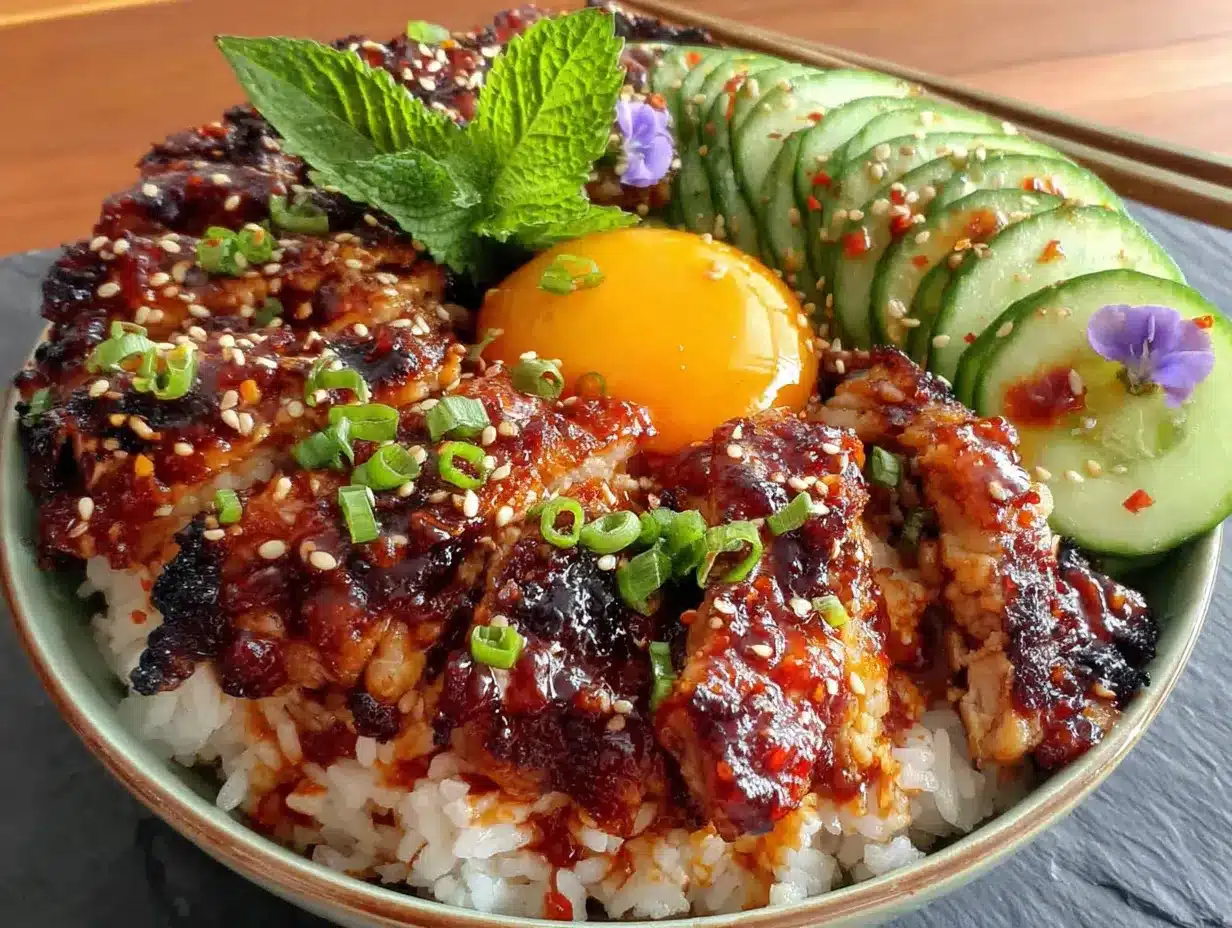
Let’s get cooking. This spicy gochujang chicken rice bowl comes together quickly, so have everything prepped before you start. Trust me on this one—it makes the whole process smoother.
- Start the rice first. Rinse 1 cup (200g) of rice under cold water until the water runs clear. This removes excess starch and prevents gummy rice. Add the rinsed rice to a saucepan with 1.5 cups (360ml) of water and a pinch of salt. Bring to a boil, then reduce heat to low, cover, and simmer for 18 minutes. Remove from heat and let it sit, covered, for 5 minutes. Fluff with a fork. If you’re using a rice cooker, just follow your machine’s instructions.
- Make the gochujang sauce. While the rice cooks, whisk together 3 tablespoons gochujang paste, 2 tablespoons soy sauce, 1 tablespoon honey or brown sugar, 1 tablespoon sesame oil, the minced garlic, and grated ginger in a small bowl. Taste it—it should be spicy, sweet, and savory all at once. Set aside.
- Prep the vegetables. Slice the cucumber into thin rounds or half-moons. Julienne the carrots into thin strips or use a vegetable peeler to make ribbons. Thinly slice the green onions, separating the white parts from the green tops. Toss the cucumber and carrots in a small bowl with 1 tablespoon rice vinegar and a pinch of salt. Let them sit while you cook the chicken—this quick pickle adds brightness and crunch.
- Cut the chicken. Pat the chicken thighs dry with paper towels. This step is important for getting good browning. Cut the thighs into bite-sized pieces, about 1-inch cubes. Season lightly with salt and pepper.
- Cook the chicken. Heat your large skillet or wok over medium-high heat. Add a drizzle of neutral oil (like vegetable or canola). Once the oil shimmers, add the chicken pieces in a single layer. Don’t crowd the pan—cook in two batches if needed. Let the chicken cook undisturbed for 3-4 minutes until golden brown on the bottom. Flip and cook another 3-4 minutes until cooked through and nicely browned. The chicken should reach an internal temperature of 165°F (74°C).
- Add the sauce. Reduce the heat to medium-low. Pour the gochujang sauce over the cooked chicken. Toss to coat every piece. Cook for 1-2 minutes, stirring constantly, until the sauce thickens and starts to caramelize on the chicken. You’ll see it get sticky and glossy—that’s exactly what you want. If it starts to dry out, add a tablespoon of water to loosen it up.
- Assemble the bowls. Divide the cooked rice among four bowls. Top with the glazed chicken. Add a generous handful of the quick-pickled cucumber and carrots. Sprinkle with the sliced green onion tops and toasted sesame seeds. If you want extra heat, drizzle a little more gochujang or sriracha on top.
A few notes from my kitchen: If the sauce gets too thick while cooking, don’t panic—just add a splash of water. And if you like your vegetables warm, you can toss them in the pan for 30 seconds after the chicken comes out. I usually keep mine cold for that temperature contrast, but you do you.
Cooking Tips & Techniques
After making this spicy gochujang chicken rice bowl more times than I can count, I’ve learned a few things the hard way. Let me save you some trouble.
Don’t skip the rice rinsing. I know it’s tempting to skip this step, especially on a busy weeknight. But unrinsed rice can turn gummy, and that sticky texture doesn’t work as well with the saucy chicken. Take the extra 30 seconds—it makes a difference.
High heat is your friend. When cooking the chicken, resist the urge to lower the heat. You want that golden-brown crust to develop. If the pan seems too hot and the chicken is burning before it’s cooked through, your pieces might be too large. Cut them smaller next time, or cook in smaller batches.
The sauce will seize up. The first time I made this, I thought I ruined the sauce when it suddenly got thick and sticky in the pan. That’s normal! Gochujang caramelizes quickly because of the sugar content. Just keep stirring and add a splash of water if needed. The glossy coating on the chicken is the goal.
Taste as you go. Gochujang brands vary in heat level. Some are mild and sweet, others will clear your sinuses. Start with 2 tablespoons and add more if you want it spicier. You can always add heat, but you can’t take it away.
Prep everything first. This is one of those recipes where mise en place matters. The cooking goes fast once you start, and you don’t want to be chopping cucumbers while the chicken burns. I learned this lesson the hard way—my smoke alarm still remembers.
Variations & Adaptations
One of the best things about this spicy gochujang chicken rice bowl is how flexible it is. Here are some ways to make it your own:
Vegetarian version: Swap the chicken for firm tofu or tempeh. Press the tofu first to remove excess moisture, then cube it and pan-fry until golden before adding the sauce. You can also use a mix of mushrooms—king oyster or shiitake work beautifully.
Low-carb option: Skip the rice and serve the chicken over cauliflower rice or a bed of mixed greens. The gochujang glaze is so flavorful that you won’t miss the grains. I’ve done this on days when I wanted something lighter, and it’s surprisingly satisfying.
Extra veggies: This bowl is a great way to use up whatever vegetables are in your fridge. Bell peppers, snap peas, shredded cabbage, or even leftover roasted broccoli all work well. In summer, I add thinly sliced radishes for extra crunch and a peppery bite.
Spice level adjustment: For a milder version, use only 1 tablespoon of gochujang and add an extra tablespoon of honey. For more heat, add a teaspoon of gochugaru (Korean chili flakes) or a drizzle of sriracha. My husband likes it so spicy it makes his ears sweat, so I usually make his separately with extra chili.
Different protein: This sauce works with almost any protein. I’ve made it with shrimp (cooks in 2-3 minutes), ground pork (brown and crumble before adding sauce), and even sliced beef sirloin (cook quickly over high heat). Each version has its own charm.
One of my favorite variations is adding a fried egg on top. The runny yolk mixes with the rice and sauce, creating this rich, silky texture that’s absolutely dreamy. Try it once, and you might never go back.
Serving & Storage Suggestions
This spicy gochujang chicken rice bowl is best served immediately while the chicken is warm and the vegetables are crisp. But it’s also surprisingly good at room temperature, which makes it perfect for summer picnics or outdoor dinners.
How to serve: Divide the rice among bowls, top with the glazed chicken, and arrange the pickled vegetables on the side. Garnish generously with green onions and sesame seeds. For a complete meal, serve with a side of kimchi or a simple cucumber salad. A cold beer or a glass of iced green tea pairs beautifully with the spicy flavors.
Storage: Store leftover components separately in airtight containers in the refrigerator. The chicken and rice will keep for up to 3 days. The pickled vegetables are best eaten within 24 hours—they lose their crunch after that. If you’ve already assembled the bowls, they’ll still be good for a day, but the vegetables will soften.
Reheating: The microwave works fine for the rice and chicken, but be careful not to overheat the chicken or it can become tough. Reheat in 30-second bursts, stirring between each. For best results, reheat the chicken in a skillet over medium heat with a splash of water to revive the sauce. The rice can be refreshed by sprinkling with a little water and microwaving covered.
Meal prep tip: This recipe is excellent for meal prep. Cook the rice and chicken, prep the vegetables, and store everything separately. When you’re ready to eat, just assemble and reheat. The flavors actually meld together nicely overnight, so leftovers taste even better the next day.
Nutritional Information & Benefits
While this spicy gochujang chicken rice bowl is a treat, it also offers some nutritional benefits worth noting. Here’s a rough breakdown per serving (based on 4 servings):
- Calories: approximately 480-520
- Protein: 35-40g
- Carbohydrates: 45-50g
- Fat: 15-18g
- Fiber: 3-4g
- Sugar: 8-10g
Gochujang contains capsaicin, which can boost metabolism and has anti-inflammatory properties. It’s also fermented, which means it contains probiotics that support gut health. The ginger and garlic in the sauce are both known for their immune-boosting benefits. And the fresh vegetables provide fiber, vitamins, and antioxidants.
If you’re watching your sodium intake, use low-sodium soy sauce and go easy on the added salt. The gochujang and soy sauce already contain plenty of sodium, so you likely won’t need extra.
For a lighter version, reduce the rice to half a cup per serving and double up on the vegetables. You’ll still get that satisfying bowl experience with fewer calories and more nutrients.
Conclusion
This spicy gochujang chicken rice bowl has become my go-to for summer nights when I want something delicious without spending hours in the kitchen. It’s the kind of recipe that proves simple ingredients and smart techniques can create something truly special. The heat from the gochujang, the cool crunch of the vegetables, the sticky rice that soaks up all that sauce—every bite is a little celebration of summer.
I hope you give this recipe a try and make it your own. Maybe you’ll add extra vegetables, dial up the spice, or discover a new favorite topping. That’s the beauty of bowls like this—they’re forgiving and flexible. And if you’re anything like me, you’ll find yourself making it on repeat, wondering why you ever thought dinner needed to be complicated.
I’d love to hear how it turns out for you. Drop a comment below and let me know if you tried any variations, or share a photo of your bowl. Happy cooking, and here’s to many more delicious summer nights!
Frequently Asked Questions
Can I make this spicy gochujang chicken rice bowl ahead of time?
Yes, this recipe is great for meal prep. Cook the rice and chicken, prep the vegetables, and store everything separately in the refrigerator for up to 3 days. Assemble when ready to eat and reheat the chicken and rice in the microwave or on the stovetop.
What can I use instead of gochujang?
If you can’t find gochujang, you can make a substitute by mixing 2 tablespoons of sriracha with 1 tablespoon of miso paste and 1 teaspoon of sugar. It won’t have the same fermented depth, but it will give you a similar spicy-sweet flavor profile.
Is this recipe gluten-free?
Gochujang is typically made from glutinous rice and is naturally gluten-free, but some brands may contain wheat. Check the label to be sure. Use tamari instead of soy sauce for a certified gluten-free version.
How do I reduce the spiciness?
Use only 1-2 tablespoons of gochujang and add an extra tablespoon of honey or brown sugar. You can also serve the bowl with a dollop of plain Greek yogurt or sour cream on top to cool things down.
Can I use frozen vegetables?
Fresh vegetables are best for the crunch factor, but frozen vegetables can work in a pinch. Thaw and drain them well before adding to the bowl. Keep in mind they’ll be softer than fresh ones.
Pin This Recipe!
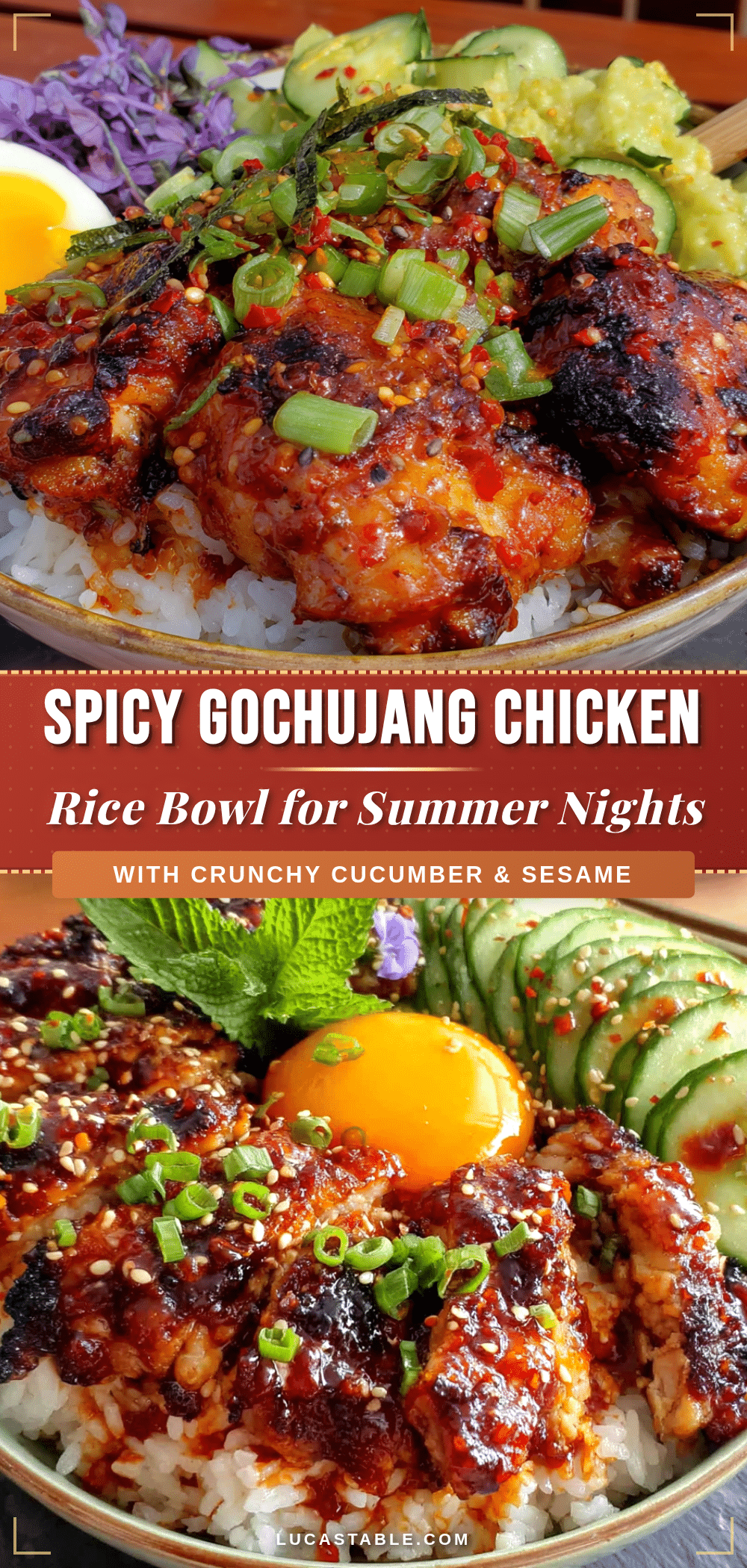
Spicy Gochujang Chicken Rice Bowl: Easy Summer Dinner
A quick and easy summer dinner featuring spicy gochujang-glazed chicken, sticky rice, and fresh crunchy vegetables, all in one bowl with minimal cleanup.
- Prep Time: 15 minutes
- Cook Time: 20 minutes
- Total Time: 35 minutes
- Yield: 4 servings 1x
- Category: Main Course
- Cuisine: Korean
Ingredients
- 3 tablespoons gochujang paste
- 1.5 pounds (about 680g) boneless, skinless chicken thighs
- 1 cup (200g) white rice (short-grain or medium-grain)
- 2 tablespoons soy sauce
- 1 tablespoon honey or brown sugar
- 1 tablespoon sesame oil
- 4 cloves garlic, minced
- 1 teaspoon fresh ginger, grated
- 1 medium cucumber
- 2 medium carrots
- 4–5 stalks green onions
- 1 tablespoon sesame seeds, toasted
- 1 tablespoon rice vinegar
- Salt and pepper to taste
- Neutral oil (vegetable or canola) for cooking
Instructions
- Rinse 1 cup (200g) of rice under cold water until the water runs clear. Add to a saucepan with 1.5 cups (360ml) of water and a pinch of salt. Bring to a boil, reduce heat to low, cover, and simmer for 18 minutes. Remove from heat and let sit, covered, for 5 minutes. Fluff with a fork.
- While the rice cooks, whisk together 3 tablespoons gochujang paste, 2 tablespoons soy sauce, 1 tablespoon honey or brown sugar, 1 tablespoon sesame oil, minced garlic, and grated ginger in a small bowl. Set aside.
- Slice the cucumber into thin rounds or half-moons. Julienne the carrots into thin strips or use a vegetable peeler to make ribbons. Thinly slice the green onions, separating white parts from green tops. Toss cucumber and carrots in a small bowl with 1 tablespoon rice vinegar and a pinch of salt. Let sit while cooking the chicken.
- Pat the chicken thighs dry with paper towels. Cut into bite-sized pieces, about 1-inch cubes. Season lightly with salt and pepper.
- Heat a large skillet or wok over medium-high heat. Add a drizzle of neutral oil. Once the oil shimmers, add the chicken pieces in a single layer (cook in two batches if needed). Cook undisturbed for 3-4 minutes until golden brown on the bottom. Flip and cook another 3-4 minutes until cooked through and nicely browned (internal temperature of 165°F / 74°C).
- Reduce heat to medium-low. Pour the gochujang sauce over the cooked chicken. Toss to coat every piece. Cook for 1-2 minutes, stirring constantly, until the sauce thickens and starts to caramelize on the chicken. If it starts to dry out, add a tablespoon of water to loosen it up.
- Divide the cooked rice among four bowls. Top with the glazed chicken. Add a generous handful of the quick-pickled cucumber and carrots. Sprinkle with sliced green onion tops and toasted sesame seeds. If desired, drizzle extra gochujang or sriracha on top.
Notes
Don’t skip rinsing the rice to avoid gumminess. Use high heat for browning the chicken. The sauce will thicken quickly due to sugar content; add a splash of water if needed. Taste gochujang first as heat levels vary by brand. Prep all ingredients before cooking as the process goes fast. For a milder version, use 1-2 tablespoons gochujang and extra honey. Leftovers can be stored separately for up to 3 days.
Nutrition
- Serving Size: 1 bowl
- Calories: 500
- Sugar: 9
- Sodium: 800
- Fat: 16
- Saturated Fat: 3
- Carbohydrates: 48
- Fiber: 3.5
- Protein: 37
Keywords: gochujang chicken rice bowl, spicy chicken bowl, Korean rice bowl, summer dinner, easy weeknight dinner, one-pan meal