“You’re not really going to cook that, right?” my roommate joked, eyeing the quick spicy Korean beef bowl I was tossing together after a brutally long day. Honestly, I wasn’t sure myself. The idea of whipping up something both fast and flavorful felt like wishful thinking. But here we were, just twenty minutes later, plates steaming with a dish that somehow nailed the perfect balance of heat, sweet, and savory. The smell alone—garlic mingling with toasted sesame and that unmistakable kick of gochujang—was enough to snap me out of the day’s chaos.
That night became a quiet revelation: this recipe isn’t just another rushed meal; it’s the kind that settles the soul without demanding hours in the kitchen. I made it more times than I care to admit that week, tweaking the spice level and adding a handful of crisp veggies or fresh scallions as I went along. It’s become my go-to for those nights when I want something comforting but vibrant, filling but not heavy.
There’s something quietly satisfying about a bowl that comes together so quickly yet tastes like you put in way more effort. The quick spicy Korean beef bowl stuck around because it’s honest food, the kind that feels like a warm hug at the end of a hectic day—no fuss, just pure, crave-worthy flavor.
Why You’ll Love This Recipe
This quick spicy Korean beef bowl is a real winner for anyone juggling busy schedules but craving bold, satisfying flavors. Having tested this recipe multiple times, I can attest to its balance of speed and taste, making it a trusty weeknight meal.
- Quick & Easy: Ready in under 25 minutes, perfect for last-minute dinners or when you’re craving something spicy and filling.
- Simple Ingredients: Uses pantry staples and common fridge items—no exotic shopping trips needed.
- Perfect for Weeknights: Ideal for those hectic evenings when you want comfort food without the wait.
- Crowd-Pleaser: The spicy-sweet flavor combo is loved by both kids and adults, with room to adjust the heat.
- Unbelievably Delicious: The tender beef, punchy gochujang sauce, and aromatic sesame oil combine for a mouthwatering experience.
This recipe isn’t just your average Korean beef bowl. The magic lies in the quick caramelization of the beef paired with a homemade sauce that balances richness and heat without overpowering. Plus, adding fresh garnishes like green onions or toasted sesame seeds gives it that restaurant-quality finish at home. It’s the kind of meal that makes you pause, close your eyes after the first bite, and savor something truly satisfying.
Whether you’re trying to impress guests or simply want a fuss-free dinner that feels special, this dish delivers every time.
What Ingredients You Will Need
This quick spicy Korean beef bowl relies on straightforward ingredients that pack a punch. Most are pantry staples, making this recipe accessible any day of the week. The key is balancing savory, spicy, and slightly sweet notes for that classic Korean flavor profile.
- Ground Beef (1 lb / 450 g): I prefer 80/20 lean-to-fat ratio for juicy, flavorful meat.
- Gochujang (Korean chili paste) (2 tbsp): The star ingredient—adds heat and umami. I recommend Chung Jung One brand for consistency.
- Soy Sauce (3 tbsp): Use low-sodium if preferred to control saltiness.
- Brown Sugar (1 tbsp): Balances out the spice with a touch of sweetness.
- Garlic (3 cloves, minced): Fresh garlic is a must for aroma and depth.
- Ginger (1 tsp, grated): Adds warmth and complexity.
- Sesame Oil (1 tbsp): Toasted sesame oil brings that nutty, fragrant finish.
- Vegetable Oil (1 tbsp): For cooking the beef.
- Green Onions (2, sliced): For freshness and crunch.
- Cooked Jasmine Rice (4 cups / 960 ml): Fluffy and fragrant, the perfect base.
- Sesame Seeds (1 tbsp): Optional, for garnish and texture.
- Red Pepper Flakes (optional, ½ tsp): For extra heat if you dare.
If you want to mix things up, adding shredded carrots or thinly sliced bell peppers works beautifully, especially if you’re aiming for a veggie boost. For a gluten-free option, swap regular soy sauce with tamari. I like to keep a jar of gochujang handy, as it’s a simple way to bring Korean flavors to many dishes—even fried rice gets a lovely kick from it.
Equipment Needed
- Large Skillet or Nonstick Pan: A sturdy pan with good heat retention is best for browning the beef evenly.
- Wooden Spoon or Silicone Spatula: For stirring and breaking up the ground beef.
- Knife and Cutting Board: For prepping garlic, ginger, and green onions.
- Measuring Spoons and Cups: To keep the sauce balanced.
- Rice Cooker or Pot: For perfectly cooked jasmine rice without hassle.
If you don’t have a rice cooker, no worries—just follow package instructions for stovetop rice. I personally love using a cast iron skillet for the beef because it gives a slight char that amps up the flavor. If you’re on a budget, any nonstick pan will do just fine, and using a silicone spatula makes cleanup easier.
Preparation Method
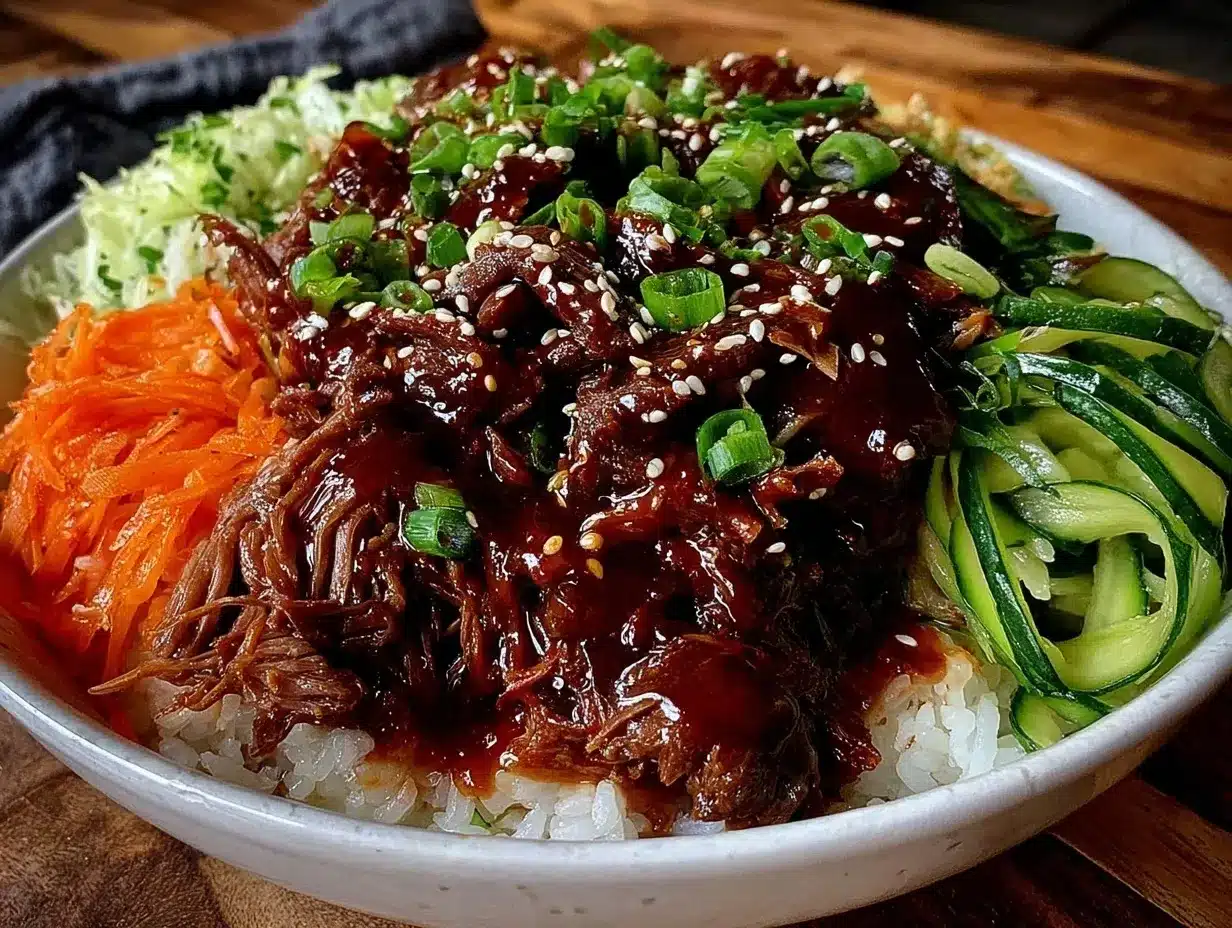
- Cook the Rice: Begin by cooking 4 cups (960 ml) of jasmine rice according to package instructions, which usually takes about 15 minutes. This way, your rice will be ready just as the beef finishes.
- Prep Aromatics: While the rice cooks, mince 3 garlic cloves and grate 1 tsp of fresh ginger. Slice 2 green onions thinly, keeping whites and greens separate for layering flavor.
- Brown the Beef: Heat 1 tbsp vegetable oil in a large skillet over medium-high heat. Add 1 lb (450 g) ground beef and cook for about 5-7 minutes, breaking it up with a wooden spoon. You want it nicely browned but not dry—look for little crispy edges forming.
- Add Aromatics and Sauce: Stir in minced garlic, grated ginger, and the white parts of the green onions. Cook for 1 minute until fragrant. Then mix in 2 tbsp gochujang, 3 tbsp soy sauce, and 1 tbsp brown sugar. Stir well to coat the beef evenly. Reduce heat to medium and simmer for 2-3 minutes, allowing the sauce to thicken slightly.
- Finish with Sesame Oil and Garnishes: Turn off the heat and drizzle 1 tbsp toasted sesame oil over the beef. Toss to combine. Serve immediately over the cooked jasmine rice, topped with sliced green onion greens and a sprinkle of sesame seeds. Add red pepper flakes if you want an extra kick.
One tip I’ve learned: don’t overcrowd the pan when browning the beef. If needed, brown in batches to get a better sear. Also, tasting the sauce before serving helps you adjust seasoning—sometimes a splash more soy or a pinch more sugar balances it perfectly. The smell of garlic and ginger cooking combined with that spicy, sweet sauce is a dead giveaway that dinner’s going to be good.
Cooking Tips & Techniques
Here are a few practical pointers to make your quick spicy Korean beef bowl turn out amazing every time:
- Choose the Right Beef: I’ve found that 80/20 ground beef strikes the perfect balance between flavor and fat content. Lean beef tends to dry out quickly, making the dish less juicy.
- Don’t Skip Browning: Getting those crispy bits on the beef adds texture and richness. Resist the urge to stir constantly—let the meat sit a bit to brown.
- Control the Spice: Gochujang can be spicy, but it also brings sweetness and depth. If you’re unsure, start with 1 tbsp and add more as you go. Red pepper flakes are great for extra heat but add sparingly.
- Multitask Efficiently: While your rice is cooking, prep your aromatics and get the beef going. This timing sync means dinner comes together fast with minimal waiting.
- Adjust Sauce Thickness: If the sauce seems too thin, cook a bit longer on medium heat to reduce it. Too thick? Add a splash of water or broth.
One time I accidentally added too much gochujang—it was fiery enough to clear the sinuses! Thankfully, a quick mix-in of brown sugar and a squeeze of lime balanced it out. Cooking is always a bit of an experiment, but that’s part of the fun.
Variations & Adaptations
This quick spicy Korean beef bowl is super adaptable, so you can make it your own depending on mood, dietary needs, or what’s in the fridge.
- Vegetarian Version: Swap ground beef for crumbled firm tofu or cooked lentils. Use mushroom soy sauce or liquid aminos for umami depth.
- Low-Carb Option: Serve the beef over cauliflower rice or sautéed greens instead of jasmine rice for a lighter, grain-free meal.
- Extra Veggies: Add shredded carrots, thinly sliced bell peppers, or snap peas. Toss them in with the aromatics for a quick sauté or serve fresh on top for crunch.
- Alternate Proteins: Ground turkey or chicken work well if you want a leaner protein. Adjust cooking time slightly to avoid drying out.
- Spice Variations: For a smoky twist, add a dash of smoked paprika or chipotle powder. Or try a drizzle of honey for a sweeter finish.
I once made this with shrimp instead of beef, stirring in the sauce just until the shrimp turned pink. It was a nice change that kept the flavors lively but lighter on the stomach.
Serving & Storage Suggestions
This beef bowl tastes best fresh and warm, right off the stove. Serve it with a side of steamed or pickled vegetables to cut through the richness. A simple cucumber kimchi or even a crisp salad pairs beautifully.
If you’re planning ahead, store leftover beef and rice separately in airtight containers in the fridge for up to 3 days. Reheat gently in a skillet or microwave, adding a splash of water to keep the beef moist.
For longer storage, freeze the cooked beef in portions for up to 2 months. Thaw overnight in the fridge before reheating. Keep in mind, the rice texture may change slightly after freezing, so fresh rice is always best.
Flavors tend to deepen after resting overnight, so this dish works well as a make-ahead lunch too. Just reheat and add fresh garnishes to brighten it up.
Nutritional Information & Benefits
Per serving (based on 4 servings): approximately 450 calories, 25g protein, 40g carbohydrates, and 18g fat. This dish provides a solid protein boost from beef and contains beneficial antioxidants and vitamins from garlic and ginger.
Gochujang, made from fermented chili paste, offers probiotics and can aid digestion. Using brown sugar in moderation keeps the sweetness balanced without excess.
This recipe can be adapted for gluten-free diets by choosing tamari soy sauce and served low-carb by swapping out rice. Be mindful of sesame and soy allergens.
From a wellness perspective, this bowl offers a satisfying balance of macronutrients and spices known to stimulate the metabolism while delivering comfort and warmth.
Conclusion
Quick, bold, and packing a punch, this spicy Korean beef bowl quickly became one of my favorite weeknight meals—not just for its flavor but for how it fits into a busy life. It proves you can enjoy a complex-tasting dish without spending hours in the kitchen or hunting down hard-to-find ingredients.
Feel free to tweak the heat level, add your favorite veggies, or swap proteins to make it truly yours. For me, it’s the kind of recipe that brings a little excitement and warmth to the dinner table, even after the toughest day.
If you try this recipe, I’d love to hear how you make it your own. Drop a comment or share your variations—you might inspire someone else’s dinner tonight. Here’s to tasty, stress-free meals that keep us coming back for more.
FAQs
- Can I use beef strips instead of ground beef?
Yes! Thinly sliced beef strips work well—just adjust cooking time to avoid overcooking. - How spicy is this recipe?
It has a moderate heat level thanks to gochujang, but you can easily dial it up or down by adjusting the chili paste and red pepper flakes. - What can I substitute for gochujang if I can’t find it?
Mix miso paste with a bit of chili powder or sriracha as a quick alternative, though the flavor won’t be exactly the same. - Can I prepare this recipe ahead of time?
Yes, you can make the beef portion a day ahead and reheat it. Cook rice fresh or reheat with a splash of water for best texture. - Is this recipe freezer-friendly?
The beef freezes well in portions. Rice may lose texture after freezing, so consider cooking fresh rice when ready to eat.
Pin This Recipe!
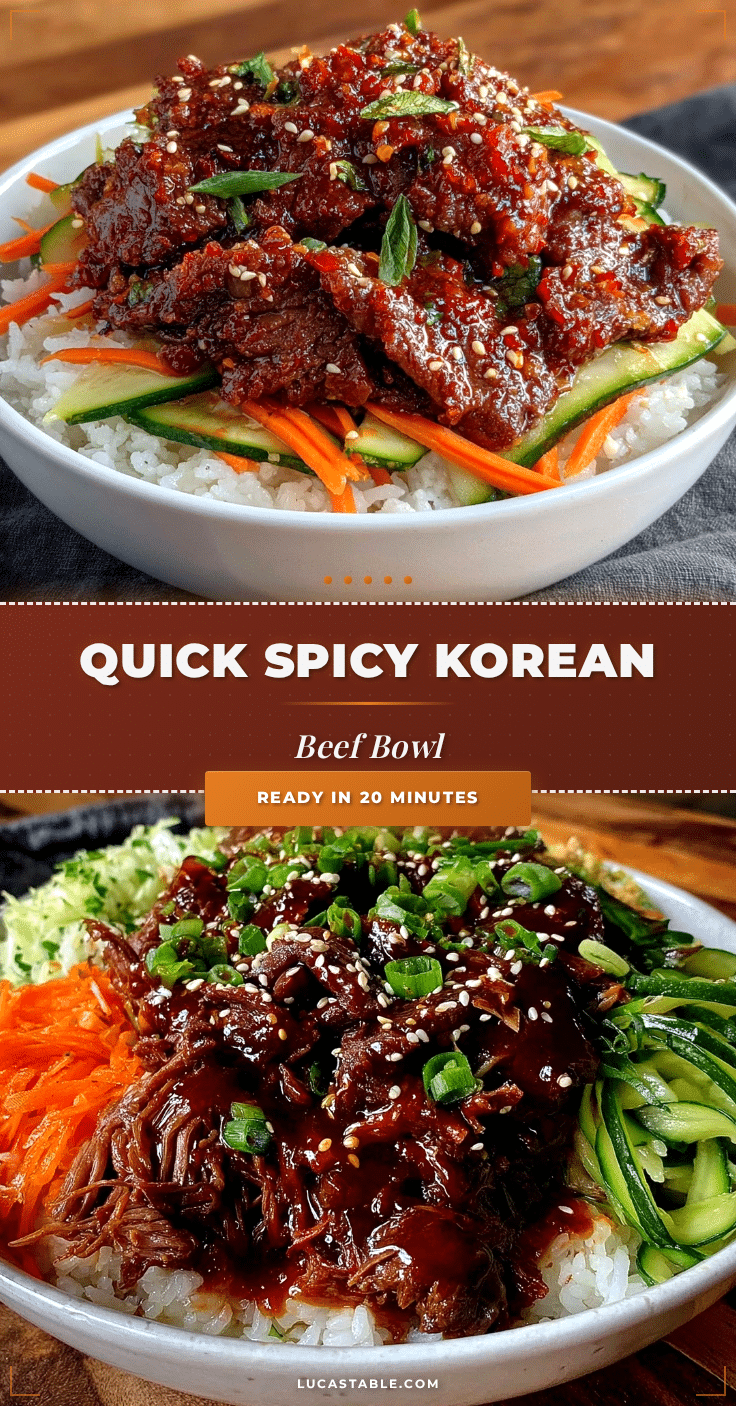
Quick Spicy Korean Beef Bowl
A fast and flavorful Korean beef bowl that balances heat, sweet, and savory, perfect for busy weeknights. Ready in under 25 minutes using simple pantry staples.
- Prep Time: 10 minutes
- Cook Time: 15 minutes
- Total Time: 25 minutes
- Yield: 4 servings 1x
- Category: Main Course
- Cuisine: Korean
Ingredients
- 1 lb (450 g) ground beef (80/20 lean-to-fat ratio)
- 2 tbsp gochujang (Korean chili paste)
- 3 tbsp soy sauce (low-sodium preferred)
- 1 tbsp brown sugar
- 3 cloves garlic, minced
- 1 tsp fresh ginger, grated
- 1 tbsp toasted sesame oil
- 1 tbsp vegetable oil
- 2 green onions, sliced (whites and greens separated)
- 4 cups cooked jasmine rice
- 1 tbsp sesame seeds (optional)
- ½ tsp red pepper flakes (optional)
Instructions
- Cook 4 cups (960 ml) of jasmine rice according to package instructions, about 15 minutes.
- While rice cooks, mince garlic, grate ginger, and slice green onions, keeping whites and greens separate.
- Heat 1 tbsp vegetable oil in a large skillet over medium-high heat. Add ground beef and cook 5-7 minutes, breaking it up, until browned with some crispy edges.
- Add minced garlic, grated ginger, and white parts of green onions to the beef. Cook 1 minute until fragrant.
- Stir in gochujang, soy sauce, and brown sugar. Mix well to coat beef evenly. Reduce heat to medium and simmer 2-3 minutes to thicken sauce.
- Turn off heat and drizzle toasted sesame oil over beef. Toss to combine.
- Serve beef immediately over cooked jasmine rice, topped with green onion greens and sesame seeds. Add red pepper flakes for extra heat if desired.
Notes
Do not overcrowd the pan when browning beef; brown in batches if needed for better sear. Adjust spice level by varying gochujang and red pepper flakes. Taste sauce before serving and adjust soy sauce or sugar as needed. For gluten-free, use tamari instead of soy sauce. Leftovers store well in fridge for 3 days; freeze beef separately for up to 2 months.
Nutrition
- Serving Size: 1 bowl (approximatel
- Calories: 450
- Fat: 18
- Carbohydrates: 40
- Protein: 25
Keywords: Korean beef bowl, spicy beef bowl, quick dinner, gochujang recipe, weeknight meal, easy Korean recipe