“You won’t believe what happened when I tried to make this honey balsamic glazed pork tenderloin the first time,” my friend said, sliding a plate across the table. Honestly, I was skeptical. Pork tenderloin can be tricky—dry if overcooked, bland if not seasoned right. But this one? It was juicy, with a shiny, sticky glaze that made me want to lick the plate clean.
I remember standing in my kitchen, half-expecting the glaze to burn or the pork to turn out tough. Instead, it turned into a quick, fuss-free dinner that had everyone asking for seconds. The sweet tang of honey mixed with the rich depth of balsamic vinegar created this flavor combo that somehow felt fancy but was super easy to pull off. I found myself making this recipe multiple times that week—sometimes tweaking the honey or adding a pinch of herbs, but always ending up with that same satisfying flavor.
Now, whenever I catch a whiff of balsamic vinegar or honey caramelizing in the pan, I’m reminded of that quiet evening where a simple pork tenderloin saved the day. It’s the kind of recipe that’s perfect for when you want to impress without stressing, or just treat yourself to something a little special after a long day. I’m sharing it here because it deserves a spot in your rotation, too—trust me, once you try this honey balsamic glazed pork tenderloin, you’ll get why it stuck around in my kitchen.
Why You’ll Love This Recipe
This honey balsamic glazed pork tenderloin has quickly become a staple in my kitchen for several reasons. It’s the kind of dish that feels special but doesn’t demand hours of prep or complicated ingredients—which is a win in my book!
- Quick & Easy: Ready in about 35 minutes from start to finish, making it perfect for busy weeknights or unexpected guests.
- Simple Ingredients: The glaze uses pantry staples like honey and balsamic vinegar, so you likely have everything on hand already.
- Perfect for Dinner Parties: It looks impressive on the plate with that glossy, caramelized finish, yet it’s straightforward enough to make for casual family meals.
- Crowd-Pleaser: The balance of sweet and tangy flavors appeals to a wide range of tastes—kids and adults alike often ask for seconds.
- Unbelievably Delicious: The pork stays juicy and tender, while the glaze creates a mouthwatering sticky coating that’s out of this world.
What sets this recipe apart is the way the honey and balsamic vinegar work together without overpowering the pork. Instead of a heavy, cloying sauce, you get a beautifully balanced glaze that enhances the meat’s natural flavor. I often think about how it compares to dishes like quick balsamic chicken recipes—this pork version has that same tangy brightness but feels a bit more indulgent thanks to the honey’s caramelization.
This is not just another pork tenderloin recipe; it’s the one that feels like a hug on a plate, yet keeps things light and fresh. Honestly, it’s the kind of dish that makes you pause for a moment after the first bite, appreciating how something so simple can taste so satisfying.
What Ingredients You Will Need
This recipe relies on a handful of straightforward, easy-to-find ingredients that come together to create a bold, flavorful glaze and tender pork. I keep these staples in my kitchen almost always, which makes whipping this up a breeze.
- Pork Tenderloin: About 1 to 1.5 pounds (450 to 680 grams), trimmed of excess fat and silver skin. This cut is lean but tender when cooked right.
- Honey: ¼ cup (85 grams) – I prefer raw or wildflower honey for its natural sweetness and depth.
- Balsamic Vinegar: ¼ cup (60 ml) – Look for a good quality balsamic with a nice balance of acidity and sweetness (I like Colavita).
- Olive Oil: 2 tablespoons (30 ml) – For searing and adding richness.
- Garlic: 3 cloves, minced – Adds a savory punch.
- Dijon Mustard: 1 tablespoon (15 grams) – Brings a subtle tang that brightens the glaze.
- Fresh Rosemary or Thyme: 1 teaspoon fresh, chopped (or ½ teaspoon dried) – Optional, but it adds a lovely herbal note.
- Salt and Pepper: To taste – Essential for seasoning the pork and balancing flavors.
- Water or Chicken Broth: 2 tablespoons (30 ml) – Helps thin the glaze during cooking if it gets too thick.
If you want to swap things up, almond or coconut nectar can replace honey for a different sweetness profile, and using apple cider vinegar instead of balsamic will give a lighter tang. For gluten-free options, just double-check your mustard and broth labels.
One tip: I always pat the pork dry before seasoning to get a good sear, and I like to let it sit at room temperature for about 15 minutes before cooking for even results. If fresh herbs aren’t available, dried herbs work just fine here, but add them earlier for more flavor release.
Equipment Needed
- Heavy Skillet or Cast Iron Pan: For searing the pork tenderloin to get that beautiful crust. A cast iron pan works great because it retains heat evenly.
- Oven or Stove with Oven-Safe Skillet: The pork finishes cooking in the oven, so having an oven-safe pan is a plus. If you don’t have one, transfer to a baking dish after searing.
- Meat Thermometer: Highly recommended to check the internal temperature for perfect doneness (145°F or 63°C is ideal for pork tenderloin).
- Small Mixing Bowl: To whisk together the honey balsamic glaze ingredients before using.
- Wooden Spoon or Heat-Resistant Spatula: For stirring the glaze as it thickens.
For those on a budget, a good non-stick skillet can substitute for cast iron, but you might not get quite the same sear. I learned the hard way that a dull pan won’t caramelize the glaze properly. Also, keeping your pans well-seasoned (if cast iron) or clean helps prevent sticking and burning.
Preparation Method
- Preheat your oven to 400°F (200°C). While it heats up, pat the pork tenderloin dry with paper towels to remove moisture. This step is crucial for a good sear.
- Season the pork generously with salt and pepper. If you have time, let it rest at room temperature for 15 minutes—this helps it cook evenly.
- Heat 2 tablespoons (30 ml) of olive oil in your skillet over medium-high heat. When the oil shimmers, add the pork tenderloin. Sear on all sides, about 3-4 minutes per side, until golden brown. This seals in the juices and builds flavor.
- While the pork sears, whisk together the glaze: In a small bowl, combine ¼ cup (85 grams) honey, ¼ cup (60 ml) balsamic vinegar, minced garlic, 1 tablespoon (15 grams) Dijon mustard, and chopped rosemary or thyme if using.
- Once the pork is seared, pour the glaze over it in the skillet. Transfer the skillet to the preheated oven (or transfer pork and glaze to a baking dish if your skillet isn’t oven-safe).
- Roast for about 15-20 minutes, basting the pork with the glaze every 5 minutes. Use a spoon to drizzle the thickening glaze over the meat. The glaze should bubble and thicken but watch closely to avoid burning.
- Check the internal temperature with a meat thermometer. When it reaches 145°F (63°C), remove from the oven. If the glaze is too thick or starting to burn, add 1-2 tablespoons (15-30 ml) water or chicken broth to loosen it up.
- Let the pork rest for 5-10 minutes before slicing. This helps redistribute the juices and keeps the meat tender.
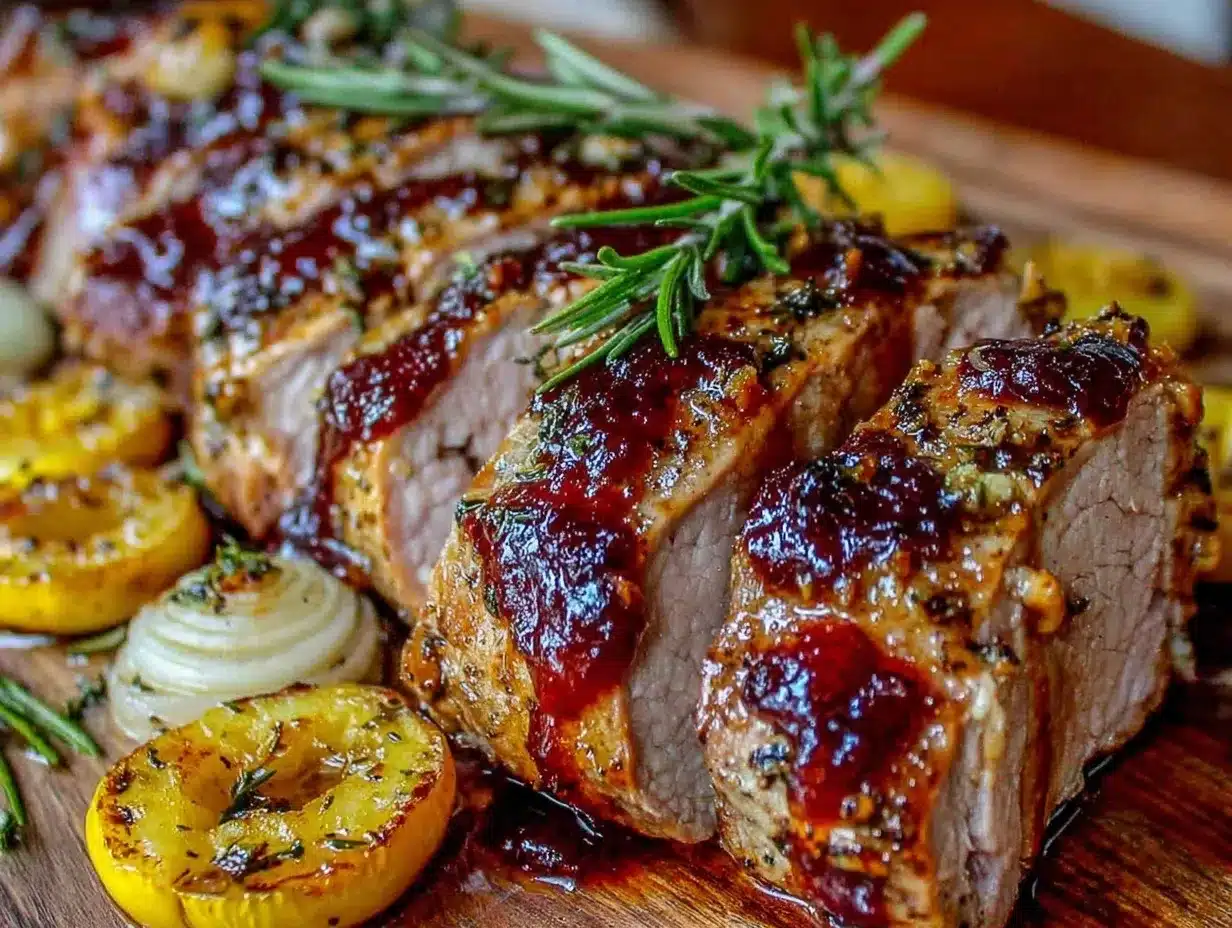
- Slice the pork into medallions and spoon extra glaze on top. Serve warm, ideally with a simple side like roasted veggies or creamy mashed potatoes.
Pro tip: Keep an eye on the glaze during roasting—it can go from perfect to burnt pretty fast. Also, don’t skip the resting step; I’ve learned that rushing to slice right away dries out the tenderloin.
Cooking Tips & Techniques
One thing I’ve learned from repeated attempts at pork tenderloin is that temperature control is everything. Searing the meat first locks in juices, but if your pan gets too hot, the glaze can burn quickly. That’s why medium-high heat is a sweet spot.
Using a meat thermometer is a game-changer. I used to guess, and sometimes ended up with dry pork. Now, hitting that 145°F (63°C) mark makes all the difference between juicy and overdone.
The glaze thickens as it cooks, so it’s tempting to pile it on, but a thin, even coat basted regularly gives the best sticky finish without bitterness. If the glaze thickens too much, adding a splash of water or broth helps keep it glossy and prevents burning.
Multitasking works well here—while the pork roasts, prepare a quick salad or whip up some zesty lemon chicken marinade for another meal. It’s a good way to optimize cooking time.
Lastly, don’t skip the rest period after cooking. I’ve learned the hard way that slicing immediately cools the meat quickly and squeezes out the juices. Give it 5-10 minutes for the perfect tender bite.
Variations & Adaptations
This honey balsamic glazed pork tenderloin recipe is pretty flexible, so feel free to make it your own!
- Spicy Twist: Add a pinch of red pepper flakes to the glaze for a subtle heat that balances the sweetness.
- Herb Variations: Swap rosemary for fresh sage or oregano depending on your mood or what’s in season.
- Gluten-Free Option: Use gluten-free Dijon mustard and check that your broth is gluten-free if you add it to thin the glaze.
- Slow Cooker Adaptation: Sear the pork as usual, then transfer to a slow cooker with the glaze and cook on low for 3-4 hours. The glaze won’t caramelize as much, but the pork will be tender and flavorful.
- Fruit Infusion: Add a splash of orange juice or a handful of fresh or frozen cherries to the glaze for a fruity contrast.
One variation I really enjoyed was adding a touch of soy sauce to the glaze for an umami boost—it gave the pork a subtle Asian-inspired flair without overpowering the honey’s sweetness.
Serving & Storage Suggestions
This glazed pork tenderloin is best served warm, right after resting. The sticky honey balsamic glaze is its star, so presenting the sliced medallions with extra glaze spooned over looks and tastes fantastic.
Pair it with simple sides like roasted garlic potatoes, steamed green beans, or a crisp salad. For a comforting meal, creamy mashed potatoes or even a quick creamy tuna pasta on the side bring balance to the tangy glaze.
Leftovers store well in an airtight container in the fridge for up to 3 days. Reheat gently in a skillet over low heat to keep the glaze from burning and the pork juicy. You can also slice the pork cold for sandwiches or salads.
Flavors mellow and deepen after resting overnight, so sometimes I make the pork a day ahead for a more developed taste. Just reheat carefully and add a little water if the glaze thickens too much.
Nutritional Information & Benefits
Per serving (based on 4 servings): approximately 280 calories, 6 grams fat, 30 grams protein, 12 grams carbohydrates, and 1 gram fiber.
Pork tenderloin is a lean cut high in protein and low in fat, making it a great choice for balanced meals. The honey provides natural sweetness along with antioxidants, while balsamic vinegar adds flavor without extra calories. Garlic and herbs contribute vitamins and antioxidants, too.
This recipe fits well within gluten-free and low-carb diets if served with suitable sides. The moderate honey amount keeps sugar levels reasonable, making it a realistic comfort-food option for health-conscious eaters without sacrificing flavor.
Conclusion
This flavorful honey balsamic glazed pork tenderloin has earned its spot as a go-to in my kitchen simply because it hits all the marks: juicy pork, a luscious glaze, and easy prep. It’s a recipe that feels special but is forgiving enough for weeknight cooking.
Whether you keep it classic or experiment with spice or herbs, this dish is a reliable crowd-pleaser that can easily become your new favorite. I love how it brings a little wow factor to dinner without making you work overtime, and I hope you find the same joy in it.
Give it a try, tweak it to your taste, and share how it turns out—I’m always curious about your twists and tips. Here’s to many tasty meals ahead!
Frequently Asked Questions
Can I use pork chops instead of pork tenderloin for this recipe?
Yes, pork chops can work, but cooking times will vary. Sear them similarly and adjust roasting time until they reach 145°F (63°C) internal temperature. Keep an eye on the glaze so it doesn’t burn.
How do I prevent the honey balsamic glaze from burning?
Use medium-high heat to sear, then roast at a moderate oven temperature (400°F/200°C). Baste the pork regularly and add a splash of water or broth if the glaze thickens too much or starts to stick to the pan.
Can I prepare the glaze ahead of time?
Absolutely! Mix the glaze ingredients in advance and store in the fridge for up to 2 days. Bring to room temperature before using to ensure it coats evenly during cooking.
What sides pair best with honey balsamic glazed pork tenderloin?
Roasted vegetables, mashed potatoes, or a fresh green salad complement the rich glaze nicely. For a more filling meal, try pairing with creamy pastas like butter chicken pasta or hearty grain bowls.
Is this recipe suitable for meal prepping?
Yes! The glazed pork keeps well in the fridge for a few days and tastes great reheated. Slice it and pack with your preferred sides for easy lunches or dinners throughout the week.
Pin This Recipe!
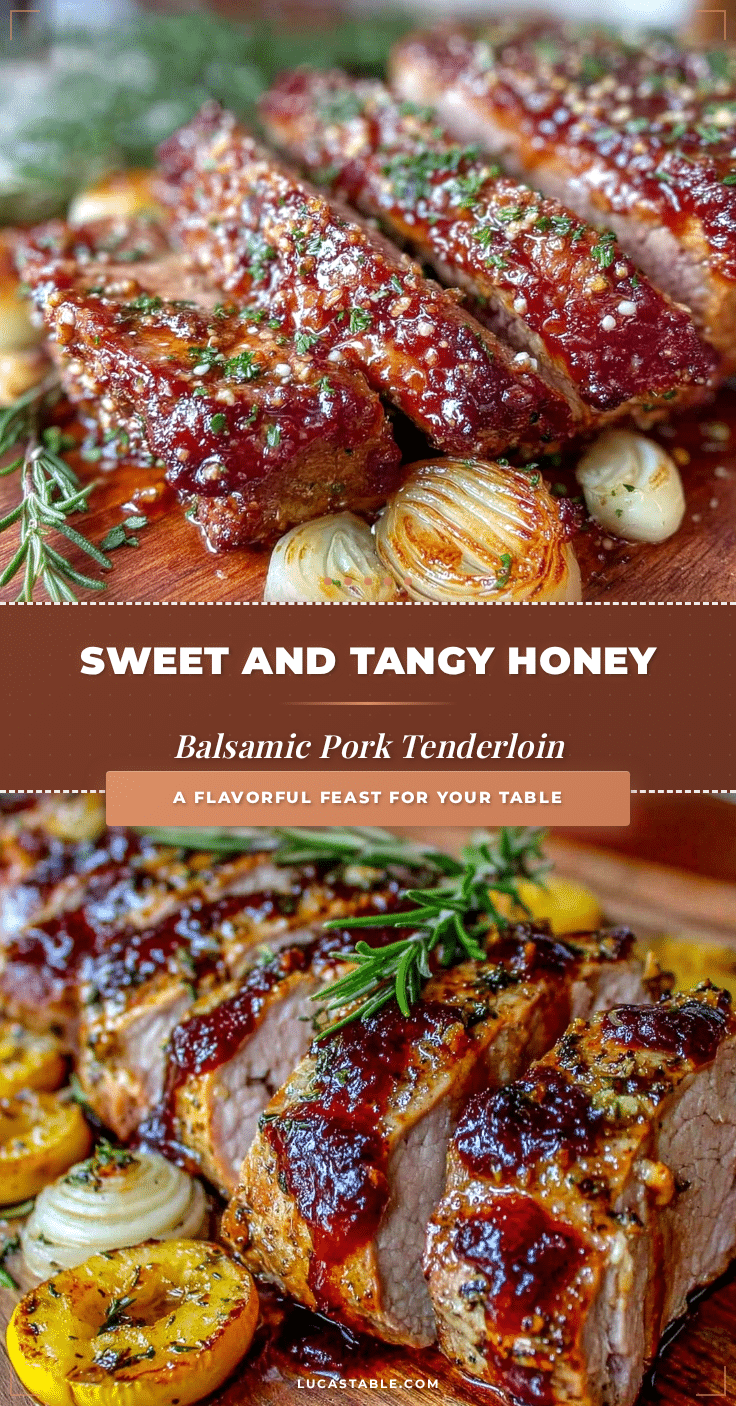
Flavorful Honey Balsamic Glazed Pork Tenderloin
A quick and easy honey balsamic glazed pork tenderloin recipe that delivers juicy, tender pork with a shiny, sticky glaze perfect for weeknight dinners or entertaining.
- Prep Time: 15 minutes
- Cook Time: 20 minutes
- Total Time: 35 minutes
- Yield: 4 servings 1x
- Category: Main Course
- Cuisine: American
Ingredients
- 1 to 1.5 pounds pork tenderloin, trimmed of excess fat and silver skin
- 1/4 cup (85 grams) honey (raw or wildflower preferred)
- 1/4 cup (60 ml) balsamic vinegar
- 2 tablespoons (30 ml) olive oil
- 3 cloves garlic, minced
- 1 tablespoon (15 grams) Dijon mustard
- 1 teaspoon fresh rosemary or thyme, chopped (or 1/2 teaspoon dried, optional)
- Salt and pepper to taste
- 2 tablespoons (30 ml) water or chicken broth (to thin glaze if needed)
Instructions
- Preheat your oven to 400°F (200°C). Pat the pork tenderloin dry with paper towels to remove moisture.
- Season the pork generously with salt and pepper. Let it rest at room temperature for 15 minutes if possible.
- Heat 2 tablespoons (30 ml) olive oil in a skillet over medium-high heat. When the oil shimmers, add the pork tenderloin and sear on all sides for 3-4 minutes per side until golden brown.
- While the pork sears, whisk together the glaze ingredients in a small bowl: honey, balsamic vinegar, minced garlic, Dijon mustard, and chopped rosemary or thyme if using.
- Pour the glaze over the seared pork in the skillet. Transfer the skillet to the preheated oven (or transfer pork and glaze to a baking dish if skillet is not oven-safe).
- Roast for 15-20 minutes, basting the pork with the glaze every 5 minutes. Add 1-2 tablespoons (15-30 ml) water or chicken broth if the glaze thickens too much or starts to burn.
- Check the internal temperature with a meat thermometer; remove from oven when it reaches 145°F (63°C).
- Let the pork rest for 5-10 minutes before slicing to redistribute juices.
- Slice the pork into medallions and spoon extra glaze on top. Serve warm.
Notes
Pat pork dry before searing for a good crust. Use medium-high heat to avoid burning glaze. Baste regularly and add water or broth if glaze thickens too much. Let pork rest before slicing to keep it juicy. Glaze can be prepared up to 2 days ahead and stored in the fridge.
Nutrition
- Serving Size: 1/4 of the pork tend
- Calories: 280
- Fat: 6
- Carbohydrates: 12
- Fiber: 1
- Protein: 30
Keywords: honey balsamic pork tenderloin, glazed pork tenderloin, easy pork recipe, quick dinner, balsamic glaze, honey glaze, pork tenderloin recipe