“Are you sure this will taste good?” my partner asked, eyebrows raised as I slathered thick balsamic glaze over a pink pork tenderloin. Honestly, I wasn’t totally convinced either. It was one of those evenings when I was half distracted—juggling emails, a barking dog, and a fridge that looked like a tornado hit it. I grabbed what was handy: pork tenderloin and asparagus, and a bottle of balsamic vinegar that had been sitting untouched for months.
As the pork roasted, filling the kitchen with that unmistakable tangy-sweet aroma, I found myself sneaking bites of the glaze off the spoon, surprised by how balanced and rich it was. The roasted asparagus, tossed with olive oil and garlic, crisped up perfectly alongside. What started as a rushed, no-fuss dinner turned into a quiet little culinary win. The kind that makes you realize sometimes simple ingredients and a little patience are all you really need.
This recipe stuck with me because it’s not just about the food—it’s about those moments of calm in a chaotic day, when cooking becomes grounding rather than another task. The balsamic glaze, with its deep, glossy finish, pairs so naturally with the tender pork and crunchy asparagus that it almost feels like a special occasion, even on a random Tuesday night. It’s a dish I keep coming back to whenever I need a low-effort, high-flavor reset.
So, if you’re looking for a meal that’s both straightforward and quietly impressive, this Perfect Balsamic Glazed Pork Tenderloin with Roasted Asparagus might be just the answer. It’s the kind of recipe that earns second helpings and genuine compliments, without requiring hours or fancy ingredients. Just a few simple steps, and you’re set for a satisfying dinner that feels anything but ordinary.
Why You’ll Love This Recipe
Having made this balsamic glazed pork tenderloin countless times, I can honestly say it’s one of my top picks for both busy weeknights and low-key weekend dinners. The balance of flavors and textures makes it a reliable crowd-pleaser that doesn’t demand a ton of effort or complicated prep.
- Quick & Easy: Ready in about 40 minutes from start to finish, this recipe fits nicely into a busy schedule without feeling rushed.
- Simple Ingredients: You probably already have most of these in your pantry—no need for specialty shopping trips.
- Perfect for Weeknight Dinners: It’s filling yet light enough that you won’t feel weighed down, making it ideal for a midweek reset.
- Crowd-Pleaser: My friends and family consistently ask for this one, especially the balsamic glaze that brings the whole dish together.
- Unbelievably Delicious: The pork stays juicy and tender while the roasted asparagus adds a fresh, crisp contrast. The glaze’s tangy-sweet finish is just right—not overpowering, but memorable.
- Unique Touch: Unlike other pork tenderloin recipes, this one uses a reduction-style balsamic glaze that thickens beautifully, clinging to the meat and veggies with a glossy sheen. It’s a subtle trick I picked up that really steps up the flavor game.
Honestly, this recipe isn’t just food—it’s comfort without the fuss. It’s one of those meals that makes you pause, savor, and maybe even close your eyes for a second bite. If you’re after a dish that’s both reliable and a little special, this one’s worth keeping in your back pocket.
What Ingredients You Will Need
This recipe uses straightforward, wholesome ingredients to deliver bold flavors and a satisfying texture without any fuss. Most are pantry staples, and the asparagus adds a seasonal, fresh touch that’s easy to swap out if needed.
- Pork Tenderloin: One whole pork tenderloin (about 1 to 1.25 pounds / 450-570 grams), trimmed of excess fat and silver skin for the best texture.
- Balsamic Vinegar: ½ cup (120 ml) good-quality balsamic vinegar. I recommend Colavita or Modenaceti for a rich, balanced flavor.
- Brown Sugar: 2 tablespoons (25 grams) to help the glaze caramelize and add just the right touch of sweetness.
- Garlic: 3 cloves, minced. Fresh garlic always makes a difference; it adds a warm, aromatic base.
- Olive Oil: 3 tablespoons (45 ml), divided. Use extra virgin for roasting asparagus and a bit for searing the pork.
- Dijon Mustard: 1 teaspoon (5 ml) to add a subtle tang and help emulsify the glaze.
- Fresh Thyme: 1 tablespoon (about 3 grams) of leaves, or 1 teaspoon dried. Adds earthiness and pairs beautifully with pork.
- Salt and Pepper: To taste. I usually go with kosher salt and freshly cracked black pepper for the best seasoning.
- Asparagus: 1 bunch (about 1 pound / 450 grams), trimmed. Look for firm, bright green stalks without wilting tips.
Substitution tips: If you’re gluten-free, this recipe is naturally safe. For a dairy-free version, no changes needed since it uses no butter. Feel free to swap asparagus with green beans or broccolini if you prefer.
Equipment Needed
- Ovenproof Skillet or Cast Iron Pan: Ideal for searing pork and finishing it in the oven. If you don’t have one, a regular skillet and a baking dish will work fine—just transfer the pork after searing.
- Baking Sheet: For roasting the asparagus. A rimmed sheet helps contain any drips and makes cleanup easier.
- Meat Thermometer: Optional but highly recommended to check pork’s internal temperature for perfect doneness.
- Mixing Bowls: For preparing the glaze and tossing asparagus.
- Whisk or Spoon: For mixing the balsamic glaze ingredients.
I personally prefer using my cast iron skillet here because it holds heat well and helps get that nice crust on the pork. Plus, it goes straight from stovetop to oven, saving a dish (and time). For those budget-conscious cooks, a sturdy stainless steel pan and a baking sheet will do the trick perfectly.
Preparation Method
- Preheat your oven to 425°F (220°C). This high heat helps roast the asparagus beautifully and finish the pork with a nice crust.
- Prepare the pork tenderloin: Pat it dry with paper towels to remove moisture (this helps with browning). Season generously with salt, pepper, and half of the fresh thyme leaves.
- Heat 1 tablespoon (15 ml) olive oil in your ovenproof skillet over medium-high heat. When shimmering, add the pork and sear on all sides—about 3-4 minutes per side—until golden brown. This step locks in juices and adds flavor.
- While the pork sears, prepare the balsamic glaze: In a small saucepan, combine balsamic vinegar, brown sugar, minced garlic, Dijon mustard, and remaining thyme. Bring to a gentle simmer over medium heat, whisking occasionally. Let it reduce until thickened and syrupy, about 8-10 minutes. Watch carefully to avoid burning.
- Trim the asparagus and place it on a baking sheet. Drizzle with 2 tablespoons (30 ml) olive oil, sprinkle with salt and pepper, and toss to coat evenly.
- Transfer the seared pork tenderloin to the oven (still in the skillet or on a baking dish). Roast for about 15-20 minutes, or until the internal temperature reaches 145°F (63°C). Insert a meat thermometer into the thickest part to check.
- At the same time, place the asparagus in the oven. Roast for 12-15 minutes, turning once halfway through. The stalks should be tender-crisp with slight caramelized edges.
- Once the pork is done, remove from oven and let it rest for 5-10 minutes. This step is crucial to allow juices to redistribute, making the meat tender and juicy.
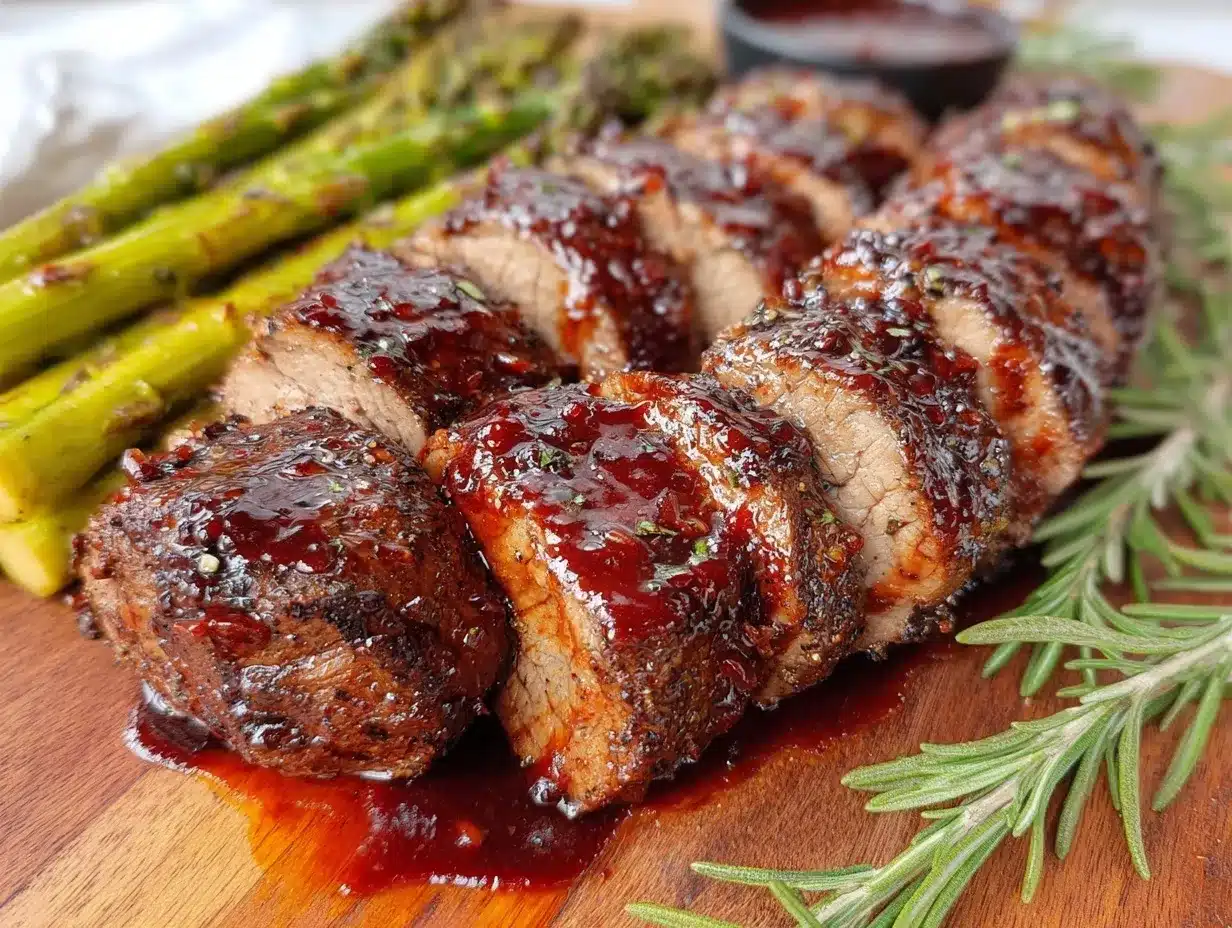
- Slice the pork into medallions, drizzle generously with the balsamic glaze, and serve alongside the roasted asparagus. The glaze should be thick and glossy, clinging to the pork beautifully.
Tip: If your glaze thickens too much and becomes hard to pour, warm it gently before serving. Also, don’t skip the resting step—it really makes a difference in tenderness.
Cooking Tips & Techniques
Getting a tender, juicy pork tenderloin with a perfectly sticky balsamic glaze isn’t rocket science, but there are a few tricks that make all the difference.
- Searing is key: Don’t rush this step. A good sear locks in flavor and gives that satisfying crust. Use a hot pan and resist moving the pork too much.
- Watch your glaze carefully: Balsamic vinegar reduces fast and can burn easily. Keep the heat moderate and stir often. It should coat the back of a spoon when ready.
- Use a meat thermometer: Pork tenderloin is lean and can dry out fast. Pull it at 145°F (63°C) for a juicy, slightly pink center. It’ll keep cooking a bit while resting.
- Roast the asparagus evenly: Try to pick similar-sized stalks for uniform cooking. Tossing halfway through ensures even caramelization.
- Don’t skip resting: Letting the pork rest keeps the juices locked inside, preventing dryness. Tent loosely with foil while resting.
- Multitasking: Start your glaze first while prepping the pork, then get the asparagus ready before roasting both together. This keeps your timing tight and efficient.
Over the years, I’ve learned that these small steps add up to a big difference. For instance, I once skipped resting and ended up with dry pork (lesson learned!). Now, it’s my non-negotiable step.
Variations & Adaptations
This balsamic glazed pork tenderloin recipe is flexible enough to suit different tastes and dietary needs.
- Flavor twists: Try adding a teaspoon of fresh rosemary to the glaze for an aromatic twist. Or swap brown sugar with honey for a floral sweetness.
- Vegetable swaps: If asparagus isn’t your thing, green beans, broccolini, or even roasted Brussels sprouts work beautifully alongside.
- Spicy kick: Add a pinch of red pepper flakes to the glaze for subtle heat that balances the sweetness.
- Cooking method: Prefer grilling? Sear the pork on a hot grill and finish over indirect heat, brushing with glaze in the last 5 minutes. Grill asparagus wrapped in foil with garlic butter.
- Allergen adjustments: This recipe is naturally gluten-free and dairy-free, making it great for various dietary restrictions.
I once tried swapping the pork tenderloin for chicken breasts using the same glaze—it worked surprisingly well, though the cooking time and temperature needed adjustment. For a quick switch, you might also enjoy my balsamic chicken recipe that shares a similar tangy glaze concept.
Serving & Storage Suggestions
This dish is best served warm, right after plating to enjoy the full glossy effect of the balsamic glaze. Slice the pork into medallions for an elegant presentation, and arrange the asparagus neatly alongside.
For sides, a creamy mashed potato or a light quinoa salad pairs nicely, but if you want to keep it simple and fresh, a crisp green salad or some roasted potatoes work just as well. If you enjoy pasta, you might appreciate the ease of my spaghetti aglio e olio, which complements the flavors without overpowering them.
Storage: Leftovers keep well in an airtight container in the fridge for up to 3 days. Reheat gently in the oven or stovetop to prevent drying out.
Freezing: You can freeze cooked pork tenderloin slices wrapped tightly for up to 2 months. Thaw overnight in the fridge before reheating.
Flavor development: The balsamic glaze tends to deepen in flavor after a day, so leftovers can taste even better. Just reheat with a splash of water if it thickens too much.
Nutritional Information & Benefits
This recipe offers a balanced meal with lean protein and nutritious vegetables. Pork tenderloin is a great source of protein, low in fat, and rich in B vitamins like B6 and B12, which support energy metabolism.
Asparagus brings fiber, vitamins A, C, and K, plus antioxidants that support overall health. The olive oil adds heart-healthy monounsaturated fats, and the garlic provides natural anti-inflammatory properties.
With no added heavy creams or butter, this recipe stays light but satisfying. It’s naturally gluten-free and low in carbs, making it suitable for many dietary preferences.
Conclusion
Perfecting this balsamic glazed pork tenderloin with roasted asparagus has been one of those kitchen moments that feels quietly rewarding. It’s a recipe that balances simplicity and flavor without demanding hours or complicated ingredients. Whether you’re cooking for yourself or a few guests, it delivers a meal that looks and tastes like you put in way more effort than you actually did.
Feel free to tweak the glaze or swap veggies depending on what’s on hand or what you’re craving—this dish is forgiving and adaptable. Personally, I keep coming back to it when I want something comforting yet fresh, and honestly, it never disappoints.
Give it a try and let me know how it turns out! I’d love to hear if you tried adding your own spin or paired it with a favorite side. Cooking is all about making recipes your own, after all.
Frequently Asked Questions
Can I use pork chops instead of pork tenderloin?
Yes, but pork chops are thicker and may require different cooking times. Sear and then roast until they reach an internal temperature of 145°F (63°C). Keep an eye on them to avoid overcooking.
How do I know when the balsamic glaze is ready?
The glaze is ready when it has thickened to a syrupy consistency and coats the back of a spoon. It should flow slowly when poured, not be watery or overly thick.
Can this recipe be made ahead of time?
You can prepare the balsamic glaze in advance and store it in the fridge for up to a week. Cook the pork and asparagus fresh for best texture, but leftovers reheat well.
Is it okay to use frozen asparagus?
Fresh asparagus gives the best texture and flavor, but if frozen is all you have, thaw and pat dry before roasting. You may need to reduce roasting time to avoid mushiness.
What’s a good side dish to serve with this meal?
Light sides like quinoa salad, mashed potatoes, or a crisp green salad complement the pork tenderloin nicely. For a carb boost, my quick creamy tuna pasta works well, too.
Pin This Recipe!
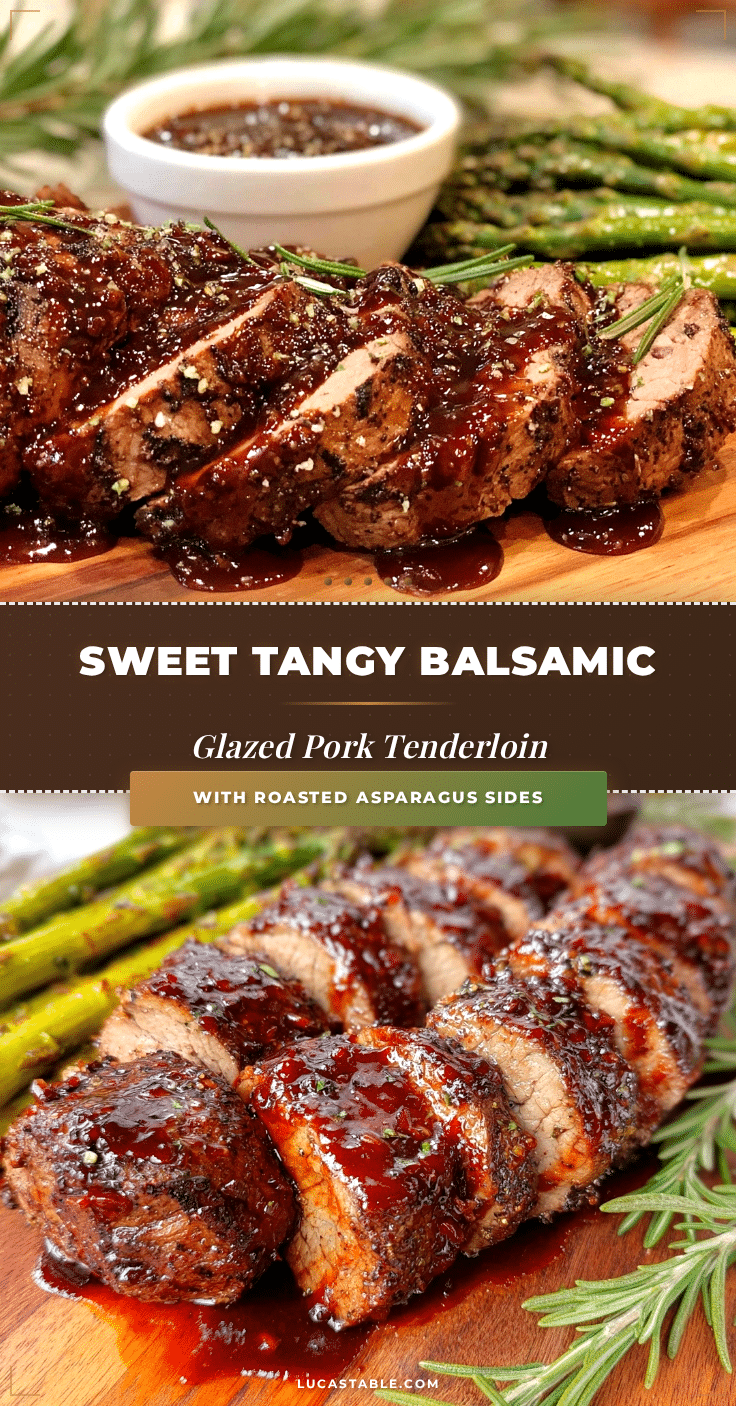
Perfect Balsamic Glazed Pork Tenderloin Recipe with Easy Roasted Asparagus
A quick and easy balsamic glazed pork tenderloin paired with roasted asparagus, delivering a juicy, flavorful meal perfect for busy weeknights or low-key dinners.
- Prep Time: 10 minutes
- Cook Time: 30 minutes
- Total Time: 40 minutes
- Yield: 4 servings 1x
- Category: Main Course
- Cuisine: American
Ingredients
- 1 whole pork tenderloin (about 1 to 1.25 pounds / 450–570 grams), trimmed of excess fat and silver skin
- ½ cup (120 ml) good-quality balsamic vinegar
- 2 tablespoons (25 grams) brown sugar
- 3 cloves garlic, minced
- 3 tablespoons (45 ml) olive oil, divided
- 1 teaspoon (5 ml) Dijon mustard
- 1 tablespoon fresh thyme leaves (about 3 grams) or 1 teaspoon dried thyme
- Salt and pepper, to taste
- 1 bunch asparagus (about 1 pound / 450 grams), trimmed
Instructions
- Preheat your oven to 425°F (220°C).
- Pat the pork tenderloin dry with paper towels. Season generously with salt, pepper, and half of the fresh thyme leaves.
- Heat 1 tablespoon (15 ml) olive oil in an ovenproof skillet over medium-high heat. When shimmering, add the pork and sear on all sides for about 3-4 minutes per side until golden brown.
- While the pork sears, prepare the balsamic glaze: In a small saucepan, combine balsamic vinegar, brown sugar, minced garlic, Dijon mustard, and remaining thyme. Bring to a gentle simmer over medium heat, whisking occasionally. Let it reduce until thickened and syrupy, about 8-10 minutes, stirring carefully to avoid burning.
- Trim the asparagus and place it on a baking sheet. Drizzle with 2 tablespoons (30 ml) olive oil, sprinkle with salt and pepper, and toss to coat evenly.
- Transfer the seared pork tenderloin to the oven (in the skillet or on a baking dish). Roast for about 15-20 minutes, or until the internal temperature reaches 145°F (63°C).
- At the same time, place the asparagus in the oven and roast for 12-15 minutes, turning once halfway through, until tender-crisp with slight caramelized edges.
- Remove the pork from the oven and let it rest for 5-10 minutes to allow juices to redistribute.
- Slice the pork into medallions, drizzle generously with the balsamic glaze, and serve alongside the roasted asparagus.
Notes
If the glaze thickens too much and becomes hard to pour, warm it gently before serving. Don’t skip the resting step for tender, juicy pork. Use a meat thermometer to ensure pork reaches 145°F (63°C) for perfect doneness. You can substitute asparagus with green beans or broccolini. The recipe is naturally gluten-free and dairy-free.
Nutrition
- Serving Size: 1/4 of pork tenderlo
- Calories: 320
- Sugar: 8
- Sodium: 350
- Fat: 18
- Saturated Fat: 3
- Carbohydrates: 12
- Fiber: 3
- Protein: 30
Keywords: balsamic glazed pork tenderloin, roasted asparagus, easy dinner, weeknight meal, balsamic glaze, pork recipe, healthy pork dinner