“You’ve got to try this pasta!” my friend blurted out over the phone, sounding way too excited for just a dinner suggestion. She was usually a tough critic, especially when it came to pasta dishes. I was skeptical, honestly — lemony asparagus and peas sounded light, maybe even a little boring. But the next evening, after a long day of juggling stuff and craving something fresh but satisfying, I finally gave in. The first forkful hit me with that bright lemon zing and the subtle crunch of asparagus paired with sweet peas. It wasn’t just fresh; it was like spring had been bottled up and tossed with pasta and parmesan. The simplicity fooled me at first, but the flavors stayed with me. Over the next few days, I found myself making this dish twice more — a surprise obsession that felt like a reset button after hectic days.
This fresh lemony asparagus and pea pasta with parmesan isn’t just a recipe; it’s that quiet moment in the kitchen where everything comes together without fuss but with intention. It’s the kind of dish that doesn’t shout but invites you to linger, savor, and maybe even close your eyes after the first bite. It’s a reminder that sometimes, the simplest ingredients, when treated right, deliver the most comfort and joy.
Why You’ll Love This Recipe
This fresh lemony asparagus and pea pasta with parmesan has quickly become a favorite, and here’s why it might just become yours too:
- Quick & Easy: Ready in under 30 minutes — perfect for those busy spring evenings when you want something fresh without a lot of fuss.
- Simple Ingredients: Mostly pantry staples and seasonal produce; no need for specialty stores or exotic items.
- Perfect for Spring Dinners: Its light, bright flavors feel just right when asparagus and peas are at their peak.
- Crowd-Pleaser: My family, normally picky about veggies, always asks for seconds, especially the kids who love the parmesan cheese.
- Unbelievably Delicious: The lemon’s brightness balances the rich parmesan and tender pasta, with fresh veggies providing just enough crunch and sweetness.
What sets this apart from other pasta recipes is the balance — not too heavy, not too bland. The trick is in how the lemon zest and juice wake up the whole dish, while the parmesan melts into a creamy coating without adding heaviness. Plus, swapping in fresh peas instead of frozen or canned makes a noticeable difference — that burst of sweetness is a game-changer. If you like recipes like my quick zesty lemon chicken, you’ll find the same kind of fresh, vibrant flavor here but in vegetarian form.
What Ingredients You Will Need
This recipe uses simple, wholesome ingredients to deliver bold flavor and satisfying texture without the fuss. Most of these are pantry staples or easy to find in spring markets, making it a breeze to pull together any day of the week.
- Pasta: 8 ounces (225 grams) of your favorite pasta — I like linguine or fettuccine for their nice surface that holds onto the sauce. Spaghetti works well too.
- Asparagus: 1 bunch (about 12-15 spears), trimmed and cut into 1-inch pieces — fresh and crisp is best.
- Fresh peas: 1 cup (about 150 grams), shelled — the sweetness of fresh peas makes a big difference, though frozen peas can work in a pinch.
- Garlic: 3 cloves, minced — adds a savory base note that complements the lemon.
- Lemon: Juice and zest of 1 large lemon — the zest adds that bright, aromatic pop, while the juice brings acidity.
- Olive oil: 3 tablespoons — use a good-quality extra virgin olive oil for richness and flavor (I usually go with Colavita).
- Parmesan cheese: 1 cup (about 100 grams), freshly grated — freshly grated parmesan melts better and tastes way more vibrant than pre-shredded.
- Salt & black pepper: To taste — freshly cracked pepper is my go-to here.
- Red pepper flakes: Optional, a pinch — for a subtle heat kick if you like.
- Fresh herbs: A handful of chopped basil or parsley (optional) — adds freshness and color.
For substitutions, you can swap the pasta for gluten-free varieties or try whole wheat for a nuttier flavor. If dairy is a concern, nutritional yeast can replace parmesan for a cheesy flavor, or use a vegan parmesan alternative. When asparagus isn’t in season, tender green beans work surprisingly well.
Equipment Needed
- Large pot for boiling pasta — a heavy-bottomed one helps maintain even heat.
- Large skillet or sauté pan — non-stick or stainless steel both work fine.
- Colander or strainer — for draining pasta and veggies.
- Microplane or fine grater — for zesting the lemon and grating parmesan.
- Sharp knife and cutting board — for prepping asparagus and herbs.
- Measuring cups and spoons — for accuracy, especially with lemon juice and oil.
If you don’t have a microplane, a small box grater will do for the lemon zest. I’ve used both, and while the microplane gives a finer zest that blends better, the box grater works in a pinch. For budget-friendly options, a basic stainless steel skillet and colander from any kitchen store will suffice — no need for fancy gear here.
Preparation Method
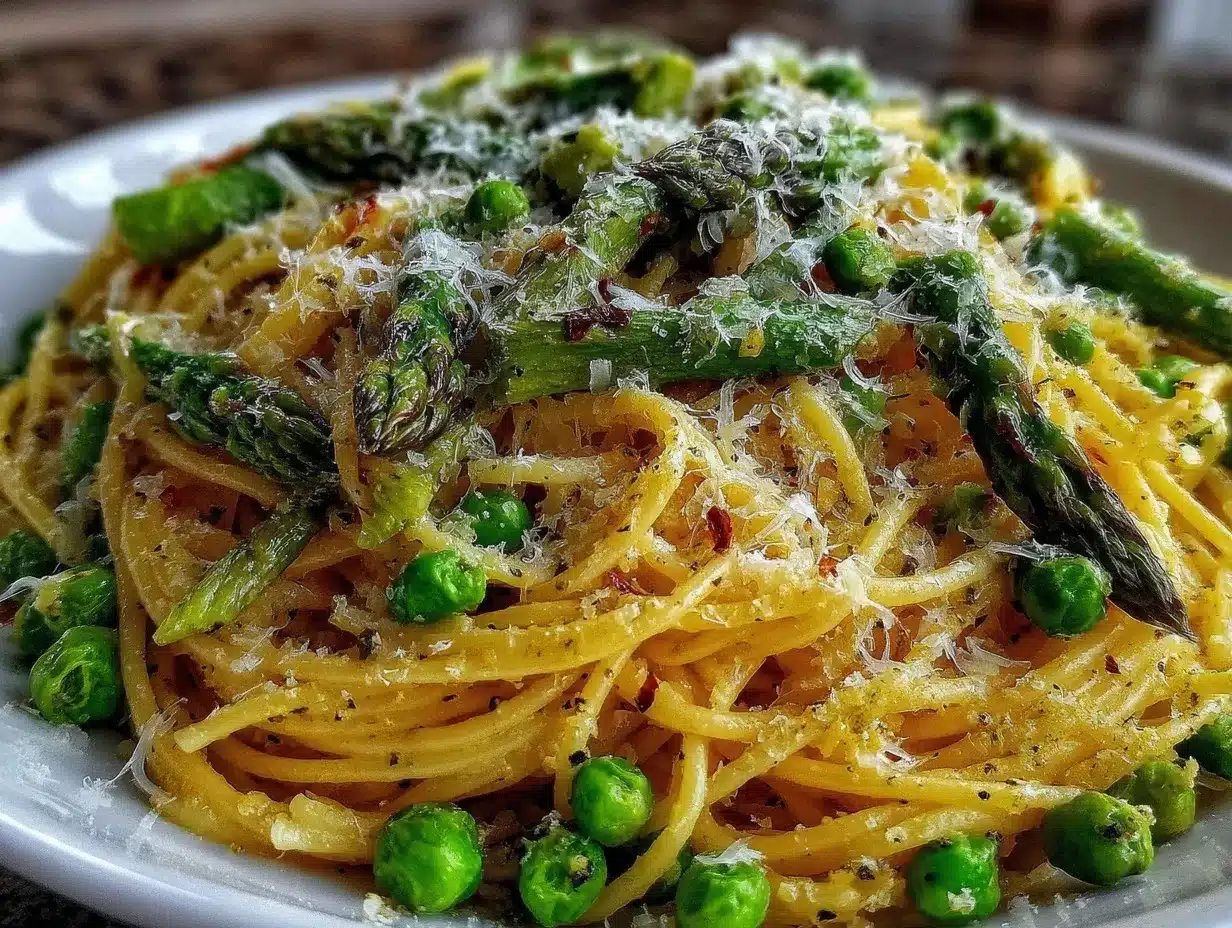
- Cook the pasta: Bring a large pot of salted water to a boil. Add 8 ounces (225 grams) of pasta and cook according to package instructions until al dente, usually 8-10 minutes. Reserve 1 cup (240 ml) of pasta water before draining. This starchy water will help create a silky sauce later.
- Prepare the asparagus and peas: While pasta cooks, trim the woody ends off 1 bunch of asparagus and cut into 1-inch pieces. Shell 1 cup (about 150 grams) of fresh peas or thaw frozen ones.
- Sauté the veggies: In a large skillet, heat 3 tablespoons olive oil over medium heat. Add 3 minced garlic cloves and cook until fragrant, about 30 seconds to 1 minute — don’t let it brown or it gets bitter. Toss in asparagus pieces and cook for 3-4 minutes, stirring occasionally, until bright green and just tender. Add peas and cook 1-2 more minutes. If you like a hint of heat, sprinkle a pinch of red pepper flakes here.
- Add lemon zest and juice: Remove the pan from heat and stir in the zest and juice of 1 large lemon. This step keeps the lemon flavor fresh and vibrant, avoiding bitterness from cooking the juice too long.
- Toss pasta and sauce: Add the drained pasta to the skillet with veggies. Pour in reserved pasta water a little at a time while tossing with tongs, helping the sauce cling to the noodles. Add 1 cup (about 100 grams) freshly grated parmesan and stir until melted and creamy. Season with salt and freshly cracked black pepper to taste.
- Finish with fresh herbs: Sprinkle chopped basil or parsley over the top for a fresh pop of color and flavor.
- Serve immediately: Plate the pasta and add extra parmesan if desired. Enjoy warm for the best flavor and texture.
Tip: If the sauce seems too thick, add a splash more pasta water; too thin, add a little more parmesan. The pasta should be glossy and lightly coated, not swimming in sauce. The asparagus should still have a little bite — mushy is a no-go here! I’ve found that tossing everything off heat helps keep the lemon bright and the cheese melt just right.
Cooking Tips & Techniques
Cooking this fresh lemony asparagus and pea pasta with parmesan has taught me a few tricks worth sharing:
- Don’t overcook your asparagus: It’s tempting to cook veggies until soft, but asparagus shines when it’s tender-crisp. Overcooked asparagus loses its vibrant color and texture.
- Reserve pasta water: This is liquid gold. The starch in the water helps bind the sauce to the pasta, making it creamy without cream.
- Use fresh lemon zest and juice: Pre-grated lemon zest or bottled juice just won’t cut it here. The fresh zest oils and juice brighten the dish and add depth.
- Grate parmesan fresh: It melts better and has a richer flavor. Pre-shredded cheese is often coated with anti-caking agents and doesn’t blend as smoothly.
- Don’t skip the garlic: It’s the foundation that brings savory depth to the light lemon and veggies.
- Work off the heat when adding lemon juice and cheese: This prevents the cheese from clumping or curdling and preserves the lemon’s fresh brightness.
- Multitask smartly: Prep your veggies while pasta cooks to save time and keep everything hot and fresh for plating.
Honestly, the first time I forgot to reserve pasta water, the sauce was a sticky mess. Lesson learned! Also, adding lemon juice too early can make the dish taste sour or bitter, so patience pays off. If you want a similar quick pasta but with a garlicky punch, you might enjoy my easy 15-minute spaghetti aglio olio recipe—it’s another simple, flavorful crowd-pleaser.
Variations & Adaptations
This fresh lemony asparagus and pea pasta recipe is super flexible. Here are some ways to make it your own:
- Protein addition: Stir in cooked shrimp or grilled chicken for a heartier meal. The lemon and parmesan pair beautifully with seafood or poultry (try pairing with my quick zesty lemon chicken for more lemony protein ideas).
- Seasonal swaps: If asparagus is out of season, try green beans or broccoli florets for crunch. Swap peas for fresh fava beans or edamame for a different texture.
- Dairy-free version: Use nutritional yeast or a vegan parmesan substitute in place of cheese, and swap olive oil with avocado oil for a creamy finish.
- Grain alternatives: Use gluten-free pasta, or try this with quinoa or couscous for a grain twist.
- Herb changes: Fresh tarragon or mint can add a springy note, while thyme or oregano give a more earthy background.
Once, I made this with a handful of toasted pine nuts stirred in at the end — it added a lovely crunch and nutty flavor that surprised me. Don’t be afraid to experiment a bit; that’s how some of the best tweaks come about.
Serving & Storage Suggestions
This fresh lemony asparagus and pea pasta is best served right away, warm and fragrant. The parmesan melts into a silky coating that’s most delicious fresh from the stove.
For presentation, a sprinkle of extra parmesan and a few lemon zest curls on top add a pretty touch. Pair this pasta with a crisp white wine or a light sparkling water with lemon slices for a spring-perfect meal.
If you have leftovers (which might not last long), store in an airtight container in the refrigerator for up to 2 days. Reheat gently in a skillet over low heat with a splash of water or olive oil to loosen the sauce. Microwave works too, but the sauce may thicken — just stir in a little pasta water or broth.
Flavors develop a little over time, with the lemon mellowing and the parmesan deepening in taste, so leftovers can be just as enjoyable if reheated carefully.
Nutritional Information & Benefits
Per serving (makes about 4 servings): approximately 350-400 calories, 12g fat, 50g carbohydrates, 12g protein.
This recipe is a light, balanced meal rich in fiber and vitamins, thanks to fresh asparagus and peas. Asparagus is packed with antioxidants and vitamin K, while peas provide plant-based protein and vitamin C. The lemon adds a boost of vitamin C and fresh flavor with minimal calories.
It’s gluten-friendly if you choose gluten-free pasta and can be adapted for dairy-free diets. Keep in mind parmesan contains dairy and is a common allergen, so substitutions may be needed for sensitive eaters.
Overall, this dish fits nicely into a health-conscious but realistic eating plan, offering fresh veggies and satisfying carbs without heaviness or complicated prep.
Conclusion
Fresh lemony asparagus and pea pasta with parmesan is one of those simple recipes that quietly steals your heart. It’s a perfect blend of bright, fresh flavors and comforting textures that makes spring dinners feel special without taking all evening. I love how easy it is to tweak and adapt this dish; it never gets boring, and it’s always a hit with whoever’s around the table.
If you try it, I’d love to hear how you make it your own — whether you add a protein, swap herbs, or throw in a secret ingredient. Cooking is all about that personal touch, after all.
Enjoy the lightness, the lemon, and the parmesan’s rich charm — it’s a simple recipe that always delivers.
FAQs About Fresh Lemony Asparagus and Pea Pasta with Parmesan
Can I use frozen peas instead of fresh?
Absolutely! Frozen peas work well; just add them a bit earlier during sautéing to thaw and heat through properly.
What pasta shape works best for this recipe?
Linguine, fettuccine, or spaghetti are great because their flat or round shapes hold the sauce nicely, but feel free to use penne or farfalle if that’s what you have.
How do I prevent the asparagus from overcooking?
Cook asparagus over medium heat just until tender-crisp — about 3-4 minutes — and keep an eye on the color; bright green means perfect.
Can I prepare this dish in advance?
While it’s best fresh, you can prep the veggies and zest the lemon ahead. Toss everything together just before serving for optimal flavor and texture.
Is this recipe suitable for vegans?
Yes, if you substitute the parmesan with a vegan cheese or nutritional yeast and confirm your pasta is egg-free, this dish can be fully vegan.
Pin This Recipe!
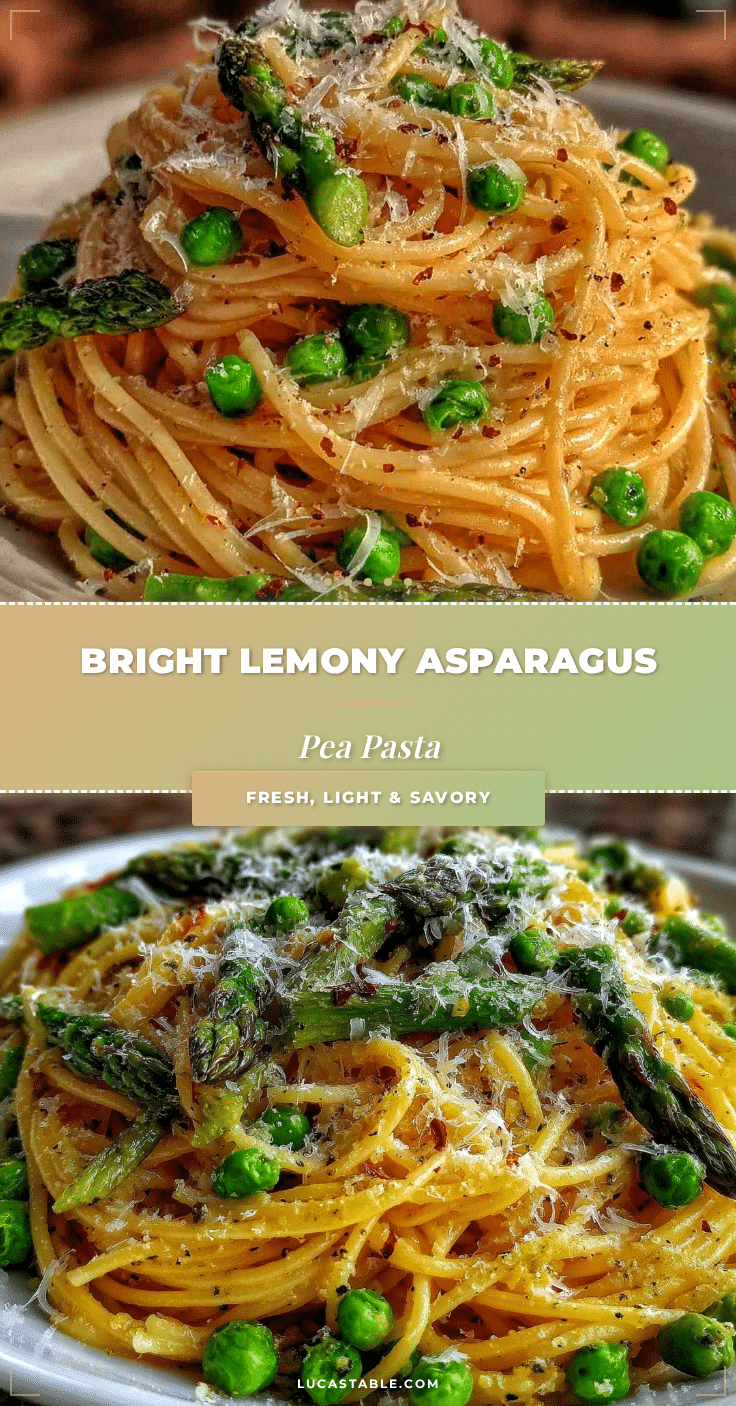
Fresh Lemony Asparagus and Pea Pasta
A bright and fresh pasta dish featuring lemon, asparagus, peas, and parmesan, perfect for a quick and easy spring dinner.
- Prep Time: 10 minutes
- Cook Time: 15 minutes
- Total Time: 25 minutes
- Yield: 4 servings 1x
- Category: Main Course
- Cuisine: Italian
Ingredients
- 8 ounces (225 grams) linguine, fettuccine, or spaghetti pasta
- 1 bunch (12-15 spears) asparagus, trimmed and cut into 1-inch pieces
- 1 cup (about 150 grams) fresh peas, shelled
- 3 cloves garlic, minced
- Juice and zest of 1 large lemon
- 3 tablespoons extra virgin olive oil
- 1 cup (about 100 grams) freshly grated parmesan cheese
- Salt, to taste
- Freshly cracked black pepper, to taste
- Pinch of red pepper flakes (optional)
- Handful of chopped fresh basil or parsley (optional)
Instructions
- Bring a large pot of salted water to a boil. Add 8 ounces (225 grams) of pasta and cook according to package instructions until al dente, usually 8-10 minutes. Reserve 1 cup (240 ml) of pasta water before draining.
- While pasta cooks, trim the woody ends off 1 bunch of asparagus and cut into 1-inch pieces. Shell 1 cup (about 150 grams) of fresh peas or thaw frozen ones.
- In a large skillet, heat 3 tablespoons olive oil over medium heat. Add 3 minced garlic cloves and cook until fragrant, about 30 seconds to 1 minute, without browning.
- Add asparagus pieces and cook for 3-4 minutes, stirring occasionally, until bright green and just tender. Add peas and cook 1-2 more minutes. If desired, sprinkle a pinch of red pepper flakes.
- Remove the pan from heat and stir in the zest and juice of 1 large lemon.
- Add the drained pasta to the skillet with veggies. Pour in reserved pasta water a little at a time while tossing with tongs to help the sauce cling to the noodles.
- Add 1 cup (about 100 grams) freshly grated parmesan and stir until melted and creamy. Season with salt and freshly cracked black pepper to taste.
- Sprinkle chopped basil or parsley over the top for freshness and color.
- Serve immediately, adding extra parmesan if desired.
Notes
Do not overcook asparagus; it should be tender-crisp. Reserve pasta water to create a silky sauce. Add lemon juice and parmesan off the heat to prevent curdling. Use fresh lemon zest and juice for best flavor. If sauce is too thick, add more pasta water; if too thin, add more parmesan.
Nutrition
- Serving Size: About 1 cup pasta wi
- Calories: 375
- Sugar: 5
- Sodium: 350
- Fat: 12
- Saturated Fat: 4
- Carbohydrates: 50
- Fiber: 6
- Protein: 12
Keywords: lemon pasta, asparagus pasta, pea pasta, spring dinner, easy pasta recipe, vegetarian pasta, fresh pasta recipe