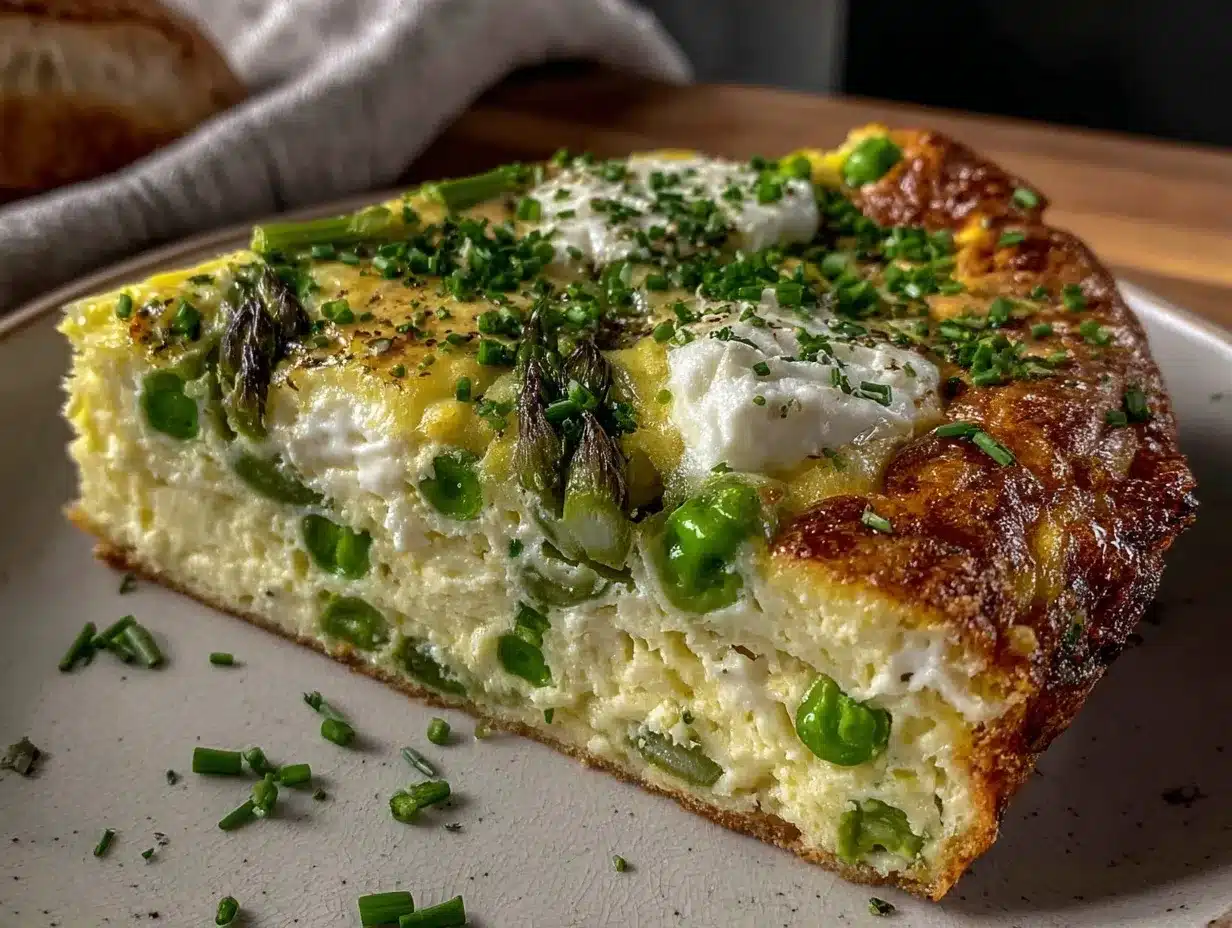
“You’ve got to try this,” my neighbor said while sliding a plate across the fence one sunny Saturday morning. I was mid-sip of my coffee, skeptical because, honestly, frittatas aren’t usually my go-to. But this one smelled different—fresh, grassy, with that tangy hint from the goat cheese poking through. I took a bite and was surprised by how the bright spring vegetables and the creamy cheese melded together so effortlessly. It wasn’t fancy or complicated, but it hit that spot that makes you pause and smile. That day, I scribbled down the recipe, thinking it was just a nice weekend thing. Then, I found myself making it midweek, again and again. It became my quiet little ritual — a fresh, easy meal that feels like a reset button.
What really stuck with me about this fresh spring vegetable frittata with creamy goat cheese is how it captures the season’s best without fuss. The tender snap of asparagus, the sweet pop of peas, and the silky goat cheese all come together in a way that feels both light and indulgent. It’s the kind of brunch that makes you want to linger over the table, but also the kind of dish you can whip up when you’re running low on time but craving something homemade. Honestly, it’s a quiet reminder that simple ingredients, treated well, can make a meal worth savoring.
Sometimes, it’s easy to think you need tons of prep or complicated steps to impress, but this frittata quietly proves otherwise. It’s become my go-to for those mornings when I want something fresh but comforting, and I think it might do the same for you. No frills, no stress—just good food that feels like a fresh start.
Why You’ll Love This Fresh Spring Vegetable Frittata with Creamy Goat Cheese
This fresh spring vegetable frittata with creamy goat cheese isn’t just another egg dish — it’s a trusted recipe I’ve honed through many brunches, rushed mornings, and weekend experiments. Here’s why it’s a keeper:
- Quick & Easy: Ready in about 30 minutes, it’s perfect for those busy mornings or impromptu brunches when you want something homemade without the wait.
- Simple Ingredients: Uses common pantry and fridge staples, plus fresh spring veggies that you can swap seasonally — no specialty store runs needed.
- Perfect for Brunch and Light Dinners: Whether it’s a laid-back weekend gathering or a solo meal, this frittata fits the bill with its fresh, vibrant flavors.
- Crowd-Pleaser: The creamy goat cheese adds a tangy richness that even picky eaters tend to love — plus, the veggies add a beautiful color and crunch.
- Unbelievably Delicious: With a smooth, custardy egg base and bright bursts of spring vegetables, it’s a texture and flavor combo that feels both comforting and fresh.
What sets this frittata apart is the subtle layering of flavors and textures. Unlike some frittatas that can get dense or heavy, this one stays light thanks to a gentle whisking technique and the creamy tang of goat cheese that melts into pockets throughout. Plus, the fresh veggies aren’t just tossed in; they’re gently sautéed to keep their snap and sweetness. It’s a simple trick I picked up that transforms the dish entirely.
Honestly, this isn’t just good food — it’s the kind of recipe that makes you close your eyes after the first bite and appreciate the little things. It’s comfort food reimagined to feel fresh and effortless without losing soul.
What Ingredients You Will Need for This Fresh Spring Vegetable Frittata with Creamy Goat Cheese
This recipe uses simple, wholesome ingredients to deliver bold flavor and a satisfying texture without fuss. Most are pantry staples, with the fresh veggies bringing that springtime brightness. Feel free to swap or adjust based on what’s in season or your preference.
- Eggs – 8 large eggs, preferably at room temperature (helps with fluffiness)
- Goat cheese – 4 ounces, crumbled (I love Chèvre for its creamy tang)
- Asparagus – 1 bunch (about 8 ounces), trimmed and cut into 1-inch pieces (look for firm, bright green stalks)
- Fresh peas – 1 cup (shelled), or frozen if fresh aren’t available (adds sweetness and pop)
- Green onions – 3, thinly sliced (adds a mild onion note)
- Garlic – 2 cloves, minced (for depth and aroma)
- Olive oil – 2 tablespoons (extra virgin for flavor)
- Milk or cream – 1/4 cup (60 ml), use whole milk or half-and-half for richness, or dairy-free milk if preferred
- Salt and freshly ground black pepper – to taste
- Fresh herbs – 2 tablespoons chopped fresh parsley or chives (for brightness)
If you want to swap the goat cheese, feta is a good alternative, though it’s saltier. For a dairy-free version, try blending silken tofu with a touch of lemon juice to mimic creaminess. In summer, fresh peas can be replaced with diced zucchini or cherry tomatoes for a different twist.
Equipment Needed
- Oven-safe skillet (preferably 10-inch non-stick or cast iron) – essential for cooking the frittata on the stove and finishing it under the broiler.
- Mixing bowl – for whisking the eggs and milk smoothly.
- Whisk or fork – to beat the eggs until fluffy.
- Spatula – for stirring the vegetables and scraping the pan.
- Measuring cups and spoons – for precise ingredient amounts.
- Knife and cutting board – for prepping vegetables and herbs.
If you don’t have an oven-safe skillet, you can transfer the cooked eggs and veggies to a baking dish for the broiler step, but I’ve found the skillet method yields better texture and browning. For budget-friendly options, a well-seasoned cast iron skillet works wonders and lasts forever.
Preparation Method for Fresh Spring Vegetable Frittata with Creamy Goat Cheese
- Preheat your oven’s broiler and position the oven rack about 6 inches from the heat source. This will help the frittata finish with a nice golden top.
- Prepare the vegetables: Trim and cut the asparagus into 1-inch pieces. Shell the peas if fresh, or rinse frozen peas under cold water to thaw. Thinly slice the green onions and mince the garlic cloves.
- Whisk the eggs: In a mixing bowl, crack 8 large eggs. Add 1/4 cup (60 ml) milk or cream, a pinch of salt, and a few grinds of black pepper. Whisk vigorously until the mixture is pale and slightly frothy — this helps the frittata be light and tender. Set aside.
- Sauté the veggies: Heat 2 tablespoons olive oil in your oven-safe skillet over medium heat. Add the minced garlic and sliced green onions, cooking for about 1 minute until fragrant but not browned.
- Add the asparagus pieces and peas to the skillet. Sauté gently for 4-5 minutes until bright green and just tender but still crisp. This step is key; overcooking here can make the veggies mushy in the final dish.
- Pour the eggs over the veggies: Spread the sautéed vegetables evenly in the pan, then pour the egg mixture over them. Tilt the skillet gently to distribute the eggs evenly.
- Cook gently on the stove: Let the eggs cook over medium-low heat for about 5-6 minutes. The edges should start to set while the center remains slightly loose. Don’t stir — just let it firm up.
- Add the goat cheese: Crumble 4 ounces of goat cheese evenly over the top. The cheese will melt into little pockets of creaminess as it cooks.
- Finish under the broiler: Transfer the skillet to the oven and broil for 3-5 minutes until the top is lightly browned and the eggs are fully set. Watch closely to avoid burning.
- Garnish and serve: Remove from the oven, sprinkle with fresh chopped parsley or chives, and let it rest for 2 minutes before slicing. This resting time helps the frittata hold together nicely.
If the frittata seems too wet in the middle before broiling, give it a few extra minutes on the stove over low heat and keep a close eye under the broiler. You want a creamy texture, not runny eggs.
Pro tip: I often make this alongside a quick side like zesty lemon chicken or pair it with a simple salad for a full meal that feels fresh and satisfying.
Cooking Tips & Techniques for the Perfect Frittata
Making a frittata that’s fluffy yet set can be a bit tricky, but a few kitchen-tested tips make all the difference.
- Use room temperature eggs: Cold eggs can cause the frittata to cook unevenly and become rubbery. Let your eggs sit out for about 15 minutes before whisking.
- Whisk well: The goal is to incorporate air for a tender texture. Whisk until the eggs are light and slightly frothy, but don’t overdo it or the eggs might collapse.
- Gentle sautéing: Cook your vegetables just until tender-crisp. Overcooked veggies will turn mushy once baked inside the eggs.
- Low and slow on the stove: Cook the eggs on medium-low heat so the bottom sets without burning before the top is ready.
- Broiler finish: The broiler step is essential for that golden top and fully cooked center. Keep a close eye—it only takes a few minutes.
- Don’t rush resting: Letting the frittata sit a couple minutes after cooking helps it firm up for easier slicing.
Once, I forgot to broil it and tried to flip it like an omelette—let’s just say it didn’t hold together well! So, trust the broiler. If you want to multitask, start prepping the vegetables ahead and whisk eggs last minute.
Variations & Adaptations for This Fresh Spring Vegetable Frittata
This frittata is incredibly versatile, and I’ve played around with it quite a bit, swapping in ingredients and tweaking methods:
- Vegetarian variation: Add sautéed mushrooms or spinach for more earthy greens. I once tossed in diced roasted red peppers for a smoky pop.
- Seasonal swaps: In summer, fresh cherry tomatoes or zucchini work beautifully instead of peas and asparagus. In fall, swap in sautéed leeks and kale.
- Cheese alternatives: Ricotta or feta can replace goat cheese if you prefer a milder or saltier flavor. For a creamier texture, dollop some mascarpone before broiling.
- Dairy-free option: Skip the cheese and use almond milk or coconut milk in the egg mixture. Nutritional yeast sprinkled on top adds a cheesy note.
- Cooking method: If you don’t have a broiler, cover the skillet with a lid and cook on low until set, but the browning won’t be the same.
Personally, adding fresh herbs like tarragon or basil gives a lovely aromatic lift, especially when serving alongside a bright pasta, like the spaghetti aglio e olio I made last week.
Serving & Storage Suggestions
This fresh spring vegetable frittata is best served warm or at room temperature, making it ideal for leisurely brunches or packed lunches. Slice into wedges and plate with a simple green salad dressed lightly with lemon vinaigrette to balance the richness.
Leftovers store well in the fridge for up to 3 days. Wrap tightly with plastic wrap or keep in an airtight container. To reheat, pop slices in a 350°F (175°C) oven for 10 minutes or microwave for 30-45 seconds, though the oven method keeps the texture better.
Flavors deepen after a day, so if you can wait, the frittata tastes even better the next day. It also freezes well: slice into portions, wrap individually, and thaw overnight before reheating.
For a heartier meal, serve alongside crusty bread or a light soup. This dish pairs surprisingly well with the lemony brightness of the zesty lemon garlic tilapia, balancing protein with fresh veggies.
Nutritional Information & Benefits
This fresh spring vegetable frittata with creamy goat cheese is a nutrient-rich dish that offers a great balance of protein, healthy fats, and vitamins.
- Protein: Eggs and goat cheese provide a solid protein base, supporting muscle health and satiety.
- Vitamins & minerals: Asparagus and peas are excellent sources of vitamin C, K, and fiber, aiding digestion and immune support.
- Low carb: Perfect for those watching carbohydrates without sacrificing flavor.
- Healthy fats: Olive oil and goat cheese contribute heart-healthy fats and creamy texture.
Be mindful that goat cheese contains dairy, which is a common allergen, and eggs may not suit everyone. This dish is gluten-free by nature, making it a great option for many dietary preferences.
From my experience, incorporating meals like this fresh vegetable frittata into your routine makes eating well feel effortless and delicious.
Conclusion
This fresh spring vegetable frittata with creamy goat cheese is a dish that’s earned its place in my kitchen rotation. It strikes the perfect balance between fresh and comforting, simple and impressive. Whether you’re cooking for one or feeding a small crowd, it adapts easily and always feels special.
Feel free to tweak the veggies, cheese, or herbs to match your tastes or seasonal finds. That’s the beauty of this recipe — it’s a canvas for whatever’s fresh and tasty.
Honestly, I love how it turns everyday ingredients into something that feels like a little celebration on a plate. If you try it, I’d love to hear how you make it your own!
Enjoy your cooking and, as always, happy eating!
FAQs About Fresh Spring Vegetable Frittata with Creamy Goat Cheese
Can I make this frittata ahead of time?
Yes! You can prepare it the night before and reheat gently in the oven or microwave. It’s also great served cold or at room temperature.
What if I don’t have a broiler?
No worries! Cover the skillet with a lid and cook on low until the eggs set fully. It won’t brown on top but will still be delicious.
Can I use other cheeses instead of goat cheese?
Absolutely. Feta, ricotta, or even shredded mozzarella work well. Just note that saltiness and creaminess levels will vary.
Is this recipe suitable for a gluten-free diet?
Yes, this frittata is naturally gluten-free, making it a safe choice for those avoiding gluten.
How do I prevent the frittata from getting rubbery?
Whisk the eggs until just frothy, cook gently on medium-low heat, and don’t overcook. Finishing under the broiler quickly sets the top without drying it out.
Pin This Recipe!

Fresh Spring Vegetable Frittata with Creamy Goat Cheese

A light and indulgent frittata featuring fresh spring vegetables and creamy goat cheese, perfect for brunch or light dinners. Quick and easy to prepare, it combines tender asparagus, sweet peas, and tangy goat cheese in a fluffy egg base.
- Prep Time: 10 minutes
- Cook Time: 20 minutes
- Total Time: 30 minutes
- Yield: 6 servings 1x
- Category: Main Course
- Cuisine: American
Ingredients
- 8 large eggs, preferably at room temperature
- 4 ounces goat cheese, crumbled
- 1 bunch asparagus (about 8 ounces), trimmed and cut into 1-inch pieces
- 1 cup fresh peas, shelled (or frozen peas, thawed)
- 3 green onions, thinly sliced
- 2 cloves garlic, minced
- 2 tablespoons extra virgin olive oil
- 1/4 cup (60 ml) milk or cream (whole milk, half-and-half, or dairy-free milk)
- Salt and freshly ground black pepper, to taste
- 2 tablespoons chopped fresh parsley or chives
Instructions
- Preheat your oven’s broiler and position the oven rack about 6 inches from the heat source.
- Prepare the vegetables: Trim and cut the asparagus into 1-inch pieces. Shell the peas if fresh, or rinse frozen peas under cold water to thaw. Thinly slice the green onions and mince the garlic cloves.
- Whisk the eggs: In a mixing bowl, crack 8 large eggs. Add 1/4 cup (60 ml) milk or cream, a pinch of salt, and a few grinds of black pepper. Whisk vigorously until the mixture is pale and slightly frothy. Set aside.
- Sauté the veggies: Heat 2 tablespoons olive oil in your oven-safe skillet over medium heat. Add the minced garlic and sliced green onions, cooking for about 1 minute until fragrant but not browned.
- Add the asparagus pieces and peas to the skillet. Sauté gently for 4-5 minutes until bright green and just tender but still crisp.
- Pour the eggs over the veggies: Spread the sautéed vegetables evenly in the pan, then pour the egg mixture over them. Tilt the skillet gently to distribute the eggs evenly.
- Cook gently on the stove: Let the eggs cook over medium-low heat for about 5-6 minutes. The edges should start to set while the center remains slightly loose. Do not stir.
- Add the goat cheese: Crumble 4 ounces of goat cheese evenly over the top.
- Finish under the broiler: Transfer the skillet to the oven and broil for 3-5 minutes until the top is lightly browned and the eggs are fully set. Watch closely to avoid burning.
- Garnish and serve: Remove from the oven, sprinkle with fresh chopped parsley or chives, and let it rest for 2 minutes before slicing.
Notes
Use room temperature eggs for fluffiness. Whisk eggs until slightly frothy but not overdone. Sauté vegetables gently to keep them crisp. Cook eggs on medium-low heat to avoid rubberiness. Finish under the broiler for a golden top. Let the frittata rest before slicing for better texture. If no broiler is available, cover skillet and cook on low until set.
Nutrition
- Serving Size: 1 wedge (1/6 of frit
- Calories: 220
- Sugar: 2
- Sodium: 220
- Fat: 16
- Saturated Fat: 6
- Carbohydrates: 5
- Fiber: 2
- Protein: 14
Keywords: frittata, spring vegetables, goat cheese, brunch, easy recipe, asparagus, peas, vegetarian, gluten-free