“You’ve got fish on the grill again?” my neighbor called over the fence one sunny afternoon, raising an eyebrow. I shrugged, half embarrassed, half proud. That day, I’d stumbled upon what I now call my go-to recipe: flavorful blackened mahi mahi with creamy avocado salsa. Honestly, I was aiming for a simple grilled fish to impress but ended up with something far more exciting. The smoky, crisp-seasoned mahi mahi paired with the silky, tangy avocado salsa was an accidental win that turned skeptical taste buds into fans.
That one afternoon, the sun was warm, and the air smelled like fresh herbs and sea breeze. I remember thinking, “This combo might just stick.” And stick it did. It became my quick fix for those hectic evenings when I wanted dinner fast but with a punch of flavor—something that felt fresh, healthy, and just a bit indulgent. The first time I served it, even my “not really a fish eater” friend asked for seconds. There’s something about the way the blackening spices char the fish, locking in moisture, that pairs perfectly with that creamy, cool salsa. It’s a bit like a kitchen surprise that keeps you coming back for more.
So, why does this recipe linger in my dinner rotation? It’s the kind of meal that feels like a small celebration after a long day. Not too complicated, no fancy ingredients, but with a flavor profile that’s bold and satisfying. Plus, it’s versatile enough for a solo late-night cook or an unplanned host needing a quick, impressive dish. It’s a quiet reminder that sometimes, the best meals come from those “let’s just try this” moments.
Why You’ll Love This Recipe
After testing this blackened mahi mahi recipe multiple times (yeah, I made it several nights in a row), I can confidently say it’s a keeper. Here’s why it’s a favorite:
- Quick & Easy: Ready in under 30 minutes, making it perfect for busy weeknights or when you want a fuss-free dinner that feels special.
- Simple Ingredients: No hunting for hard-to-find spices or exotic produce; most pantry staples and fresh avocados do the trick.
- Great for Dinner Parties: The bold seasoning and creamy salsa impress guests without turning you into a stressed-out chef.
- Crowd-Pleaser: Both kids and adults love the crispy, slightly charred fish paired with the cool avocado salsa—trust me, you’ll get requests for the recipe.
- Unbelievably Delicious: The balance of heat, smokiness, and creaminess hits all the right notes. The blackened crust seals in the fish’s natural juices, while the avocado salsa adds brightness and richness.
What sets this recipe apart? It’s the technique of blackening—using a blend of spices that toast just right in a hot cast-iron skillet. This creates a crispy exterior without drying out the mahi mahi. And the avocado salsa isn’t just mashed avocado thrown on top; it’s a creamy, flavorful mix with lime juice, cilantro, and a hint of jalapeño that gently wakes up your palate.
This isn’t just another fish dinner. It’s the one that makes you close your eyes and savor every bite. If you’ve enjoyed recipes like the quick zesty lemon chicken or the easy 15-minute spaghetti aglio olio, you’ll find this mahi mahi recipe equally satisfying and straightforward.
What Ingredients You Will Need
This recipe calls for simple, wholesome ingredients that come together to create bold flavor and satisfying texture without any fuss. Most of these are pantry staples or fresh produce you can find year-round.
- Mahi Mahi Fillets – about 4 fillets (6 oz/170 g each), skinless and boneless for easy cooking
- Blackening Seasoning:
- Paprika (smoked if you can find it, adds depth)
- Cayenne Pepper (adjust to your heat preference)
- Garlic Powder
- Onion Powder
- Dried Thyme
- Dried Oregano
- Salt and Black Pepper
- Avocado Salsa:
- Ripe Avocados (2 medium-sized, diced or mashed)
- Fresh Lime Juice (from 1 large lime, brightens and balances creaminess)
- Fresh Cilantro Leaves (a handful, chopped)
- Jalapeño (1 small, seeded and finely chopped – optional for a mild kick)
- Red Onion (2 tablespoons, finely diced for crunch and sharpness)
- Cherry Tomatoes (5-6 halved, adds freshness and color)
- Salt and Pepper to taste
- Cooking Fat: Butter or neutral oil (like avocado oil) for searing the fish – I prefer butter for that rich, nutty flavor.
If you’re short on fresh cilantro, flat-leaf parsley works as a substitute. For a dairy-free version, swap butter with avocado or grapeseed oil. And if mahi mahi isn’t available, firm fish like swordfish or even salmon can be blackened using this spice mix.
Equipment Needed
- Cast-Iron Skillet: Ideal for blackening because it holds heat evenly and creates that perfect crust on the fish. If you don’t have one, a heavy stainless steel pan works well too.
- Mixing Bowls: One for the avocado salsa and another to mix the blackening spices.
- Sharp Knife: For chopping the salsa ingredients finely and slicing the fish if needed.
- Measuring Spoons: To get the spice blend just right.
- Spatula or Fish Turner: To flip the mahi mahi gently without breaking the crust.
I’ve tried this in non-stick pans, but the sear isn’t quite the same. The cast-iron skillet really makes the difference—a bit of seasoning on the pan develops over time, adding extra flavor layers. Also, keep your skillet well-seasoned and avoid sudden temperature changes to prolong its life.
Preparation Method
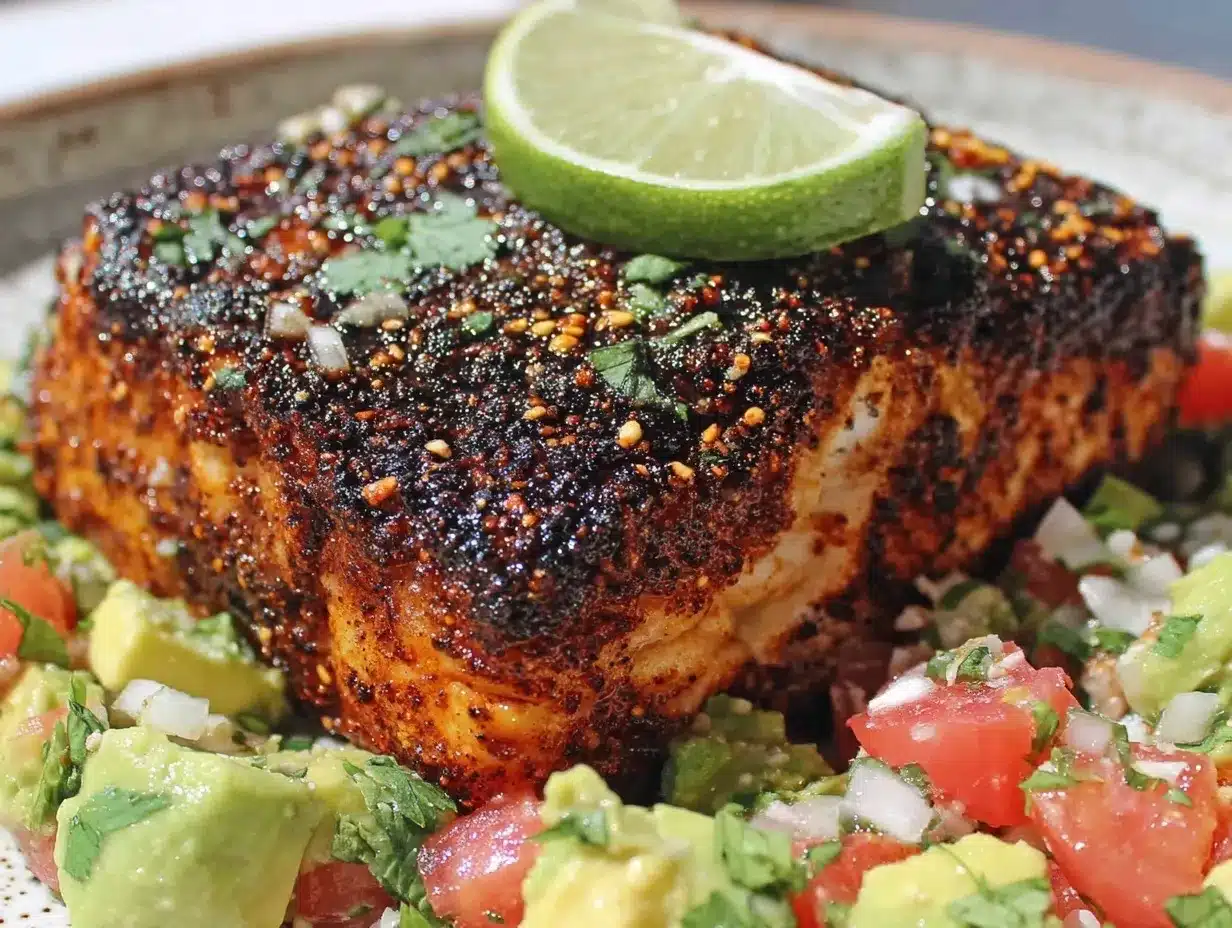
- Prepare the Blackening Spice Blend: In a small bowl, combine 1 tablespoon paprika, 1 teaspoon cayenne pepper (reduce if you prefer less heat), 1 teaspoon garlic powder, 1 teaspoon onion powder, 1 teaspoon dried thyme, 1 teaspoon dried oregano, 1 teaspoon salt, and ½ teaspoon black pepper. Mix thoroughly. This blend will coat your mahi mahi to form that signature blackened crust.
Estimated time: 5 minutes. - Season the Mahi Mahi: Pat the fillets dry with paper towels (this helps the seasoning stick and promotes crisping). Generously coat each fillet with the blackening spice mix on both sides, pressing slightly to adhere. Set aside.
Tip: If you have time, let it rest for 10 minutes allowing the spices to meld. - Make the Creamy Avocado Salsa: In a medium bowl, combine 2 ripe avocados (either diced or mashed depending on texture preference), juice of 1 lime, a handful of chopped cilantro, 1 finely chopped small jalapeño (optional), 2 tablespoons diced red onion, and 5-6 halved cherry tomatoes. Season with salt and pepper to taste. Mix gently to keep some texture.
Note: The lime juice prevents the avocado from browning while adding a zesty punch.
Estimated time: 10 minutes. - Heat the Skillet: Place your cast iron skillet over medium-high heat and add 1 tablespoon of butter or oil. Heat until shimmering but not smoking—this ensures a quick sear.
Warning: Too hot and the spices can burn; adjust heat if you smell bitterness. - Cook the Mahi Mahi: Place the fillets in the hot skillet. Cook without moving for about 3-4 minutes (or until the edges start turning opaque and the crust forms). Flip gently with a spatula and cook for another 3-4 minutes, until the fish flakes easily with a fork and reaches an internal temperature of 145°F (63°C).
Pro Tip: Avoid overcrowding the pan; cook in batches if needed to keep the crust crispy. - Serve: Plate the blackened mahi mahi fillets and spoon the creamy avocado salsa generously on top or on the side.
Estimated total cooking time: 20-25 minutes.
Cooking Tips & Techniques
Blackening fish can feel intimidating, but a few tricks make all the difference. First, drying your fish well before seasoning is key to achieving a crisp crust instead of steaming the fillets. Don’t be shy with the spice mix—it’s supposed to create a bold, flavorful shell.
When heating your skillet, resist cranking the heat too high; burning the spices will give a bitter taste. Medium-high is usually perfect. Also, use a sturdy spatula to flip the fish gently—blackened crusts can be fragile if handled roughly.
For the avocado salsa, keep the texture a bit chunky. Smooth guacamole-like salsa works, but the little pops of tomato and onion add freshness and crunch, balancing the creamy avocado. You’ll find that letting the salsa sit for 5-10 minutes before serving helps the flavors marry.
Honestly, the first time I tried blackening, I overcooked the fish and ended up with dry fillets. Lesson learned: timing matters. A quick sear on each side is all it takes. You can multitask by prepping the salsa while the fish cooks, cutting down on overall time.
Variations & Adaptations
- Spice Level: For a milder version, reduce cayenne pepper or omit jalapeño in the salsa. For heat lovers, add a pinch of chipotle powder or serve with sliced fresh chili.
- Fish Alternatives: Try this blackening technique on salmon, tilapia, or swordfish fillets. Each brings its own texture and flavor but adapts well to the seasoning mix.
- Avocado Salsa Variations: Swap cilantro with fresh basil or mint for a different herbal note. In summer, add diced mango or pineapple for a sweet, tropical twist.
- Cooking Method: If you don’t have a skillet, blacken your fish under a broiler for 5-6 minutes per side, watching closely to avoid burning.
- Dietary Adjustments: Use olive oil instead of butter for dairy-free cooking. The recipe is naturally gluten-free, making it suitable for most dietary needs.
One time, I made a quick adjustment by tossing the avocado salsa with some black beans and corn—turned it into a heartier topping that worked great for a casual weeknight like my creamy tuna pasta but with a fresh, coastal vibe.
Serving & Storage Suggestions
Serve this blackened mahi mahi immediately while the crust is still crisp and the salsa is cool and refreshing. It pairs beautifully with simple sides like steamed rice, quinoa, or a light salad. A chilled white wine or a citrusy sparkling water complements the freshness of the salsa.
Leftovers can be stored in an airtight container in the refrigerator for up to 2 days. The blackened crust softens after chilling, but reheating gently in a skillet over low heat helps regain some crispness. Avoid microwaving to keep the texture intact.
The avocado salsa is best eaten fresh but can be kept for a day if tightly covered with plastic wrap pressed directly on its surface to prevent browning. Interestingly, the flavors in the salsa deepen after resting, making it even more vibrant the next day.
Nutritional Information & Benefits
Each serving of blackened mahi mahi with avocado salsa packs approximately 320 calories, providing a healthy dose of protein (around 35g) and heart-healthy fats from the avocado. Mahi mahi is low in saturated fat and rich in essential nutrients like selenium and vitamin B12.
The creamy avocado salsa adds fiber, potassium, and antioxidants, making this dish a wholesome option that fits well into balanced diets, including gluten-free and low-carb plans. Plus, the spices in the blackening mix support metabolism and digestion.
For anyone mindful of allergens, this recipe is free from nuts and gluten, and easily adjusted for dairy-free diets by switching the butter to oil.
Conclusion
This flavorful blackened mahi mahi with creamy avocado salsa is more than just a quick dinner—it’s a tasty, approachable way to bring a bit of coastal charm to your table anytime. Whether you’re feeding just yourself or pulling together a last-minute meal for friends, this recipe adapts beautifully to your pace and preferences.
I love it because it feels like a small treat that’s both indulgent and nourishing. It’s proof that with a good spice blend and fresh ingredients, you can turn simple fish into a memorable meal. When you try it, don’t hesitate to tweak the salsa or spice levels to match your taste—cooking should always be a bit personal.
If you enjoyed the balance of bold and fresh flavors here, you might also appreciate the quick crispy lemon butter salmon or the quick and flavorful fried rice for other speedy, flavor-packed dinners. Feel free to share your own twists or questions below—I love hearing from fellow home cooks.
Here’s to meals that feel like a fresh breeze and a little celebration on your plate.
FAQs
What is the best fish for blackening besides mahi mahi?
Firm, meaty fish like salmon, swordfish, or tilapia work well for blackening due to their texture and ability to hold up to high heat.
Can I make the avocado salsa ahead of time?
You can prepare it up to a few hours in advance, but to keep it from browning, cover it tightly with plastic wrap pressed onto the surface and refrigerate.
How spicy is this blackened mahi mahi recipe?
The heat level is moderate and can be adjusted by reducing or omitting cayenne pepper and jalapeño in the salsa to suit your preference.
What if I don’t have a cast-iron skillet?
A heavy stainless steel pan works well too. Alternatively, you can use your oven broiler to blacken the fish, watching closely to avoid burning.
Is this recipe gluten-free?
Yes, it’s naturally gluten-free as it uses spices and fresh ingredients without any wheat-based products.
Pin This Recipe!
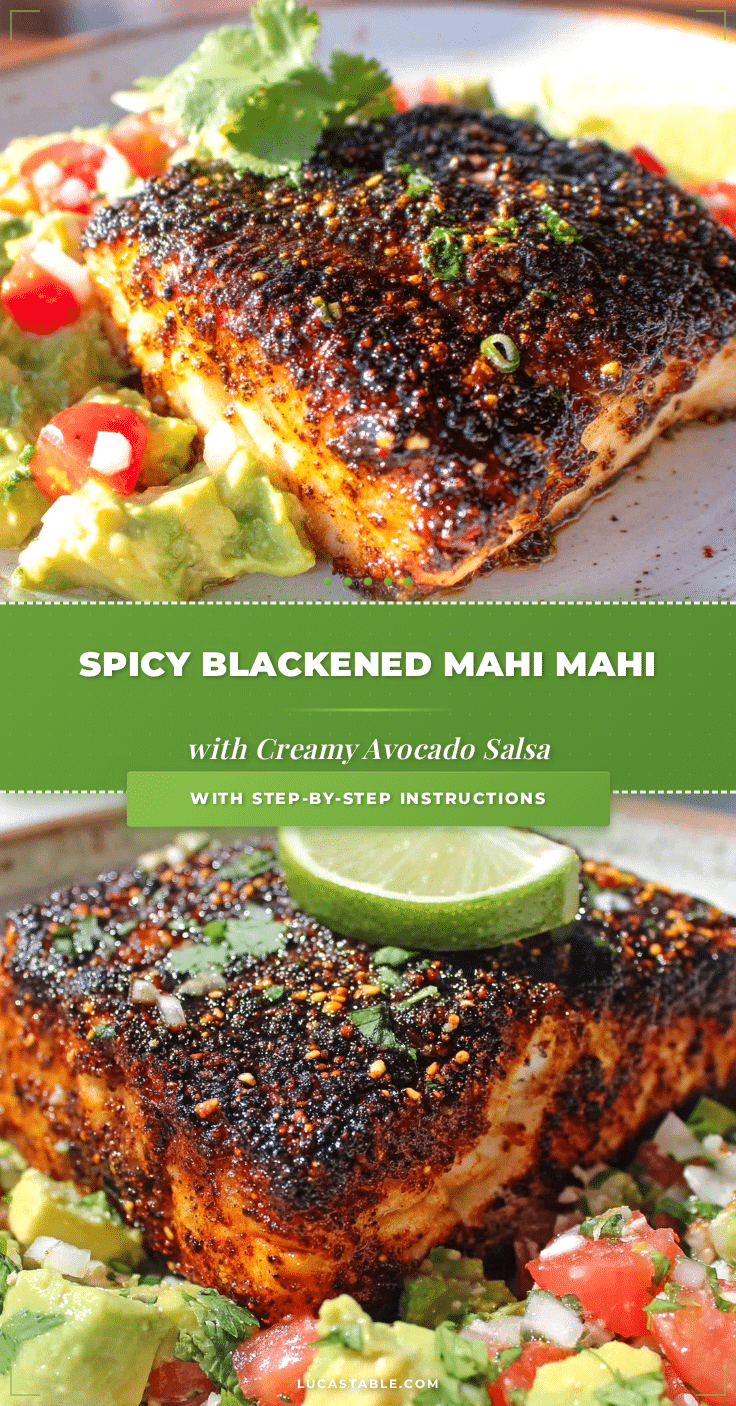
Blackened Mahi Mahi with Easy Creamy Avocado Salsa
A quick and flavorful blackened mahi mahi recipe paired with a creamy, tangy avocado salsa, perfect for a healthy and impressive dinner.
- Prep Time: 15 minutes
- Cook Time: 10 minutes
- Total Time: 25 minutes
- Yield: 4 servings 1x
- Category: Main Course
- Cuisine: American
Ingredients
- 4 mahi mahi fillets (6 oz each), skinless and boneless
- 1 tablespoon paprika (smoked preferred)
- 1 teaspoon cayenne pepper (adjust to heat preference)
- 1 teaspoon garlic powder
- 1 teaspoon onion powder
- 1 teaspoon dried thyme
- 1 teaspoon dried oregano
- 1 teaspoon salt
- 1/2 teaspoon black pepper
- 2 ripe avocados, diced or mashed
- Juice of 1 large lime
- A handful of fresh cilantro leaves, chopped
- 1 small jalapeño, seeded and finely chopped (optional)
- 2 tablespoons red onion, finely diced
- 5–6 cherry tomatoes, halved
- 1 tablespoon butter or neutral oil (such as avocado oil) for searing
Instructions
- Prepare the blackening spice blend by mixing paprika, cayenne pepper, garlic powder, onion powder, dried thyme, dried oregano, salt, and black pepper in a small bowl.
- Pat the mahi mahi fillets dry with paper towels. Generously coat each fillet with the blackening spice mix on both sides, pressing slightly to adhere. Let rest for 10 minutes if time allows.
- Make the creamy avocado salsa by combining diced or mashed avocados, lime juice, chopped cilantro, jalapeño (if using), diced red onion, halved cherry tomatoes, salt, and pepper in a medium bowl. Mix gently to keep some texture.
- Heat a cast-iron skillet over medium-high heat and add butter or oil. Heat until shimmering but not smoking.
- Place the seasoned mahi mahi fillets in the hot skillet. Cook without moving for 3-4 minutes until a crust forms and edges turn opaque.
- Flip the fillets gently and cook for another 3-4 minutes until the fish flakes easily and reaches an internal temperature of 145°F (63°C).
- Serve the blackened mahi mahi immediately with the creamy avocado salsa spooned on top or on the side.
Notes
Dry the fish well before seasoning to achieve a crisp crust. Use medium-high heat to avoid burning spices. Let the avocado salsa sit for 5-10 minutes before serving to marry flavors. For dairy-free, substitute butter with avocado or grapeseed oil. Avoid overcrowding the pan to keep crust crispy. Leftovers can be stored refrigerated for up to 2 days and reheated gently in a skillet.
Nutrition
- Serving Size: 1 mahi mahi fillet w
- Calories: 320
- Sugar: 3
- Sodium: 700
- Fat: 18
- Saturated Fat: 4
- Carbohydrates: 10
- Fiber: 7
- Protein: 35
Keywords: blackened mahi mahi, avocado salsa, grilled fish, quick dinner, healthy seafood, creamy avocado, easy recipe