“You gotta try this beef bulgogi bowl,” my coworker said over lunch, sliding her takeout container across the table. I was skeptical—Korean food felt intimidating, like it needed a whole spice cabinet I’d never open. But that sweet and spicy glaze on the beef? It smelled irresistible. So, I gave it a shot one weeknight after a chaotic day of back-to-back meetings and a fridge that was sadly bare except for some basics. Honestly, it was a game-changer—fast, flavorful, and exactly what my frazzled brain needed.
That first night, as the aroma filled my tiny kitchen, I realized this easy Korean beef bulgogi bowl wasn’t just dinner; it was a quick reset. Juicy, marinated beef tossed in a sticky, sweet-spicy glaze served over steaming rice with crisp veggies—it hit all the right notes. I found myself making it over and over, sometimes swapping out the beef for chicken or doubling the glaze because, well, who doesn’t want extra sauce? It became my go-to quick dinner, the kind that made me feel like I actually had my act together on busy nights.
There’s something honest about this bowl—it’s not trying too hard, but it’s full of personality. The balance of sweet, savory, and heat felt just right, and that glaze? It clings to the beef perfectly, no messy drips or complicated steps. I love how it brings a bit of Korean street food vibe into my home kitchen without fuss. And the best part? It’s a recipe you can trust to deliver every time, even when you think you don’t have time to cook.
So yeah, this isn’t just another Korean beef recipe. It’s the one that stuck with me because it’s simple, satisfying, and kind of addictive. If you’re craving something quick but with a little kick, this bulgogi bowl might just be your new secret weapon.
Why You’ll Love This Recipe
After testing this easy Korean beef bulgogi bowl countless times, I can say it’s one of those recipes that just makes weeknight dinners feel a little less rushed and a lot more delicious. Here’s why it’s worth keeping in your culinary arsenal:
- Quick & Easy: Ready in about 25 minutes, it’s perfect when you want a flavorful meal without spending hours in the kitchen.
- Simple Ingredients: Uses pantry staples and common fridge items—no need for specialty Korean sauces or hard-to-find spices.
- Perfect for Busy Nights: Whether you’re cooking for one or a small family, it’s a fuss-free recipe that fills bellies fast.
- Crowd-Pleaser: The sweet and spicy glaze appeals to all ages, making it a hit for casual dinners or unexpected guests.
- Unbelievably Delicious: The juicy beef melded with that sticky glaze creates a texture and flavor combo that’s honestly addictive.
What sets this bulgogi bowl apart is the glaze—crafted to hit just the right balance of sweet heat without overpowering the beef’s natural flavor. I tweak the marinade to keep the meat tender while layering in garlic and ginger for authentic notes. Plus, tossing it all over rice and fresh veggies makes it a complete, satisfying meal in one bowl. It’s the kind of dinner that feels thoughtfully made but takes hardly any time, which is a rare win in my book.
What Ingredients You Will Need
This recipe calls for simple, wholesome ingredients that come together beautifully to create bold flavor and satisfying texture without fuss. Most of these are pantry staples or easy to find at any grocery store.
- Beef: Thinly sliced ribeye or sirloin steak (about 1 pound / 450 grams) – look for well-marbled cuts for juiciness.
- Soy Sauce: ¼ cup (60 ml) – I prefer low-sodium soy sauce to keep saltiness balanced.
- Brown Sugar: 2 tablespoons (adds sweetness and helps caramelize the glaze).
- Garlic: 3 cloves, minced (fresh is best for that punchy flavor).
- Ginger: 1 teaspoon, grated (adds warmth and depth).
- Gochujang (Korean chili paste): 1 tablespoon – this brings the perfect sweet-spicy kick; you can substitute with a mix of chili paste and a bit of honey if needed.
- Sesame Oil: 1 tablespoon – for that signature nutty aroma.
- Green Onions: 2, thinly sliced (adds freshness and crunch).
- Rice Vinegar: 1 teaspoon (balances the sweetness).
- Black Pepper: Freshly ground, to taste.
- Cooked Rice: Jasmine or short-grain rice, about 2 cups (cooked) – any type works, but jasmine adds nice fragrance.
- Vegetables for serving: Thinly sliced carrots, cucumber ribbons, or steamed broccoli – optional but recommended for texture and color.
- Sesame Seeds: Toasted, for garnish.
If you want to keep it gluten-free, swap soy sauce with tamari. And if you don’t have gochujang handy, mixing a little sriracha with honey can work in a pinch—just tweak to your spice comfort level. Personally, I like using Korean brand Bibigo gochujang for authentic flavor and consistency.
Equipment Needed
- Non-stick skillet or cast iron pan: A heavy-bottomed skillet helps sear the beef evenly.
- Mixing bowls: For marinating the beef and mixing the glaze.
- Sharp knife and cutting board: Essential for slicing beef thinly and prepping veggies.
- Measuring spoons and cups: For precise ingredient quantities.
- Spatula or tongs: For stirring and flipping the beef during cooking.
- Rice cooker or pot: To cook your rice perfectly (or use leftover rice).
If you don’t have a cast iron pan, a good quality non-stick skillet works just fine and cleans up easily. For slicing beef thinly, freezing the meat for 30 minutes beforehand firms it up, making cuts easier and more uniform. I also keep a small mesh strainer handy when rinsing rice—makes the prep smoother.
Preparation Method
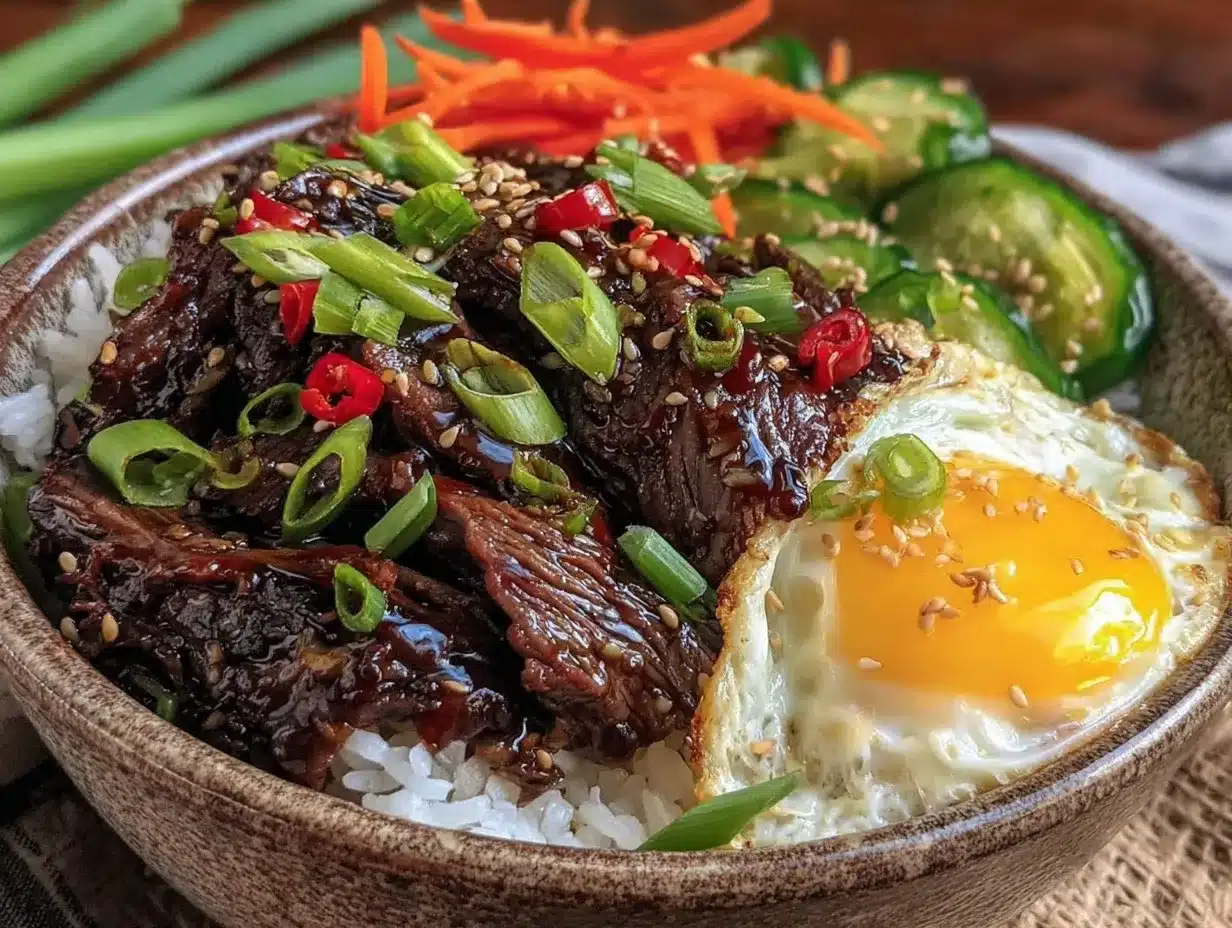
- Prepare the beef: Freeze the beef for about 30 minutes to firm it up, then slice thinly against the grain into bite-sized strips (about ¼ inch / 0.6 cm thick). This helps the meat stay tender and soak up the marinade.
- Make the marinade and glaze: In a medium bowl, whisk together ¼ cup (60 ml) soy sauce, 2 tablespoons brown sugar, 3 minced garlic cloves, 1 teaspoon grated ginger, 1 tablespoon gochujang, 1 tablespoon sesame oil, 1 teaspoon rice vinegar, and freshly ground black pepper to taste. This combo forms both the marinade and the sticky glaze that caramelizes on the beef.
- Marinate the beef: Toss the sliced beef in half of the marinade mixture. Cover and refrigerate for at least 15 minutes, but ideally 30 for more flavor. (Skip marinating if in a hurry—just cook and glaze at the end.)
- Cook the rice: While beef marinates, cook 1 cup (200 g) dry jasmine rice according to package instructions or use leftover rice. Fluff and keep warm.
- Sear the beef: Heat a non-stick skillet over medium-high heat. Add a small drizzle of oil if needed. Add the marinated beef in a single layer (work in batches if needed), cooking for 2-3 minutes per side until browned and just cooked through. Remove beef and set aside.
- Make the glaze: In the same skillet, pour in the reserved marinade and cook over medium heat, stirring frequently, until it thickens slightly and becomes syrupy (about 2-3 minutes). Return the beef to the skillet and toss to coat evenly in the glaze.
- Prepare the veggies: While the glaze thickens, slice your fresh veggies (carrots, cucumber ribbons, steamed broccoli) to add crunch and color to your bowl.
- Assemble the bowl: Spoon warm rice into bowls, top with the glazed beef, arrange veggies on the side, and sprinkle with sliced green onions and toasted sesame seeds for garnish.
Pro tip: Don’t overcrowd the pan while cooking beef or it will steam instead of sear. High heat and quick cooking keep the meat tender and flavorful. If glaze gets too thick, splash a tiny bit of water to loosen it up. The smell of garlic and gochujang caramelizing is your cue that dinner’s almost ready.
Cooking Tips & Techniques
Getting the perfect balance in this easy Korean beef bulgogi bowl is all about technique and timing.
- Thin slicing is key: It lets the marinade soak in and ensures the beef cooks quickly without drying out. If you struggle, freezing the meat for a bit before slicing helps a lot.
- Marinate enough but don’t overdo it: 15-30 minutes gives the beef flavor without the soy sauce breaking down the meat fibers too much, which can cause mushiness.
- High heat searing: This locks in juices and creates that tasty caramelized crust. Avoid crowding your pan or you’ll steam the beef.
- Glaze consistency: Cook the reserved marinade until slightly thickened so it clings to the beef. If it’s too runny, the bowl gets soggy; too thick and it feels sticky, so keep an eye on it.
- Multitasking: Cook your rice while the beef marinates to save time. Using leftover rice? Let it warm in the microwave with a damp towel to keep it fluffy.
I once rushed and skipped the glaze step—big mistake! The beef was good but missed that signature sticky, sweet-spicy finish. Lesson learned: the glaze is the soul of this dish. Also, don’t forget the fresh garnishes; they add brightness against all that rich beef.
Variations & Adaptations
This bulgogi bowl is incredibly versatile. Here are a few ways to switch it up:
- Protein swaps: Use thinly sliced chicken thighs or pork belly for a different twist. Cooking times vary slightly—chicken needs a bit longer, so watch for doneness.
- Vegetarian option: Replace beef with marinated mushrooms or tofu, and double the glaze for extra flavor.
- Spice level: Adjust gochujang quantity or add fresh chopped chilies if you want more heat. For milder tastes, reduce or substitute with sweet chili sauce.
- Grain alternatives: Serve over cauliflower rice or mixed greens for a low-carb version.
- Seasonal veggies: Swap carrots and cucumber for sautéed spinach or roasted sweet potatoes in cooler months. I’ve tried adding kimchi on the side once—game changer!
Once, I made a batch with a touch of orange zest in the marinade, which added a lovely citrus brightness. It’s fun to experiment but the classic sweet and spicy glaze is a safe bet that always satisfies.
Serving & Storage Suggestions
Serve this bulgogi bowl hot, straight from the pan, ideally with a sprinkle of toasted sesame seeds and fresh green onions on top. The contrast of warm, sticky beef, fluffy rice, and crisp veggies makes every bite interesting.
Pair it with a light cucumber salad or simple pickled radishes to cut through the richness. A cold beer or a slightly sweetened iced green tea complements the sweet-spicy glaze beautifully.
Leftovers keep well in the refrigerator for up to 3 days. Store beef and rice separately if possible to avoid sogginess. Reheat gently in a skillet or microwave, adding a splash of water to loosen the glaze if it thickens too much.
Flavors actually deepen after a day, so leftovers can taste even better if you don’t mind the texture of reheated rice. Just add fresh veggies or a handful of sprouts when serving to bring back some crunch.
Nutritional Information & Benefits
This easy Korean beef bulgogi bowl is a balanced meal providing protein, carbs, and veggies in a single dish. A typical serving (about 1 bowl) contains approximately:
| Nutrient | Amount |
|---|---|
| Calories | 480 kcal |
| Protein | 30 g |
| Carbohydrates | 50 g |
| Fat | 15 g |
| Fiber | 3 g |
| Sugar | 12 g |
Beef supplies iron and B vitamins, while sesame oil adds healthy fats. Using brown sugar and gochujang in moderation keeps the glaze flavorful without overwhelming sweetness. You can make it gluten-free by swapping soy sauce for tamari and use cauliflower rice for a low-carb option.
From a wellness perspective, this bowl offers a satisfying, nutrient-dense meal that can fit into diverse eating plans. The fresh veggies add fiber and crunch, making it a wholesome way to enjoy Korean flavors without complicated prep or hard-to-find ingredients.
Conclusion
This easy Korean beef bulgogi bowl with sweet and spicy glaze is proof that you don’t need to spend hours or hunt down exotic ingredients for a satisfying, flavorful meal. It’s quick, straightforward, and reliably delicious—perfect for those nights when you want something special without the stress.
Feel free to tweak the spice levels, switch up the veggies, or try different proteins to make it your own. Honestly, it’s one of those recipes that welcomes personalization and keeps rewarding your taste buds every time.
I love how this bulgogi bowl brings a little excitement to my weeknight dinners, and I hope it finds a place in your kitchen, too. If you try it, I’d love to hear how you made it yours!
Frequently Asked Questions
Can I use ground beef instead of sliced steak?
Yes, ground beef works in a pinch but the texture will be different. Cook the ground beef thoroughly and toss with the glaze at the end. It won’t have the same chewiness but still tastes great.
What can I use if I don’t have gochujang?
Try mixing sriracha with a little honey or brown sugar to mimic the sweet-spicy flavor. It won’t be exactly the same, but it’s a decent substitute.
How do I make this recipe gluten-free?
Replace soy sauce with tamari or coconut aminos. Double-check that your gochujang is gluten-free or swap for a chili paste without wheat.
Can I prep this bulgogi bowl ahead of time?
You can marinate the beef a few hours in advance and cook later. Cooked components store well separately for a couple of days, making it easy to reheat and assemble.
What vegetables go best with this bulgogi bowl?
Carrots, cucumbers, steamed broccoli, and green onions are classic. You can also add kimchi, radishes, or baby spinach for extra flavor and texture.
For more quick and flavorful dinner ideas, you might enjoy my quick zesty lemon chicken recipe or the quick crispy chicken fried rice—both are simple, tasty, and perfect for busy weeknights.
Pin This Recipe!
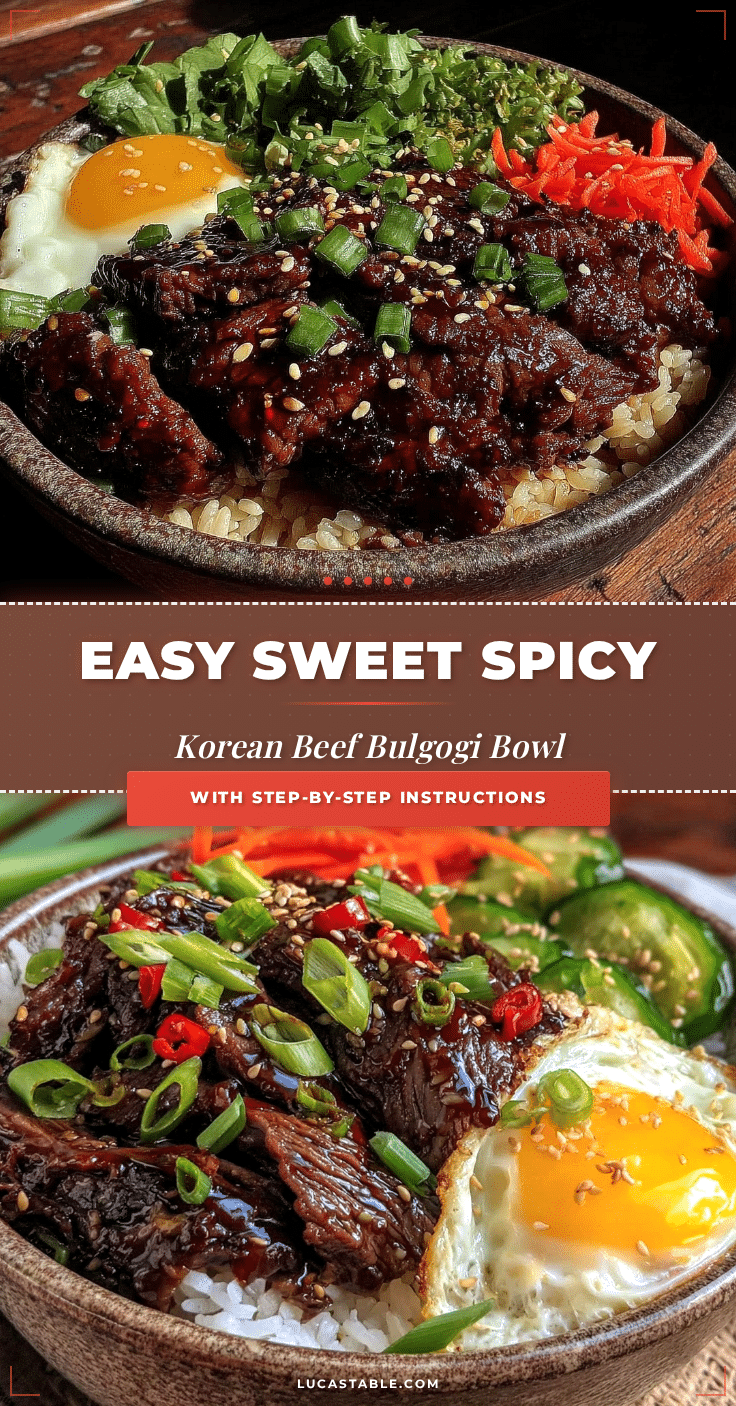
Easy Korean Beef Bulgogi Bowl Recipe with Sweet Spicy Glaze Perfect for Quick Dinners

A quick and flavorful Korean beef bulgogi bowl featuring juicy marinated beef in a sweet and spicy glaze served over rice with fresh veggies. Perfect for busy weeknights and easy to customize.
- Prep Time: 15 minutes
- Cook Time: 10 minutes
- Total Time: 25 minutes
- Yield: 4 servings 1x
- Category: Main Course
- Cuisine: Korean
Ingredients
- 1 pound thinly sliced ribeye or sirloin steak (well-marbled)
- 1/4 cup low-sodium soy sauce
- 2 tablespoons brown sugar
- 3 cloves garlic, minced
- 1 teaspoon grated ginger
- 1 tablespoon gochujang (Korean chili paste)
- 1 tablespoon sesame oil
- 2 green onions, thinly sliced
- 1 teaspoon rice vinegar
- Freshly ground black pepper, to taste
- 2 cups cooked jasmine or short-grain rice
- Vegetables for serving: thinly sliced carrots, cucumber ribbons, or steamed broccoli (optional)
- Toasted sesame seeds, for garnish
Instructions
- Freeze the beef for about 30 minutes to firm it up, then slice thinly against the grain into bite-sized strips about 1/4 inch thick.
- In a medium bowl, whisk together soy sauce, brown sugar, minced garlic, grated ginger, gochujang, sesame oil, rice vinegar, and freshly ground black pepper to form the marinade and glaze.
- Toss the sliced beef in half of the marinade mixture. Cover and refrigerate for at least 15 minutes, ideally 30 minutes. (Skip marinating if in a hurry.)
- Cook 1 cup dry jasmine rice according to package instructions or use leftover rice. Fluff and keep warm.
- Heat a non-stick skillet over medium-high heat. Add a small drizzle of oil if needed. Add the marinated beef in a single layer, cooking 2-3 minutes per side until browned and cooked through. Remove beef and set aside.
- Pour the reserved marinade into the same skillet and cook over medium heat, stirring frequently, until it thickens and becomes syrupy, about 2-3 minutes.
- Return the beef to the skillet and toss to coat evenly in the glaze.
- Slice fresh veggies (carrots, cucumber ribbons, steamed broccoli) while glaze thickens.
- Assemble the bowl by spooning warm rice into bowls, topping with glazed beef, arranging veggies on the side, and sprinkling with sliced green onions and toasted sesame seeds.
Notes
Freeze beef before slicing for easier thin cuts. Do not overcrowd the pan to avoid steaming the beef. If glaze thickens too much, add a splash of water to loosen. Marinate for 15-30 minutes for best flavor but can skip if short on time. Use tamari instead of soy sauce for gluten-free. Substitute gochujang with sriracha and honey if needed.
Nutrition
- Serving Size: 1 bowl
- Calories: 480
- Sugar: 12
- Fat: 15
- Carbohydrates: 50
- Fiber: 3
- Protein: 30
Keywords: Korean beef bulgogi, bulgogi bowl, sweet spicy glaze, quick dinner, easy Korean recipe, weeknight meal, beef recipe