“You’re seriously making duck tonight?” my roommate asked, eyebrows raised as I pulled the skillet out of the cabinet. Honestly, I wasn’t even sure myself a few hours earlier. It started as one of those nights when the fridge was half-empty, and I was too tired for anything fancy. But then I spotted the duck breasts tucked in the back, and something about that rich, gamey meat called out for a little attention.
Now, I’ve always been a bit wary of cooking duck. It’s one of those proteins that sounds impressive but can easily go wrong—the skin not crispy enough, the meat chewy, or worse, bland. But that night, I decided to give it a shot, pairing it with a quick cherry port sauce that was more about throwing ingredients together than following some complex formula. To my surprise, the whole thing came together beautifully. The skin crisped up with a sizzle that made me stop and just listen for a moment, and the sauce balanced tart cherries with the warmth of port wine in a way that felt like a hug on a plate.
Since then, this recipe has become a go-to for those evenings when I want something a little special without spending hours in the kitchen. I’ve made it more times than I can count, sometimes swapping cherries for seasonal berries, sometimes sneaking in a bit of extra thyme or a splash of balsamic. It’s the kind of dish that feels fancy but doesn’t require a chef’s finesse, you know? Plus, it’s perfect for impressing a date or just treating yourself after a long day.
What really sticks with me about this pan-seared duck breast with cherry port sauce is how it turned a potentially overwhelming ingredient into a simple, satisfying meal. It’s proof that sometimes, the easiest dishes surprise you the most—and that’s a quiet little victory worth savoring.
Why You’ll Love This Perfect Pan-Seared Duck Breast Recipe
This recipe isn’t just another duck breast dish. It’s the product of a few kitchen stumbles turned into a reliable, delicious routine. Here’s why this pan-seared duck breast with cherry port sauce deserves a spot in your repertoire:
- Quick & Easy: You’ll have this ready in about 30 minutes, no marathon cooking sessions needed. Perfect when you want to impress without stressing.
- Simple Ingredients: Most of the ingredients are pantry staples or easy to find, so no last-minute grocery runs.
- Perfect for Cozy Dinners: Whether it’s a weekend treat or a special occasion, this dish brings warmth and a touch of elegance to the table.
- Crowd-Pleaser: Even folks who usually shy away from duck find this recipe irresistible—the crispy skin and rich sauce win them over every time.
- Unbelievably Delicious: The balance between the savory duck and the sweet-tart cherry port sauce is just right, making every bite memorable.
What sets this duck breast apart? The secret lies in the technique: scoring the skin just right for maximum crispiness and letting the fat render slowly. The cherry port sauce is straightforward, but blending fresh cherries with port wine and a hint of shallots creates a complex flavor that feels luxurious. This isn’t just another duck recipe floating around—it’s the one I trust when I want to feel confident in the kitchen.
Honestly, it’s the kind of dish that makes you pause mid-bite and appreciate how something so deceptively simple can feel like a celebration. If you’ve ever hesitated to cook duck, this recipe might just be the one to change your mind.
What Ingredients You Will Need
This recipe keeps things straightforward but flavorful by focusing on quality ingredients that play well together. You’ll find most are pantry staples or easy to swap if needed.
- Duck Breasts: 2 skin-on duck breasts, about 6-7 oz (170-200 g) each. Look for fresh, firm breasts with a nice layer of fat. I prefer organic or free-range when possible.
- Salt and Black Pepper: For seasoning the duck. Kosher salt works best to draw out moisture and enhance crispiness.
- Fresh Thyme: A few sprigs, to add an herbal note to both the duck and the sauce.
- Shallot: 1 small, finely chopped. Adds subtle sweetness and depth to the sauce.
- Fresh or Frozen Cherries: 1 cup (about 150 g), pitted. Fresh cherries work beautifully in season, but frozen are a convenient alternative year-round.
- Port Wine: ½ cup (120 ml). Choose a ruby port for a rich, fruity base to the sauce.
- Chicken or Vegetable Stock: ¼ cup (60 ml) to add body and balance to the sauce.
- Balsamic Vinegar: 1 teaspoon, to brighten and give a tangy edge.
- Butter: 1 tablespoon, cold and cut into small pieces, to finish the sauce with silkiness.
Optional but recommended:
- Orange Zest: A little zest adds freshness and complements the cherries nicely.
- Honey or Maple Syrup: A touch (1 teaspoon) if you prefer a sweeter sauce.
If you want to make this gluten-free, just double-check your stock and port labels. You can also swap the port for a red wine if needed, though the flavor will be slightly different but still lovely.
Equipment Needed
- Heavy Skillet or Cast Iron Pan: Essential for crisping the duck skin evenly. A well-seasoned cast iron is my go-to for that perfect sear.
- Sharp Knife: For scoring the duck skin and chopping shallots.
- Small Saucepan: To simmer the cherry port sauce separately while the duck cooks.
- Tongs: Handy for flipping the duck breasts without piercing the skin.
- Meat Thermometer (Optional): If you’re particular about doneness, this helps nail medium-rare perfectly.
If you don’t have a cast iron skillet, a heavy stainless steel pan will work, but keep in mind it might take a little longer to get the skin crispy. I’ve done it on a regular non-stick pan, but the results aren’t quite as good. For sauce-making, any small saucepan or even a deep frying pan works fine.
Preparation Method
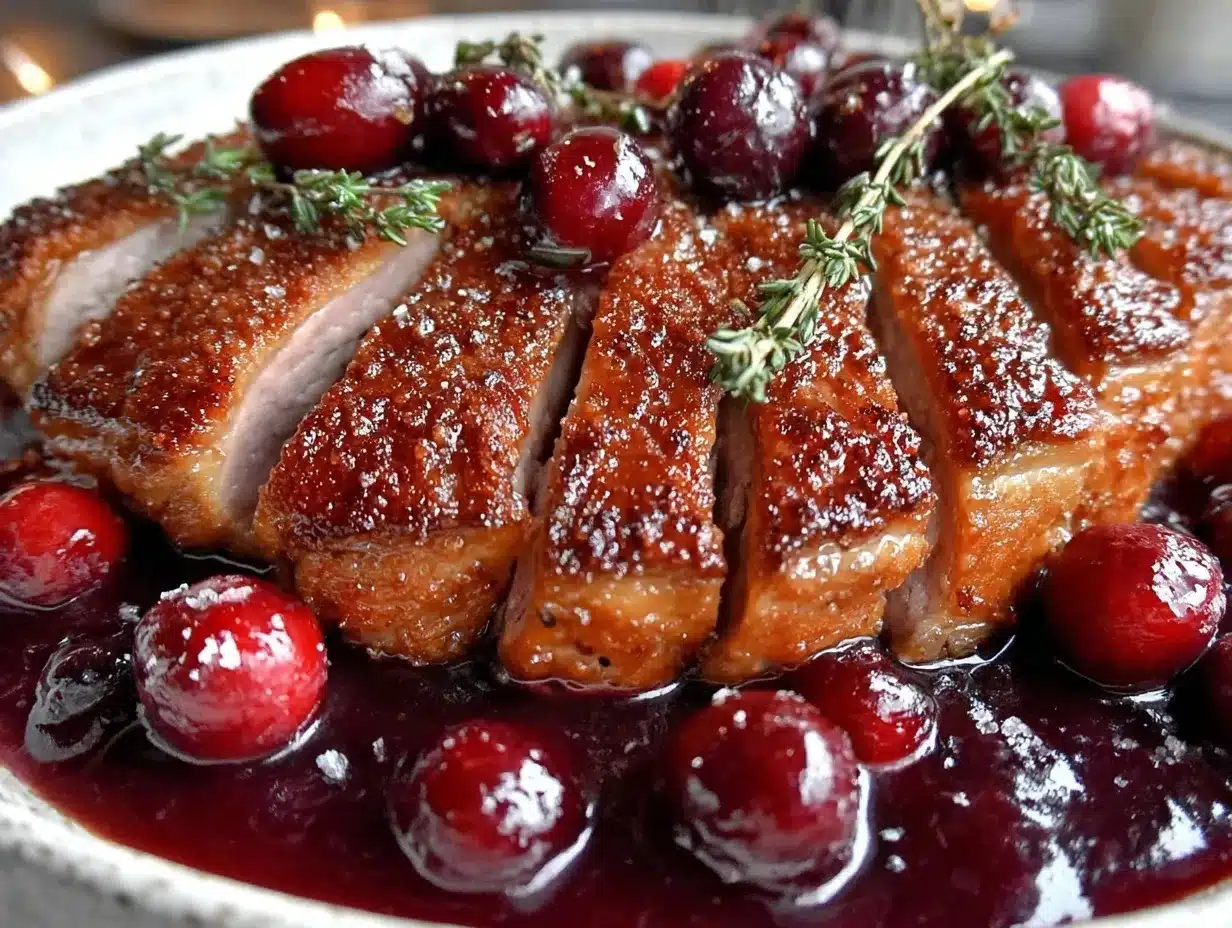
- Score the Duck Skin: Pat the duck breasts dry with paper towels. Using a sharp knife, gently score the skin in a crisscross pattern, about ¼ inch (6 mm) apart. Be careful not to cut into the meat. This helps the fat render and the skin crisp up nicely. Season both sides generously with kosher salt and freshly ground black pepper. Let them rest at room temperature for 15 minutes.
- Start Cooking the Duck: Heat your cast iron skillet over medium heat—no oil needed because the duck fat will render out. Place the duck breasts skin-side down and press lightly to ensure even contact. Cook for about 6-8 minutes, adjusting heat as needed to avoid burning. You want the skin to turn golden brown and crisp, with a satisfying sizzle. Flip the breasts over and cook the meat side for another 3-4 minutes for medium-rare (internal temperature should reach about 135°F/57°C). Adjust time slightly if you prefer it more or less done.
- Rest the Duck: Remove the duck breasts from the pan and let them rest on a plate, tented loosely with foil for 5-7 minutes. This step lets the juices redistribute and keeps the meat tender.
- Make the Cherry Port Sauce: While the duck rests, discard excess fat from the skillet, leaving about 1 tablespoon. Add the chopped shallot and cook over medium heat until softened and fragrant, about 2 minutes. Pour in the port wine, scraping up any browned bits from the pan with a wooden spoon. Let it reduce by half, about 4-5 minutes. Add the stock, cherries, thyme sprigs, and balsamic vinegar. Simmer gently until the cherries soften and the sauce thickens slightly, about 6-8 minutes. Remove the thyme sprigs, then whisk in the cold butter pieces one at a time off the heat to give the sauce a smooth sheen. Taste and adjust seasoning with salt, pepper, or a teaspoon of honey if you want it sweeter.
- Slice and Serve: Slice the duck breasts thinly against the grain. Arrange on plates and spoon the warm cherry port sauce over the top. Garnish with a sprinkle of fresh thyme or a little orange zest if you like. Serve immediately.
Pro tip: If the sauce thickens too much while resting, just add a splash of stock or water and warm gently before serving. Also, keep an eye on the duck while cooking—too high heat risks burning the skin before the fat has rendered.
Cooking Tips & Techniques
Getting that perfect pan-seared duck breast with cherry port sauce takes a bit of finesse, but it’s nothing you can’t handle with a few insider tips.
- Patience with the Skin: It’s tempting to crank the heat for a quick sear, but medium heat is your friend here. It allows the fat to render slowly, leaving you with crispy skin instead of burnt bits.
- Don’t Skip Resting: I used to rush to slice the duck right off the pan, and let me tell you, the juices would just run out and leave the meat dry. Resting makes all the difference.
- Cherry Sauce Timing: Start the sauce while the duck rests. This overlap saves time and means everything’s hot and ready together.
- Use a Meat Thermometer: If you’re unsure, this tool takes the guesswork out of doneness. Duck breast is best at medium-rare, around 135°F (57°C), for juicy meat.
- Rendering Fat: Don’t discard the rendered duck fat! Save it for roasting vegetables or making crispy potatoes—you’ll thank me later.
One time, I accidentally left the heat too high and ended up with a smoky kitchen and a slightly burnt skin. Lesson learned: low and steady wins the race. Also, I’ve found that fresh cherries give the sauce a brighter punch, but frozen works fine if you’re in off-season. Season your sauce well; the balance between sweet, tart, and savory is what makes it sing.
Variations & Adaptations
This duck breast recipe is flexible enough for several tasty twists:
- Berry Port Sauce: Swap cherries for blackberries or raspberries for a different fruity note, especially in summer.
- Spiced Cherry Sauce: Add a pinch of cinnamon or star anise to the sauce for a warm, cozy flavor profile that’s perfect for fall or winter.
- Gluten-Free Option: Ensure your stock is gluten-free and skip any added thickeners that contain gluten. The sauce thickens nicely on its own.
- Orange and Ginger Twist: Add fresh ginger to the sauce and finish with a splash of orange juice for a zesty punch.
- Pan-Roasted Duck: For a hands-off approach, sear the duck skin-side down, then transfer the skillet to a 400°F (200°C) oven for 7-10 minutes to finish cooking.
Personally, I once tried adding a bit of garlic and chili flakes to the sauce for a subtle kick, which was surprisingly good! Feel free to experiment and make this recipe your own.
Serving & Storage Suggestions
This duck breast shines best served warm, straight from the pan with the cherry port sauce spooned generously over it. I like to pair it with creamy mashed potatoes or a simple wild rice pilaf that soaks up the sauce beautifully.
For something lighter, steamed green beans or sautéed spinach add fresh contrast to the richness. A glass of medium-bodied red wine or a fruity pinot noir complements the flavors nicely.
Leftovers? Wrap the sliced duck tightly in foil and store in an airtight container in the fridge for up to 2 days. Reheat gently in a skillet over low heat to avoid drying out. The sauce keeps well too, just warm it slowly and stir in a splash of stock if it thickens too much.
Flavors tend to deepen after a day, so sometimes I purposely make extra to enjoy the next day with minimal effort. Just avoid microwaving the duck, as it can toughen the meat.
Nutritional Information & Benefits
Here’s a rough estimate per serving (based on 2 servings):
| Calories | 450-500 kcal |
|---|---|
| Protein | 35 g |
| Fat | 30 g (mostly from duck fat and butter) |
| Carbohydrates | 10-15 g (mainly from cherries and port wine) |
| Fiber | 2 g |
Duck breast is an excellent source of high-quality protein and iron, supporting muscle health and energy. The cherries contribute antioxidants and vitamins, while the port wine adds flavor without excess sugar when used sparingly. Keep in mind this is a richer dish, so it’s perfect as an occasional treat or special meal.
For those watching carbs or following a low-carb diet, this recipe fits well but watch portion sizes of the sauce. And if you’re interested in leaner poultry options, you might enjoy dishes like the quick zesty lemon chicken that I also often make on busy nights.
Conclusion
This perfect pan-seared duck breast with cherry port sauce is one of those recipes that feels impressive without being intimidating. It’s a balance of crispy, juicy, savory, and sweet that just works every time. I love how it turns a fancy cut of meat into a manageable weeknight dinner or a special meal for company without requiring hours in the kitchen.
Feel free to tweak the sauce or the seasoning to suit your taste buds—this recipe rewards experimentation. For me, it’s become a quiet favorite for when I want to feel like I’m doing something special but without fuss.
If you try it, I’d love to hear how it goes or what variations you come up with—drop a comment or share your thoughts. Cooking is all about sharing those little moments, and this duck is definitely one worth savoring. Here’s to many cozy dinners ahead!
Frequently Asked Questions
How do I know when the duck breast is cooked perfectly?
The best way is to use a meat thermometer; medium-rare duck breast should register about 135°F (57°C). The skin should be crispy and golden, and the meat juicy and pink inside.
Can I prepare the cherry port sauce ahead of time?
Yes, you can make the sauce a few hours ahead and gently reheat it before serving. Just add a splash of stock or water if it becomes too thick.
What if I don’t have port wine?
Red wine is a good substitute, but the sauce will have a slightly different flavor. You can also omit it and use extra stock with a bit of balsamic vinegar to maintain acidity.
Is duck breast very fatty? Should I trim the fat?
Duck breast has a thick layer of fat which renders during cooking to crisp the skin and keep the meat moist. It’s best not to trim it off but score it to help the fat render out.
Can I use frozen duck breasts for this recipe?
Fresh is ideal, but if using frozen, thaw completely in the fridge overnight and pat dry before cooking to ensure crisp skin.
Pin This Recipe!
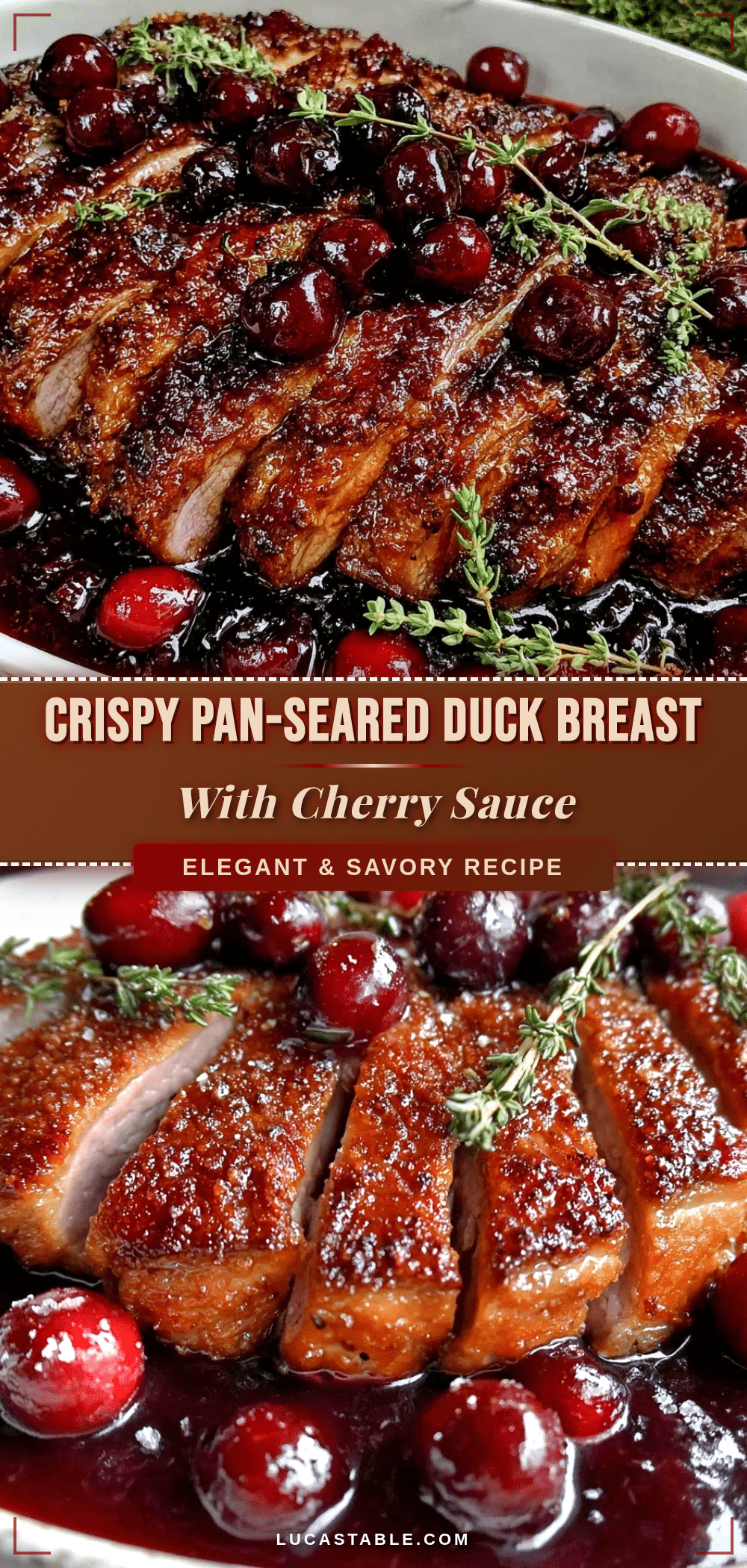
Perfect Pan-Seared Duck Breast Recipe with Easy Cherry Port Sauce

A quick and easy pan-seared duck breast recipe paired with a rich and flavorful cherry port sauce, perfect for cozy dinners or special occasions.
- Prep Time: 15 minutes
- Cook Time: 15 minutes
- Total Time: 30 minutes
- Yield: 2 servings 1x
- Category: Main Course
- Cuisine: French-inspired
Ingredients
- 2 skin-on duck breasts, about 6-7 oz (170–200 g) each
- Kosher salt and freshly ground black pepper, to season
- A few sprigs fresh thyme
- 1 small shallot, finely chopped
- 1 cup (about 150 g) fresh or frozen pitted cherries
- ½ cup (120 ml) ruby port wine
- ¼ cup (60 ml) chicken or vegetable stock
- 1 teaspoon balsamic vinegar
- 1 tablespoon cold butter, cut into small pieces
- Optional: orange zest
- Optional: 1 teaspoon honey or maple syrup
Instructions
- Pat the duck breasts dry with paper towels. Score the skin in a crisscross pattern about ¼ inch (6 mm) apart without cutting into the meat. Season both sides generously with kosher salt and black pepper. Let rest at room temperature for 15 minutes.
- Heat a cast iron skillet over medium heat (no oil needed). Place duck breasts skin-side down and press lightly for even contact. Cook 6-8 minutes until skin is golden brown and crisp. Flip and cook meat side 3-4 minutes for medium-rare (135°F/57°C internal temperature). Adjust time for preferred doneness.
- Remove duck breasts and rest loosely tented with foil for 5-7 minutes.
- Discard excess fat from skillet, leaving about 1 tablespoon. Add chopped shallot and cook over medium heat until softened, about 2 minutes. Pour in port wine, scraping browned bits, and reduce by half (4-5 minutes). Add stock, cherries, thyme, and balsamic vinegar. Simmer until cherries soften and sauce thickens (6-8 minutes). Remove thyme sprigs and whisk in cold butter off heat. Adjust seasoning with salt, pepper, or honey if desired.
- Slice duck breasts thinly against the grain. Arrange on plates and spoon warm cherry port sauce over. Garnish with fresh thyme or orange zest if desired. Serve immediately.
Notes
Use medium heat to render fat slowly and achieve crispy skin without burning. Rest duck before slicing to keep meat juicy. Save rendered duck fat for roasting vegetables. If sauce thickens too much, add stock or water and warm gently before serving. Fresh cherries give a brighter flavor but frozen cherries work year-round. For gluten-free, verify stock and port wine labels. Red wine can substitute port wine with a slightly different flavor.
Nutrition
- Serving Size: 1 duck breast with s
- Calories: 475
- Sugar: 8
- Sodium: 600
- Fat: 30
- Saturated Fat: 10
- Carbohydrates: 12
- Fiber: 2
- Protein: 35
Keywords: duck breast, pan-seared duck, cherry port sauce, easy duck recipe, quick duck dinner, crispy duck skin, elegant dinner, cozy meal