“Hey, you ever tried garlic scapes in pesto?” my neighbor asked me over the fence one breezy May afternoon. I blinked, unfamiliar with the term, but she insisted I give it a shot. Honestly, I was skeptical. Garlic scapes? Sounds fancy or maybe just another “trendy” ingredient that I’d never find in my usual grocery run. But curiosity won, especially after she handed me a jar of vibrant green pesto she’d made herself. That first bite of fresh garlic scape pesto pasta with toasted pine nuts was like finding a secret weapon for quick, fresh dinners.
The pesto had this bright, almost grassy flavor with just enough garlicky punch to wake up my taste buds without overwhelming them. The toasted pine nuts added a mild crunch that played so nicely against the silky pasta. I ended up making this recipe several times that week—sometimes late at night when the kitchen was quiet, and sometimes in a rush before a gathering. It became my go-to, the kind of dish that felt simple but impressive, like a little win on hectic days.
What really stuck with me about this fresh garlic scape pesto pasta was how it captures that fleeting season of garlic scapes—those curly, green stalks that show up just once a year in farmers’ markets or garden patches. It’s a little culinary secret that feels like a gift from spring itself. And the toasted pine nuts? They bring this warm, nutty depth that makes every forkful comforting.
So, if you ever find yourself wondering what to do with those curious garlic scapes, this recipe might be your answer. It’s honest, straightforward, and honestly, there’s a quiet satisfaction in making something so fresh and tasty without fuss. It’s the kind of meal that feels like a fresh breath of spring, even on the busiest nights.
Why You’ll Love This Fresh Garlic Scape Pesto Pasta Recipe
Having made this fresh garlic scape pesto pasta with toasted pine nuts more times than I can count, I can confidently say it’s one of those recipes that just makes dinner feel a little brighter. Here’s what makes it stand out:
- Quick & Easy: From start to finish, this pesto pasta comes together in about 20 minutes. Perfect for those evenings when you want something fresh but can’t spend hours cooking.
- Simple Ingredients: You probably have most of these in your pantry or can find fresh garlic scapes at your local market during spring. No complicated shopping trips necessary.
- Perfect for Seasonal Cooking: This recipe celebrates the brief garlic scape season, turning what might be an overlooked ingredient into a star.
- Crowd-Pleaser: Whether you’re feeding family or friends, the mild garlic flavor paired with toasted pine nuts always gets compliments – even from the picky eaters.
- Unbelievably Delicious: The texture of the creamy pesto coating the pasta, punctuated by the crunch of toasted pine nuts, is a comforting combination that never gets old.
What really sets this garlic scape pesto apart from your run-of-the-mill pesto is the freshness and mild garlicky bite that doesn’t overpower. The pesto’s green vibrancy and unique flavor profile bring something new to the table while still feeling familiar and comforting—kind of like a fresh twist on classic basil pesto. Plus, the pine nuts toasted just right give a subtle warmth that makes every bite satisfying.
This isn’t just a recipe; it’s a way to honor a short-lived ingredient that deserves a spotlight. It’s perfect to serve when you want something wholesome without the fuss, or when you’re planning a casual dinner but want to impress a little. Honestly, this fresh garlic scape pesto pasta became my solution for turning simple ingredients into a dish that feels special.
What Ingredients You Will Need for Fresh Garlic Scape Pesto Pasta
This recipe uses simple, wholesome ingredients to deliver bold flavor and satisfying texture without fuss. The ingredients are mostly pantry staples with the standout being fresh garlic scapes, which lend a unique, bright garlic flavor that’s less intense than raw garlic.
- Garlic Scapes: About 1 cup chopped (roughly 8-10 scapes). These tender green stalks are the star, offering a mild garlic taste. Look for firm, fresh scapes at farmers’ markets or specialty stores.
- Fresh Basil Leaves: 1/2 cup packed, washed. Adds classic pesto herb freshness and balances the garlic scapes.
- Toasted Pine Nuts: 1/3 cup. Toasting brings out a warm, nutty depth that complements the garlicky notes perfectly. I prefer brands like Fattoria La Vialla for quality and flavor.
- Parmesan Cheese: 1/2 cup freshly grated. Adds salty richness and creaminess. Use Parmigiano-Reggiano if you can—it really makes a difference.
- Extra Virgin Olive Oil: 1/2 cup. Choose a good-quality olive oil for smoothness and flavor; Colavita is a reliable pick.
- Lemon Juice: 1 tablespoon freshly squeezed. Brightens the pesto, balancing richness.
- Salt: To taste, about 1/2 teaspoon. Enhances all the flavors.
- Black Pepper: A few grinds for subtle heat.
- Pasta: 12 ounces (340 grams) of your choice. I like linguine or spaghetti for this recipe because they hold the pesto nicely. Gluten-free pasta works well too.
Substitutions: If you can’t find garlic scapes, young garlic leaves or scallions offer a milder alternative but the flavor won’t be quite the same. For a nut-free version, try toasted pumpkin seeds instead of pine nuts. Dairy-free Parmesan substitutes or nutritional yeast work great if you want a vegan twist.
Equipment Needed
- Food Processor or Blender: Essential for making the pesto smooth and well combined. I’ve used both over the years; a food processor gives a chunkier texture, while a blender yields silkier results.
- Large Pot: For boiling pasta. Make sure it’s roomy enough so the pasta cooks evenly without sticking.
- Colander: To drain pasta efficiently.
- Skillet or Small Pan: For toasting pine nuts. Watching closely and stirring often prevents burning.
- Measuring Cups and Spoons: For precise measurements, especially with oil and lemon juice.
If you’re on a budget and don’t have a food processor, a sturdy mortar and pestle works, but it takes some elbow grease. Also, a silicone spatula helps scrape down the sides of the bowl, making sure you get all that pesto goodness.
Preparation Method for Fresh Garlic Scape Pesto Pasta
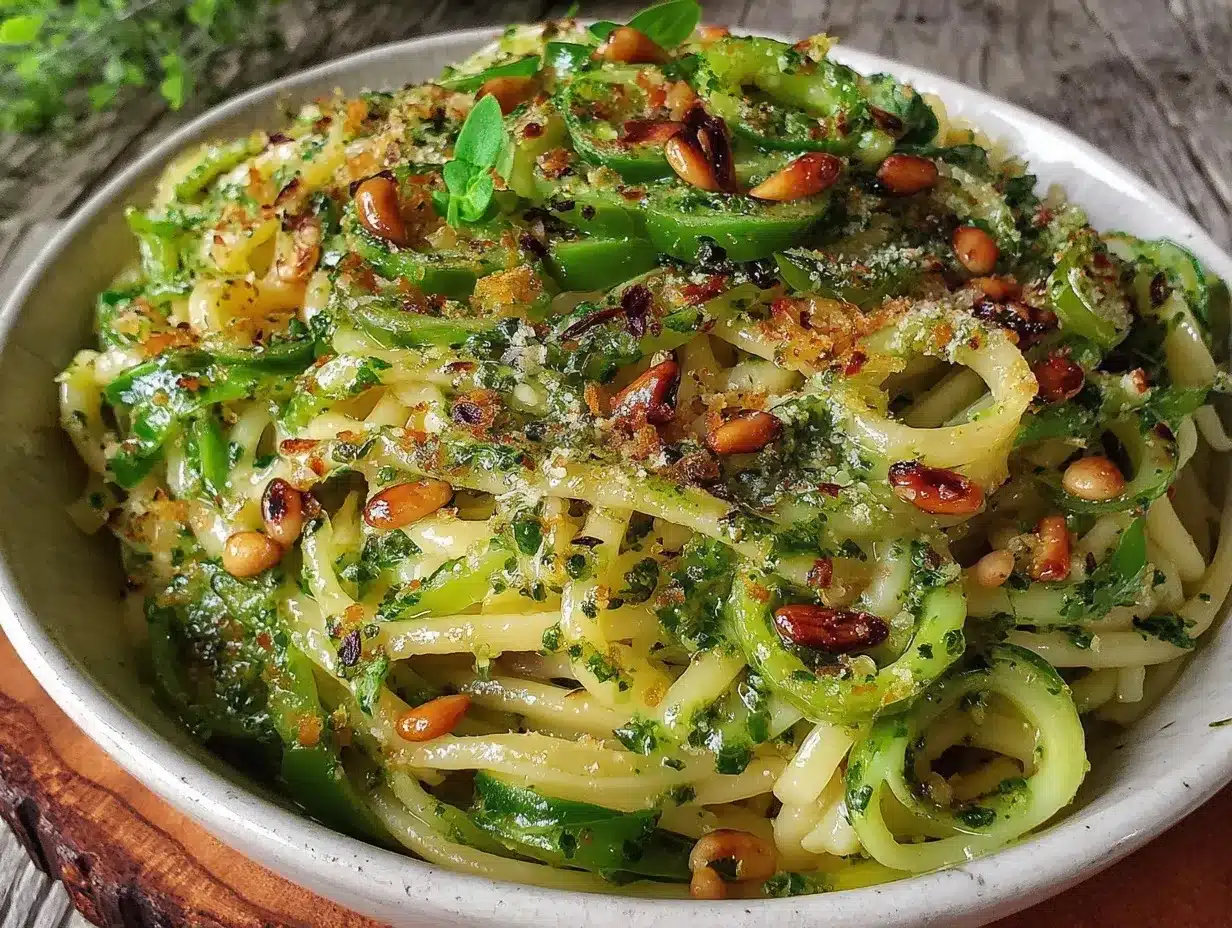
- Toast the Pine Nuts (about 5 minutes): Heat a dry skillet over medium heat. Add pine nuts and stir frequently until golden and fragrant. Watch closely—pine nuts can go from toasted to burnt quickly. Once done, transfer to a plate to cool.
- Cook the Pasta (8-10 minutes): Bring a large pot of salted water to a boil. Add pasta and cook according to package instructions until al dente. Reserve about 1 cup (240 ml) of pasta water before draining.
- Prepare the Pesto (10 minutes): In a food processor, combine chopped garlic scapes, basil leaves, toasted pine nuts (reserve a tablespoon for garnish), grated Parmesan, lemon juice, salt, and pepper. Pulse a few times to roughly combine.
- Add Olive Oil: While the processor is running, slowly drizzle in olive oil until the mixture forms a creamy pesto. If it seems too thick, add a tablespoon or two of the reserved pasta water to loosen it up. Taste and adjust seasoning as needed.
- Toss Pasta and Pesto: Return drained pasta to the pot or a large bowl. Add pesto and toss thoroughly to coat. Use reserved pasta water as needed for a silky, clingy sauce. The pasta should glisten with pesto but not be soupy.
- Serve: Divide pasta among plates, sprinkle with remaining toasted pine nuts, and add an extra dusting of Parmesan if you like. Fresh cracked black pepper on top is a nice finishing touch.
Note: If you like a little more brightness, a light drizzle of lemon juice at the end can really lift the flavors. Also, I find that warming the pesto slightly before tossing helps it cling better to the pasta.
Cooking Tips & Techniques
One thing I’ve learned from making fresh garlic scape pesto pasta a bunch of times is that the key to that perfect creamy texture is patience with the olive oil. Drizzling it slowly while blending lets the oil emulsify properly, preventing a greasy or separated sauce.
Another tip: always toast your pine nuts yourself. Pre-toasted nuts can taste stale or bitter. Toasting releases a deep, warm aroma that’s a game-changer. Just keep your eyes peeled and stir often to avoid burning.
When boiling pasta, salty water is your friend—it seasons the pasta from the inside out. I usually add about 1 tablespoon of kosher salt per 4 quarts of water.
Don’t rinse your pasta after draining; the little bit of starch left helps the pesto stick better. And reserve pasta water! That starchy liquid is pure magic for loosening sauces without watering them down.
For a smoother pesto, blend longer, but if you prefer a bit of texture, pulse less. I like mine somewhere in the middle—creamy but with hints of chopped pine nuts and scapes.
Variations & Adaptations
- Vegan Version: Omit Parmesan and swap with nutritional yeast or a vegan cheese substitute. Use a plant-based olive oil blend for a slightly different flavor profile.
- Nut-Free Option: Replace pine nuts with toasted sunflower or pumpkin seeds for a similar crunch and nuttiness without allergens.
- Seasonal Twist: During summer, add a handful of fresh peas or chopped asparagus for extra texture and color. Works beautifully with the fresh green flavors.
- Protein Boost: Toss in some grilled chicken or shrimp—or keep it simple and pair with a quick lemon garlic chicken recipe for a balanced meal.
- Herb Swap: If you want a different herb twist, try replacing half the basil with fresh parsley or mint for a fresh punch.
Personally, I once added a spoonful of ricotta on top for creaminess that felt indulgent without much fuss—a little trick I picked up from making creamy pasta dishes like quick creamy tuna pasta.
Serving & Storage Suggestions
This fresh garlic scape pesto pasta is best served warm or at room temperature. The flavors mellow out beautifully if it sits for a bit, making it great for picnics or packed lunches.
Serve it with a simple green salad or some crusty bread to soak up any extra pesto. A crisp white wine or a sparkling water with a twist of lemon pairs nicely, balancing the garlic and pine nut richness.
To store leftovers, keep the pasta in an airtight container in the refrigerator for up to 3 days. The pesto may thicken—if so, stir in a splash of olive oil or a bit of warm water before reheating gently on the stove or microwave.
Freezing pesto separately in ice cube trays is a handy way to have fresh garlic scape pesto on hand beyond the season. Just thaw and toss with your favorite pasta or roasted veggies.
Nutritional Information & Benefits
This recipe is not only tasty but provides a nice balance of nutrients. Garlic scapes offer antioxidants and anti-inflammatory properties with a milder garlic flavor that’s easier on digestion. Pine nuts contribute healthy fats and protein, while olive oil adds heart-healthy monounsaturated fats.
Per serving, expect approximately 450 calories, with a good dose of fiber, vitamins A and C from the garlic scapes and basil, and a satisfying amount of protein from the nuts and Parmesan. This dish can fit well into vegetarian or gluten-free diets when using appropriate pasta.
I appreciate this meal for its fresh ingredients and wholesome fats that make it feel nourishing without heaviness—great for those mindful of balanced eating but who don’t want to sacrifice flavor.
Conclusion
Fresh garlic scape pesto pasta with toasted pine nuts is one of those recipes that quietly claims a spot in your dinner rotation for good reason. It’s simple, fresh, and adaptable, showcasing an ingredient that’s too often overlooked. Whether you’re cooking for one or feeding a few, it delivers satisfying flavor with minimal fuss.
What I love most is how it turns a fleeting seasonal ingredient into something approachable and comforting, yet a little special. It’s a reminder that sometimes the best meals come from taking a chance on something new and letting the freshness shine.
Try it, tweak it, and make it your own. And if you’re ever in the mood for another quick pasta fix, this fresh garlic scape pesto pasta pairs beautifully with the light simplicity of spaghetti aglio olio, giving you options for fast, flavorful dinners any night of the week.
FAQs About Fresh Garlic Scape Pesto Pasta
What are garlic scapes, and where can I find them?
Garlic scapes are the curly, green flower stalks of garlic plants, harvested before the bulbs mature. You can usually find them at farmers’ markets or specialty grocery stores during late spring and early summer.
Can I use regular garlic instead of garlic scapes in this pesto?
You can, but garlic scapes have a milder, fresher flavor. If substituting, use 2-3 cloves of garlic and adjust to taste, as raw garlic can be much stronger.
How do I store leftover pesto?
Store pesto in an airtight container in the fridge for up to a week. Pour a thin layer of olive oil on top to prevent browning. You can also freeze pesto in ice cube trays for longer storage.
What pasta types work best with this pesto?
Long pastas like spaghetti, linguine, or fettuccine hold pesto well. Short shapes like penne or fusilli also work if you prefer bite-sized pieces.
Is this recipe suitable for a vegan diet?
Yes! Simply replace Parmesan with nutritional yeast or a vegan cheese alternative, and ensure your olive oil is plant-based (most are). The rest of the ingredients are naturally vegan.
Pin This Recipe!
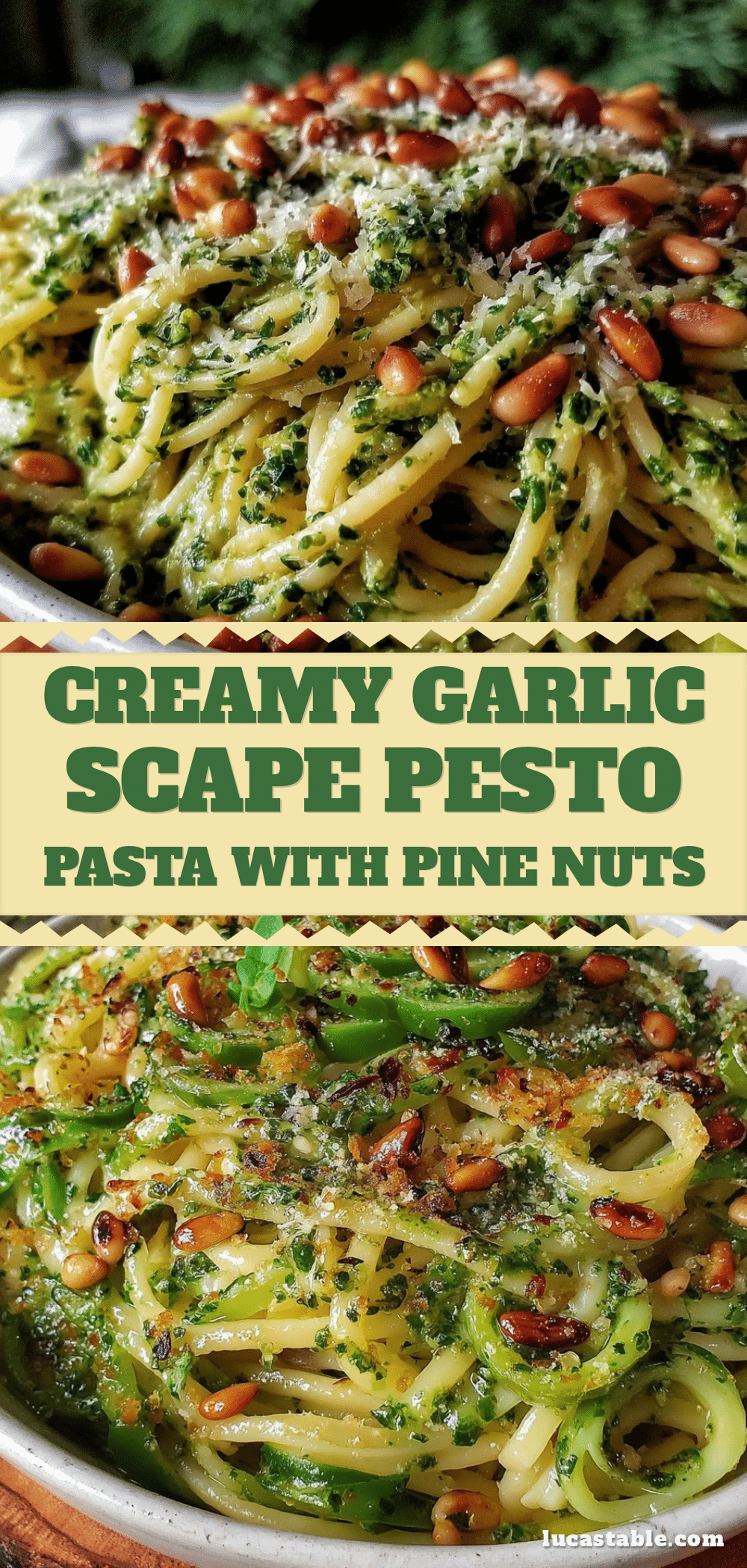
Fresh Garlic Scape Pesto Pasta Recipe Easy Homemade with Toasted Pine Nuts
A quick and easy pasta recipe featuring fresh garlic scape pesto with toasted pine nuts, delivering a bright, mild garlic flavor and creamy texture perfect for spring.
- Prep Time: 10 minutes
- Cook Time: 10 minutes
- Total Time: 20 minutes
- Yield: 4 servings 1x
- Category: Main Course
- Cuisine: Italian
Ingredients
- 1 cup chopped garlic scapes (about 8–10 scapes)
- 1/2 cup packed fresh basil leaves, washed
- 1/3 cup toasted pine nuts
- 1/2 cup freshly grated Parmesan cheese
- 1/2 cup extra virgin olive oil
- 1 tablespoon freshly squeezed lemon juice
- 1/2 teaspoon salt, or to taste
- Black pepper, a few grinds
- 12 ounces (340 grams) pasta of choice (linguine or spaghetti recommended)
Instructions
- Toast the pine nuts in a dry skillet over medium heat, stirring frequently until golden and fragrant, about 5 minutes. Transfer to a plate to cool.
- Bring a large pot of salted water to a boil. Add pasta and cook according to package instructions until al dente (8-10 minutes). Reserve about 1 cup (240 ml) of pasta water before draining.
- In a food processor, combine chopped garlic scapes, basil leaves, toasted pine nuts (reserve 1 tablespoon for garnish), grated Parmesan, lemon juice, salt, and pepper. Pulse a few times to roughly combine.
- With the processor running, slowly drizzle in olive oil until the mixture forms a creamy pesto. If too thick, add reserved pasta water a tablespoon at a time to loosen. Taste and adjust seasoning.
- Return drained pasta to the pot or a large bowl. Add pesto and toss thoroughly to coat, using reserved pasta water as needed for a silky sauce.
- Divide pasta among plates, sprinkle with remaining toasted pine nuts and extra Parmesan if desired. Finish with fresh cracked black pepper.
Notes
Drizzle olive oil slowly while blending to emulsify properly and avoid greasy sauce. Always toast pine nuts yourself for best flavor. Reserve pasta water to loosen pesto sauce as needed. Do not rinse pasta after draining to help pesto stick better. For more brightness, add a light drizzle of lemon juice before serving. Warming pesto slightly before tossing helps it cling better to pasta.
Nutrition
- Serving Size: 1 serving (about 1/4
- Calories: 450
- Sugar: 2
- Sodium: 400
- Fat: 32
- Saturated Fat: 6
- Carbohydrates: 35
- Fiber: 3
- Protein: 12
Keywords: garlic scape pesto, pesto pasta, toasted pine nuts, spring recipe, easy pasta, homemade pesto, vegetarian pasta, quick dinner