“You sure that fish isn’t too spicy?” my roommate asked, eyeing the blackened mahi mahi sizzling away in the pan. Honestly, I was skeptical too at first—blackening spices can be intimidating if you’re not used to them. But that evening, after a long, sweltering day that left me craving something refreshing yet full of punch, I decided to throw caution to the wind. I whipped up this flavorful blackened mahi mahi with fresh mango salsa I’d been tinkering with. The aroma of paprika and cayenne mingling with the sweet tropical burst of mango filled the kitchen—and, well, it was a game changer.
It wasn’t some fancy Sunday or a special occasion; just a random weeknight where I needed a quick reset. The contrast between the smoky, lightly charred fish and the bright, juicy salsa was so satisfying it nearly made me forget the chaos of the day. This recipe stuck with me because it’s one of those rare dishes that feels both indulgent and light. Plus, it’s straightforward enough to pull off without sweating over complicated steps.
There’s a quiet joy in serving a meal that gets you closing your eyes after the first bite, savoring those layered flavors. That’s why I keep coming back to this blackened mahi mahi with fresh mango salsa—it’s like a little summer vacation on your plate, no matter the season.
Why You’ll Love This Recipe
After testing this blackened mahi mahi recipe several times (yes, more than I’d admit!), I’m confident it ticks all the right boxes for busy cooks and flavor seekers alike. Here’s why it might become a staple in your kitchen:
- Quick & Easy: Ready in under 30 minutes, perfect for nights when you want something impressive without the fuss.
- Simple Ingredients: No exotic spices or hard-to-find produce—pretty much pantry staples plus fresh mango, which you can swap out if needed.
- Perfect for Summer or Any Season: The fresh mango salsa brings a cool brightness that’s ideal for warm weather but also adds a nice twist during colder months.
- Crowd-Pleaser: My friends always ask for this at dinner parties, and kids surprisingly love the mild sweetness paired with the smoky fish.
- Unbelievably Delicious: The balance between the bold blackened seasoning and the juicy salsa creates a mouthwatering texture and flavor combo that’s hard to beat.
What makes this blackened mahi mahi recipe stand apart is the little trick of toasting the spices just before coating the fish—this step releases their oils and amps up the aroma, delivering that unmistakable smoky depth. Plus, the salsa isn’t just chopped fruit thrown together; it’s finely diced, layered with lime juice and a hint of jalapeño, which gives it a refreshing kick without overpowering the fish.
This isn’t just another blackened fish dish—it’s my go-to when I want a quick meal that still feels special and fresh. It’s the kind of recipe that makes you pause, smile, and maybe even plan the next night’s dinner around it.
What Ingredients You Will Need
This recipe uses simple, wholesome ingredients to deliver bold flavor and satisfying texture without the fuss. Most are pantry staples, with the mango salsa bringing a bright, seasonal touch. Here’s what you’ll need:
- For the Blackened Mahi Mahi:
- 4 mahi mahi fillets (6 oz / 170 g each), skinless and boneless
- 2 tablespoons smoked paprika (I prefer McCormick for consistent flavor)
- 1 teaspoon cayenne pepper (adjust based on spice tolerance)
- 1 teaspoon garlic powder
- 1 teaspoon onion powder
- 1 teaspoon dried thyme
- 1 teaspoon dried oregano
- 1/2 teaspoon black pepper, freshly ground
- 1/2 teaspoon salt
- 2 tablespoons unsalted butter or olive oil, for cooking
- For the Fresh Mango Salsa:
- 1 large ripe mango, peeled and finely diced (substitute with pineapple in winter months)
- 1 small red bell pepper, finely chopped
- 1/4 cup red onion, finely minced
- 1 small jalapeño, seeded and minced (optional for mild heat)
- 1/4 cup fresh cilantro, chopped
- Juice of 1 lime (about 2 tablespoons)
- Salt to taste
For a gluten-free version, mahi mahi is naturally safe, and the spice mix contains no hidden gluten. If you want a dairy-free option, swap butter with a neutral oil like avocado oil. The salsa is incredibly versatile; if mango isn’t in season, fresh pineapple or even peach works well.
Equipment Needed
To get this blackened mahi mahi just right, you’ll want a few essential tools:
- Heavy Skillet or Cast Iron Pan: This is key for getting that perfect sear and the characteristic blackened crust. I’ve tried non-stick pans, but they don’t quite give the same char.
- Sharp Chef’s Knife: For dicing the salsa ingredients finely and evenly, which is crucial for a balanced bite.
- Mixing Bowls: One for the spice blend, one for the salsa.
- Measuring Spoons: To keep the spice ratios just right.
- Spatula or Tongs: For flipping the fish gently without breaking the fillets.
If you don’t have cast iron, a stainless steel pan works, just be sure it gets really hot before adding the fish. Also, keeping your knife sharp makes salsa prep way less frustrating—trust me, I’ve learned that the hard way!
Preparation Method
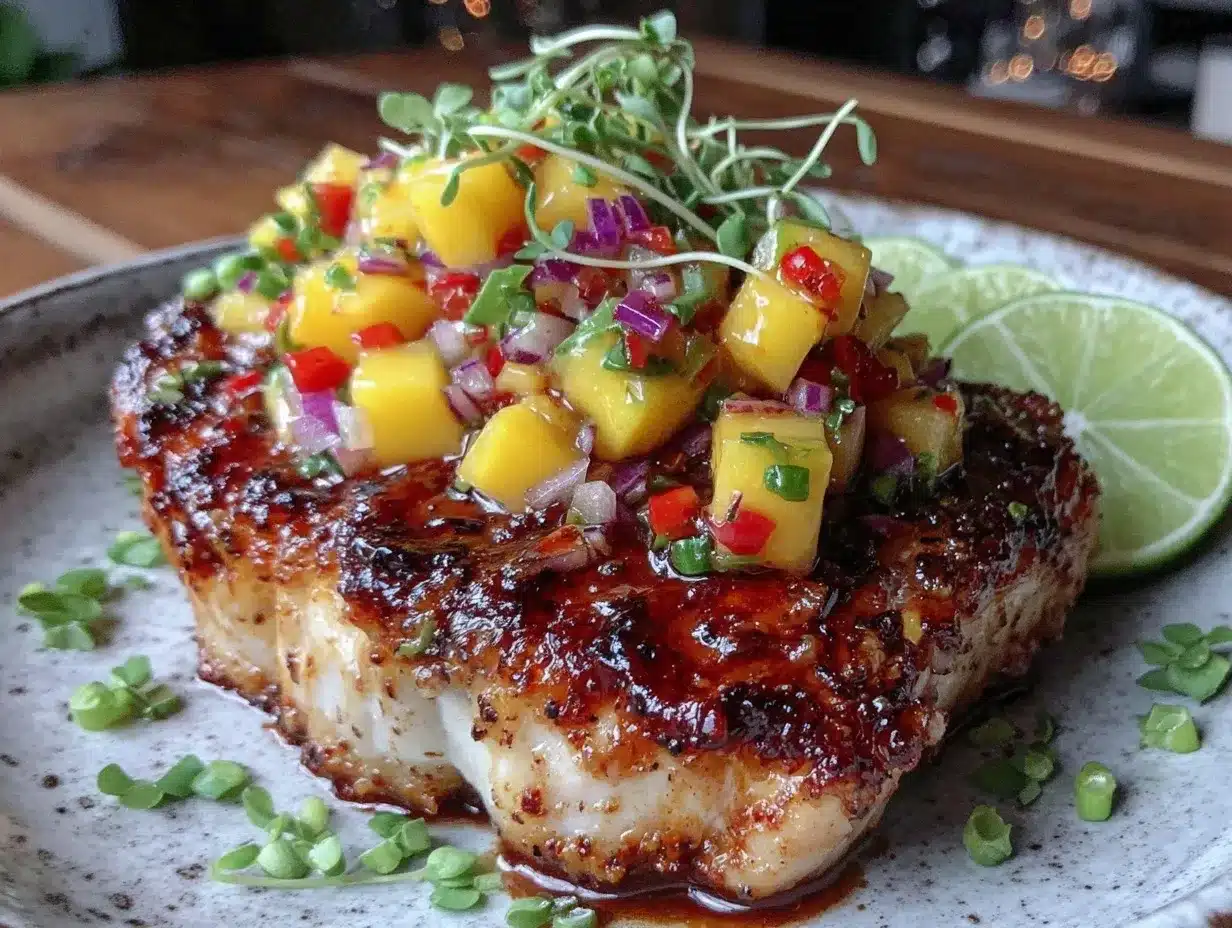
- Prepare the Blackening Spice Mix: In a small bowl, combine smoked paprika, cayenne pepper, garlic powder, onion powder, dried thyme, dried oregano, black pepper, and salt. Mix well and set aside. This step takes just 2 minutes but makes all the difference.
- Toast the Spices (Optional but Recommended): Heat a dry cast iron skillet over medium heat. Add the spice mix and toast for about 1 minute, stirring constantly. This releases the essential oils and deepens the flavor. Be careful not to burn it.
- Prep the Mahi Mahi: Pat the fillets dry with paper towels. This helps the spices stick better and ensures a nice crust.
- Coat the Fish: Generously rub the toasted spice mix on all sides of each fillet. Don’t be shy here—this is where the flavor comes alive.
- Make the Mango Salsa: While the pan is heating, combine diced mango, red bell pepper, red onion, jalapeño, cilantro, and lime juice in a bowl. Season with a pinch of salt to taste. Stir gently and set aside to let the flavors meld.
- Cook the Fish: Heat 2 tablespoons of butter or olive oil in the cast iron skillet over medium-high heat until shimmering. Add the mahi mahi fillets and cook for 3-4 minutes per side, depending on thickness (about 1-inch thick fillets). You want a dark, almost blackened crust but not burnt.
- Check for Doneness: The fish should flake easily with a fork and be opaque all the way through. If your fillets are thicker, lower the heat slightly and cook a bit longer to avoid raw centers.
- Rest and Serve: Remove the fish from the pan and let it rest for a couple of minutes. Plate with a generous spoonful of fresh mango salsa on top or on the side.
Pro Tip: If you want to speed things up, prep the salsa and spice mix ahead of time. Also, don’t overcrowd the pan—cook in batches if needed to keep that perfect sear.
Cooking Tips & Techniques
Blackening fish can be intimidating, but a few pointers make all the difference:
- Don’t Skimp on Drying the Fish: Moisture is the enemy of a good crust. Pat your mahi mahi dry thoroughly before applying the spice rub.
- Heat Is Your Friend: Get your skillet smoking hot before adding the butter or oil. The butter adds flavor but burns quickly, so keep an eye on it and lower the heat if it starts to brown too fast.
- Use a Cast Iron Skillet if Possible: It retains heat evenly and helps develop that classic blackened crust better than most pans.
- Don’t Flip Too Early: Let the crust form properly on one side before flipping. You should feel some resistance when you try to lift the fillet.
- Adjust the Spice Level: Cayenne can be dialed down if you’re sensitive to heat. I’ve also added a pinch of smoked chili powder for extra depth sometimes.
- Mango Salsa Balance: Taste your salsa before serving—if it feels too tart, add a pinch of sugar or honey to mellow it out.
One time, I got impatient and flipped the fillets too soon—the crust stuck to the pan and left me with patchy spots. Lesson learned: patience really pays off here.
Variations & Adaptations
This recipe is pretty flexible, which is why I love it for both casual dinners and when guests show up unannounced.
- Dietary Swap: For a low-carb option, serve the mahi mahi with cauliflower rice instead of regular rice or tortillas. The salsa stays great as is.
- Seasonal Twist: In cooler months, swap mango for diced roasted butternut squash or apples mixed with a bit of cinnamon for a cozy fall vibe.
- Spice Variations: Add a pinch of cumin or coriander to the blackening mix for a slightly different flavor profile. Or swap cayenne with chipotle powder for smoky heat.
- Cooking Method: If you don’t want to use the stovetop, blacken the fish under a broiler for 4-5 minutes per side, watching closely to avoid burning.
- Personal Variation: I’ve tossed in diced avocado to the mango salsa for added creaminess and richness—it’s a nice creamy contrast to the spicy fish.
Serving & Storage Suggestions
This blackened mahi mahi shines best served immediately while the crust is crisp and the salsa is fresh. I like to plate it with:
- Steamed jasmine rice or a light quinoa salad
- Grilled corn on the cob or sautéed green beans for a touch of crunch
- A cold glass of crisp white wine or a citrusy sparkling water
Leftovers can be stored in an airtight container in the fridge for up to 2 days. The blackened crust softens over time, but reheating gently in a skillet or oven helps bring back some crispness. The salsa can be refrigerated separately and actually tastes better after a few hours as the flavors meld.
Reheat the fish at 325°F (160°C) for about 8-10 minutes, keeping an eye so it doesn’t dry out. If you want to turn leftovers into a different meal, try flaking the fish into tacos with a drizzle of lime crema.
Nutritional Information & Benefits
This blackened mahi mahi recipe is a healthy choice, offering a good balance of protein, healthy fats, and vitamins:
- Each serving provides roughly 250-300 calories, with 30 grams of lean protein.
- Mahi mahi is rich in omega-3 fatty acids, which support heart and brain health.
- The mango salsa adds vitamin C, antioxidants, and dietary fiber, aiding digestion and boosting immunity.
- The recipe is naturally gluten-free and dairy-free if you use oil instead of butter.
- Low in carbs and sugars, making it suitable for low-carb or paleo diets.
From a wellness perspective, this dish strikes a satisfying balance: it’s flavorful without heavy sauces or excess calories, so you can enjoy bold tastes guilt-free.
Conclusion
This flavorful blackened mahi mahi with fresh mango salsa isn’t just a recipe—it’s a little celebration of how simple ingredients can come together to create something truly memorable. Whether you’re trying to impress friends or just treat yourself after a long day, it’s a dish that adapts easily to your mood and pantry.
I keep coming back to it because it’s fresh, fast, and packs a punch without being complicated. Plus, the mango salsa adds a brightness that makes every bite feel like summer on your plate, no matter when you make it.
If you love quick, tasty seafood meals, give this one a shot and feel free to tweak the spice level or salsa ingredients to suit your taste. And if you enjoy this recipe, you might also appreciate the quick zesty lemon chicken recipe or the quick 15-minute shrimp fried rice for other speedy, flavorful dinner ideas.
Happy cooking—and here’s to many delicious meals ahead!
FAQs
What is the best fish to use for blackening besides mahi mahi?
Great alternatives include salmon, snapper, or catfish. Look for firm, thick fillets that can hold up to the high heat of blackening.
Can I make the mango salsa ahead of time?
Yes! The salsa actually tastes better after sitting for a few hours in the fridge, allowing the flavors to meld. Just add avocado last minute if you’re including it.
How do I adjust the spice level in the blackening seasoning?
Reduce or omit cayenne pepper for less heat, or add extra paprika for smokiness without spice. Jalapeño in the salsa can also be adjusted or removed.
Is blackened mahi mahi gluten-free?
Absolutely, as long as your spices don’t have any added gluten-containing fillers. This recipe uses gluten-free spices and fresh ingredients.
What sides pair well with blackened mahi mahi and mango salsa?
Steamed rice, quinoa, grilled veggies, or a fresh green salad all complement this dish nicely. For a fun twist, try it with crispy fish tacos for a casual meal option.
Pin This Recipe!
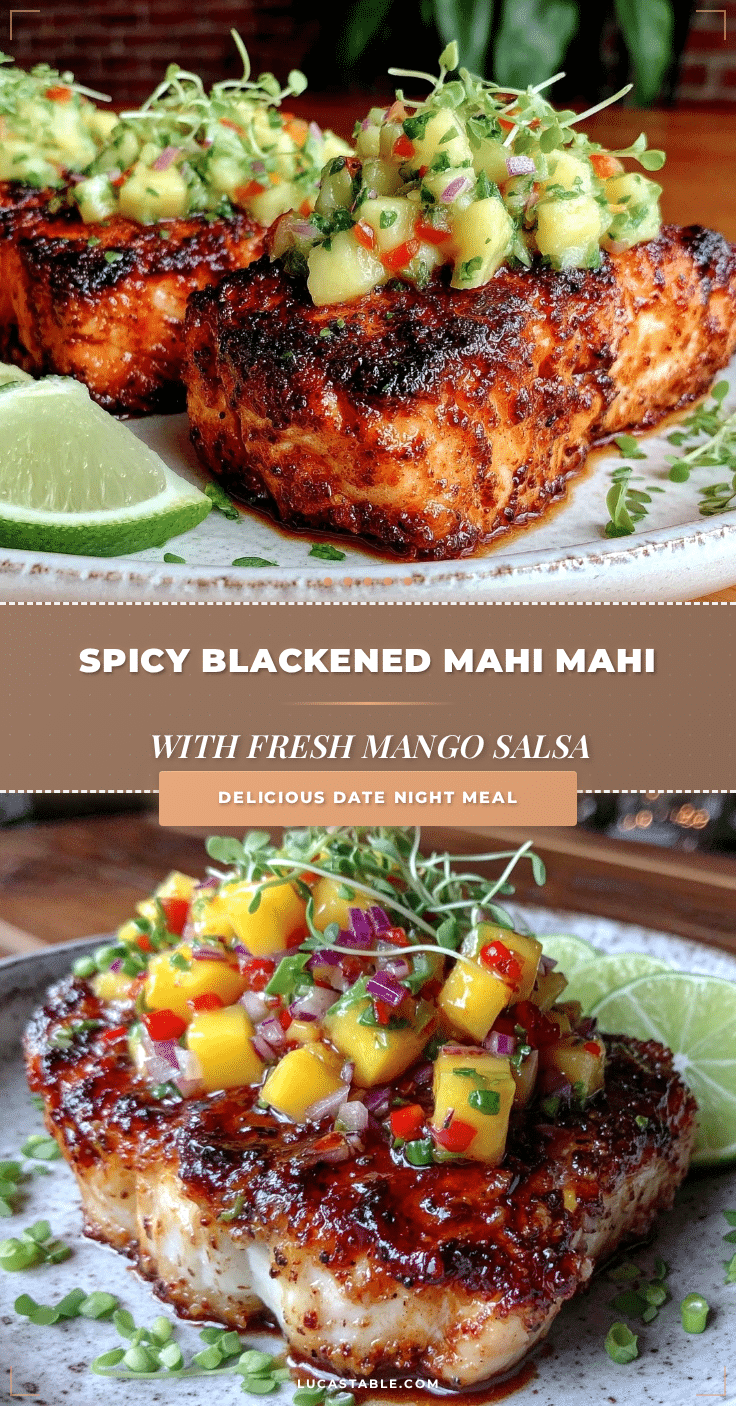
Blackened Mahi Mahi Recipe with Easy Fresh Mango Salsa for Summer
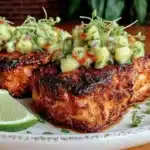
A quick and flavorful blackened mahi mahi paired with a fresh, bright mango salsa that offers a perfect balance of smoky and sweet flavors, ideal for summer or any season.
- Prep Time: 10 minutes
- Cook Time: 10 minutes
- Total Time: 20 minutes
- Yield: 4 servings 1x
- Category: Main Course
- Cuisine: American
Ingredients
- 4 mahi mahi fillets (6 oz / 170 g each), skinless and boneless
- 2 tablespoons smoked paprika
- 1 teaspoon cayenne pepper (adjust based on spice tolerance)
- 1 teaspoon garlic powder
- 1 teaspoon onion powder
- 1 teaspoon dried thyme
- 1 teaspoon dried oregano
- 1/2 teaspoon black pepper, freshly ground
- 1/2 teaspoon salt
- 2 tablespoons unsalted butter or olive oil, for cooking
- 1 large ripe mango, peeled and finely diced (substitute with pineapple in winter months)
- 1 small red bell pepper, finely chopped
- 1/4 cup red onion, finely minced
- 1 small jalapeño, seeded and minced (optional for mild heat)
- 1/4 cup fresh cilantro, chopped
- Juice of 1 lime (about 2 tablespoons)
- Salt to taste
Instructions
- In a small bowl, combine smoked paprika, cayenne pepper, garlic powder, onion powder, dried thyme, dried oregano, black pepper, and salt. Mix well and set aside.
- Heat a dry cast iron skillet over medium heat. Add the spice mix and toast for about 1 minute, stirring constantly to release oils and deepen flavor. Be careful not to burn it.
- Pat the mahi mahi fillets dry with paper towels to help spices stick and ensure a nice crust.
- Generously rub the toasted spice mix on all sides of each fillet.
- While the pan is heating, combine diced mango, red bell pepper, red onion, jalapeño, cilantro, and lime juice in a bowl. Season with a pinch of salt to taste. Stir gently and set aside to let flavors meld.
- Heat 2 tablespoons of butter or olive oil in the cast iron skillet over medium-high heat until shimmering.
- Add the mahi mahi fillets and cook for 3-4 minutes per side, depending on thickness (about 1-inch thick fillets), until a dark, almost blackened crust forms but not burnt.
- Check for doneness by ensuring the fish flakes easily with a fork and is opaque all the way through. If fillets are thicker, lower heat and cook a bit longer.
- Remove the fish from the pan and let it rest for a couple of minutes.
- Plate the fish with a generous spoonful of fresh mango salsa on top or on the side.
Notes
Toast the spices before coating the fish to release essential oils and enhance flavor. Pat fish dry thoroughly for a better crust. Adjust cayenne pepper to control spice level. Mango salsa tastes better after sitting for a few hours. For dairy-free, substitute butter with neutral oil like avocado oil. Cook fish in batches if needed to avoid overcrowding the pan.
Nutrition
- Serving Size: 1 mahi mahi fillet w
- Calories: 275
- Sugar: 7
- Sodium: 450
- Fat: 12
- Saturated Fat: 4
- Carbohydrates: 10
- Fiber: 2
- Protein: 30
Keywords: blackened mahi mahi, mango salsa, summer recipe, quick seafood, spicy fish, fresh salsa, healthy dinner