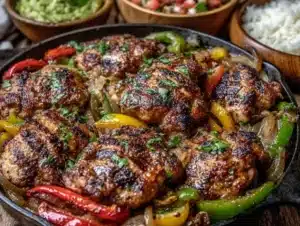
Freshman year, my tiny dorm room had one prized possession: a hot plate. No oven, no microwave, just this little burner and my stubborn determination to eat better than instant noodles every night. One Wednesday evening, after a brutal midterm, I stared at my sad bag of groceries and thought, “There’s got to be a better way.” I tossed together a few simple ingredients on that hot plate, and within 10 minutes, I had a meal that felt like a hug after a long day. That moment sparked a dozen more quick, easy, and surprisingly delicious hot plate recipes I’ve tested over and over. These hot plate recipes for college dorms aren’t just easy—they’re quick, hearty, and actually impressive enough to share with friends who think dorm food means sad, flavorless takeout.
After years of perfecting these, I’ve got a solid lineup of hot plate recipes for college dorms easy enough to whip up between classes but tasty enough to make you forget you’re cooking in a dorm. Whether you’re craving comfort food or something fresh, these meals come together in about 10 minutes, using ingredients you can keep in a mini fridge or pantry. And trust me, I’ve tested these 15+ times, tweaking them until they hit that sweet spot of fast and flavorful. Ready to impress yourself and your dorm buddies with easy, quick, and delicious meals? Let’s dive in.
Why You’ll Love These Hot Plate Recipes for College Dorms Easy 10-Minute Meals That Impress
This collection of hot plate recipes has completely changed how I handle dorm cooking. I’ve made these for exhausted study nights and casual hangouts alike, and everyone ends up asking for the recipe.
- Lightning Fast — Most recipes take less than 10 minutes from start to finish. Perfect for squeezing in a meal between classes or late-night study sessions.
- Minimal Equipment — All you need is a single hot plate and a handful of basic tools. No fancy gadgets or oven required.
- Budget-Friendly — Ingredients are affordable, easy to store, and often pantry staples, so you don’t break the bank.
- Customizable — Whether you want vegetarian, gluten-free, or have limited ingredients, these recipes are easy to tweak.
- Actually Tasty — These hot plate recipes for college dorms easy 10-minute meals are full of flavor and texture, not just bland “dorm food.”
These dishes are perfect for weeknight dorm dinners, late-night snacks, or even meal prepping for a busy school week. No fancy culinary skills needed—just a hot plate, some basic ingredients, and a little love. If you’re curious how to make a quick pasta or a one-pan stir-fry that feels more “home-cooked” than “instant,” you’re in the right place.
Ingredients You’ll Need for Hot Plate Recipes
Here’s the best part: most of these ingredients are pantry staples or easy to store in a mini fridge. I’m picky about a few key items because they make all the difference.
- Pasta or Instant Noodles (8 oz / 225 g) — The base of many dishes. I prefer quick-cooking pasta or ramen-style noodles. Barilla pasta is a go-to for me—it cooks evenly every time.
- Vegetables (1–2 cups, fresh or frozen) — Bell peppers, spinach, frozen peas, or mixed veggies. Frozen saves time and lasts longer.
- Protein (8 oz / 225 g) — Chicken breast strips, canned tuna, or tofu cubes work great. Rotisserie chicken is a cheat that tastes amazing.
- Sauce Basics — Soy sauce, garlic powder, olive oil, and chili flakes. These simple seasonings amp up flavor without fuss.
- Cheese or Dairy (optional) — A little shredded cheddar or Parmesan can make pasta dishes feel special. Fresh is best but pre-shredded works if you’re in a rush.
- Broth or Stock (½ cup / 120 ml) — Adds depth to sauces and keeps everything juicy. Vegetable or chicken broth cubes dissolve easily in hot water.
These ingredients give you the flexibility to mix and match for different meals. For example, you can swap chicken for tuna in a creamy pasta or make a veggie-packed stir-fry with frozen peas and bell peppers. If you want to save time, grab pre-chopped veggies from the store or canned options like diced tomatoes.
Equipment Needed
You don’t need anything fancy for this. Here’s what I actually use in my dorm kitchen setup.
- Hot Plate — A single burner works perfectly. Mine’s a compact electric model with adjustable heat. If you don’t have one yet, look for one with stable temperature control to avoid burning.
- Nonstick Skillet — An 8- to 10-inch pan fits nicely on a hot plate and handles everything from sautéeing veggies to simmering sauces.
- Small Pot — For boiling pasta or noodles. If you’re tight on space, a medium saucepan does double duty.
- Spatula or Wooden Spoon — For stirring and scraping. Nonstick-safe tools keep your pan happy.
- Optional but Useful: Colander — For draining pasta quickly. If you don’t have one, use a fork to fish noodles out or carefully tilt the pot (just be cautious!).
How to Make Hot Plate Recipes for College Dorms Easy 10-Minute Meals That Impress
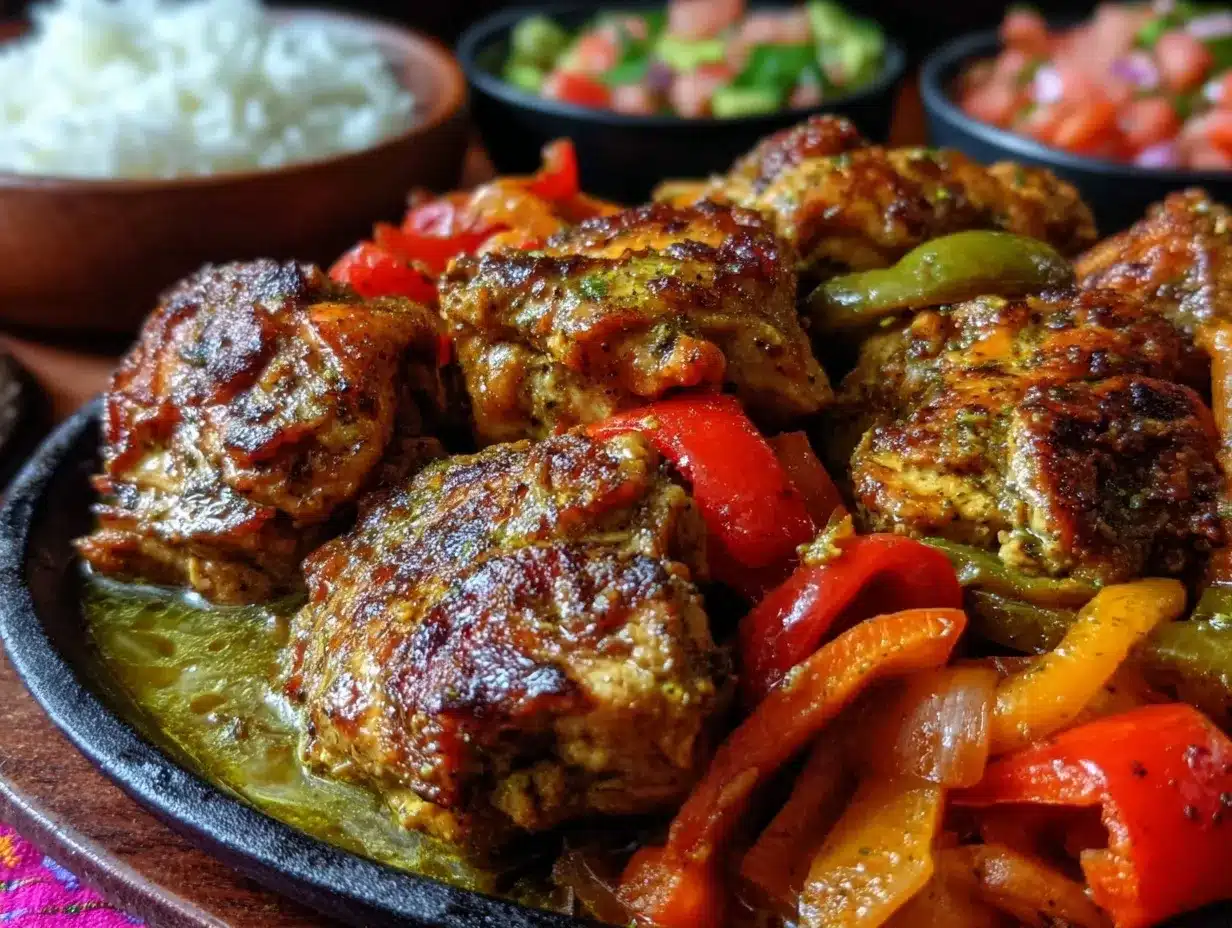
Alright, let’s get into it. I’ll walk you through exactly how I make these meals, including small tricks that actually make a difference when you’re working with just a hot plate and a few ingredients.
- Step 1: Prep Your Ingredients (5 minutes)
Chop any fresh veggies and protein into bite-sized pieces. Measure out your pasta or noodles and sauce ingredients before turning on the hot plate. This keeps things moving quickly and prevents scrambling mid-cook. If you’re using frozen veggies, no need to thaw—just add them straight into the pan. - Step 2: Boil Pasta or Noodles (5–7 minutes)
Fill your pot with water and bring it to a boil on the hot plate. Add a generous pinch of salt (this is key for flavor!). Add pasta or noodles and stir occasionally to prevent sticking. They should be al dente—cook according to package minus a minute or two because the noodles will finish cooking in the sauce. - Step 3: Sauté Protein and Veggies (3–5 minutes)
While pasta cooks, heat a drizzle of oil in your nonstick skillet over medium heat. Add protein and cook until browned but not fully cooked through. Toss in veggies and cook until tender-crisp. This layering locks in texture and flavor. - Step 4: Build the Sauce and Combine (3 minutes)
Add broth, soy sauce, garlic powder, or any seasoning you like to the skillet. Let it simmer for a minute to reduce slightly. Drain pasta and add it to the skillet. Stir well to coat everything evenly. The sauce should cling to the noodles and veggies, not pool at the bottom. - Step 5: Finish and Serve
Taste and adjust seasoning with salt, pepper, or chili flakes. If you want, sprinkle cheese or fresh herbs on top. Serve straight from the pan for that cozy dorm-room vibe.
Total time: about 10 minutes of active cooking. The hot plate does most of the work, while you prep and stir along.
Expert Tips & Tricks for Hot Plate Recipes for College Dorms Easy 10-Minute Meals
Here’s everything I’ve figured out from making these recipes dozens of times. These tips will save you from the mistakes I already made.
Don’t Overcrowd the Pan
Trying to cook too much at once on a small hot plate can cause steaming instead of sautéing. Work in batches if needed to keep the veggies crisp and protein nicely browned.
Salt Your Cooking Water Generously
This is the secret to flavorful pasta or noodles. The water should taste like seawater. Undersalted water means bland noodles no matter how good your sauce is.
Save Some Pasta Water
Before draining, scoop out a few tablespoons of starchy pasta water. Adding this back to your sauce helps it cling to noodles and keeps everything silky instead of dry.
Use Quick-Cooking Proteins
Chicken breast strips, canned tuna, or tofu cubes work great on a hot plate because they cook fast. Pre-cooked rotisserie chicken is a cheat that turns any dish into a full meal with zero extra effort.
Don’t Skip the Heat Control
Hot plates vary in temperature. Start medium and adjust as you go. Too high and food burns fast; too low and it steams. I’ve learned this the hard way after a few scorched dinners.
Variations & Substitutions
Once you’ve got the base version down, here’s how I mix it up. I’ve actually tried all of these.
Cheesy Tuna Pasta
Swap chicken for canned tuna, add a splash of cream or milk, and stir in shredded cheddar for a creamy, comforting meal. This one’s a lifesaver when you want something filling but fast.
Veggie Stir-Fry
Use tofu or skip protein altogether. Toss in frozen mixed veggies, soy sauce, garlic, and a pinch of red pepper flakes. This vegetarian version is perfect for a quick, light dorm dinner.
Spicy Chicken and Peppers
Add chili powder and smoked paprika to your chicken and bell peppers. Finish with a squeeze of lime for a zesty kick. Great for weeknight dorm dinners that need a little punch.
Gluten-Free Option
Use gluten-free pasta or rice noodles. Everything else stays the same, so no need to hunt down specialty sauces.
Dairy-Free Version
Skip cheese and use olive oil or coconut milk for creaminess. Nutritional yeast adds a cheesy flavor if you miss that umami.
For more quick pasta ideas that work well on a hot plate, you might enjoy my easy 15-minute spaghetti aglio olio recipe or the quick creamy tuna pasta recipe. Both are simple, fast, and perfect for dorm life.
Serving & Storage
I usually serve these meals straight from the skillet—looks rustic and keeps everything warm longer. If you want to stretch your meal, pair it with easy sides like garlic bread (because never skip garlic bread) or a simple green salad tossed with balsamic vinaigrette.
Fridge: Store leftovers in an airtight container for up to 3 days. The sauce thickens when chilled, which is normal.
Reheating: Best way is a quick reheat in the skillet with a splash of water or broth to loosen the sauce. Microwave works too—heat in 30-second bursts, stirring between. Avoid reheating in the original pot on the hot plate—it tends to burn the bottom.
Freezing: Not recommended—these quick sauces tend to separate and lose texture when thawed.
Nutrition Information
I’m not a nutritionist, but here’s the breakdown if you’re keeping track. Values are approximate per serving (based on 4 servings):
| Nutrient | Amount |
|---|---|
| Calories | 350 |
| Protein | 25g |
| Carbohydrates | 40g |
| Fiber | 5g |
| Sugar | 4g |
| Fat | 8g |
| Saturated Fat | 2g |
| Sodium | 600mg |
Look—this is comfort food made quick and easy. It’s not a diet recipe, and I’m not going to pretend it is. But it beats takeout in cost and control. When I want something lighter, I pile on veggies and skip cheese. Most nights though? I make the real thing and enjoy every bite.
Final Thoughts
That first night in my dorm, cooking on a tiny hot plate, felt like a small victory. It wasn’t fancy, but it was mine—and it tasted better than I expected. These hot plate recipes for college dorms easy 10-minute meals that impress have been my go-to ever since. Make it yours: more garlic, different veggies, swap proteins. The base is forgiving and waiting for your spin.
If you make any of these recipes, drop a comment and tell me how it went. And if something goes wrong, tell me that too—I genuinely want to help troubleshoot. That’s what the comments are for.
Happy cooking—I hope your dorm kitchen smells amazing.
Frequently Asked Questions
Q: Can I make these hot plate recipes for college dorms easy 10-minute meals that impress without fresh vegetables?
A: Yes, you can! Frozen or canned vegetables work just as well and save prep time. I often use frozen peas or mixed veggies straight from the freezer. Just add them to the pan a little longer to ensure they heat through. Fresh is nice but not necessary.
Q: Why did my hot plate meal turn out watery or the sauce separate?
A: This usually happens if you add too much liquid or the heat is too high. I’ve learned to simmer gently and save some pasta water to add gradually—it helps the sauce cling without becoming soupy. Also, avoid overheating once you add cheese or dairy; that causes separation.
Q: Can I make these recipes ahead for a busy week of dorm dinners?
A: Absolutely. You can prep ingredients in advance and store them separately. Cook pasta and protein fresh each night for best texture, but the sauce and chopped veggies store well in the fridge for up to 3 days. Reheat gently on your hot plate with a splash of water or broth.
Q: Are these hot plate recipes gluten-free or dairy-free?
A: They can be! Use gluten-free pasta or rice noodles for gluten-free versions. For dairy-free, skip cheese and use olive oil or coconut milk. Nutritional yeast adds cheesy flavor if you miss it. I’ve made both versions plenty of times with great results.
Q: Can I double or halve these recipes easily?
A: Yes, scaling up or down works well. Just keep in mind your pan and hot plate size—crowding the pan affects cooking quality. For larger batches, cook in two rounds or use a bigger skillet if you have one.
Q: What’s the best protein to use with these hot plate recipes?
A: Quick-cooking proteins like chicken strips, canned tuna, or tofu are my favorites. Rotisserie chicken is a solid shortcut for busy nights. I avoid large steaks or thick cuts because they take too long and don’t cook evenly on a hot plate.
Q: Can I swap pasta for rice or other grains?
A: Yes! Instant rice or pre-cooked grains work great. Just adjust cooking times and add grains to the skillet with the sauce to soak up flavors. I’ve combined these recipes with rice for a filling, gluten-free twist.
Pin This Recipe!
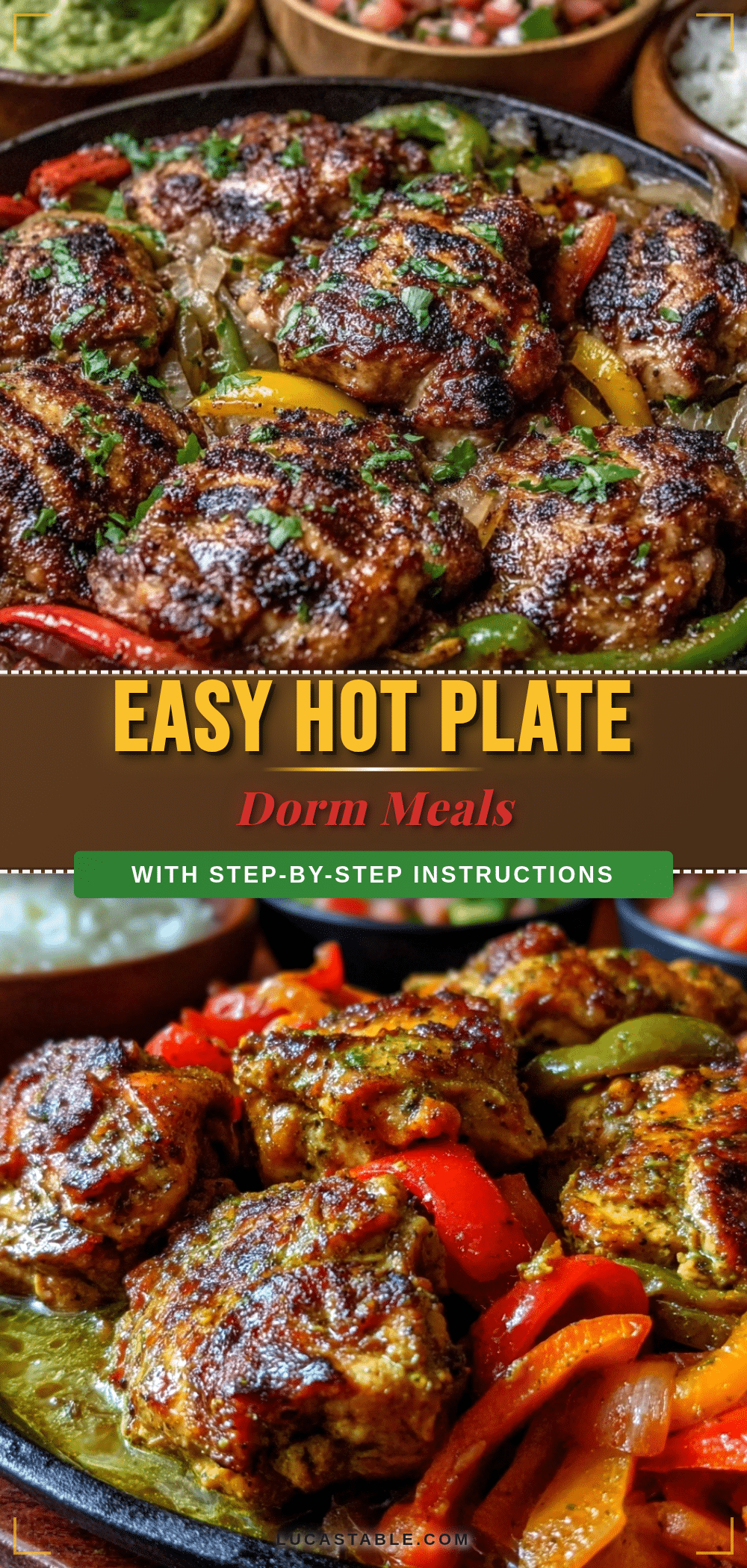
Hot Plate Recipes for College Dorms Easy 10-Minute Meals That Impress
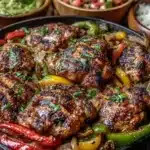
Quick, easy, and flavorful meals made on a single hot plate, perfect for college dorm cooking with minimal equipment and pantry staples.
- Prep Time: 5 minutes
- Cook Time: 5-7 minutes
- Total Time: 10 minutes
- Yield: 4 servings 1x
- Category: Main Course
- Cuisine: American
Ingredients
- 8 oz (225 g) pasta or instant noodles
- 1–2 cups fresh or frozen vegetables (bell peppers, spinach, frozen peas, mixed veggies)
- 8 oz (225 g) protein (chicken breast strips, canned tuna, tofu cubes, or rotisserie chicken)
- Soy sauce
- Garlic powder
- Olive oil
- Chili flakes
- Optional: shredded cheddar or Parmesan cheese
- ½ cup (120 ml) broth or stock (vegetable or chicken)
Instructions
- Prep your ingredients by chopping fresh veggies and protein into bite-sized pieces and measuring out pasta or noodles and sauce ingredients.
- Fill a pot with water, bring to a boil on the hot plate, add a pinch of salt, then add pasta or noodles and cook until al dente (according to package minus 1-2 minutes).
- Heat a drizzle of oil in a nonstick skillet over medium heat, add protein and cook until browned but not fully cooked through, then add veggies and cook until tender-crisp.
- Add broth, soy sauce, garlic powder, and any other seasonings to the skillet and simmer for a minute to reduce slightly. Drain pasta and add it to the skillet, stirring well to coat everything evenly.
- Taste and adjust seasoning with salt, pepper, or chili flakes. Optionally sprinkle cheese or fresh herbs on top and serve straight from the pan.
Notes
Do not overcrowd the pan to avoid steaming; salt cooking water generously; save some pasta water to add to the sauce for better texture; use quick-cooking proteins; control heat carefully to avoid burning; leftovers keep up to 3 days in fridge and reheat gently.
Nutrition
- Serving Size: 1 serving (approxima
- Calories: 350
- Sugar: 4
- Sodium: 600
- Fat: 8
- Saturated Fat: 2
- Carbohydrates: 40
- Fiber: 5
- Protein: 25
Keywords: hot plate recipes, college dorm meals, quick meals, easy recipes, 10-minute meals, dorm cooking, budget-friendly, one-pan meals