Let me tell you, the scent of warm, freshly fried dough dusted with a generous cloud of powdered sugar is enough to make anyone’s mouth water—and that’s exactly what you get with these light and fluffy classic beignets. The first time I made these golden pillows of joy, I was instantly hooked; the kind of moment where you pause, take a deep breath, and just smile because you know you’re onto something truly special. When I was knee-high to a grasshopper, my grandma would bring these treats out on lazy Sunday afternoons, the aroma filling the kitchen and wrapping us all in pure, nostalgic comfort. Years ago, I stumbled upon this recipe during a rainy weekend baking spree, trying to recreate that same magic.
Honestly, my family couldn’t stop sneaking them off the cooling rack (and I can’t really blame them). You know what? These beignets are dangerously easy to make, perfect for potlucks, weekend breakfasts, or just brightening up your Pinterest cookie board with some classic Southern charm. After testing this recipe multiple times—in the name of research, of course—it has become a staple for family gatherings and gifting. This recipe feels like a warm hug on a plate, and you’re going to want to bookmark this one.
Why You’ll Love This Recipe
Having tested countless beignet recipes over the years, this one stands out because it balances simplicity with that truly light, airy texture you crave. Here’s why this classic beignets recipe will quickly become your go-to:
- Quick & Easy: Comes together in under 30 minutes of active prep, perfect for busy mornings or last-minute sweet cravings.
- Simple Ingredients: No fancy grocery runs needed; you probably already have everything in your pantry.
- Perfect for Any Occasion: Great for brunches, afternoon treats, or casual get-togethers with friends.
- Crowd-Pleaser: Always gets rave reviews from kids and adults alike—trust me, they’ll be asking for seconds.
- Unbelievably Delicious: The fluffy, pillowy texture combined with the sweet powdered sugar is next-level comfort food.
What makes this recipe different? It’s all in the dough—lightly whipped and rested just right to create that signature puffiness without being heavy. Plus, the frying temperature is spot on to get a golden crust while keeping the inside soft and tender. It isn’t just good—it’s the kind of treat that makes you close your eyes after the first bite, savoring the sweet simplicity. Whether you’re impressing guests or treating yourself, this classic beignets recipe brings a little slice of New Orleans magic to your kitchen.
What Ingredients You Will Need
This recipe uses simple, wholesome ingredients to deliver bold flavor and satisfying texture without the fuss. Most are pantry staples, and swapping a few helps if you’re working with dietary needs.
- All-purpose flour (2 ½ cups / 320g) – provides the perfect structure for that fluffy dough. I trust brands like King Arthur for consistent results.
- Granulated sugar (¼ cup / 50g) – adds just the right hint of sweetness to the dough.
- Active dry yeast (2 ¼ teaspoons / 1 packet) – essential for the dough to rise and become airy. Make sure it’s fresh for best puffiness.
- Warm water (1 cup / 240ml, about 110°F / 43°C) – activates the yeast and hydrates the dough.
- Whole milk (½ cup / 120ml, warmed) – adds richness and tenderness. You can use dairy-free milk if needed.
- Large eggs (2, room temperature) – bind the dough and add moisture.
- Unsalted butter (4 tablespoons / 56g, melted) – gives richness and softness.
- Salt (1 teaspoon) – balances sweetness and enhances flavor.
- Vegetable oil (for frying) – neutral oil with a high smoke point like canola or peanut is best.
- Powdered sugar (for dusting) – the signature finish that melts slightly on the warm beignets.
Substitutions: For a gluten-free twist, almond flour or a gluten-free blend can work but expect a slightly different texture. Use coconut or oat milk to keep it dairy-free, and swap butter for coconut oil for a subtle flavor change.
Equipment Needed
- Mixing bowls: At least two—one for activating yeast and another for combining the dough.
- Stand mixer with dough hook (optional): Makes kneading easier, but hand-kneading works fine if you don’t have one.
- Measuring cups and spoons: For accuracy, especially with yeast and salt.
- Rolling pin: To roll out the dough evenly to about ¼ inch thickness.
- Sharp knife or pizza cutter: For cutting dough into perfect squares or rectangles.
- Deep pot or heavy-bottomed skillet: For frying the beignets safely and evenly.
- Candy or deep-fry thermometer: Crucial for maintaining the oil temperature around 350°F (175°C).
- Wire rack and paper towels: To drain excess oil and cool the beignets properly.
If you’re on a budget, a large, deep saucepan can substitute for a deep fryer. Just keep a close eye on the oil temperature with a reliable thermometer to avoid greasy or undercooked treats.
Preparation Method
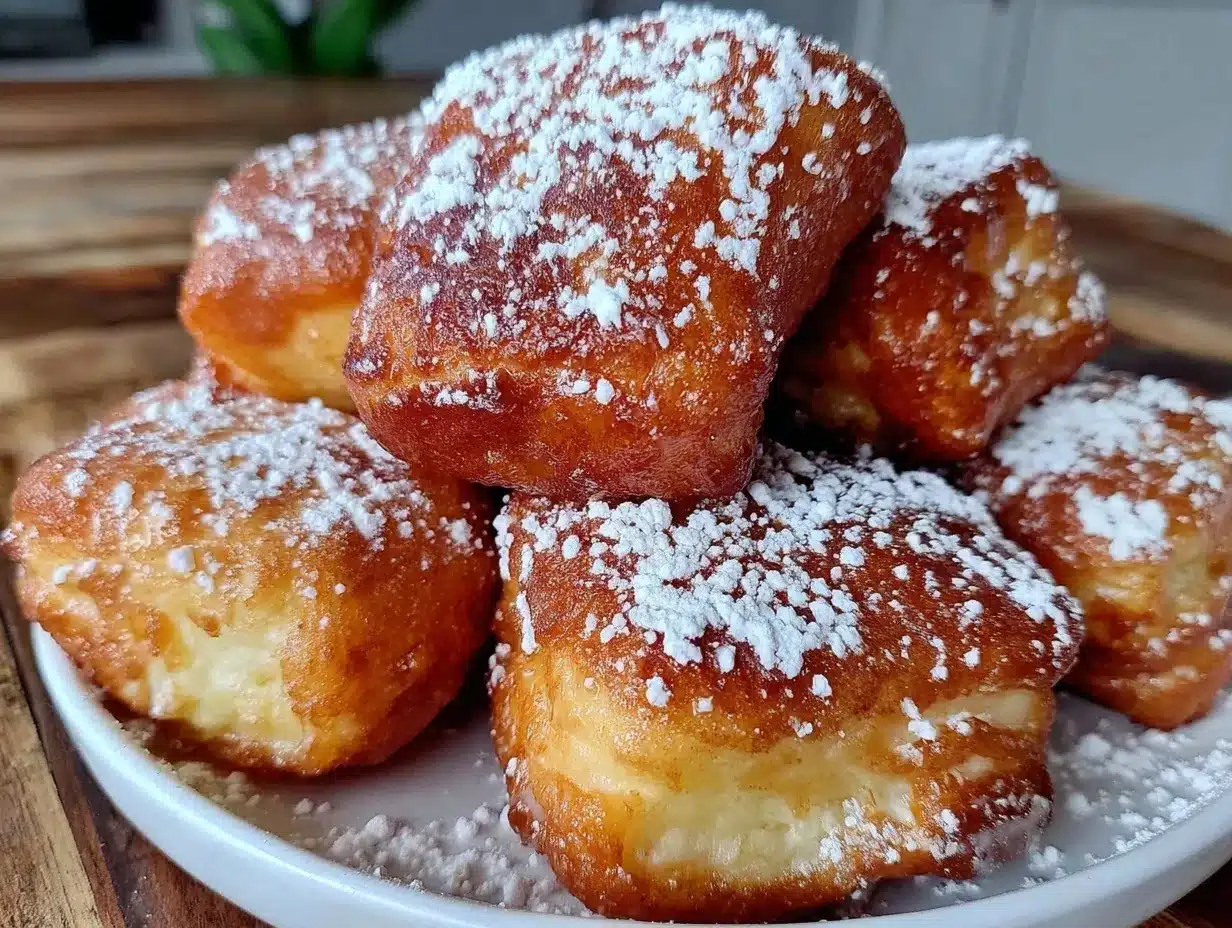
- Activate the yeast: In a small bowl, combine 1 cup (240ml) of warm water (110°F / 43°C) with 1 packet (2 ¼ tsp) of active dry yeast and 1 tablespoon of the granulated sugar. Stir gently and let it sit for 5–10 minutes until frothy and bubbly. If it doesn’t foam, your yeast might be old—start over for best results.
- Mix the dough: In a large bowl or stand mixer bowl, whisk together 2 ½ cups (320g) of all-purpose flour, remaining sugar, and 1 teaspoon of salt. Add the yeast mixture, ½ cup (120ml) warmed whole milk, 2 large eggs (room temperature), and 4 tablespoons (56g) melted butter. Mix on low speed until the dough starts to come together.
- Knead the dough: Knead by hand on a lightly floured surface for about 8–10 minutes or use the dough hook on medium speed for 5–6 minutes until the dough is smooth, elastic, and slightly sticky but not wet. You want it soft but manageable.
- First rise: Lightly oil a large bowl, place the dough inside, and cover it with a clean kitchen towel or plastic wrap. Let it rise in a warm spot for 1 to 1 ½ hours until doubled in size. If your kitchen is chilly, I warm my oven to 200°F (93°C), turn it off, and place the bowl inside for the perfect environment.
- Roll and cut: Once risen, punch down the dough gently to release air. Turn it onto a floured surface and roll it out evenly to about ¼ inch (6 mm) thickness. Using a sharp knife or pizza cutter, cut into 2 ½-inch (6 cm) squares or rectangles.
- Heat the oil: Pour vegetable oil into a deep pot or heavy skillet to a depth of 2–3 inches (5–7.5 cm). Heat to 350°F (175°C) using a candy or deep-fry thermometer—this temp is key for that perfect golden crust without absorbing too much oil.
- Fry the beignets: Fry a few pieces at a time (don’t overcrowd) for about 2–3 minutes per side, flipping gently with tongs or a slotted spoon. They should puff up and turn a beautiful golden brown. Adjust heat as needed to maintain temperature.
- Drain and dust: Remove the beignets from oil and place on a wire rack set over paper towels to drain. While still warm, dust generously with powdered sugar—don’t be shy; this is the magic touch.
Tip: If your beignets aren’t puffing as much as you’d like, make sure the oil is hot enough and the dough was rolled evenly. Also, resting the dough before frying helps develop that airy texture.
Cooking Tips & Techniques
Here’s a few tricks I’ve picked up to get these beignets just right every time. First, never rush the yeast activation—it’s the foundation of that fluffy texture. Using warm, not hot, water is crucial; too hot and you’ll kill your yeast (been there, done that). Also, resting the dough properly makes a world of difference. I’ve learned that covering the dough with a damp towel keeps it from drying out during the rise.
When frying, maintaining 350°F (175°C) is the secret sauce. If the oil is too cool, the beignets soak up oil and get greasy; too hot, and they brown too fast outside but stay raw inside. I like to have my thermometer handy and adjust the burner accordingly. Also, frying in small batches ensures even cooking and prevents the oil temperature from dropping.
One mistake I often see is overcrowding the pan—don’t do it! Give each beignet enough space to puff freely. And don’t forget to drain them well on a wire rack—paper towels alone can make the bottoms soggy. Trust me, these little details take your beignets from good to show-stopping.
Variations & Adaptations
Want to mix things up? Here are some fun ways to tailor this classic beignets recipe to your liking:
- Gluten-Free: Swap all-purpose flour for a gluten-free blend that includes xanthan gum. The texture will change slightly but remains delicious.
- Chocolate-Stuffed: Before frying, place a small piece of chocolate or Nutella in the center of each dough square and seal edges well for a gooey surprise.
- Spiced Sugar: Instead of plain powdered sugar, toss the beignets in cinnamon sugar or add a pinch of nutmeg to the dough for a warm twist.
- Baked Version: For a lighter, less oily treat, brush the dough squares with melted butter and bake at 400°F (200°C) for 10–12 minutes until puffed and golden.
- Dairy-Free: Use coconut milk or almond milk and substitute butter with coconut oil or vegan margarine.
I personally tried the chocolate-stuffed version once for a holiday brunch and it was a hit—the kids went crazy for that melty center!
Serving & Storage Suggestions
Serve these beignets warm, fresh out of the fryer, dusted generously with powdered sugar. They pair beautifully with a strong cup of coffee or a rich hot chocolate for a cozy treat. For a festive touch, add fresh berries or a drizzle of fruit preserves on the side.
If you have leftovers (which is rare!), store them in an airtight container at room temperature for up to 1 day. For longer storage, freeze the cooled beignets in a single layer on a baking sheet, then transfer to a freezer bag for up to 1 month. To reheat, pop them in a 350°F (175°C) oven for 5–7 minutes until warmed through and crisp again—avoid microwaving, as it makes them soggy.
Flavors actually mellow and deepen a bit after a few hours, so if you can resist, letting them rest for 30 minutes before serving is a nice touch.
Nutritional Information & Benefits
Each beignet (about 2 ½-inch square) contains roughly 150–180 calories, depending on the oil absorbed and sugar dusting. While these are definitely a treat, they provide energy-boosting carbs and some protein from the eggs and milk.
Using whole milk and butter adds a creamy richness, and the yeast fermentation helps with digestibility. If you swap in dairy-free milk, it’s a great option for those with lactose intolerance. Keep in mind, these are not gluten-free unless you use a special flour blend.
From a wellness perspective, enjoying these beignets mindfully—say, for a weekend breakfast or special occasion—brings joy and comfort, which is just as important as nutritional content. Food should nourish both body and spirit!
Conclusion
So, why should you try this light and fluffy classic beignets recipe? Because it’s a simple way to bring a little homemade magic into your kitchen with minimal fuss. Customize it with your favorite flavors, impress your guests, or simply treat yourself to that warm, sugary delight that feels like a hug in every bite.
I love this recipe because it connects me to family memories and those cozy afternoons when time slows down. Now it’s your turn to make it a part of your story. If you give it a go, I’d love to hear how it turned out—drop your thoughts or recipe twists in the comments below. And hey, if you know someone who’d appreciate a homemade sweet treat, share this recipe and spread the joy!
Happy frying and sweet savoring!
FAQs About Classic Beignets
How long does it take to make classic beignets from start to finish?
Plan for about 2 to 2 ½ hours total, including the 1 to 1 ½ hour dough rise. Active prep and frying take roughly 30–40 minutes.
Can I make the dough ahead of time?
Yes! You can prepare the dough, let it rise once, then refrigerate overnight. Just bring it to room temperature before rolling and frying.
What if my beignets don’t puff up?
Check your oil temperature—it should be around 350°F (175°C). Also, make sure the dough is rolled evenly and that the yeast was active.
Can I bake beignets instead of frying them?
Absolutely, though frying gives the signature crispiness. To bake, brush dough with butter and bake at 400°F (200°C) for 10–12 minutes.
How do I make beignets gluten-free?
Substitute with a gluten-free flour blend containing xanthan gum. The texture will be a bit different but still tasty.
Pin This Recipe!
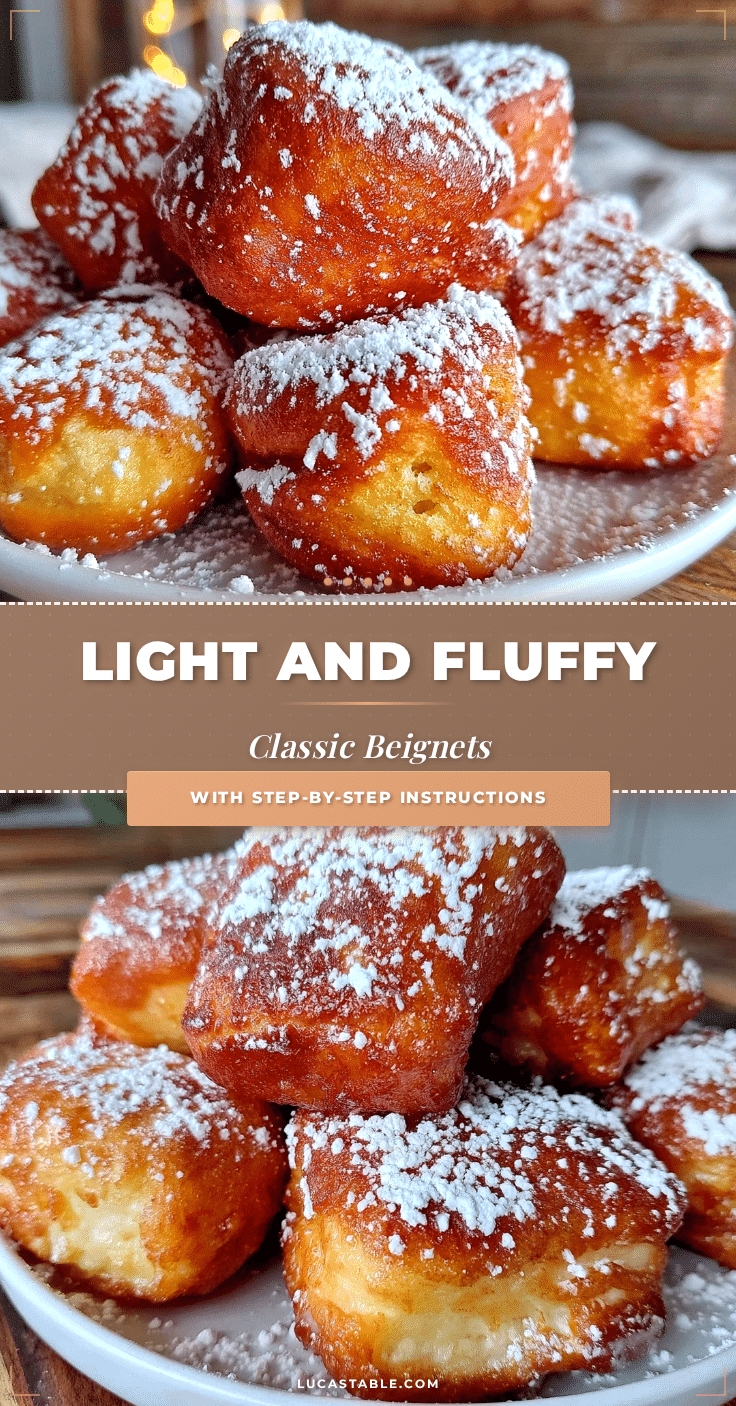
Light and Fluffy Classic Beignets Recipe Perfect for Easy Homemade Treats

These light and fluffy classic beignets are golden pillows of joy, perfect for potlucks, weekend breakfasts, or casual get-togethers. They offer a perfect balance of simplicity and airy texture with a sweet powdered sugar finish.
- Prep Time: 30 minutes
- Cook Time: 10 minutes
- Total Time: 2 hours 30 minutes
- Yield: 16 servings 1x
- Category: Dessert
- Cuisine: Southern, New Orleans
Ingredients
- 2 ½ cups (320g) all-purpose flour
- ¼ cup (50g) granulated sugar
- 2 ¼ teaspoons (1 packet) active dry yeast
- 1 cup (240ml) warm water (about 110°F / 43°C)
- ½ cup (120ml) whole milk, warmed
- 2 large eggs, room temperature
- 4 tablespoons (56g) unsalted butter, melted
- 1 teaspoon salt
- Vegetable oil for frying (canola or peanut oil recommended)
- Powdered sugar for dusting
Instructions
- Activate the yeast: In a small bowl, combine 1 cup (240ml) warm water (110°F / 43°C) with 1 packet (2 ¼ tsp) active dry yeast and 1 tablespoon granulated sugar. Stir gently and let sit for 5–10 minutes until frothy and bubbly.
- Mix the dough: In a large bowl or stand mixer bowl, whisk together 2 ½ cups (320g) all-purpose flour, remaining sugar, and 1 teaspoon salt. Add the yeast mixture, ½ cup (120ml) warmed whole milk, 2 large eggs, and 4 tablespoons (56g) melted butter. Mix on low speed until dough starts to come together.
- Knead the dough: Knead by hand on a lightly floured surface for 8–10 minutes or use dough hook on medium speed for 5–6 minutes until dough is smooth, elastic, and slightly sticky but not wet.
- First rise: Lightly oil a large bowl, place dough inside, cover with a clean towel or plastic wrap. Let rise in a warm spot for 1 to 1 ½ hours until doubled in size.
- Roll and cut: Punch down dough gently to release air. Turn onto floured surface and roll out evenly to about ¼ inch (6 mm) thickness. Cut into 2 ½-inch (6 cm) squares or rectangles.
- Heat the oil: Pour vegetable oil into a deep pot or heavy skillet to a depth of 2–3 inches (5–7.5 cm). Heat to 350°F (175°C) using a candy or deep-fry thermometer.
- Fry the beignets: Fry a few pieces at a time for 2–3 minutes per side, flipping gently, until puffed and golden brown. Adjust heat to maintain temperature.
- Drain and dust: Remove beignets from oil and place on wire rack over paper towels to drain. While warm, dust generously with powdered sugar.
Notes
Ensure yeast is fresh and water is warm but not hot to activate yeast properly. Maintain oil temperature at 350°F (175°C) to avoid greasy or undercooked beignets. Fry in small batches to keep oil temperature steady. Rest dough properly and roll evenly for best puffiness. For gluten-free, use a gluten-free flour blend with xanthan gum. For dairy-free, substitute milk and butter with plant-based alternatives.
Nutrition
- Serving Size: One 2 ½-inch square
- Calories: 165
- Sugar: 5
- Sodium: 150
- Fat: 7
- Saturated Fat: 3.5
- Carbohydrates: 22
- Fiber: 1
- Protein: 4
Keywords: beignets, classic beignets, homemade beignets, fried dough, powdered sugar, New Orleans treats, easy dessert, Southern dessert