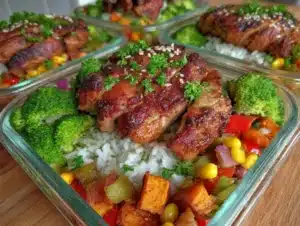
Junior year of college hit me hard—not just with exams, but with the reality of living in a tiny dorm room with a mini fridge that barely fit a carton of milk. I remember staring at that mini fridge one Thursday night, my stomach rumbling louder than my laptop’s fan, wondering how I could possibly stretch my budget and still eat something decent. Spoiler: it wasn’t instant noodles every night.
What saved me was figuring out a mini fridge meal prep strategy tailored for a college budget—small portions, affordable ingredients, and meals that actually tasted good (not just edible). After testing and tweaking over 20 times, I landed on 10 easy affordable meals that fit perfectly in a mini fridge and my wallet. These meals aren’t just budget-friendly; they’re designed to keep you full and sane during those study marathons.
If you’ve been scrolling for “mini fridge meal prep for college budget,” you’re in the right place. I’ll walk you through simple, affordable meals that require minimal space and time, so you can focus on what really matters—whether that’s acing finals or binge-watching your favorite show guilt-free. And yes, I’ve tested these recipes repeatedly because eating off-campus junk food was not an option for me (or my budget).
Why You’ll Love This Mini Fridge Meal Prep for College Budget
This mini fridge meal prep approach has genuinely changed my college food game.
Small Portions, Big Flavor — Each meal is perfectly sized for a mini fridge, so you’re not wasting food or space. These meals pack tons of flavor without requiring giant containers or complicated steps.
Budget-Smart Ingredients — I picked ingredients that won’t break the bank but still feel fresh and satisfying. Think rice, beans, canned tuna, and fresh veggies that last for days. You can find most of these staples at your local grocery store or even the college market.
Quick to Prep — Most meals take 20 to 30 minutes tops, with many under 15 minutes. Perfect for those late-night study breaks or hectic mornings before class.
Versatile for Any Schedule — Whether you have 10 minutes or an hour, these meals adapt to your time. If you want to double up, they freeze well or store in your mini fridge for several days.
Great for Weeknight Fuel — These meals are exactly what you want after a long day of classes and extracurriculars. They’re comforting, filling, and won’t leave you staring blankly into the fridge hoping something appears magically.
Mini fridge meal prep for college budget isn’t just a convenience here—it’s survival. That’s why I keep coming back to these recipes, especially when finals hit or when I’m low on cooking motivation but high on hunger.
Ingredients You’ll Need for Mini Fridge Meal Prep
Here’s the best part: most of these ingredients are either pantry staples or easy to grab fresh. I’m picky about a few key items because they make all the difference.
- Brown rice (2 cups / 370g, cooked) — Filling base for many meals, budget-friendly, and reheats well.
- Canned beans (2 cans, 15oz / 425g each) — Protein-packed and super affordable. Rinse well to reduce sodium.
- Frozen mixed vegetables (1 bag, 12oz / 340g) — Last longer than fresh and save fridge space.
- Canned tuna (3 cans, 5oz / 142g each) — Great for quick protein boosts. Use in pasta or salads.
- Eggs (6 large) — Versatile, quick cooking, and keep well in mini fridges.
- Greek yogurt (1 cup / 240g) — Adds creaminess and protein, perfect for dressings or snacks.
- Cheddar cheese (4oz / 115g, shredded) — Adds flavor, melts well, and lasts in a mini fridge.
- Fresh garlic (3 cloves) — The secret to turning simple dishes into something special.
- Olive oil (2 tablespoons) — A must for sautéing and flavor.
- Salt and pepper — Basic but essential.
- Hot sauce or soy sauce — Optional, but I always keep these on hand for extra flavor.
Quick note: I rely on frozen veggies and canned goods because they last longer in a cramped mini fridge and reduce waste. Plus, they don’t compromise on taste or nutrition.
Equipment Needed
You don’t need anything fancy for this. Here’s what I actually use:
- Small non-stick skillet — Perfect for scrambling eggs, sautéing veggies, and reheating without sticking. A 10-inch skillet fits nicely in small kitchens.
- Microwave-safe containers — I use 4-6 small containers (about 3 cups / 700ml each) that stack easily in my mini fridge. Glass or BPA-free plastic works.
- Rice cooker or small pot — Rice cookers are a game-changer for hands-off cooking. If you don’t have one, a small pot with a tight lid works fine.
- Cutting board and sharp knife — Essential for quick chopping. Don’t skip this, even if you’re only prepping veggies.
- Optional but useful: Small mixing bowls — For prepping dressings or mixing ingredients before cooking.
How to Make Mini Fridge Meal Prep for College Budget: Step by Step
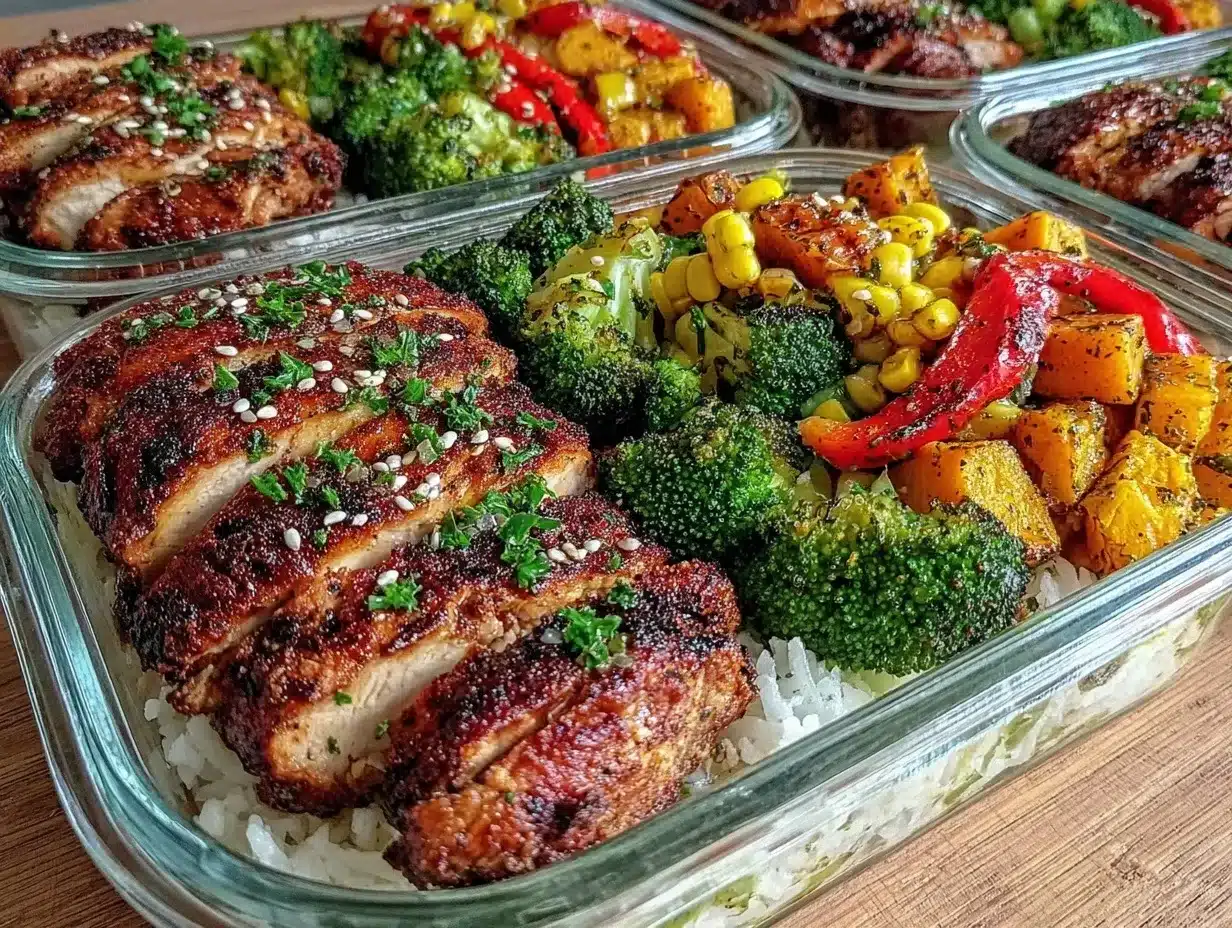
Alright, let’s get into it. I’ll walk you through exactly how I whip up these 10 easy affordable meals, including the small tricks that make a huge difference in taste and storage.
- Cook your base carbs first (20 minutes)
I start by cooking brown rice—two cups dry makes enough for multiple meals. Use a rice cooker if you have one (set it and forget it), or bring 4 cups water to a boil, add rice, cover, and simmer low for 40 minutes until tender. The rice should be fluffy and separate, not mushy. This base keeps meals filling without bulk. - Prepare proteins and veggies (10-15 minutes)
While rice cooks, drain and rinse canned beans. Microwave frozen veggies for 3-4 minutes or sauté them in olive oil with minced garlic until tender but still vibrant (about 5 minutes). For eggs, scramble or make simple omelets—season with salt and pepper. The eggs should be fluffy, not rubbery. - Mix and match meals (10 minutes)
Here’s the trick: combine your rice, beans, veggies, and protein in small containers. One meal might be rice with black beans and mixed veggies; another could be tuna mixed with Greek yogurt and garlic, served with veggies and a sprinkle of cheddar. Each container should be about 2-3 cups total—perfect for mini fridges and portion control. - Flavor it up (5 minutes)
Don’t forget seasoning! A dash of hot sauce, soy sauce, or a squeeze of lemon juice can transform these simple ingredients. I keep a small bottle of hot sauce in the fridge for this exact reason. - Store correctly
Let food cool slightly before sealing containers. Stack neatly in your mini fridge, leaving a little airflow space. Meals will last about 3-4 days refrigerated, which means you can prep twice a week and never feel stuck.
Total time: about 45 minutes for a full week’s worth of meals. Roughly 20 minutes active, the rest is just letting things cook or cool.
Expert Tips & Tricks for Mini Fridge Meal Prep for College Budget
Here’s everything I’ve figured out from making this recipe dozens of times. These tips will save you from the mistakes I already made.
Save Space with Stackable Containers
I swear by uniform containers that stack neatly. It saves precious fridge real estate and makes grabbing your meal a breeze.
Don’t Skip Rinsing Canned Beans
Rinsing removes excess sodium and the canning liquid’s unpleasant flavor. It also helps prevent your meals from tasting too “tinny.”
Cook Rice a Day Ahead
If you have a busy morning, cook rice the night before and refrigerate. It reheats quickly, and the texture actually firms up, making it easier to portion.
Use Garlic Generously
Fresh garlic amps up flavor without extra calories or cost. Plus, it keeps things interesting when you’re eating similar meals all week.
Keep Ingredients Versatile
I mix and match beans, proteins, and veggies depending on what’s on sale or what I have. This way, mini fridge meal prep for college budget is never boring.
Mistake: Meals getting soggy
Fix: Keep sauces and dressings separate until serving, or add them sparingly. This keeps veggies crisp and rice fluffy.
Mistake: Running out of fridge space
Fix: Transfer leftovers to freezer-safe bags and freeze. Thaw overnight in the fridge for next-day meals.
Variations & Substitutions for Mini Fridge Meal Prep
Once you’ve got the base version down, here’s how I mix it up. I’ve actually tried all of these.
Mexican-Inspired Bowls
Swap black beans for pinto beans, add canned corn, and top with a dollop of salsa or hot sauce. Great for weeknight family meals or casual hangouts.
Tuna Salad Mix-Up
Replace Greek yogurt with a light mayo or avocado for creaminess. Add diced celery or pickles if you want crunch. Perfect for a quick lunch between classes.
Veggie-Packed Version
Add chopped spinach, cherry tomatoes, or bell peppers to your frozen veggies. Mix in shredded cheese for a more filling meal. Ideal for those days you want to sneak in extra greens.
Gluten-Free Friendly
All these meals are naturally gluten-free if you stick to plain rice and beans. Just avoid soy sauce with wheat or swap for tamari.
Dairy-Free Swap
Skip the cheese and Greek yogurt, or use dairy-free alternatives. Nutritional yeast adds a cheesy flavor if you miss it.
Serving & Storage Tips
I usually eat these meals straight from the container—lazy but efficient, and no extra dishes. Sometimes I transfer to a small plate if I want to feel fancy.
Pair with simple sides if you want to jazz things up:
- Fresh fruit like apple slices or berries for a sweet balance.
- A small side salad with olive oil and lemon dressing to boost freshness.
- Quick zesty lemon chicken for when you want to bulk up without much effort.
Storage:
- Fridge: Airtight containers, up to 4 days. Rice and beans hold up really well.
- Reheating: Microwave on medium power in 30-second bursts, stirring between. Or warm in a skillet with a splash of water to keep moist.
- Freezing: Some meals freeze well (like bean and rice bowls), but fresh veggies can get soggy. Freeze only if you’re confident about the texture.
Nutrition Information
I’m not a nutritionist, but here’s the breakdown if you’re keeping track. These numbers are approximate and based on 1 serving (of 6 total).
| Calories | Protein | Carbs | Fiber | Sugar | Fat | Saturated Fat | Sodium |
|---|---|---|---|---|---|---|---|
| 350 | 18g | 45g | 8g | 3g | 6g | 1.5g | 400mg |
Look — this is real college food made with simple ingredients. It’s not a diet recipe and I’m not going to pretend it is. But it’s way better than campus cafeteria mystery meat, costs less, and I know exactly what’s in it. When I want something lighter, I pile in extra veggies or swap in a salad. Most days though? I stick to this because it’s easy, affordable, and keeps me fueled.
Final Thoughts
Remember that night I mentioned earlier, standing in front of my tiny fridge? That moment led me to create this mini fridge meal prep plan, and it’s been a lifesaver ever since. You don’t need fancy gadgets or expensive ingredients—just a little planning and these easy affordable meals.
Make it yours. Add more spices if you like heat. Swap the protein for whatever’s on sale. Toss in any veggies you have. The base is forgiving and flexible, so don’t be afraid to experiment.
If you make this, drop a comment and tell me how it went. And if something goes wrong, tell me that too—I genuinely want to help troubleshoot. That’s what the comments are for.
Happy cooking — I hope your kitchen smells amazing.
Frequently Asked Questions
Q: Can I make these mini fridge meal prep meals without canned beans?
A: Yes, you can swap canned beans for cooked dried beans or even lentils if you prefer. I’ve done this when I had extra time to soak and cook beans ahead. Just make sure you cool them completely before storing in your mini fridge. It’s a bit more prep but worth it for the texture and flavor.
Q: Why did my meals turn out watery or soggy?
A: This usually happens if you add sauces or dressings before storing. I’ve made the mistake of mixing in too much dressing and ended up with sad, soggy veggies. The fix? Keep sauces separate until you’re ready to eat, or add them sparingly right before reheating.
Q: Can I make these meals ahead for a busy week of classes?
A: Absolutely! Mini fridge meal prep is perfect for busy weeks. Just prep twice a week to keep meals fresh. I recommend prepping on Sunday and Wednesday evenings. If you want to prep further ahead, freeze some portions and thaw overnight in the fridge.
Q: Are these meals gluten-free or dairy-free?
A: Most of these meals are naturally gluten-free if you stick to plain rice and avoid soy sauce with wheat (use tamari instead). For dairy-free, skip the cheese and Greek yogurt or swap with dairy-free alternatives like coconut yogurt or nutritional yeast. I’ve made the dairy-free swaps and they work surprisingly well.
Q: Can I double or halve these recipes?
A: Yes, these recipes are very flexible. I often double the batch when I have extra time, especially if I’m hosting friends or want leftovers. Halving is just as easy and perfect if you’re cooking solo. Just adjust your storage containers accordingly.
Q: How do I keep my mini fridge from smelling weird when meal prepping?
A: Great question! I recommend keeping containers airtight and wiping down your mini fridge weekly. A small box of baking soda inside the fridge can absorb odors. Also, avoid storing strong-smelling foods uncovered—for example, keep garlic and onions sealed tight.
Q: Can I swap rice for pasta or quinoa in these meals?
A: Yes, you can! I’ve swapped in quick-cooking pasta like in this creamy tuna pasta recipe when I wanted a change. Quinoa works too and adds protein. Just watch cooking times and storage space, since pasta can be more delicate in a mini fridge.
Pin This Recipe!
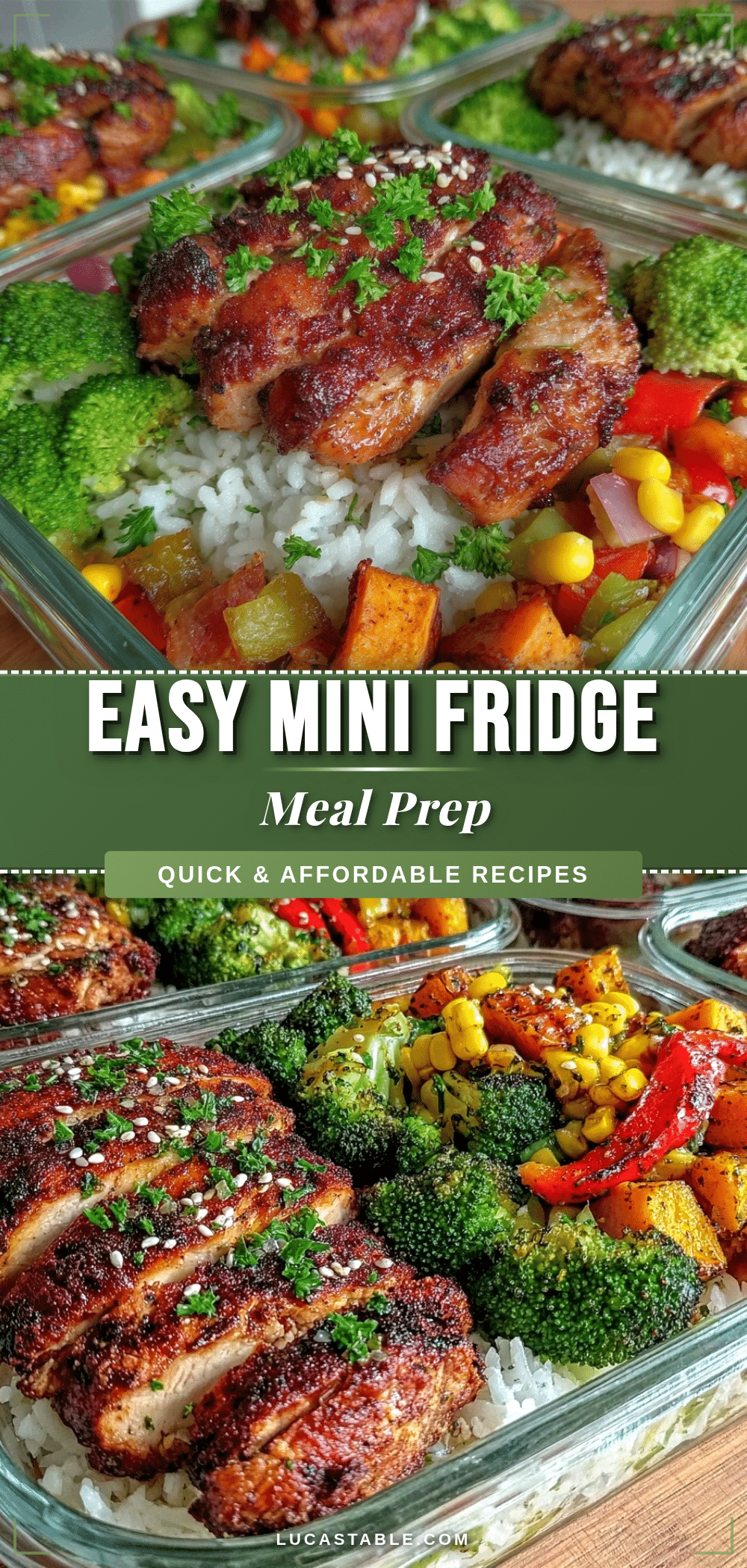
Mini Fridge Meal Prep for College Budget 10 Easy Affordable Meals
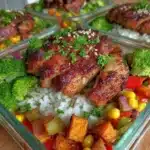
A collection of 10 easy, affordable meals designed for small portions that fit in a mini fridge, perfect for college students on a budget. These meals are quick to prep, budget-smart, and versatile for any schedule.
- Prep Time: 15 minutes
- Cook Time: 30 minutes
- Total Time: 45 minutes
- Yield: 6 servings 1x
- Category: Meal Prep
- Cuisine: American
Ingredients
- 2 cups cooked brown rice (about 370g)
- 2 cans canned beans (15oz / 425g each), rinsed
- 1 bag frozen mixed vegetables (12oz / 340g)
- 3 cans canned tuna (5oz / 142g each)
- 6 large eggs
- 1 cup Greek yogurt (240g)
- 4oz shredded cheddar cheese (115g)
- 3 cloves fresh garlic
- 2 tablespoons olive oil
- Salt and pepper to taste
- Hot sauce or soy sauce (optional)
Instructions
- Cook brown rice: Use a rice cooker or bring 4 cups water to a boil, add rice, cover, and simmer low for 40 minutes until tender and fluffy.
- Prepare proteins and veggies: Drain and rinse canned beans. Microwave frozen veggies for 3-4 minutes or sauté in olive oil with minced garlic for about 5 minutes until tender but vibrant. Scramble or make simple omelets with eggs, seasoning with salt and pepper.
- Mix and match meals: Combine rice, beans, veggies, and protein in small containers (2-3 cups each). Examples include rice with black beans and mixed veggies or tuna mixed with Greek yogurt and garlic, topped with cheddar.
- Flavor it up: Add hot sauce, soy sauce, or lemon juice to taste.
- Store correctly: Let food cool slightly before sealing containers. Stack neatly in mini fridge with some airflow space. Meals last 3-4 days refrigerated.
Notes
[‘Rinse canned beans to reduce sodium and remove canning liquid flavor.’, ‘Cook rice a day ahead for easier reheating and better texture.’, ‘Use fresh garlic generously to enhance flavor without extra calories.’, ‘Keep sauces and dressings separate until serving to avoid sogginess.’, ‘Freeze meals in freezer-safe bags if fridge space is limited; thaw overnight in fridge.’, ‘Swap ingredients based on availability and preference to keep meals interesting.’, ‘Use tamari instead of soy sauce for gluten-free meals.’, ‘Use dairy-free alternatives like coconut yogurt or nutritional yeast for dairy-free versions.’]
Nutrition
- Serving Size: Approximately 2-3 cu
- Calories: 350
- Sugar: 3
- Sodium: 400
- Fat: 6
- Saturated Fat: 1.5
- Carbohydrates: 45
- Fiber: 8
- Protein: 18
Keywords: mini fridge meal prep, college budget meals, affordable meals, easy meal prep, small portions, quick meals, budget-friendly, dorm room cooking