Let me tell you, the scent of tamarind and roasted peanuts swirling through my kitchen is enough to make anyone’s mouth water. The first time I whipped up this quick and flavorful 30-minute Pad Thai, I was instantly hooked—the kind of moment where you pause, take a deep breath, and just smile because you know you’re onto something truly special. When I was knee-high to a grasshopper, my grandma used to make this magical noodle dish that felt like pure, nostalgic comfort. Years ago, I tried recreating that street-food vibe at home, and honestly, this recipe is what I wish I’d stumbled upon back then.
My family couldn’t stop sneaking bites off the pan while it was still sizzling (and I can’t really blame them). This quick and flavorful Pad Thai has become a staple for last-minute dinners, cozy weekends, and even for impressing friends without breaking a sweat. You know what? It’s dangerously easy to make and brightens up any weeknight dinner table or casual get-together with its vibrant colors and bold flavors.
This recipe is perfect for potlucks, a sweet treat for your kids who love noodles, or just a satisfying dish to brighten up your Pinterest recipe board. After testing it multiple times—in the name of research, of course—I can confidently say it’s a keeper you’ll want to bookmark and make again and again.
Why You’ll Love This Recipe
After countless kitchen trials and family taste tests, here’s why this quick and flavorful Pad Thai recipe stands out:
- Quick & Easy: Comes together in under 30 minutes, perfect for busy weeknights or last-minute cravings.
- Simple Ingredients: No fancy grocery store expeditions needed; you probably already have most of these pantry staples.
- Perfect for Any Occasion: Great for everything from casual dinners to lively potlucks and even weekday lunches.
- Crowd-Pleaser: Always gets rave reviews from both kids and adults alike—seriously, it disappears fast.
- Unbelievably Delicious: The dance of tangy tamarind, sweet palm sugar, and crunchy peanuts creates a flavor combo that feels like comfort food with a kick.
What sets this Pad Thai apart? It’s the balance—the sauce hits all the right notes without being overpowering, and the technique of soaking the rice noodles just right keeps them tender but not mushy. Plus, tossing in a handful of fresh ingredients at the end keeps things bright and fresh. Honestly, this isn’t just another Pad Thai recipe; it’s the best version you’ll make at home.
This recipe isn’t just good—it’s the kind that makes you close your eyes after the first bite and savor every mouthful. It’s comfort food reimagined: faster, healthier, but still packing all the soul-soothing satisfaction you crave. Perfect for impressing guests without stress, or turning a simple meal into something memorable.
What Ingredients You Will Need
This recipe uses simple, wholesome ingredients to deliver bold flavor and satisfying texture without the fuss. Most are pantry staples or easy to find in your local market.
- Rice noodles: 8 ounces (225g) flat dry rice noodles (about ¼ inch wide) – soak in warm water until just pliable
- Vegetable oil: 2 tablespoons (for stir-frying) – I prefer neutral oils like canola or sunflower
- Garlic: 3 cloves, minced – adds that punchy aroma
- Eggs: 2 large, beaten – for that classic Pad Thai scramble
- Firm tofu: 6 ounces (170g), cubed (optional) – I recommend Nasoya brand for firm texture
- Bean sprouts: 1 cup (about 100g), fresh and rinsed – adds crunch and freshness
- Green onions: 3 stalks, sliced thinly (both white and green parts)
- Crushed peanuts: ½ cup (60g), roasted – for that irresistible nutty crunch
- Fresh lime: 1, cut into wedges – to squeeze on top for bright acidity
- For the sauce:
- 3 tablespoons tamarind paste – the soul of authentic Pad Thai
- 3 tablespoons fish sauce (or soy sauce for vegetarian) – salty umami boost
- 2 tablespoons palm sugar (or light brown sugar) – balances tartness with subtle sweetness
- 1 tablespoon rice vinegar – adds mild tang
- 1 teaspoon chili powder (adjust to taste) – optional, for a little heat kick
For a gluten-free version, make sure your soy sauce is labelled gluten-free, or swap for tamari. If you want a vegan option, use tamari instead of fish sauce and skip the eggs or use a vegan egg substitute.
Equipment Needed
- Large bowl: for soaking rice noodles – any heatproof bowl works fine.
- Wok or large skillet: I prefer a wok for even heat distribution, but a big nonstick skillet does the trick.
- Spatula or wooden spoon: for stirring and scrambling eggs – a silicone spatula helps scrape the pan clean.
- Measuring spoons and cups: for precise sauce ingredients.
- Small mixing bowl: to combine the sauce ingredients before adding to the pan.
If you don’t have a wok, no worries—a heavy-bottomed skillet works just fine. I’ve tried using a cast iron pan too; it adds a nice sear but watch the heat so it doesn’t burn the sauce. Also, keep your spatula handy for quick mixing and scraping.
Preparation Method
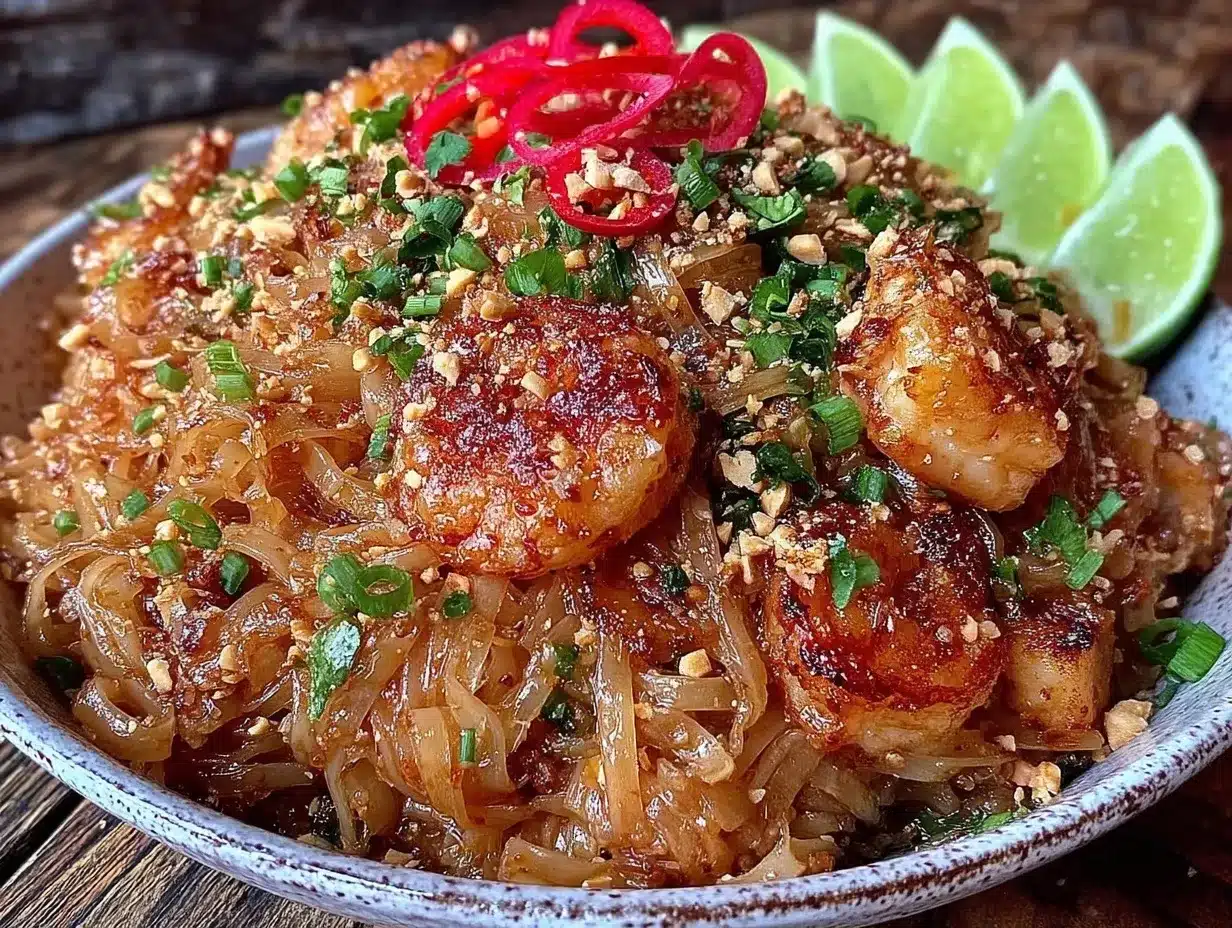
- Soak the rice noodles: Place the dry rice noodles in a large bowl and cover with warm water. Let them soak for about 20 minutes until just pliable but still a bit firm (about al dente). Drain and set aside. (Don’t over-soak or they’ll turn mushy.)
- Prepare the sauce: In a small bowl, whisk together tamarind paste, fish sauce, palm sugar, rice vinegar, and chili powder. Stir until sugar dissolves. Set aside. (Taste and adjust balance if needed—more sugar or lime can help.)
- Heat the wok: Add vegetable oil and warm over medium-high heat until shimmering. Toss in the minced garlic and stir for 30 seconds until fragrant (don’t let it burn!).
- Add tofu (if using): Toss in cubed tofu and stir-fry for 3-4 minutes until golden on all sides. Remove and set aside.
- Cook the eggs: Pour in beaten eggs, swirling the pan gently. Scramble quickly until just set but still moist. Push eggs to the side.
- Add noodles and sauce: Add drained noodles to the wok along with the prepared sauce. Toss everything together with tongs or spatula, stirring continuously to coat noodles evenly. Cook for 2-3 minutes until noodles are tender and sauce thickens slightly.
- Return tofu and add veggies: Add tofu back into the wok along with bean sprouts and green onions. Stir-fry for another minute just to warm through and keep veggies crisp.
- Final touches: Remove from heat. Sprinkle crushed peanuts on top and serve immediately with lime wedges on the side for squeezing.
Pro tip: Keep the heat high but don’t rush the noodles; tossing them gently keeps them from sticking and gives you that perfect chewy texture. Also, adding the sauce gradually helps you control the flavor balance.
Cooking Tips & Techniques
Pad Thai is all about timing and balance. Here’s what I’ve learned from multiple batches (and a few kitchen mishaps):
- Soak noodles just right: Too long, and they turn mushy; too short, and they’re tough. Test them early and adjust soaking time accordingly.
- Use high heat: This replicates the quick stir-fry style of street vendors, giving you that slightly smoky wok hei flavor.
- Don’t overcrowd the pan: Cook in batches if needed. Crowding causes steaming and soggy noodles.
- Toss continuously: Keeps everything evenly coated and prevents sticking.
- Adjust your sauce: Taste as you go, especially if swapping ingredients like tamarind or fish sauce brands—they vary in intensity.
- Add fresh ingredients last: Bean sprouts and green onions should stay crispy and bright, so toss them in just before serving.
One time, I left the garlic in too long and ended up with a bitter taste—lesson learned! Also, scrambling the eggs separately but in the same pan creates that perfect texture without overcooking. Timing is everything, and with a little practice, you’ll nail it every time.
Variations & Adaptations
This quick and flavorful Pad Thai is super versatile—here are some ways to make it your own:
- Protein swaps: Instead of tofu, try shrimp, chicken, or even thinly sliced beef for a twist. Cook these separately to avoid overcrowding.
- Vegan version: Skip fish sauce and use tamari or soy sauce, and leave out the eggs or substitute with scrambled tofu or chickpea flour scramble.
- Nut-free option: Omit peanuts and add toasted sesame seeds or crispy fried shallots for crunch.
- Seasonal veggies: Add shredded carrots, bell peppers, or snap peas for extra color and nutrition.
- Spice level: Adjust chili powder or add fresh sliced chilies to suit your heat preference.
I once swapped in spiralized zucchini noodles for a low-carb version—it was surprisingly tasty and kept that fresh Pad Thai vibe. Feel free to experiment and find what suits your taste buds best!
Serving & Storage Suggestions
Serve your quick and flavorful Pad Thai piping hot, right off the stove. Garnish with extra crushed peanuts, fresh lime wedges, and perhaps a sprinkle of chopped cilantro or Thai basil for a fragrant touch. This dish pairs beautifully with a crisp Asian-style cucumber salad or a light soup to balance the flavors.
If you have leftovers (rare, I know), store them in an airtight container in the refrigerator for up to 2 days. To reheat, warm gently in a skillet over medium heat, adding a splash of water or oil to loosen the noodles and revive that fresh texture. Avoid microwaving if you can—it tends to make the noodles gummy.
Pad Thai flavors actually deepen a bit after resting, so if you have time, let it sit for 10-15 minutes before serving again. Just add a squeeze of lime to brighten it back up before serving.
Nutritional Information & Benefits
This dish offers a balanced mix of carbs, protein, and healthy fats. The rice noodles provide quick energy, while tofu or other proteins keep you full and satisfied. Tamarind paste is a good source of antioxidants and adds digestive benefits, and peanuts contribute heart-healthy fats and a satisfying crunch.
Gluten-free? Just ensure your soy sauce or tamari is gluten-free. This recipe can easily fit into vegetarian or vegan diets with simple swaps. Just watch out for peanut allergies and substitute accordingly.
From a wellness perspective, this quick and flavorful Pad Thai packs in fresh veggies and lean protein, making it a wholesome meal you can feel good about feeding your family any night of the week.
Conclusion
In short, this quick and flavorful 30-minute Pad Thai recipe is a game-changer for anyone craving authentic Thai flavors without the fuss. It’s easy, approachable, and delicious—a real go-to for busy nights that still deserve a home-cooked touch. Feel free to tweak the ingredients to suit your preferences or dietary needs; that’s part of the fun!
Honestly, I love this recipe because it brings a little bit of street food magic right into my kitchen, and it never fails to impress. So grab your wok, gather those simple ingredients, and give it a try—you’re going to want to make this one over and over.
If you give it a shot, please drop a comment below or share your own twists. I’d love to hear how your quick and flavorful Pad Thai turns out!
Frequently Asked Questions
How do I prevent my rice noodles from sticking together?
Soak them just until pliable, then drain well. Toss gently with a little oil before cooking, and avoid overcrowding the pan during stir-fry.
Can I make Pad Thai without fish sauce?
Absolutely! Use soy sauce or tamari for a vegetarian or vegan option. You might want to add a splash of lime or extra tamarind to balance flavors.
What can I substitute if I can’t find tamarind paste?
Mix lime juice with a little brown sugar and a splash of rice vinegar as a quick substitute, though the flavor won’t be quite the same.
Is it okay to use fresh rice noodles instead of dry?
Yes, fresh rice noodles can be used but reduce soaking time and be gentle during cooking as they’re more delicate.
How spicy is this Pad Thai recipe?
It’s mildly spicy by default, but you can easily adjust the chili powder or add fresh chilies to ramp up the heat to your liking.
Pin This Recipe!
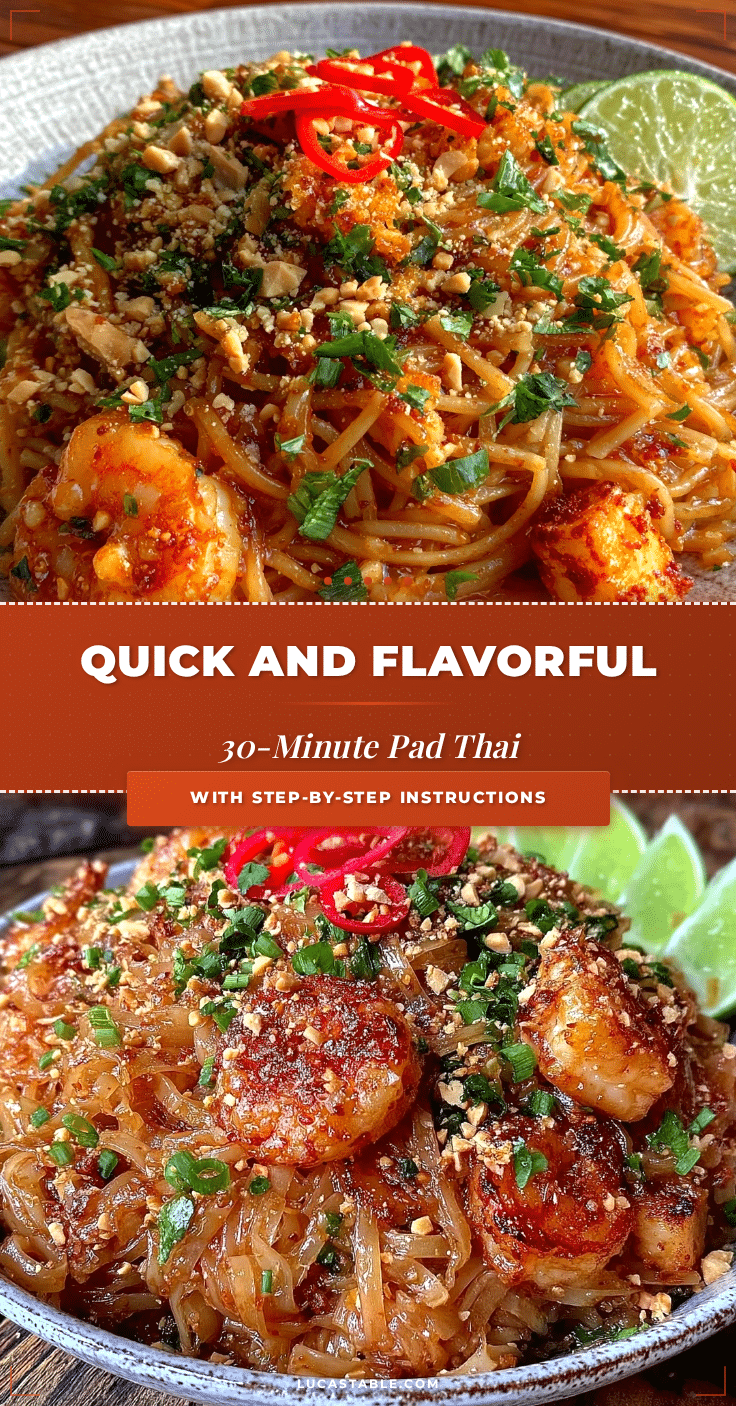
Quick and Flavorful Pad Thai Recipe 30-Minute Easy Homemade Meal

A quick and flavorful Pad Thai recipe that comes together in under 30 minutes, perfect for busy weeknights or last-minute cravings. This easy homemade meal balances tangy tamarind, sweet palm sugar, and crunchy peanuts for a delicious and satisfying dish.
- Prep Time: 10 minutes
- Cook Time: 20 minutes
- Total Time: 30 minutes
- Yield: 4 servings 1x
- Category: Main Course
- Cuisine: Thai
Ingredients
- 8 ounces (225g) flat dry rice noodles (about ¼ inch wide) – soak in warm water until just pliable
- 2 tablespoons vegetable oil (canola or sunflower preferred)
- 3 cloves garlic, minced
- 2 large eggs, beaten
- 6 ounces (170g) firm tofu, cubed (optional)
- 1 cup (about 100g) fresh bean sprouts, rinsed
- 3 stalks green onions, sliced thinly (both white and green parts)
- ½ cup (60g) roasted crushed peanuts
- 1 fresh lime, cut into wedges
- 3 tablespoons tamarind paste
- 3 tablespoons fish sauce (or soy sauce for vegetarian)
- 2 tablespoons palm sugar (or light brown sugar)
- 1 tablespoon rice vinegar
- 1 teaspoon chili powder (optional, adjust to taste)
Instructions
- Soak the rice noodles in a large bowl with warm water for about 20 minutes until just pliable but still a bit firm. Drain and set aside.
- In a small bowl, whisk together tamarind paste, fish sauce, palm sugar, rice vinegar, and chili powder until sugar dissolves. Set aside.
- Heat vegetable oil in a wok or large skillet over medium-high heat until shimmering. Add minced garlic and stir for 30 seconds until fragrant.
- Add cubed tofu (if using) and stir-fry for 3-4 minutes until golden on all sides. Remove and set aside.
- Pour in beaten eggs and scramble quickly until just set but still moist. Push eggs to the side of the pan.
- Add drained noodles and prepared sauce to the wok. Toss continuously to coat noodles evenly and cook for 2-3 minutes until noodles are tender and sauce thickens slightly.
- Return tofu to the wok along with bean sprouts and green onions. Stir-fry for another minute to warm through and keep veggies crisp.
- Remove from heat. Sprinkle crushed peanuts on top and serve immediately with lime wedges.
Notes
Soak noodles just until pliable to avoid mushiness. Use high heat for authentic stir-fry flavor and avoid overcrowding the pan. Toss noodles gently and add sauce gradually to control flavor. For vegan version, use tamari instead of fish sauce and substitute eggs with vegan alternatives. For gluten-free, ensure soy sauce or tamari is gluten-free. Leftovers keep well for up to 2 days refrigerated; reheat gently in a skillet with a splash of water or oil.
Nutrition
- Serving Size: 1 serving (approxima
- Calories: 420
- Sugar: 8
- Sodium: 900
- Fat: 18
- Saturated Fat: 3
- Carbohydrates: 48
- Fiber: 3
- Protein: 15
Keywords: Pad Thai, quick Pad Thai, easy Pad Thai recipe, homemade Pad Thai, Thai noodles, stir-fry noodles, tamarind sauce, vegetarian Pad Thai, gluten-free Pad Thai