There used to be a tiny farm-to-table café tucked into a converted garage in the Hudson Valley called The Gilded Beet. They made a butternut squash and apple soup that was almost too pretty to eat—swirled with cream, topped with crispy sage, and served with a hunk of crusty bread. When they closed their doors three winters ago, I actually drove past the building twice, hoping it was some kind of mistake. It wasn’t. After twelve attempts—some too sweet, some too watery, one that my husband politely called “orange baby food”—I finally cracked the code. This slow cooker version is the one. It’s the soup I think about when the first real chill hits the air, the one that makes me close my eyes after that first spoonful. Maybe you’ve been hunting for that same cozy feeling, the kind that only comes from a bowl that tastes like fall in slow motion. Let me tell you, this is it.
I remember the Tuesday I finally got it right. My kitchen smelled like a candle shop exploded, but in the best way. I had apples everywhere, squash seeds stuck to my sweater, and I forgot to add the salt until the very end. Honestly, that mistake might have been a happy accident—it made me pay attention to the balance. This soup has become my seasonal anchor. When the leaves start turning, I know exactly what I’m making.
Why You’ll Love This Recipe
Let’s face it, most squash soups are either too heavy or too thin, too sweet or too bland. This one hits that Goldilocks zone, and it does it with almost no effort on your part. Here’s why this recipe stands out from the dozens I tested:
- Set It and Forget It : The slow cooker does all the heavy lifting. You chop, dump, and walk away. No stirring, no watching, no babysitting a hot pot.
- Perfectly Balanced Flavor : The apples cut through the earthy sweetness of the squash without making it taste like dessert. It’s savory with a whisper of sweet, not a shout.
- Simple, Real Ingredients : No cream-of-anything cans or mystery broths here. Everything comes from the produce aisle or your pantry.
- Budget-Friendly Comfort : Butternut squash and apples are some of the cheapest fall staples. This soup costs pennies per serving but tastes like a restaurant splurge.
- Freezer-Friendly : Make a double batch and stash half for a crazy Tuesday in December. It thaws like a dream.
I brought this soup to a neighborhood potluck last October, and three people asked for the recipe before I even set the bowl down. One neighbor, Marta, texted me the next day saying her picky seven-year-old asked for seconds. That’s the kind of win that makes a home cook feel like a rockstar.
This isn’t just another squash soup recipe. It’s the one I tested until my family begged me to cook something else. It’s the one where the texture is velvety without any cream, thanks to the natural starch in the squash and the pectin in the apples. It’s comfort food that feels wholesome, not heavy.
What Ingredients You Will Need
This recipe relies on a handful of humble ingredients that come together to create something greater than the sum of their parts. Everything is available at any grocery store, and most of it you might already have on hand.
- 1 medium butternut squash (about 3 pounds) , peeled, seeded, and cut into 1-inch cubes. Look for squash that feels heavy for its size with a matte, beige skin. Avoid any with soft spots or green patches. I prefer to buy pre-cut cubes from the refrigerated section when I’m in a hurry, but whole squash is cheaper and tastes a bit fresher.
- 2 medium Honeycrisp or Fuji apples , peeled, cored, and chopped. These apples hold their shape during cooking and add a gentle sweetness without turning mushy. Granny Smith works too if you want a tarter edge, but you might need an extra pinch of maple syrup at the end.
- 1 medium yellow onion , roughly chopped. Nothing fancy here. A sweet onion like Vidalia would work, but a standard yellow onion gives the soup a savory backbone.
- 2 cloves garlic , smashed. Smashing them instead of mincing means they’ll infuse the broth without becoming overpowering. I just press them with the side of my knife.
- 1 tablespoon fresh ginger , grated. This is my secret ingredient. Ginger adds a warm, slightly spicy note that wakes up the whole soup. Use a microplane if you have one, or just grate it on the small holes of a box grater.
- 4 cups vegetable broth , low-sodium. I use Pacific Foods brand for its clean flavor. Chicken broth works too if you’re not keeping it vegetarian.
- 1 tablespoon maple syrup , plus more to taste. Pure maple syrup, not pancake syrup. It rounds out the flavors without making the soup cloying.
- 1 teaspoon salt , plus more as needed. I use fine sea salt. If you’re using kosher salt, you’ll need about 1 ½ teaspoons.
- ½ teaspoon black pepper , freshly ground.
- ¼ teaspoon nutmeg , freshly grated if possible. Pre-ground works fine, but fresh nutmeg has a floral quality that’s worth the extra five seconds.
- 2 tablespoons olive oil or butter , for sautéing the onions. Butter adds richness, but olive oil keeps it dairy-free.
- Optional garnish: ¼ cup heavy cream or coconut milk , plus crispy sage leaves and toasted pumpkin seeds. These are for serving, not cooking.
For substitutions, you can swap the maple syrup with honey or brown sugar. Use coconut oil instead of butter for a fully vegan version. If you can’t find fresh ginger, ½ teaspoon of ground ginger works, but the fresh stuff really makes a difference here.
Equipment Needed
You don’t need a fancy kitchen to make this soup, but a few specific tools will make the process smoother. Here’s what I use:
- Slow cooker (6-quart or larger) . Any brand works. I have a Cuisinart model that’s been going strong for eight years. If your slow cooker runs hot, check the soup earlier than the suggested time.
- Immersion blender . This is the easiest way to puree the soup right in the pot. I use a KitchenAid cordless model, and it was a game-changer. No transferring hot liquid to a blender in batches. If you don’t have one, a standard blender works, but let the soup cool for 10 minutes first and blend in small batches with the lid slightly vented.
- Chef’s knife and cutting board . A sharp knife makes peeling and cubing squash much less of a chore. I sharpen mine every few weeks with a honing steel.
- Vegetable peeler . A Y-shaped peeler is faster for butternut squash than a standard straight one.
- Large skillet , for sautéing the onions and garlic before they go into the slow cooker. This step adds depth, so don’t skip it even if you’re tempted.
- Measuring cups and spoons . Nothing fancy needed.
If you’re on a budget, skip the immersion blender and use a regular blender. Just be careful with the hot liquid. I learned that lesson the hard way when I ended up with soup on my ceiling. True story.
Preparation Method
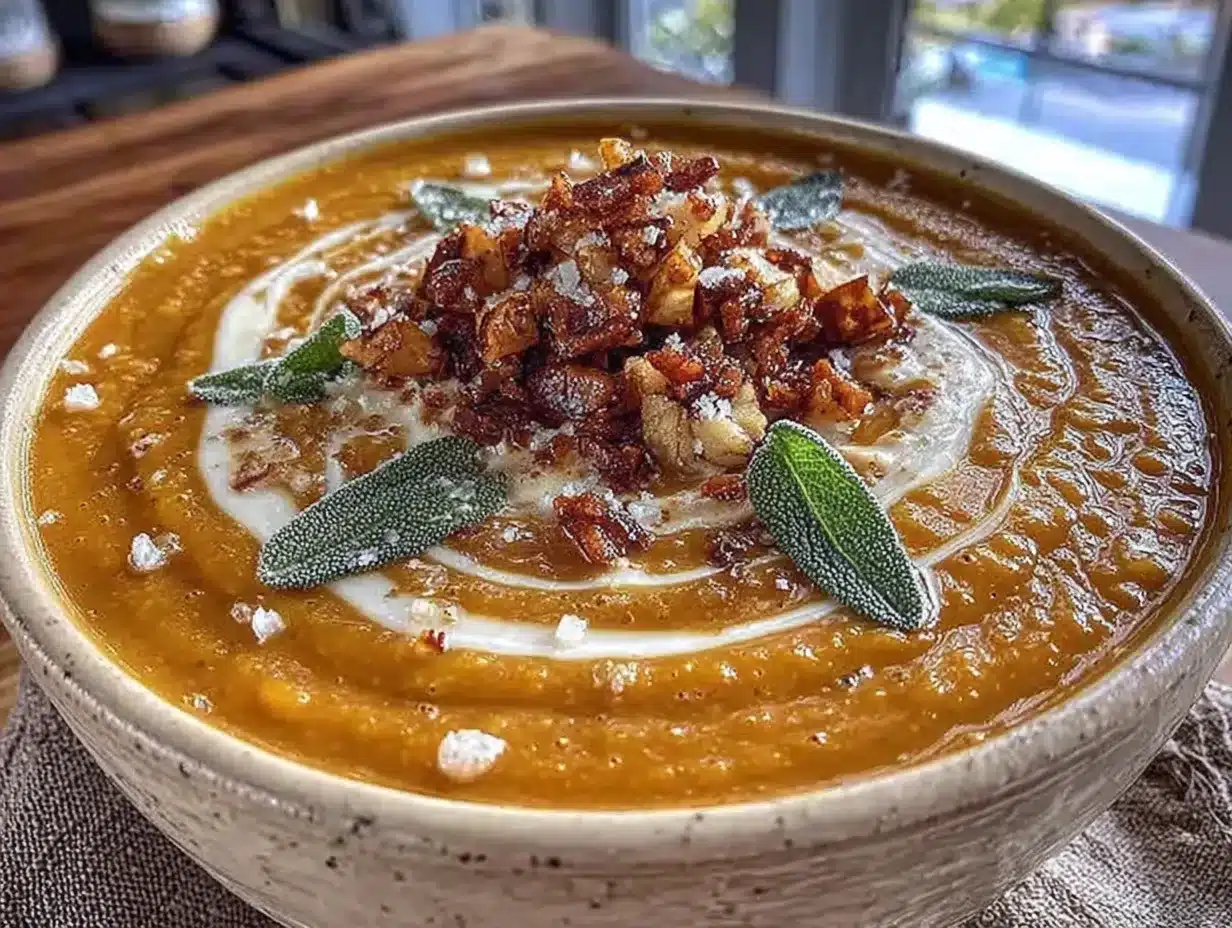
This recipe is almost laughably easy, but a few details make the difference between good soup and great soup. Follow these steps, and you’ll be rewarded with a bowl that tastes like you fussed for hours.
- Sauté the aromatics (10 minutes) . Heat the olive oil or butter in a large skillet over medium heat. Add the chopped onion and cook, stirring occasionally, until it’s translucent and starting to brown at the edges, about 6 to 7 minutes. Add the smashed garlic and grated ginger, and cook for 1 more minute until fragrant. Don’t let the garlic burn—it turns bitter fast. Scrape everything into the slow cooker.
- Prep the squash and apples (15 minutes) . While the onions cook, peel the butternut squash with a vegetable peeler. Cut it in half lengthwise, scoop out the seeds with a spoon, and cut the flesh into 1-inch cubes. Peel and core the apples, then chop them into similar-sized pieces. Try to keep the pieces uniform so they cook evenly. I usually cut the squash first, then the apples, so the apples don’t brown.
- Layer everything in the slow cooker (5 minutes) . Add the cubed squash and chopped apples to the slow cooker on top of the onion mixture. Pour in the vegetable broth, maple syrup, salt, pepper, and nutmeg. Give everything a gentle stir to combine. The liquid should barely cover the solids—if it doesn’t, add a splash more broth or water.
- Cook low and slow (6 to 7 hours on low, or 3 to 4 hours on high) . Cover and cook until the squash is very tender. You should be able to pierce a cube easily with a fork, and it should almost fall apart when you do. I prefer cooking on low for the full 7 hours because the flavors meld more deeply. If you’re short on time, high works fine, just check at the 3-hour mark.
- Puree the soup (5 minutes) . Turn off the slow cooker. If using an immersion blender, submerge it fully and blend until completely smooth. Be careful not to splatter—I usually tilt the pot slightly away from me. If using a countertop blender, let the soup cool for 10 minutes, then blend in batches, filling the blender no more than halfway. Remove the center cap from the lid and cover it with a kitchen towel to let steam escape. Blend until velvety smooth.
- Taste and adjust (2 minutes) . Stir in the heavy cream or coconut milk if using. Taste the soup and adjust the seasoning. You might want more salt, a drizzle more maple syrup, or an extra pinch of nutmeg. Trust your palate here. I often add another ¼ teaspoon of salt at this stage.
- Serve and garnish (5 minutes) . Ladle the soup into bowls. Swirl a little cream or coconut milk on top if you’re feeling fancy. Scatter crispy sage leaves and toasted pumpkin seeds over each bowl. Serve immediately with crusty bread or a simple green salad.
Cooking Tips & Techniques
Over the course of those twelve attempts, I learned a few things the hard way. Here are the tips that made the biggest difference:
Don’t skip the sauté step. I know it’s tempting to dump everything in the slow cooker raw, but sautéing the onions, garlic, and ginger first unlocks their full flavor. Raw garlic in a slow cooker can taste harsh and metallic. That extra 10 minutes is worth it.
Cut the squash into even pieces. If some cubes are twice the size of others, they won’t cook at the same rate. You’ll end up with some mushy bits and some undercored chunks. Aim for 1-inch cubes, and don’t stress if they’re not perfect—just reasonably close.
Taste before you blend. I made this mistake on attempt number four. I blended the soup, tasted it, and realized it was bland. Fixing seasoning after blending is harder because you have to reheat and re-blend. Taste the broth before you puree, and adjust salt and spices at that stage.
Watch your liquid level. Squash releases a surprising amount of water as it cooks. If your soup ends up too thin, you can simmer it on the stovetop for 10 to 15 minutes after blending to reduce it. If it’s too thick, stir in a little more broth or water until it reaches your preferred consistency.
Let it rest. This soup actually tastes better the next day. The flavors settle and deepen overnight. If you have time, make it a day ahead and reheat gently. I once served it to guests after a 24-hour rest, and they asked if I’d added extra spices. Nope—just time.
Variations & Adaptations
This recipe is a fantastic base for experimentation. Here are a few ways I’ve adapted it depending on my mood or what’s in the fridge:
- Vegan Version : Use olive oil instead of butter, and swap the heavy cream for full-fat coconut milk. The coconut milk adds a subtle tropical note that pairs surprisingly well with the ginger.
- Spicy Kick : Add ½ teaspoon of red pepper flakes along with the garlic, or stir in a minced serrano pepper. The heat cuts through the sweetness beautifully. I did this once when I had a cold, and it was exactly what I needed.
- Roasted Variation : For a deeper, caramelized flavor, roast the cubed squash and apples on a sheet pan at 400°F for 25 minutes before adding them to the slow cooker. This adds a smoky sweetness that’s incredible, but it does add an extra step and 30 minutes of active time.
- Protein Boost : Stir in a can of drained and rinsed chickpeas before blending. They disappear into the soup and add fiber and protein without changing the flavor much. My husband didn’t even notice until I told him.
- Herb Swirl : Instead of cream, blend in a handful of fresh basil or cilantro with the soup. It turns the soup a lovely pale green and adds a fresh, peppery note.
If you’re avoiding nightshades, this soup is naturally free of tomatoes and peppers, so it’s a safe bet. For a nut-free garnish, skip the pumpkin seeds and use toasted sunflower seeds instead.
Serving & Storage Suggestions
This soup is a star on its own, but it pairs beautifully with a few simple sides. Here’s how I like to serve it:
For a cozy weeknight dinner : Serve with a grilled cheese sandwich made with sharp cheddar and sourdough. The crunch of the toast against the smooth soup is pure comfort. My go-to is a classic cheddar and apple grilled cheese—it echoes the flavors in the soup.
For a dinner party : Ladle the soup into small cups or shot glasses as an appetizer. Garnish with a tiny sage leaf and a drizzle of cream. It looks elegant and gives guests a taste of what’s to come.
For a hearty lunch : Top the soup with crumbled goat cheese, toasted walnuts, and a drizzle of honey. Add a side of crusty bread for dipping.
Storage : Let the soup cool completely, then transfer it to an airtight container. It will keep in the refrigerator for up to 5 days. The flavors actually improve after a day or two. To freeze, pour the cooled soup into freezer-safe bags or containers, leaving an inch of headspace for expansion. It freezes beautifully for up to 3 months. Thaw overnight in the refrigerator before reheating.
Reheating : Reheat gently on the stovetop over medium-low heat, stirring occasionally. Add a splash of broth or water if the soup has thickened. You can also reheat individual portions in the microwave in 30-second bursts, stirring between each. Don’t boil it—it can cause the cream to separate.
Nutritional Information & Benefits
This soup is as good for you as it is delicious. Here’s a rough estimate per serving (based on 6 servings, without optional cream garnish):
- Calories : ~180
- Fat : 6g
- Carbohydrates : 32g
- Fiber : 7g
- Protein : 3g
- Sugar : 14g (naturally occurring)
- Sodium : 580mg (varies with broth and added salt)
Butternut squash is packed with vitamin A, vitamin C, and potassium. It’s also a great source of beta-carotene, which supports eye health and immune function. Apples contribute soluble fiber called pectin, which helps with digestion and keeps you feeling full. Ginger is a natural anti-inflammatory, and the olive oil provides heart-healthy monounsaturated fats.
This soup is naturally vegetarian, gluten-free, and can be made vegan with simple swaps. It’s also relatively low in calories for such a satisfying bowl, making it a great option if you’re watching your intake without sacrificing flavor.
Conclusion
This slow cooker butternut squash and apple soup is the recipe I turn to when I need a hug in a bowl. It’s the taste of fall without the fuss, the kind of meal that makes you slow down and actually taste what you’re eating. After that first failed attempt—the one that tasted like sweet potato mush—I almost gave up. But I’m glad I didn’t. This version is worth every trial and error.
I’d love to hear how it turns out for you. Did you add your own twist? Use a different apple? Forget an ingredient and still love it? Drop a comment below and let me know. And if you share a photo on Pinterest, tag me—I want to see your cozy bowl of soup. Here’s to warm kitchens and full bellies.
Frequently Asked Questions
Can I use frozen butternut squash instead of fresh?
Absolutely. Frozen cubed squash works perfectly in this recipe. You don’t even need to thaw it first—just add it straight to the slow cooker. The cooking time might be slightly shorter, so start checking for tenderness at the 5-hour mark on low.
Why did my soup turn out watery?
This usually happens if you added too much broth or if your squash was particularly large and released extra water. To fix it, simmer the blended soup on the stovetop for 10 to 15 minutes to let some of the liquid evaporate. Next time, start with 3 ½ cups of broth and add more at the end if needed.
Can I make this soup in an Instant Pot?
Yes! Use the sauté function to cook the onions, garlic, and ginger. Then add the remaining ingredients, close the lid, and cook on high pressure for 12 minutes. Quick-release the pressure, then blend as directed. The flavor is slightly different—less mellow than the slow cooker version—but still delicious.
How do I make crispy sage leaves for garnish?
Heat about ¼ inch of olive oil in a small skillet over medium heat. Add the sage leaves one at a time—they’ll sizzle immediately. Cook for 10 to 15 seconds, then flip and cook for another 5 seconds. Transfer to a paper towel-lined plate and sprinkle with a tiny pinch of salt. They’ll crisp up as they cool.
Is this soup safe for babies or toddlers?
Yes, with a few adjustments. Skip the salt and any spicy additions. The pureed soup is a great texture for babies starting solids. You can also stir in a little plain yogurt or breast milk to thin it further. Always check the temperature before serving to little ones.
Pin This Recipe!
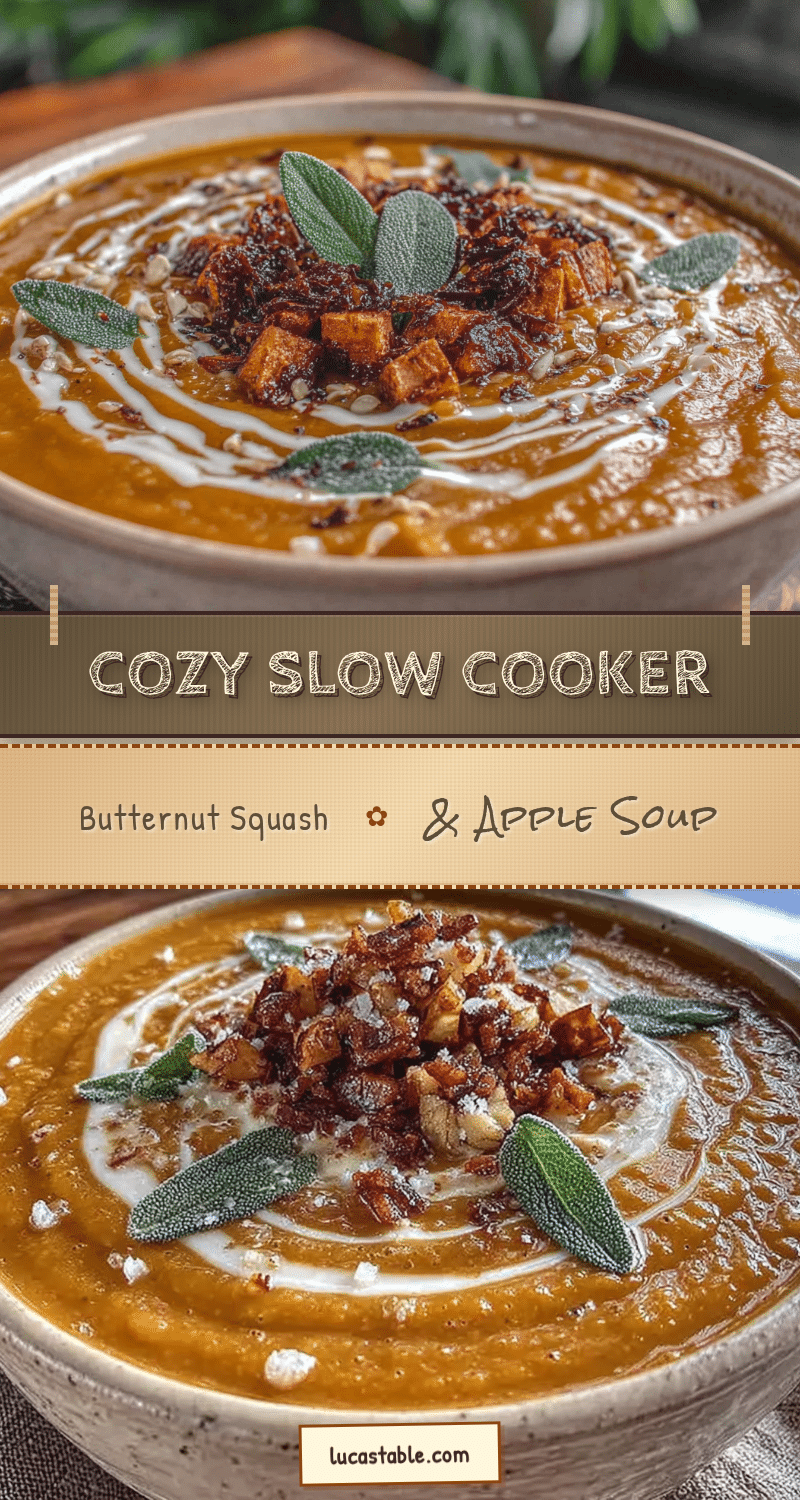
Cozy Slow Cooker Butternut Squash Apple Soup

A velvety, perfectly balanced slow cooker soup that combines the earthy sweetness of butternut squash with the gentle tartness of apples. This set-it-and-forget-it recipe delivers restaurant-quality comfort with minimal effort, making it the ultimate fall staple.
- Prep Time: 30 minutes
- Cook Time: 6 to 7 hours on low, or 3 to 4 hours on high
- Total Time: 6 hours 30 minutes to 7 hours 30 minutes
- Yield: 6 servings 1x
- Category: Soup
- Cuisine: American
Ingredients
- 1 medium butternut squash (about 3 pounds), peeled, seeded, and cut into 1-inch cubes
- 2 medium Honeycrisp or Fuji apples, peeled, cored, and chopped
- 1 medium yellow onion, roughly chopped
- 2 cloves garlic, smashed
- 1 tablespoon fresh ginger, grated
- 4 cups low-sodium vegetable broth
- 1 tablespoon maple syrup, plus more to taste
- 1 teaspoon fine sea salt, plus more as needed
- ½ teaspoon freshly ground black pepper
- ¼ teaspoon nutmeg, freshly grated if possible
- 2 tablespoons olive oil or butter
- Optional garnish: ¼ cup heavy cream or coconut milk, crispy sage leaves, toasted pumpkin seeds
Instructions
- Sauté the aromatics: Heat the olive oil or butter in a large skillet over medium heat. Add the chopped onion and cook, stirring occasionally, until translucent and starting to brown at the edges, about 6 to 7 minutes. Add the smashed garlic and grated ginger, and cook for 1 more minute until fragrant. Scrape everything into the slow cooker.
- Prep the squash and apples: While the onions cook, peel the butternut squash with a vegetable peeler. Cut it in half lengthwise, scoop out the seeds, and cut the flesh into 1-inch cubes. Peel and core the apples, then chop them into similar-sized pieces.
- Layer everything in the slow cooker: Add the cubed squash and chopped apples to the slow cooker on top of the onion mixture. Pour in the vegetable broth, maple syrup, salt, pepper, and nutmeg. Give everything a gentle stir to combine.
- Cook low and slow: Cover and cook on low for 6 to 7 hours, or on high for 3 to 4 hours, until the squash is very tender and easily pierced with a fork.
- Puree the soup: Turn off the slow cooker. Using an immersion blender, blend until completely smooth. If using a countertop blender, let the soup cool for 10 minutes, then blend in batches, filling the blender no more than halfway. Remove the center cap from the lid and cover with a kitchen towel to let steam escape. Blend until velvety smooth.
- Taste and adjust: Stir in the heavy cream or coconut milk if using. Taste and adjust seasoning with more salt, maple syrup, or nutmeg as desired.
- Serve and garnish: Ladle the soup into bowls. Swirl a little cream or coconut milk on top if desired. Scatter crispy sage leaves and toasted pumpkin seeds over each bowl. Serve immediately with crusty bread or a simple green salad.
Notes
Don’t skip the sauté step—it unlocks deeper flavor. Cut squash into even 1-inch cubes for uniform cooking. Taste the broth before blending to adjust seasoning. The soup tastes even better the next day as flavors meld. For a thinner soup, add more broth; for thicker, simmer on stovetop after blending. To freeze, cool completely and store in airtight containers for up to 3 months.
Nutrition
- Serving Size: 1 bowl (about 1.5 cu
- Calories: 180
- Sugar: 14
- Sodium: 580
- Fat: 6
- Saturated Fat: 1
- Carbohydrates: 32
- Fiber: 7
- Protein: 3
Keywords: slow cooker butternut squash soup, butternut squash apple soup, fall soup, cozy soup, vegetarian soup, gluten-free soup, easy slow cooker recipe