I want a stuffed acorn squash right now, and I have everything except the quiet hour it takes to make one properly. That’s the thing about this recipe—it asks for time, not effort. And honestly, that trade-off feels right for October. The squash halves are sitting on my counter, those deep green ridges with sunset-orange patches, and I keep glancing at them like they’re waiting for me to catch up. This cozy stuffed acorn squash with wild rice and cranberries isn’t complicated. It’s just deliberate. You toast the rice, you sweat the onions, you let the kitchen smell like sage and maple for an hour. That’s the whole point, isn’t it?
The first time I made this, I was trying to use up a sad-looking squash and a half-bag of wild rice that had been in the pantry since last Thanksgiving. I wasn’t expecting much—just something to eat while I watched the leaves pile up outside. But then the cranberries burst in the heat, and the pecans got toasty, and the whole thing came together in a way that felt like a hug in food form. I ate it standing at the counter, straight out of the squash skin, and I knew I’d be making it again on purpose, not just for leftovers.
This isn’t the kind of recipe that screams for attention. It’s the kind that sits quietly on the table and lets you come to it. And you will, probably with a fork in hand, ready for that first bite of sweet and savory and nutty all at once.
Why You’ll Love This Recipe
This isn’t just another stuffed squash recipe. After testing this about four times (and eating the evidence every single time), I can tell you exactly what makes this version different. It’s the texture contrast—the way the tender squash gives way to chewy wild rice, then hits you with a pop of tart cranberry and a crunch of toasted pecan. Every bite keeps you guessing in the best way.
- Simple Ingredients : You probably already have most of this in your pantry. No fancy trips to specialty stores. Just good, honest food.
- Perfect for Fall Gatherings : This is the dish that disappears at Thanksgiving, Friendsgiving, or just a cozy Sunday dinner when the weather turns cold.
- Crowd-Pleaser for All Diets : Naturally vegetarian and easily made vegan or gluten-free. Everyone at the table can dig in without questions.
- Make-Ahead Friendly : The filling keeps beautifully, and the squash halves can be pre-roasted a day ahead. This recipe actually tastes better the next day.
- Unbelievably Satisfying : There’s something about eating out of a squash boat that feels deeply comforting. It’s a complete meal in one edible bowl.
What really sets this recipe apart is the technique. I roast the squash cut-side down first to get that caramelized edge, then flip them to let the filling soak up all those roasted squash juices. It’s a small step, but it makes a huge difference. The filling isn’t just sitting in there—it’s absorbing flavor from the squash itself.
This is the kind of meal that makes you slow down. It’s not a 15-minute dinner, and it shouldn’t be. Some recipes are meant to be savored from the very first step.
What Ingredients You Will Need
This recipe keeps things straightforward. Each ingredient plays a specific role, and together they create something that feels much greater than the sum of its parts. Here’s what you’ll need:
For the Acorn Squash
- 2 medium acorn squash (about 1.5 pounds each, look for ones that feel heavy for their size)
- 2 tablespoons olive oil (for brushing the squash halves)
- Salt and black pepper (to taste)
For the Wild Rice Filling
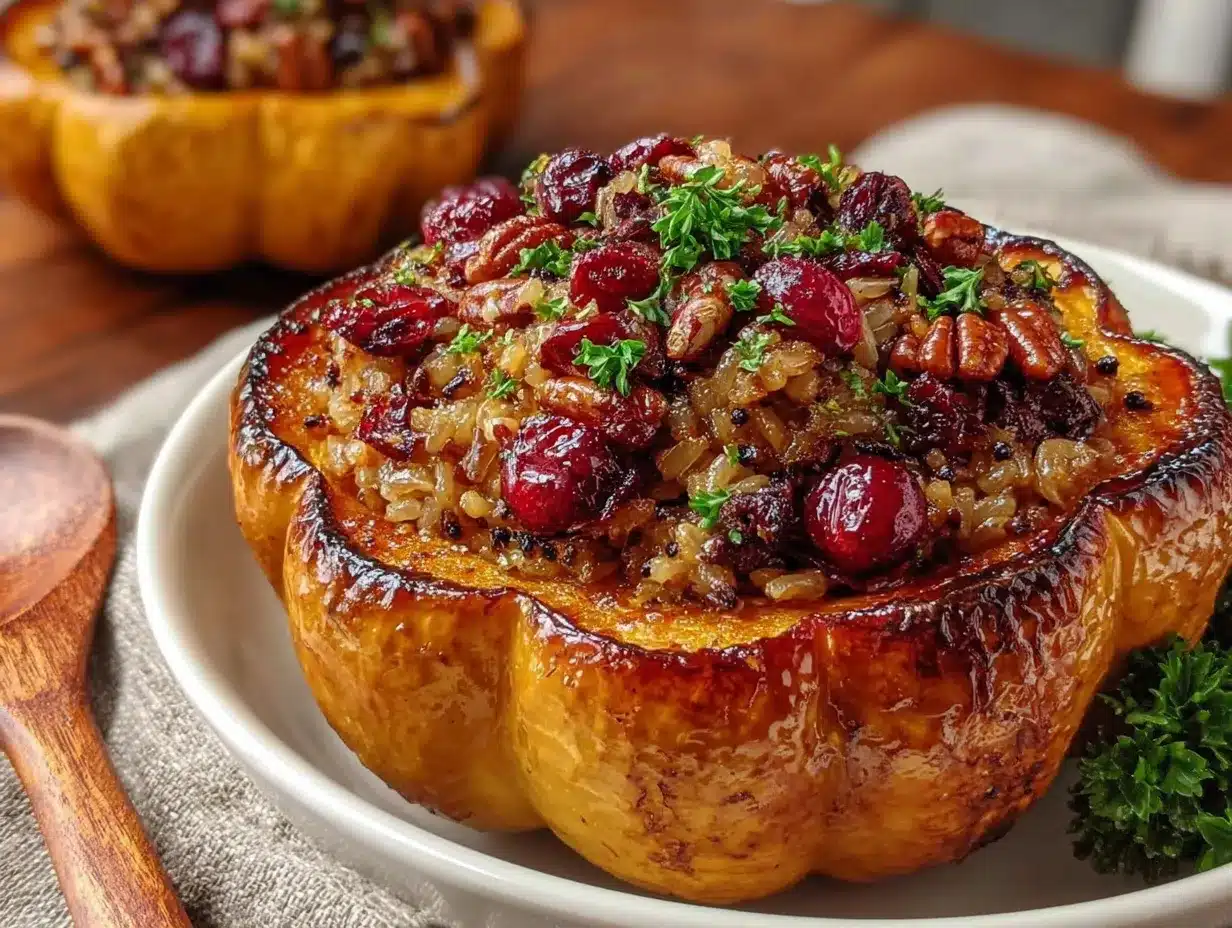
- 1 cup wild rice blend (I prefer Lundberg’s wild rice blend—it cooks evenly and has that perfect chew)
- 2 cups vegetable broth (use low-sodium so you can control the salt)
- 1 tablespoon olive oil (for sautéing)
- 1 medium yellow onion, diced small
- 2 celery stalks, diced small
- 2 cloves garlic, minced
- 1 teaspoon dried sage (rubbed between your palms to release the oils)
- 1/2 teaspoon dried thyme
- 1/2 cup dried cranberries (unsweetened if you prefer a less sweet filling)
- 1/3 cup pecans, roughly chopped and toasted
- 1 tablespoon maple syrup (not the fake stuff—use real maple syrup)
- Salt and black pepper to taste
For the Garnish (Optional but Recommended)
- Fresh parsley or sage leaves, chopped
- Extra toasted pecans
- A drizzle of balsamic glaze (trust me on this one)
One quick note on the wild rice—don’t use the quick-cook kind. You want the real deal that takes about 45 minutes to cook. The texture is completely different, and that chewy, nutty bite is what makes this filling so satisfying. I learned this the hard way after using instant wild rice once. It turned into mush. Never again.
If you need to make this gluten-free, double-check your vegetable broth. Most are fine, but some brands sneak in wheat-based ingredients. Also, for a vegan version, just use maple syrup instead of honey if you were considering that swap.
Equipment Needed
You don’t need a fancy kitchen for this recipe. Here’s what you’ll actually use:
- Sharp chef’s knife (acorn squash are tough—a dull knife is dangerous here)
- Large baking sheet (rimmed, so the squash juices don’t spill everywhere)
- Parchment paper or silicone baking mat (for easy cleanup)
- Medium saucepan with lid (for cooking the wild rice)
- Large skillet (for sautéing the aromatics and mixing the filling)
- Mixing bowl (for combining the filling ingredients)
- Measuring cups and spoons
- Wooden spoon or silicone spatula
If you don’t have a baking sheet with a rim, you can use a 9×13 baking dish instead. Just be careful—the squash might stick a little more. And if you’re using a silicone mat, make sure it’s rated for temperatures above 400°F. Most are, but it’s worth checking.
One tool I really recommend is a sturdy vegetable peeler. Some people like to peel acorn squash, but I leave the skin on—it’s edible and gets tender when roasted. Plus, those ridges look beautiful on the plate.
Preparation Method
Let’s walk through this step by step. I’ve included timing estimates and sensory cues so you know exactly what to look for.
- Preheat the oven to 400°F (200°C). Line a large baking sheet with parchment paper or a silicone mat. This makes cleanup so much easier.
- Prepare the acorn squash. Using a sharp chef’s knife, carefully cut each squash in half from stem to tip. Scoop out the seeds and stringy pulp with a spoon. (Save the seeds—you can roast them just like pumpkin seeds.) Brush the cut sides and cavities with olive oil, then season generously with salt and pepper.
- Roast the squash cut-side down. Place the squash halves cut-side down on the prepared baking sheet. Roast for 25-30 minutes, until the flesh is tender when pierced with a fork. The bottoms should be lightly caramelized. This step is crucial—roasting cut-side down creates that golden, sweet edge that makes the squash irresistible.
- Cook the wild rice. While the squash roasts, rinse the wild rice blend under cold water. In a medium saucepan, combine the rice and vegetable broth. Bring to a boil, then reduce heat to low, cover, and simmer for 40-45 minutes, until the rice is tender and the grains have started to split open. Drain any excess liquid and set aside.
- Sauté the aromatics. While the rice cooks, heat 1 tablespoon of olive oil in a large skillet over medium heat. Add the diced onion and celery. Cook for 5-7 minutes, stirring occasionally, until the onion is translucent and the celery has softened. The kitchen should smell sweet and savory at this point.
- Add the garlic and herbs. Stir in the minced garlic, dried sage, and dried thyme. Cook for 1 minute until fragrant. Don’t let the garlic burn—it turns bitter fast.
- Combine the filling. In a large mixing bowl, combine the cooked wild rice, sautéed aromatics, dried cranberries, toasted pecans, and maple syrup. Stir gently to combine. Taste and adjust seasoning with salt and pepper. The filling should be slightly sweet, savory, and nutty all at once.
- Flip the squash and fill. Remove the squash from the oven. Carefully flip each half over so the cut side is facing up. Divide the filling evenly among the four squash halves, mounding it slightly in the center. Don’t pack it too tight—you want some air in there.
- Return to the oven. Bake the stuffed squash for another 15-20 minutes, until the filling is heated through and the tops are slightly golden. The squash should be fork-tender and the filling should be bubbling slightly around the edges.
- Rest and serve. Let the squash rest for 5 minutes before serving. This helps the filling set and makes the squash easier to handle. Garnish with fresh parsley or sage leaves, extra pecans, and a drizzle of balsamic glaze if you’re feeling fancy.
A few timing notes: The entire process takes about 1 hour and 15 minutes from start to finish. Most of that is hands-off roasting time. You can cook the rice and prep the filling while the squash does its thing in the oven. It’s actually a pretty efficient workflow once you get going.
Cooking Tips & Techniques
I’ve made this recipe enough times to know where things can go wrong. Here’s what I’ve learned:
Don’t skip the cut-side-down roasting. This is the single most important step. Roasting the squash face-down creates steam that cooks the flesh evenly while the cut side caramelizes. If you roast them cut-side up from the start, the tops dry out before the bottoms are tender. I learned this the hard way when I was rushing one night and ended up with unevenly cooked squash.
Toast your pecans. This takes exactly 3-4 minutes in a dry skillet over medium heat. Shake the pan frequently so they don’t burn. Toasted pecans have a depth of flavor that raw ones just don’t. The difference is night and day.
Season the squash aggressively. Acorn squash is naturally sweet, but it needs salt to balance that sweetness. Don’t be shy with the salt and pepper on the cut sides before roasting. I use about 1/4 teaspoon of salt per squash half.
Let the rice rest. After cooking the wild rice, let it sit covered for 5-10 minutes before fluffing. This allows the steam to redistribute and the grains to firm up slightly. The result is fluffier, more distinct grains instead of a mushy mess.
Watch the filling moisture. If your filling seems too dry, add a splash of vegetable broth or even a little melted butter. If it’s too wet, let it cook uncovered for a few minutes to evaporate excess liquid. The perfect filling should hold together when pressed but still feel moist.
Make extra filling. Honestly, I always double the filling recipe. It’s amazing as a side dish on its own, or you can stuff it into bell peppers the next day. Leftover filling also makes a great lunch bowl with some greens and a fried egg on top.
Variations & Adaptations
This recipe is incredibly flexible. Here are some variations I’ve tested and loved:
Vegan Version : This recipe is already vegetarian, but to make it vegan, just skip the butter (if using) and use maple syrup instead of honey. The filling is naturally plant-based, so it’s an easy swap.
Add Protein : For a heartier meal, add cooked sausage (chicken or turkey), crumbled bacon, or shredded rotisserie chicken to the filling. I’ve done it with spicy Italian sausage, and it’s incredible. If you’re looking for another quick dinner idea, this filling also works beautifully with the crispy chicken quesadillas I make on busy weeknights—just swap the fillings.
Cheese Lovers : Stir in 1/2 cup of crumbled goat cheese or feta cheese into the filling before stuffing. The tangy cheese cuts through the sweetness beautifully. Or sprinkle some shredded Gruyère on top during the last 5 minutes of baking for a melty, golden crust.
Different Grains : Don’t have wild rice? Use farro, quinoa, or even brown rice. Each will give a different texture, but they all work. Farro is my second favorite—it has that same chewy bite.
Seasonal Swaps : In the summer, use fresh cranberries (if you can find them) or swap in dried cherries. In the winter, add some roasted Brussels sprouts leaves or cubed butternut squash to the filling. The recipe adapts to whatever you have on hand.
Spice It Up : Add 1/4 teaspoon of red pepper flakes or a pinch of cayenne to the filling for a subtle heat that balances the sweetness. I did this once by accident and now I do it on purpose every time.
Gluten-Free : This recipe is naturally gluten-free as written, as long as you use certified gluten-free vegetable broth. Just double-check your broth label.
Serving & Storage Suggestions
These stuffed squash halves are a meal in themselves, but they also pair beautifully with other dishes.
Serving Temperature : Serve warm, straight from the oven. The squash should be tender enough to cut with a fork, and the filling should be piping hot. Let it rest for 5 minutes first—it’s worth the wait.
Presentation : Place each squash half on a plate with the filling mounded up. Garnish with fresh herbs, extra toasted pecans, and a drizzle of balsamic glaze. The colors are stunning—deep orange squash, dark wild rice, ruby cranberries, and green herbs.
Complementary Dishes : A simple arugula salad with lemon vinaigrette cuts through the richness perfectly. Roasted Brussels sprouts or green beans also work well. For a complete fall feast, serve alongside a savory Mongolian beef for a contrast of flavors, or keep it light with a honey garlic chicken on the side.
Storage : Store leftover stuffed squash in an airtight container in the refrigerator for up to 4 days. The flavors actually meld together overnight, so leftovers are delicious.
Reheating : The best way to reheat is in the oven at 350°F for 10-15 minutes, until warmed through. The microwave works in a pinch, but the squash will be softer. If reheating from frozen, thaw overnight in the fridge first, then reheat in the oven.
Freezing : You can freeze the stuffed squash for up to 3 months. Assemble the squash completely, then wrap each half tightly in plastic wrap and foil. To serve, thaw overnight and reheat in the oven. The texture of the squash will be slightly softer after freezing, but the flavor is still fantastic.
Flavor Development : Like many stuffed dishes, this one tastes even better the next day. The flavors have time to meld, and the squash absorbs more of the savory filling. I always make extra just for leftovers.
Nutritional Information & Benefits
This recipe is as nourishing as it is delicious. Here’s the estimated nutritional breakdown per serving (one stuffed squash half):
| Nutrient | Amount |
|---|---|
| Calories | 385 |
| Total Fat | 14g |
| Saturated Fat | 2g |
| Cholesterol | 0mg |
| Sodium | 520mg |
| Total Carbohydrates | 62g |
| Dietary Fiber | 9g |
| Sugars | 16g |
| Protein | 9g |
| Vitamin A | 245% DV |
| Vitamin C | 35% DV |
| Iron | 15% DV |
Health Highlights : Acorn squash is packed with vitamin A (great for eye health) and fiber (keeps you full and happy). Wild rice is a whole grain with more protein than white rice, plus it’s rich in B vitamins and minerals like zinc and magnesium. Cranberries are loaded with antioxidants, and pecans provide healthy fats that support heart health.
Dietary Considerations : This recipe is naturally vegetarian, gluten-free, dairy-free, and can easily be made vegan. It’s also nut-free if you skip the pecans (though they do add wonderful texture). If you’re watching your sodium, use low-sodium vegetable broth and go easy on the added salt.
One personal note—this is the kind of meal that makes me feel good after eating it. Not in a restrictive way, but in a “my body is getting real nutrients” way. It’s comfort food that actually nourishes you.
Conclusion
This cozy stuffed acorn squash with wild rice and cranberries is more than just a recipe—it’s a moment. It’s the meal you make when you want to slow down, when you want the kitchen to smell like fall, when you want to eat something that feels like a warm hug from the inside out.
What I love most about this recipe is how forgiving it is. You can swap ingredients, adjust the spices, add or skip cheese—it always turns out delicious. It’s the kind of dish that makes you look like you spent hours in the kitchen when really, most of the time is just letting the oven do its thing.
I’d love to hear how this turns out for you. Did you add your own twist? Did your family fight over the last piece? Drop a comment below and let me know. And if you’re looking for more cozy fall recipes, check out some of my other favorites on the blog.
Until next time, happy cooking—and don’t forget to save those squash seeds for roasting!
Frequently Asked Questions
Can I use a different type of squash?
Absolutely! Butternut squash, delicata squash, or even small sugar pumpkins work beautifully. Just adjust the roasting time based on the size and density of the squash. Delicata cooks faster, while butternut might need a few extra minutes.
Can I make this ahead of time for a party?
Yes, and I actually recommend it. Roast the squash halves and prepare the filling up to 2 days ahead. Store them separately in the fridge. When you’re ready to serve, stuff the squash and bake for 20-25 minutes until heated through. This makes entertaining so much easier.
How do I cut acorn squash without hurting myself?
This is a legit concern. Acorn squash are tough. Use a sharp chef’s knife, not a dull one. Microwave the whole squash for 2 minutes to soften it slightly, then cut off a thin slice from the bottom so it sits flat. Cut from stem to tip with a rocking motion. And please—stabilize the squash with a flat hand, not your fingers curled underneath.
Can I freeze the stuffed squash?
Yes, but with one caveat. The texture of the squash will be softer after freezing and thawing. If that doesn’t bother you, go for it. Assemble the squash completely, wrap each half tightly in plastic wrap and foil, and freeze for up to 3 months. Thaw overnight in the fridge before reheating.
What can I do with leftover filling?
So many things! Use it as a stuffing for bell peppers or portobello mushrooms. Serve it as a side dish alongside roasted chicken or pork. Add it to a grain bowl with greens and a fried egg. Or just eat it straight from the bowl with a spoon—no judgment here.
Pin This Recipe!
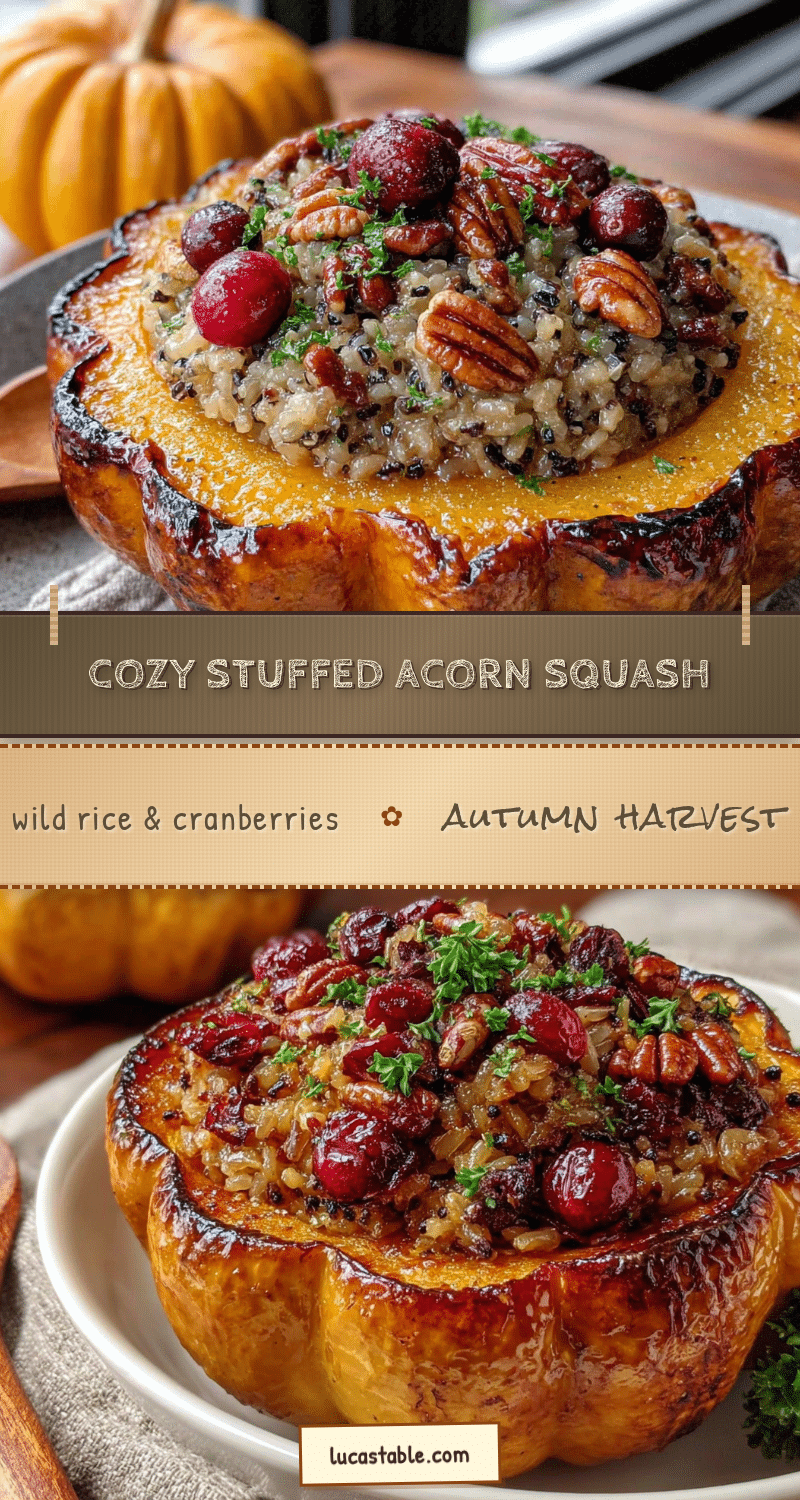
Cozy Stuffed Acorn Squash with Wild Rice & Cranberries
This cozy stuffed acorn squash with wild rice and cranberries is a perfect fall meal. The tender squash is filled with a savory-sweet mixture of wild rice, dried cranberries, and toasted pecans, all roasted together for a comforting, nourishing dish.
- Prep Time: 15 minutes
- Cook Time: 1 hour
- Total Time: 1 hour 15 minutes
- Yield: 4 servings 1x
- Category: Main Course
- Cuisine: American
Ingredients
- 2 medium acorn squash (about 1.5 pounds each)
- 2 tablespoons olive oil
- Salt and black pepper to taste
- 1 cup wild rice blend
- 2 cups vegetable broth (low-sodium)
- 1 tablespoon olive oil
- 1 medium yellow onion, diced small
- 2 celery stalks, diced small
- 2 cloves garlic, minced
- 1 teaspoon dried sage
- 1/2 teaspoon dried thyme
- 1/2 cup dried cranberries (unsweetened if preferred)
- 1/3 cup pecans, roughly chopped and toasted
- 1 tablespoon maple syrup
- Salt and black pepper to taste
- Fresh parsley or sage leaves, chopped (for garnish)
- Extra toasted pecans (for garnish)
- Balsamic glaze (for garnish, optional)
Instructions
- Preheat the oven to 400°F (200°C). Line a large baking sheet with parchment paper or a silicone mat.
- Prepare the acorn squash: Cut each squash in half from stem to tip. Scoop out seeds and stringy pulp. Brush cut sides and cavities with olive oil, then season generously with salt and pepper.
- Roast the squash cut-side down on the prepared baking sheet for 25-30 minutes, until tender when pierced with a fork.
- While the squash roasts, rinse the wild rice blend under cold water. In a medium saucepan, combine rice and vegetable broth. Bring to a boil, then reduce heat to low, cover, and simmer for 40-45 minutes until tender. Drain any excess liquid and set aside.
- While the rice cooks, heat 1 tablespoon olive oil in a large skillet over medium heat. Add diced onion and celery. Cook for 5-7 minutes until onion is translucent and celery softened.
- Stir in minced garlic, dried sage, and dried thyme. Cook for 1 minute until fragrant.
- In a large mixing bowl, combine cooked wild rice, sautéed aromatics, dried cranberries, toasted pecans, and maple syrup. Stir gently. Season with salt and pepper to taste.
- Remove squash from oven. Carefully flip each half over so cut side is up. Divide filling evenly among the four squash halves, mounding slightly.
- Return to oven and bake for another 15-20 minutes until filling is heated through and tops are slightly golden.
- Let rest for 5 minutes before serving. Garnish with fresh herbs, extra pecans, and a drizzle of balsamic glaze if desired.
Notes
Don’t skip roasting the squash cut-side down for caramelization. Toast pecans for best flavor. Season squash aggressively with salt. Let rice rest after cooking. Filling can be made ahead. Leftovers taste even better the next day.
Nutrition
- Serving Size: 1 stuffed squash hal
- Calories: 385
- Sugar: 16
- Sodium: 520
- Fat: 14
- Saturated Fat: 2
- Carbohydrates: 62
- Fiber: 9
- Protein: 9
Keywords: stuffed acorn squash, wild rice, cranberries, fall recipe, vegetarian, gluten-free, Thanksgiving side dish