I figured crunchy ramen noodle salad was just one of those things people brought to barbecues because it was cheap to make. It took about three bites at a friend’s Fourth of July party for that assumption to fall apart completely. I stood there, paper plate in hand, fork halfway to my mouth, and honestly had to stop myself from going back for a fourth serving before anyone else got a chance.
The thing was, I’d walked right past it twice. It sat there in a big plastic bowl, looking like every other pasta salad I’d ever ignored — unassuming, beige-ish, not trying to impress anyone. But the woman next to me grabbed a scoop and said, “Oh, you have to try this one. It’s the ramen one.” And I thought, ramen? Like the dorm room noodles? That seemed wrong. But I took a scoop anyway, mostly to be polite.
That first bite was a problem — in the best way. The dressing was tangy and a little sweet, the cabbage still had crunch, and those little bits of broken ramen had somehow stayed crispy even after sitting out for an hour. I stood there eating it and trying to figure out how that was even possible. It felt like the kind of recipe someone figured out by accident and then kept making because people wouldn’t stop asking for it.
I asked for the recipe before I left. The host laughed and said it was her mom’s go-to, scribbled on a notecard somewhere. She texted me a photo of it later that night — wrinkled paper, coffee ring in the corner, measurements written in pencil. That’s the version I’ve been making ever since. This Crunchy Ramen Noodle Pasta Salad with Easy Sesame Vinaigrette is my slightly tweaked take on that stained notecard, and I think it’s even better than the original.
Why You’ll Love This Recipe
This isn’t one of those salads that sits there looking sad after an hour. The texture stays interesting from the first bite to the last, which is honestly rare for any pasta salad situation. Here’s what makes it worth your time:
- Comes together in under 20 minutes — No boiling water for ten minutes, no complicated steps. You can literally make this while the kids are arguing about something and still have time to hide in the pantry and eat a spoonful of it before dinner.
- Uses pantry staples — Ramen noodles, oil, vinegar, soy sauce, sugar. You probably have most of this stuff already. The only thing you might need to grab is a head of cabbage and some green onions.
- Perfect for potlucks and barbecues — This is the dish that disappears first. I’ve watched people skip the baked beans and potato salad to get another scoop of this. It travels well, doesn’t need to be kept hot, and actually gets better after sitting for a bit.
- Crowd-pleaser across all ages — Kids love the crunchy noodles, adults love the savory dressing, and everyone loves that it doesn’t feel heavy or greasy.
- Unbelievably satisfying texture — The contrast between the soft noodles, crisp cabbage, and crunchy ramen bits is honestly addictive. You’ll find yourself picking at it straight from the bowl.
What makes this version different from the other ramen salads out there is the dressing. Most recipes use a basic oil-and-vinegar situation that separates after ten minutes. This one uses a little sesame oil and a touch of honey to create an emulsion that actually coats every single strand of noodle. It’s not watery, it’s not greasy — it’s just right. I’ve made this for family reunions, weeknight dinners alongside some crispy sesame chicken, and even as a lunch prep option that holds up for days.
What Ingredients You Will Need
This recipe uses simple ingredients that work together to create something way more interesting than the sum of their parts. Nothing fancy here — just smart combinations.
- 2 packages ramen noodles (discard the seasoning packets or save them for something else) — You want the cheap square blocks here, not the fancy cup noodles. The texture is different, and the cheap ones toast up better. I usually grab Maruchan or Top Ramen.
- 1/4 cup slivered almonds — These add a buttery crunch that complements the ramen bits. Toast them lightly in a dry pan for about 3 minutes if you have time. It makes a difference.
- 1/4 cup sunflower seeds — Optional but highly recommended. They add another layer of crunch and a little saltiness. Pepitas work great too if that’s what you have.
- 1 small head green cabbage (about 4 cups shredded) — You want it firm and fresh. Skip the pre-shredded bags if you can — they’re often cut too thick and don’t absorb the dressing as well.
- 3 green onions, sliced thin — Both the white and green parts go in. They add a mild onion bite that cuts through the richness of the dressing.
- 1/2 cup vegetable oil — A neutral oil works best here. Canola or grapeseed are fine. Don’t use olive oil — the flavor is too strong and overpowers the sesame.
- 3 tablespoons rice vinegar — This is milder than white vinegar and gives the dressing a gentle tang. Unseasoned rice vinegar is best so you can control the salt level yourself.
- 2 tablespoons soy sauce — Regular or low-sodium both work. If you’re gluten-free, use tamari or coconut aminos.
- 2 tablespoons honey — Just enough sweetness to balance the vinegar and soy sauce. Maple syrup works in a pinch, but honey gives a smoother finish.
- 1 tablespoon sesame oil — This is where the magic happens. Toasted sesame oil, not the light stuff. A little goes a long way, so don’t go overboard.
- 1 clove garlic, minced — Fresh is best here. The jarred stuff works if you’re in a hurry, but fresh garlic gives the dressing a sharper kick.
- 1/2 teaspoon black pepper — Freshly ground if you can. It makes a difference in the dressing.
Ingredient notes: I’ve tried this with red cabbage instead of green, and it works fine — just expect a slightly stronger flavor and a pretty purple color. If you’re avoiding nuts, leave out the almonds and double up on the sunflower seeds. For a gluten-free version, use rice noodles or gluten-free ramen and tamari instead of soy sauce. The texture will be slightly different, but still delicious.
Equipment Needed
You don’t need much for this one, which is part of the appeal. Here’s what you’ll need:
- Large mixing bowl — Big enough to toss everything without sending cabbage flying across the counter. I use my grandmother’s old ceramic bowl, but any large bowl works.
- Small skillet or frying pan — For toasting the almonds and sunflower seeds. A dry pan over medium heat does the job in about 3-4 minutes.
- Whisk or small jar with a lid — For making the dressing. I prefer the jar method because you can shake it vigorously and get a better emulsion. A fork works in a pinch if you’re desperate.
- Chef’s knife and cutting board — For shredding cabbage and slicing green onions. A mandoline works great if you have one, but a sharp knife is totally fine.
- Measuring cups and spoons — This recipe is forgiving, but it helps to measure the dressing ingredients until you’ve made it a few times.
Budget-friendly tip: If you don’t have a jar for shaking dressing, just whisk everything in the bowl you’ll use for the salad. One less dish to wash, and the dressing coats the noodles just as well.
Preparation Method
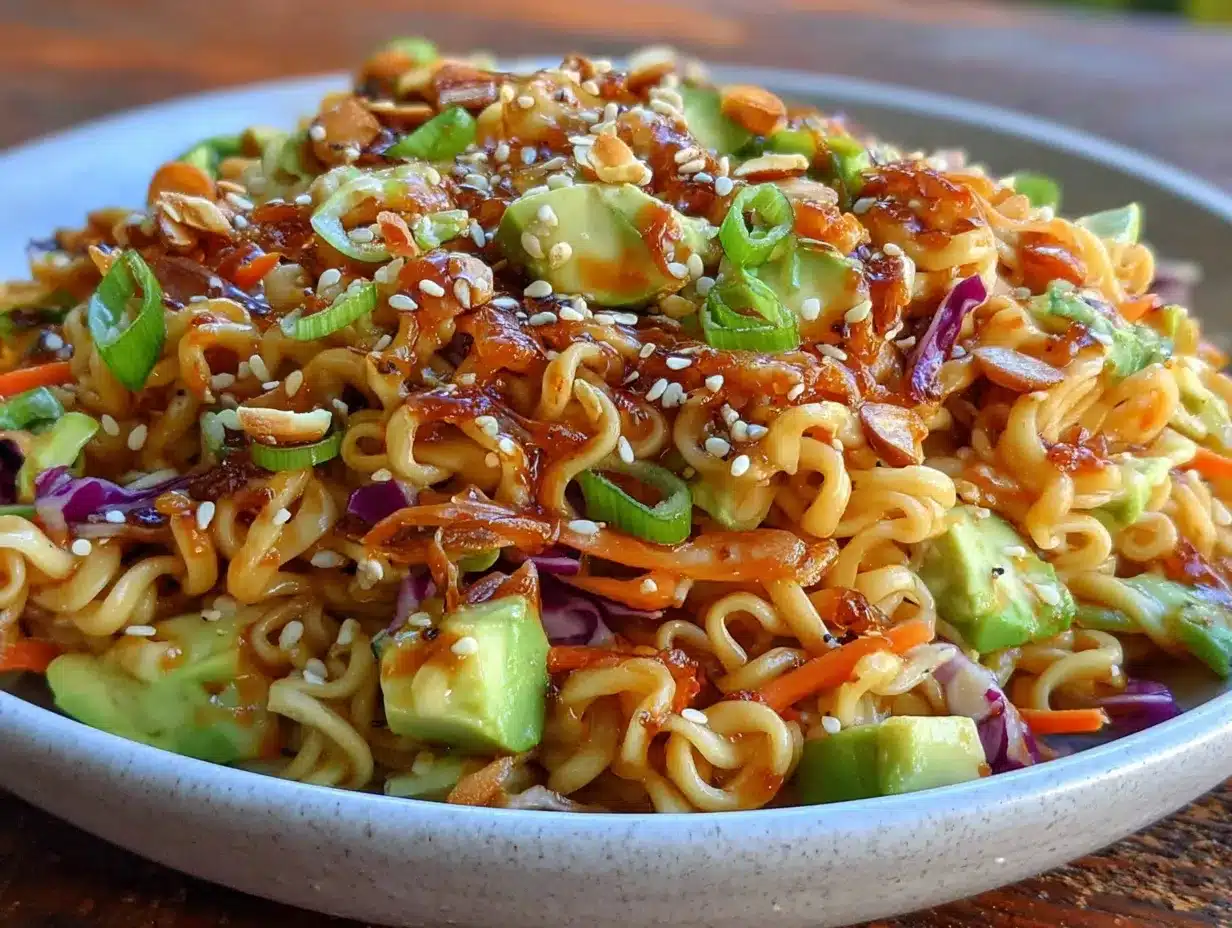
This comes together fast, so I recommend prepping everything before you start cooking. Trust me — once you start toasting the ramen, things move quickly.
- Toast the ramen noodles. Break each block of ramen into small pieces — about the size of a quarter or slightly smaller. You want them bite-sized but not powdery. Heat a large skillet over medium heat and add the broken ramen pieces. Stir them frequently for 4-5 minutes until they turn light golden brown. They’ll smell nutty and toasty when they’re done. Watch them carefully — they burn fast. I’ve ruined a batch by walking away to answer a text. Don’t be like me.
- Toast the almonds and sunflower seeds. In the same skillet (no need to wash it), add the slivered almonds and sunflower seeds. Toast over medium heat for 2-3 minutes, stirring constantly, until the almonds are golden and fragrant. Remove from the pan immediately so they don’t keep cooking.
- Shred the cabbage. Cut the head of cabbage in half through the core, then cut out the core in a V-shape. Slice the cabbage into thin ribbons — about 1/4 inch thick. You want it thin enough to soften slightly in the dressing but thick enough to hold its crunch. Aim for about 4 cups total.
- Slice the green onions. Cut off the root ends and the dark green tops (save those for garnish if you want). Slice the remaining white and light green parts into thin rings. Set aside.
- Make the dressing. In a small jar or bowl, combine 1/2 cup vegetable oil, 3 tablespoons rice vinegar, 2 tablespoons soy sauce, 2 tablespoons honey, 1 tablespoon sesame oil, 1 minced garlic clove, and 1/2 teaspoon black pepper. If using a jar, screw the lid on tight and shake vigorously for about 30 seconds until everything is combined and slightly thickened. If whisking, go at it for a full minute — the honey can be stubborn.
- Taste the dressing. Dip a clean spoon in and try it. It should be tangy, slightly sweet, and savory all at once. If it tastes too sharp, add another teaspoon of honey. If it’s too sweet, add a splash more vinegar. Adjust it to your preference — this is your salad now.
- Assemble the salad. In a large mixing bowl, combine the shredded cabbage, sliced green onions, toasted almonds, and sunflower seeds. Pour about three-quarters of the dressing over the top and toss well with tongs or your hands (clean hands work best for even coating).
- Add the toasted ramen. Add the toasted ramen pieces to the bowl and pour the remaining dressing over them. Toss gently to combine without crushing the ramen too much. You want some pieces to stay intact for that signature crunch.
- Let it sit. Here’s the trick — let the salad sit at room temperature for 10-15 minutes before serving. This gives the cabbage time to soften slightly and absorb some of the dressing while the ramen stays crunchy. If you serve it immediately, the flavors won’t have melded yet.
- Garnish and serve. Sprinkle the reserved dark green onion tops over the top for color. Serve immediately or within an hour for maximum crunch.
Sensory cues to watch for: When the ramen is toasting, it should smell nutty and warm — like popcorn and toast had a baby. The cabbage should look glossy after tossing, not drenched. The finished salad should have visible pieces of crunchy ramen throughout, not a soggy mess.
Cooking Tips & Techniques
I’ve made this salad probably twenty times by now, and I’ve learned a few things the hard way. Here’s what I wish someone had told me:
Toast the ramen right before serving. The biggest mistake people make is toasting the ramen hours ahead of time. It loses its crunch and turns stale. Toast it while you’re prepping the other ingredients, and add it to the salad just before serving. If you’re bringing this to a potluck, toast the ramen at home and add it right before you walk out the door, then toss everything together when you arrive.
Don’t overdress the salad. You can always add more dressing, but you can’t take it out. Start with three-quarters of the dressing, toss, then add more if it looks dry. The cabbage releases a little water as it sits, which thins the dressing slightly. If you drown it upfront, you’ll end up with soup by the end of the meal.
Use cold cabbage. If your cabbage is straight from the fridge, it’ll stay crunchier longer. Room temperature cabbage wilts faster and gets limp. I keep my cabbage in the fridge until the last minute, then shred it right before assembling.
Toast in batches if needed. If your skillet is small, toast the ramen in two batches instead of crowding the pan. Crowding steams the noodles instead of toasting them, and you’ll end up with chewy, sad ramen instead of crunchy, golden bits. I learned this the hard way when I tried to rush through it.
Double the dressing if you’re making a big batch. This salad is popular for a reason, and if you’re serving a crowd, you’ll want extra dressing to refresh it after people have been picking at it for a while. I make a double batch of dressing and keep half in the fridge to add right before serving.
Let it sit before serving. I know I said this already, but it’s worth repeating. The 10-15 minute rest is non-negotiable. The cabbage needs that time to soften slightly and absorb the flavors. If you serve it immediately, it tastes like raw cabbage with dressing on top — not the same thing at all.
Variations & Adaptations
This recipe is incredibly flexible. Here are a few ways I’ve changed it up depending on what I had on hand or who I was serving:
- Add protein. Shredded rotisserie chicken, grilled shrimp, or even crumbled tofu turn this into a full meal. I’ve added leftover chicken lo mein to this salad before and it worked surprisingly well — the flavors complemented each other perfectly.
- Make it spicy. Add 1-2 teaspoons of sriracha or chili crisp to the dressing. The heat cuts through the sweetness and gives it a nice kick. I’ve also sprinkled red pepper flakes over the top for a milder heat that builds as you eat.
- Switch up the nuts. Cashews, peanuts, or pine nuts all work great in place of almonds. I’ve made it with crushed peanuts and it tasted almost like a Thai-inspired salad. Pecans are too sweet, though — skip those.
- Try different vegetables. Shredded carrots, thinly sliced bell peppers, or even broccoli slaw mix can replace some or all of the cabbage. I’ve made a version with half cabbage and half shredded Brussels sprouts that was fantastic.
- Go gluten-free. Use gluten-free ramen or rice noodles (toasted in the same way) and tamari instead of soy sauce. The texture is slightly different — rice noodles get crunchier but also soften faster — so eat it within an hour of assembling.
- Add fruit. Dried cranberries or chopped apple add a sweet pop that works really well with the savory dressing. I was skeptical the first time I tried it, but it’s become one of my favorite variations.
Serving & Storage Suggestions
This salad is best served at room temperature, right after the 10-15 minute rest. The contrast between the crunchy ramen, tender cabbage, and savory dressing is at its peak within the first hour. If you’re serving it at a barbecue or potluck, keep it covered with plastic wrap until it’s time to eat so the ramen doesn’t dry out.
Storage: Leftovers keep in the fridge for up to 2 days, but the ramen will lose its crunch. That’s okay — it becomes more of a soft noodle salad, which is still delicious but different. Store it in an airtight container and give it a good stir before serving again. If you want to revive the crunch, toast a fresh batch of ramen and stir it in right before eating.
Reheating: Don’t. This is a cold or room temperature salad. Heating it up makes the cabbage soggy and the dressing separates. If you want a warm version, toast the ramen fresh and toss everything together while the ramen is still warm — that’s the closest you’ll get to a hot version without ruining it.
Make-ahead tip: You can prep everything separately up to a day ahead. Shred the cabbage, slice the green onions, toast the almonds and seeds, and make the dressing. Store each component in separate containers in the fridge. Toast the ramen right before serving, then toss everything together. This is my go-to strategy for potlucks and holidays.
The flavors actually develop and mellow out after sitting in the fridge overnight. The cabbage absorbs the dressing and becomes softer and more flavorful. It’s different from the fresh version, but still really good — especially if you’re someone who likes leftovers that taste even better the next day.
Nutritional Information & Benefits
This salad is surprisingly balanced for something that tastes this indulgent. Here’s a rough breakdown per serving (based on 6 servings):
- Calories: Approximately 320-350 per serving
- Fat: 22g (mostly from the oil and nuts — the good kind)
- Carbohydrates: 28g
- Fiber: 4g
- Protein: 6g
- Sugar: 10g (from honey and natural sugars)
Health benefits: Cabbage is packed with vitamin C, vitamin K, and fiber — it’s great for digestion and immune support. The almonds add healthy fats and vitamin E, while the sesame oil contains antioxidants and anti-inflammatory compounds. This isn’t health food, but it’s certainly not junk food either. It’s the kind of salad that makes you feel good without feeling deprived.
Dietary considerations: This recipe is vegetarian and can easily be made vegan by swapping honey for maple syrup. It’s naturally dairy-free. For gluten-free, use tamari and gluten-free ramen. The main allergens are soy (soy sauce), nuts (almonds), and sesame (sesame oil).
I personally love that this salad doesn’t feel heavy. It’s satisfying enough to be a main dish with some added protein, but light enough to serve alongside a heavier main like crispy chicken parmesan without overwhelming the plate.
Conclusion
This Crunchy Ramen Noodle Pasta Salad is one of those recipes that proves simple ingredients can create something genuinely memorable. It’s the dish people ask for by name at gatherings, the one that disappears before the grilled food even comes off the barbecue. And the best part? It takes almost no effort to make.
I’ve tweaked this recipe over the years — added more almonds here, less honey there — but the core of it has stayed the same since that wrinkled notecard showed up in my phone. It’s reliable, adaptable, and always, always delicious. Whether you’re bringing it to a potluck, serving it alongside a weeknight dinner, or just making it for yourself because you deserve a good crunchy salad, this one delivers.
Try it once, and I think you’ll understand why I couldn’t stop at one bite that day at the barbecue. And when you make it — because I’m pretty sure you will — come back and let me know how it turned out. Did you add something unexpected? Leave out an ingredient? Make it your own? I’d love to hear about it.
Frequently Asked Questions
Can I use the ramen seasoning packet in the dressing?
You can, but I don’t recommend it. The seasoning packets are mostly salt and MSG, which will make the dressing way too salty. The dressing is already well-seasoned with soy sauce and garlic. Save the packets for something else — they’re great sprinkled on popcorn or added to soup broth.
How far in advance can I make this salad?
You can prep all the components a day ahead, but don’t assemble the salad until right before serving. The toasted ramen will lose its crunch within an hour or two after being mixed with the dressing. If you want leftovers that stay crunchy, store the ramen separately and add it to individual servings as you eat them.
Can I use pre-shredded coleslaw mix instead of fresh cabbage?
You can, but the texture won’t be the same. Pre-shredded coleslaw mix is usually cut thicker and doesn’t absorb the dressing as well. It also tends to be drier because it’s been sitting in a bag. If you’re in a pinch, go ahead and use it — just know the salad won’t be as flavorful or tender.
Is this salad gluten-free?
Not as written, but it’s easy to adapt. Use gluten-free ramen noodles or rice noodles (toast them the same way) and replace the soy sauce with tamari or coconut aminos. Everything else in the recipe is naturally gluten-free.
Can I double this recipe for a crowd?
Absolutely. The recipe doubles beautifully. Just make sure you toast the ramen in batches so it gets evenly golden, and use a really big bowl for mixing. You might need to make the dressing in a larger container — a quart-sized mason jar works great for a double batch.
Pin This Recipe!
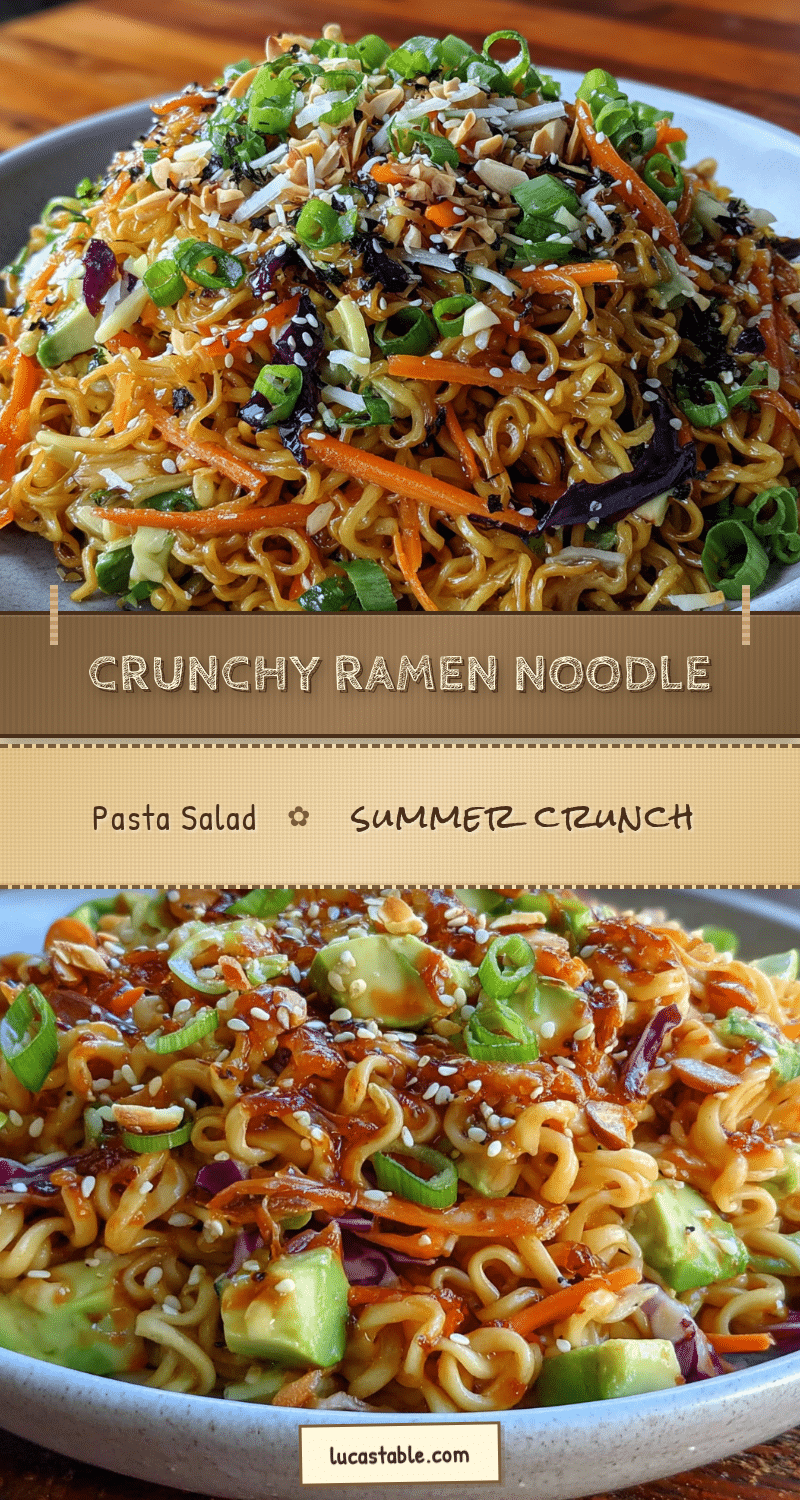
Crunchy Ramen Noodle Pasta Salad with Easy Sesame Vinaigrette
This Crunchy Ramen Noodle Pasta Salad is a crowd-pleasing potluck favorite with toasted ramen, crisp cabbage, and a tangy-sweet sesame vinaigrette. It comes together in under 20 minutes and stays crunchy even after sitting out.
- Prep Time: 15 minutes
- Cook Time: 5 minutes
- Total Time: 20 minutes
- Yield: 6 servings 1x
- Category: Salad
- Cuisine: American
Ingredients
- 2 packages ramen noodles (discard seasoning packets)
- 1/4 cup slivered almonds
- 1/4 cup sunflower seeds
- 1 small head green cabbage (about 4 cups shredded)
- 3 green onions, sliced thin
- 1/2 cup vegetable oil
- 3 tablespoons rice vinegar
- 2 tablespoons soy sauce
- 2 tablespoons honey
- 1 tablespoon sesame oil
- 1 clove garlic, minced
- 1/2 teaspoon black pepper
Instructions
- Toast the ramen noodles: Break each block of ramen into small pieces (about quarter-sized). Heat a large skillet over medium heat and add the broken ramen pieces. Stir frequently for 4-5 minutes until light golden brown and nutty. Watch carefully to avoid burning.
- Toast the almonds and sunflower seeds: In the same skillet, add slivered almonds and sunflower seeds. Toast over medium heat for 2-3 minutes, stirring constantly, until almonds are golden and fragrant. Remove from pan immediately.
- Shred the cabbage: Cut the head of cabbage in half through the core, remove the core, and slice into thin ribbons (about 1/4 inch thick). Aim for about 4 cups total.
- Slice the green onions: Cut off root ends and dark green tops (reserve for garnish). Slice remaining white and light green parts into thin rings.
- Make the dressing: In a small jar or bowl, combine 1/2 cup vegetable oil, 3 tablespoons rice vinegar, 2 tablespoons soy sauce, 2 tablespoons honey, 1 tablespoon sesame oil, 1 minced garlic clove, and 1/2 teaspoon black pepper. Shake or whisk vigorously for about 30 seconds until combined and slightly thickened.
- Taste the dressing: Adjust sweetness or tanginess to preference—add more honey if too sharp, more vinegar if too sweet.
- Assemble the salad: In a large mixing bowl, combine shredded cabbage, sliced green onions, toasted almonds, and sunflower seeds. Pour about three-quarters of the dressing over the top and toss well with tongs or clean hands.
- Add the toasted ramen: Add toasted ramen pieces to the bowl and pour remaining dressing over them. Toss gently to combine without crushing the ramen too much.
- Let it sit: Allow the salad to rest at room temperature for 10-15 minutes before serving to let flavors meld.
- Garnish and serve: Sprinkle reserved dark green onion tops over the top for color. Serve immediately or within an hour for maximum crunch.
Notes
Toast ramen right before serving for maximum crunch. Don’t overdress the salad—start with three-quarters of the dressing and add more if needed. Let the salad sit for 10-15 minutes before serving to allow flavors to meld. For a vegan version, substitute honey with maple syrup. For gluten-free, use gluten-free ramen and tamari instead of soy sauce.
Nutrition
- Serving Size: 1 serving (about 1 c
- Calories: 335
- Sugar: 10
- Sodium: 480
- Fat: 22
- Saturated Fat: 3
- Carbohydrates: 28
- Fiber: 4
- Protein: 6
Keywords: ramen noodle salad, crunchy ramen salad, sesame vinaigrette, potluck salad, easy pasta salad