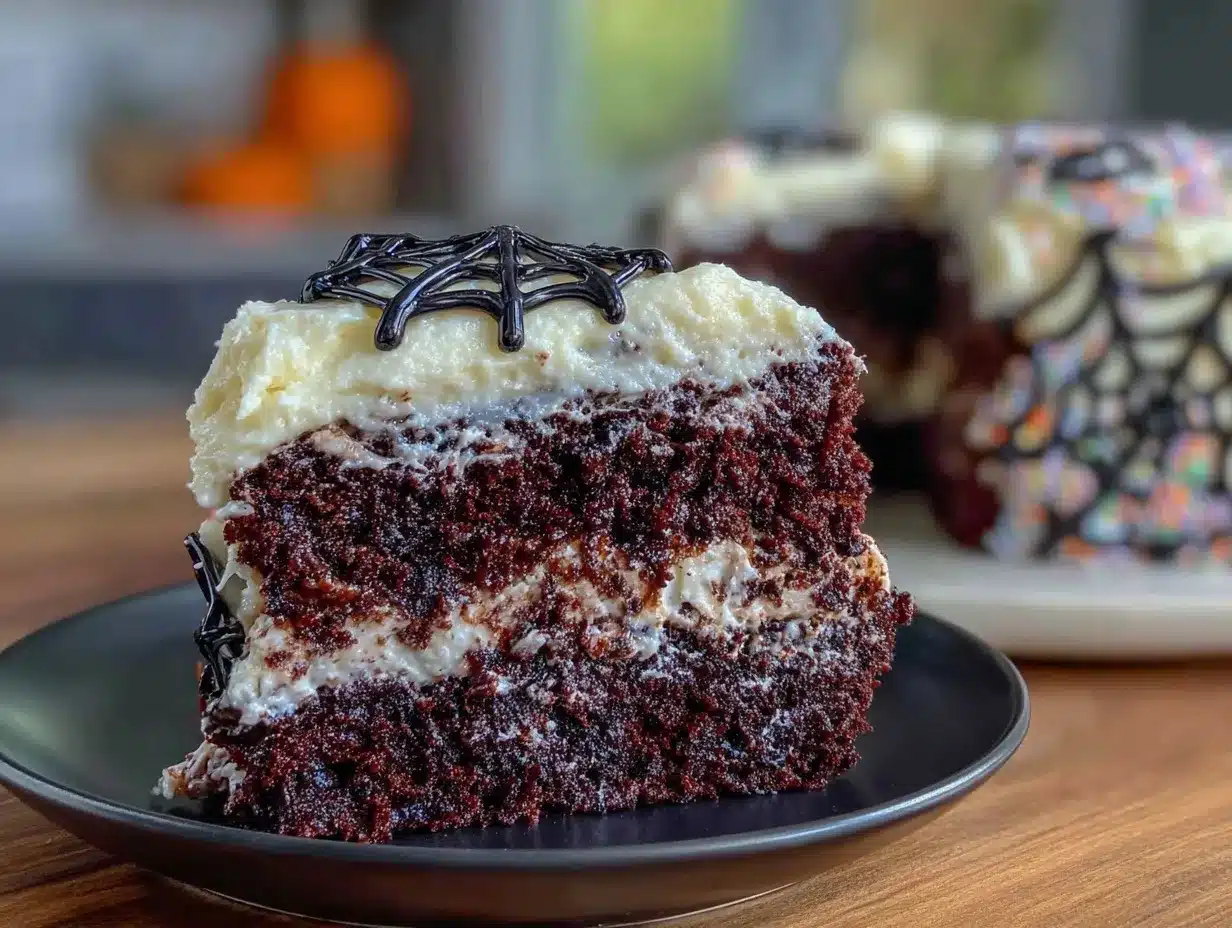
I ruined the crumb on my first three attempts at this decadent black velvet Halloween layer cake with spider web frosting. Honestly, I thought black velvet cake was just a gimmick—a spooky twist on red velvet—until I got it wrong so often that I nearly gave up. The layers came out either too dense or crumbly, and the frosting never looked like the eerie spider web I imagined. But then, after some stubborn trial and error (plus a few late-night kitchen messes), I finally nailed the texture and that creepy-cool design. It’s not just for Halloween parties; it’s the kind of cake that makes you pause, fork halfway to your mouth, and smile because it’s as delicious as it is fun to look at.
There’s something about the contrast—the deep, almost black cake layers paired with the delicate white spider web frosting—that feels like a little magic on a plate. This recipe stuck with me because it’s perfect for those moments when you want to surprise guests with something both dramatic and indulgent, without spending hours fussing in the kitchen. Plus, the frosting technique is easier than it looks (promise!). If you’ve ever felt intimidated by a layered cake, this one will quietly convince you it’s worth the effort—and maybe even fun.
So yeah, I botched it a few times, but that’s how I learned to make this decadent black velvet Halloween layer cake with spider web frosting just right. And now, it’s one of those recipes I reach for every October, no regrets.
Why You’ll Love This Recipe
After perfecting this recipe through a fair share of kitchen chaos, I can vouch for why the decadent black velvet Halloween layer cake with spider web frosting deserves a spot on your dessert table.
- Quick & Easy: The cake layers come together in under an hour, and the spider web frosting only takes minutes to pipe—ideal for last-minute Halloween celebrations.
- Simple Ingredients: You don’t need anything fancy; most items are pantry staples or easy to find at any grocery store.
- Perfect for Halloween Parties: The dramatic black color and spooky web design make it a showstopper that’s sure to impress kids and adults alike.
- Crowd-Pleaser: I’ve served this at gatherings where it vanished fast—people can’t resist the moist layers paired with smooth cream cheese frosting.
- Unbelievably Delicious: The black velvet base is richer and more chocolatey than your average red velvet, with a hint of cocoa that’s just right—not overpowering.
What sets this cake apart? The secret is in the balance: the black velvet batter is tender and moist, thanks to a precise mix of buttermilk and cocoa powder, while the cream cheese frosting is whipped just enough to be silky but firm enough to hold the spider web pattern. My twist? Using a fine tip piping bag for the frosting web that lets you create a delicate, almost hypnotic design without any professional skills.
This cake isn’t just dessert—it’s an experience. It’s the kind of treat that makes the spooky season a little sweeter and invites a quiet moment of delight amidst the Halloween chaos.
What Ingredients You Will Need
This decadent black velvet Halloween layer cake relies on a few straightforward ingredients that come together to create a strikingly dark, flavorful cake with silky frosting. The ingredients are mostly pantry staples, making it an easy bake for any home cook.
- For the Cake Layers:
- All-purpose flour – 2 ½ cups (315g), sifted for a light texture
- Unsweetened cocoa powder – ⅓ cup (30g), preferably Dutch-processed for that deep black hue
- Baking soda – 1 ½ teaspoons
- Salt – 1 teaspoon
- Unsalted butter – ¾ cup (170g), softened (I like using Land O’ Lakes for consistency)
- Granulated sugar – 1 ¾ cups (350g)
- Large eggs – 3, at room temperature
- Buttermilk – 1 cup (240ml), room temperature (if you don’t have buttermilk, mix 1 cup milk with 1 tablespoon lemon juice and let sit 5 minutes)
- Vanilla extract – 2 teaspoons, pure
- Black gel food coloring – 1 tablespoon, to deepen the black velvet shade without altering flavor
- White vinegar – 1 tablespoon (reacts with baking soda for tender crumb)
- For the Spider Web Frosting:
- Cream cheese – 8 ounces (225g), softened (use full-fat for best taste)
- Unsalted butter – ½ cup (115g), softened
- Powdered sugar – 3 cups (360g), sifted to avoid lumps
- Vanilla extract – 1 teaspoon
- Milk – 1-2 tablespoons, as needed for consistency
Seasonal twist: If you want to give the cake a subtle autumnal flavor, add a pinch of cinnamon or a teaspoon of espresso powder to the batter—it enhances the cocoa notes beautifully. For a dairy-free option, swap the butter and cream cheese for plant-based alternatives, and use coconut milk instead of buttermilk (though the texture will change slightly).
Equipment Needed
To make this decadent black velvet Halloween layer cake with spider web frosting, you’ll want a few basic tools—and a couple of specialized ones to nail the look and texture.
- Two 8-inch (20cm) round cake pans – non-stick or well-greased to avoid any layer disasters
- Mixing bowls – one large for the batter, one medium for the frosting
- Electric mixer – a stand mixer works best, but a hand mixer will do just fine
- Sifter or fine mesh sieve – for flour and powdered sugar, helps keep the texture light
- Rubber spatula – essential for folding and scraping the bowl clean
- Piping bag with a small round tip (size #2 or #3) – this is the secret weapon for the spider web frosting design
- Cooling racks – to cool the cake layers evenly and prevent sogginess
- Offset spatula or butter knife – for spreading frosting smoothly between layers and on the cake exterior
If you don’t own a piping bag, you can use a resealable plastic bag with a tiny corner snipped off—just make sure the opening is small enough to pipe thin lines. Also, keeping the cream cheese and butter at true room temperature (not too warm or cold) is crucial, so tools like a quick thermometer help if you want to get technical.
Preparation Method
- Preheat your oven to 350°F (175°C) and grease your two 8-inch cake pans. Line the bottoms with parchment paper rounds for easy release.
- Mix the dry ingredients: In a medium bowl, sift together 2 ½ cups all-purpose flour, ⅓ cup cocoa powder, 1 ½ teaspoons baking soda, and 1 teaspoon salt. Set aside.
- Cream butter and sugar: In a large bowl, beat ¾ cup softened unsalted butter with 1 ¾ cups granulated sugar until light and fluffy, about 3-4 minutes on medium speed. This step traps air for a tender crumb.
- Add eggs, one at a time: Beat in 3 large eggs, one by one, mixing well after each addition. The batter might look a bit curdled—that’s normal.
- Mix wet ingredients: In a small bowl, combine 1 cup buttermilk, 2 teaspoons vanilla extract, 1 tablespoon white vinegar, and 1 tablespoon black gel food coloring. Stir gently to blend.
- Alternate adding dry and wet: Add the dry ingredients in three additions, alternating with the buttermilk mixture in two additions, beginning and ending with dry. Mix on low speed just until combined—overmixing can toughen the cake.
- Divide and bake: Pour batter evenly into prepared pans. Smooth tops with a spatula. Bake 28-32 minutes or until a toothpick inserted in the center comes out clean. Resist opening the oven early to avoid sinking.
- Cool completely: Let cakes rest in pans for 10 minutes, then turn out onto cooling racks to cool fully. This prevents the frosting from melting on contact.
- Prepare the frosting: Beat together 8 ounces softened cream cheese and ½ cup softened butter until smooth and creamy. Gradually add 3 cups powdered sugar and 1 teaspoon vanilla, beating on low then high until fluffy. Add milk, 1 tablespoon at a time, to reach pipeable consistency.
- Assemble the cake: Place one cake layer on your serving plate. Spread a generous layer of frosting evenly on top. Place the second cake layer on top. Cover the entire cake with a thin crumb coat and chill for 20 minutes.
- Final frosting layer: Apply a smooth, even coat of frosting over the chilled cake.
- Create the spider web: Using a piping bag fitted with a small round tip, pipe concentric circles of frosting on the top of the cake. Then, drag a toothpick or skewer from the center outwards to the edge, repeating four to six times to form the web pattern. It’s easier than it sounds once you try.
- Chill again: Refrigerate the cake for at least 30 minutes to set the frosting before serving.
Tip: If your batter looks a bit thick, a splash of extra buttermilk can help. And don’t rush the frosting—soft cream cheese frosting is easier to pipe than cold, but if it gets too soft, pop it back in the fridge briefly.
Cooking Tips & Techniques
From my many trials, a few tips can save you from common missteps when making this decadent black velvet Halloween layer cake with spider web frosting.
- Use Dutch-process cocoa: It gives the cake that deep black color without bitterness. Regular cocoa can make the cake taste harsh.
- Room temperature ingredients: Make sure eggs, butter, and buttermilk are at room temperature for better mixing and smoother batter texture.
- Don’t overmix: Mix just until combined to keep the layers tender. Overmixing activates gluten and makes the cake dense.
- Test your oven temperature: An oven thermometer helps avoid overbaking or underbaking. I once ruined a batch because my oven ran hot!
- Crumb coat the cake: Applying a thin layer of frosting and chilling before the final coat minimizes crumbs in your frosting and keeps the spider web neat.
- Frosting consistency matters: If your frosting is too soft, it won’t hold the design. If too stiff, it can be hard to pipe. Adjust with milk or powdered sugar accordingly.
- Practice your web: Try piping concentric circles on parchment paper before the cake to get comfortable with the motion.
- Multitasking: While the cake bakes, prep the frosting ingredients to save time.
Variations & Adaptations
Want to tweak this decadent black velvet Halloween layer cake with spider web frosting? Here are some ways to make it your own:
- Flavor twists: Add a teaspoon of espresso powder to the batter for a mocha undertone, or swap vanilla extract with almond extract for a nutty note.
- Gluten-free option: Use a 1:1 gluten-free baking flour blend in place of all-purpose flour, and add a teaspoon of xanthan gum if your blend doesn’t include it.
- Frosting alternatives: Replace cream cheese frosting with a vegan buttercream for dairy-free needs, or use chocolate ganache for a richer topping (though the spider web design will be more challenging).
- Different designs: Instead of a spider web, pipe little ghost or pumpkin shapes using colored frosting to switch up the Halloween vibe.
- Seasonal fruit: Layer fresh blackberries or raspberries between cake layers for bursts of tartness that complement the richness.
Personally, I tried adding a splash of orange zest into the frosting last year, which gave it a subtle citrus brightness that cut through the richness nicely. It was surprisingly good and festive!
Serving & Storage Suggestions
This decadent black velvet Halloween layer cake is best served chilled or at room temperature. The frosting holds its shape better when cool, but letting it sit out for 20 minutes before slicing softens the cream cheese for the perfect mouthfeel.
For presentation, place the cake on a dark or rustic wooden board to highlight the stark contrast of the black velvet and white web. Pair it with warm drinks like spiced apple cider or a bold coffee to complement the cake’s richness.
Store leftover cake covered in the refrigerator for up to 4 days. To freeze, wrap tightly in plastic wrap and foil, and freeze for up to 2 months. Thaw overnight in the fridge before serving.
When reheating slices, avoid the microwave if possible—cream cheese frosting can get grainy. Instead, let the slice soften at room temperature or warm gently in a low oven wrapped in foil.
Flavors actually deepen after a day or two, so if you can wait, the cake tastes even better the next day.
Nutritional Information & Benefits
One slice (1/12th of cake) of this decadent black velvet Halloween layer cake contains approximately:
| Calories | 380 |
|---|---|
| Fat | 22g |
| Saturated Fat | 13g |
| Carbohydrates | 44g |
| Sugar | 32g |
| Protein | 4g |
Key ingredients like cocoa powder provide antioxidants, and cream cheese adds calcium and protein. Using buttermilk contributes to a tender crumb and adds a touch of vitamin B12. This cake is gluten-containing and has dairy, so it’s not suitable for those with those allergies.
While this isn’t a health food (let’s be honest!), it’s a treat worth savoring mindfully. I appreciate that the recipe keeps things simple—no artificial additives—and relies on real ingredients.
Conclusion
This decadent black velvet Halloween layer cake with spider web frosting is the kind of recipe that rewards patience and curiosity. It’s rich, moist, and visually captivating without demanding professional baking skills. What I love most is how it turns a simple celebration into a memorable moment, whether it’s for family, friends, or just a sweet indulgence on a spooky night.
Feel free to make it your own—switch up the flavors, change the design, or add your favorite seasonal touches. I’d love to hear how you customize this cake and what moments you share it with.
If you’re interested in quick dinner ideas after a busy Halloween day in the kitchen, you might want to check out the quick zesty lemon chicken recipe or the easy spaghetti aglio olio for fast, tasty meals.
Happy baking—and may your Halloween be as sweet and spooky as this cake!
Frequently Asked Questions
What makes this cake “black velvet” instead of “red velvet”?
Black velvet cake uses more cocoa powder and black food coloring to create a deep black color, while red velvet is lighter with red food coloring and less cocoa. The black velvet version has a richer chocolate flavor and a dramatic appearance.
Can I make this cake ahead of time?
Absolutely. You can bake the layers a day or two in advance, wrap them tightly, and refrigerate. Assemble and frost the cake the day you plan to serve it for the best freshness and design.
How do I prevent the frosting from melting while decorating?
Keep the cream cheese and butter properly chilled before mixing. If your kitchen is warm, refrigerate the frosting for 15 minutes before piping. Also, work quickly but gently when creating the spider web.
Can I use a different frosting for the spider web design?
Cream cheese frosting works best because it’s firm yet smooth. Buttercream can work but might be softer and harder to pipe sharply. Ganache isn’t ideal for spider web piping as it sets too quickly.
What’s the best way to store leftover cake?
Store in an airtight container in the refrigerator for up to 4 days. You can freeze it wrapped well for up to 2 months, then thaw overnight in the fridge before serving.
Pin This Recipe!
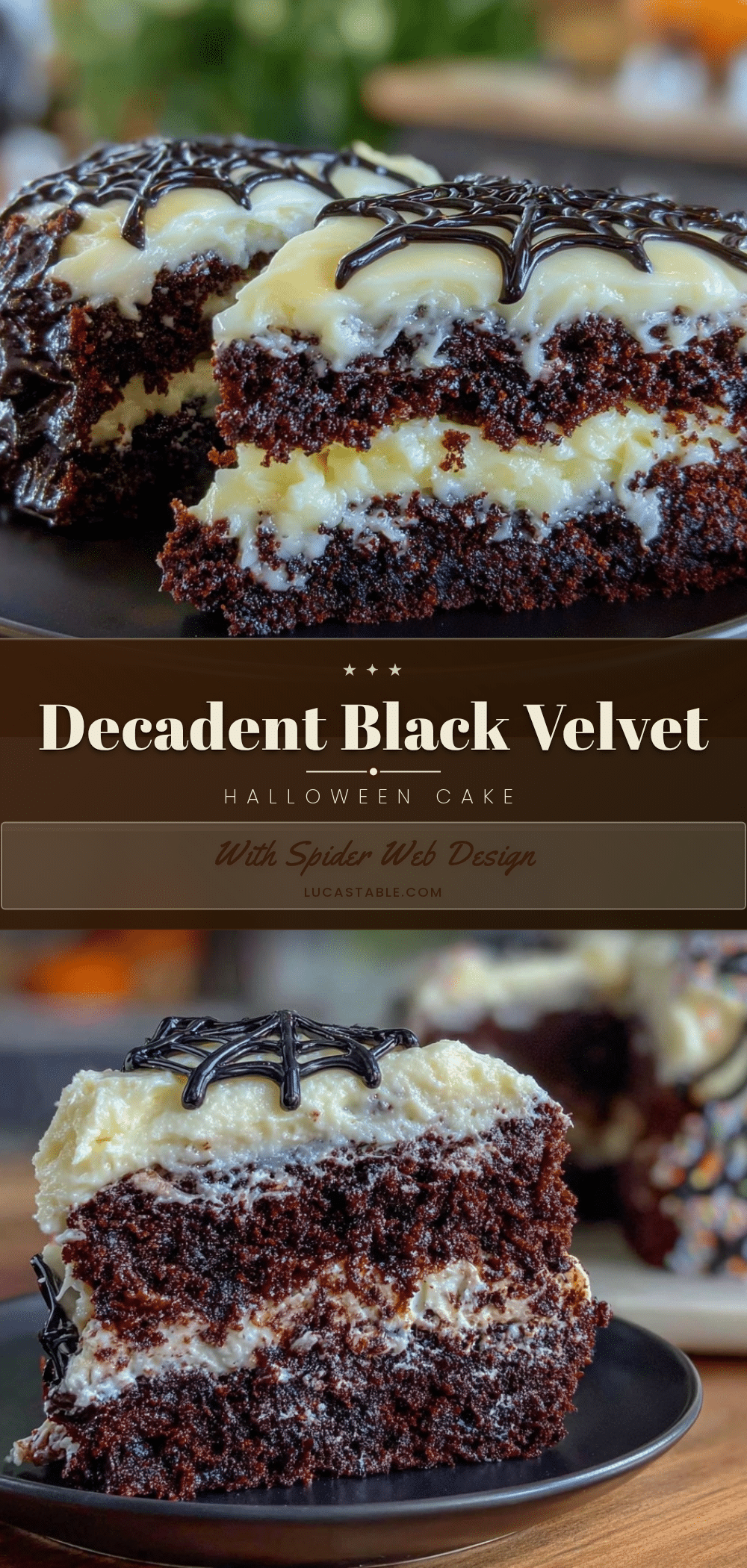
Decadent Black Velvet Halloween Layer Cake Recipe with Easy Spider Web Frosting
A rich, moist black velvet cake with a dramatic deep black color paired with silky cream cheese spider web frosting, perfect for Halloween parties and celebrations.
- Prep Time: 20 minutes
- Cook Time: 30 minutes
- Total Time: 50 minutes
- Yield: 12 servings 1x
- Category: Dessert
- Cuisine: American
Ingredients
- 2 ½ cups (315g) all-purpose flour, sifted
- ⅓ cup (30g) unsweetened cocoa powder, preferably Dutch-processed
- 1 ½ teaspoons baking soda
- 1 teaspoon salt
- ¾ cup (170g) unsalted butter, softened
- 1 ¾ cups (350g) granulated sugar
- 3 large eggs, room temperature
- 1 cup (240ml) buttermilk, room temperature (or 1 cup milk + 1 tbsp lemon juice, let sit 5 minutes)
- 2 teaspoons pure vanilla extract
- 1 tablespoon black gel food coloring
- 1 tablespoon white vinegar
- 8 ounces (225g) cream cheese, softened
- ½ cup (115g) unsalted butter, softened
- 3 cups (360g) powdered sugar, sifted
- 1 teaspoon vanilla extract
- 1–2 tablespoons milk, as needed for consistency
Instructions
- Preheat oven to 350°F (175°C) and grease two 8-inch cake pans. Line bottoms with parchment paper.
- Sift together flour, cocoa powder, baking soda, and salt in a medium bowl; set aside.
- Beat softened butter and granulated sugar in a large bowl until light and fluffy, about 3-4 minutes.
- Add eggs one at a time, mixing well after each addition; batter may look curdled.
- In a small bowl, combine buttermilk, vanilla extract, white vinegar, and black gel food coloring; stir gently.
- Add dry ingredients in three additions alternating with wet ingredients in two additions, beginning and ending with dry. Mix on low speed just until combined.
- Divide batter evenly between prepared pans and smooth tops. Bake 28-32 minutes or until a toothpick inserted in center comes out clean.
- Let cakes rest in pans for 10 minutes, then turn out onto cooling racks to cool completely.
- Beat cream cheese and softened butter until smooth. Gradually add powdered sugar and vanilla, beating until fluffy. Add milk 1 tablespoon at a time to reach pipeable consistency.
- Place one cake layer on serving plate and spread a generous layer of frosting on top. Add second layer and cover entire cake with a thin crumb coat. Chill for 20 minutes.
- Apply a smooth, even final coat of frosting over chilled cake.
- Using a piping bag with a small round tip, pipe concentric circles of frosting on top of cake. Drag a toothpick or skewer from center outward 4-6 times to create spider web pattern.
- Refrigerate cake for at least 30 minutes to set frosting before serving.
Notes
Use Dutch-process cocoa for deep black color without bitterness. Keep ingredients at room temperature for best texture. Do not overmix batter to avoid dense cake. Chill frosting if too soft for piping. Practice piping spider web on parchment paper before decorating cake. Batter can be thinned with extra buttermilk if too thick.
Nutrition
- Serving Size: 1 slice (1/12th of c
- Calories: 380
- Sugar: 32
- Fat: 22
- Saturated Fat: 13
- Carbohydrates: 44
- Protein: 4
Keywords: black velvet cake, Halloween cake, spider web frosting, layered cake, cream cheese frosting, spooky dessert, chocolate cake