My friend Jenna asked why I couldn’t just skip the searing step and throw the pork tenderloin straight into the apple cider. I started to explain why that wouldn’t work — something about the Maillard reaction and locked-in juices. Then I stopped. Honestly, I had never actually tried it her way. I was just repeating what I’d always been told. So, on a random Tuesday, with the rain tapping against my kitchen window, I did exactly what she suggested. No browning. Just a raw tenderloin, nestled into a bath of bubbling apple cider with a few aromatics tossed in for good measure.
I braced myself for a pale, sad piece of meat. What came out of the oven was the most tender, flavorful pork I had ever made. The meat was so soft it practically fell apart under the fork, and the cider had reduced into this silky, lightly sweet sauce that didn’t need any thickening. I mean, I was genuinely annoyed at how easy it was. All those years of hovering over a hot skillet, splattering oil everywhere, for what? Jenna, who barely cooks, had stumbled onto something brilliant. The teacher became the student, and I’ve never gone back to the old way since.
Maybe you’ve been there — so sure of a technique that you never question it. This Easy Apple Cider Braised Pork Tenderloin is proof that sometimes the simplest path is the best one. It’s a weeknight dinner that feels like a Sunday supper, and it all starts with letting go of a little kitchen dogma. You just need a good bottle of cider and a willingness to be wrong.
Why You’ll Love This Recipe
I’ve tested this Easy Apple Cider Braised Pork Tenderloin at least a dozen times now, tweaking the cider ratio, playing with the herbs, and even trying it with different cuts of meat. This version is the one I keep coming back to, and here is exactly why it works so well.
- Incredibly Tender: The slow braise in apple cider breaks down the meat’s fibers without drying it out. You get a fork-tender result every single time, no special skills required.
- Simple Ingredients: You likely have garlic, thyme, and butter in your kitchen right now. The star of the show is just good apple cider — nothing fancy or hard to find.
- Perfect for Fall Weeknights: When the weather turns cool, this dish brings all the cozy vibes without keeping you stuck in the kitchen for hours. It’s mostly hands-off after the initial prep.
- Naturally Healthier: Because you skip the oil-heavy sear and rely on the cider’s moisture, this is a lighter way to enjoy pork. It fits perfectly into a balanced meal plan without sacrificing flavor.
- Always Impresses: The glossy, golden sauce looks like you fussed for ages. Guests always think this is a complicated restaurant dish, and I just smile and nod.
What makes this recipe different from other braised pork dishes is the technique — or lack thereof. By skipping the sear, you avoid any risk of overcooking the outside while the inside stays raw. The pork cooks gently in the cider, absorbing all that fruity sweetness while staying incredibly moist. It’s not just another pork recipe; it is the one that finally convinced me that less work can mean more flavor.
What Ingredients You Will Need
This recipe relies on a handful of pantry-friendly ingredients that come together to create something truly special. The apple cider does double duty here — it tenderizes the meat and becomes the base for a rich, silky sauce.
- Pork Tenderloin (1 to 1.5 pounds): Look for a tenderloin that is evenly thick so it cooks consistently. I prefer buying from a local butcher when I can, but any good-quality supermarket brand works fine. Trim off any silver skin before cooking.
- Apple Cider (2 cups): Use unfiltered apple cider for the best flavor. Not apple juice — cider has more body and a deeper, tangier taste that reduces beautifully. I like the brand from my local orchard, but Martinelli’s is a reliable grocery store option.
- Garlic (4 cloves, smashed): Smashing the cloves releases their oils without mincing them too fine, which keeps them from burning during the braise. You want them soft and mellow by the end.
- Fresh Thyme (4-5 sprigs): The earthy, slightly floral notes of thyme balance the sweetness of the cider perfectly. Dried thyme can work in a pinch, but fresh really shines here.
- Butter (2 tablespoons, unsalted): This gets whisked into the sauce at the very end for a glossy finish and a touch of richness. Use a good-quality butter like Kerrygold for the best taste.
- Salt and Black Pepper: Generous seasoning is key. Don’t be shy — pork tenderloin needs a good amount of salt to bring out its natural flavor. Use freshly cracked black pepper for a little bite.
- Optional: Dijon Mustard (1 teaspoon): Stirring this into the finished sauce adds a subtle tang that cuts through the sweetness. It’s not traditional, but I love the little kick it gives.
For the best results, make sure your pork is at room temperature before it goes into the oven. Cold meat will cook unevenly, even in a gentle braise. If you need a dairy-free option, you can swap the butter for a tablespoon of olive oil at the end, though the sauce won’t be quite as silky.
Equipment Needed
You don’t need a lot of fancy gear for this one, which is part of its charm.
- Dutch Oven or Heavy-Bottomed Pot: A 5- to 6-quart Dutch oven is ideal because it holds heat evenly and has a tight-fitting lid. Le Creuset is lovely, but a Lodge cast iron pot is just as effective and much more affordable.
- Meat Thermometer: This is non-negotiable for pork tenderloin. You want to pull it at 145°F for perfectly juicy meat. I’ve ruined plenty of tenderloins by guessing — trust the thermometer.
- Chef’s Knife: A sharp knife makes trimming the silver skin a breeze. A dull knife is a recipe for frustration and accidental cuts.
- Cutting Board: Use a sturdy board for trimming the pork. I prefer wood or bamboo, but plastic is fine too.
- Tongs: For handling the hot tenderloin when it comes out of the oven. Silicone-tipped ones won’t scratch your pot.
If you don’t have a Dutch oven, a deep oven-safe skillet with a lid works just as well. Just make sure it can go in the oven without the handle melting. I learned that one the hard way with a cheap pan.
Preparation Method
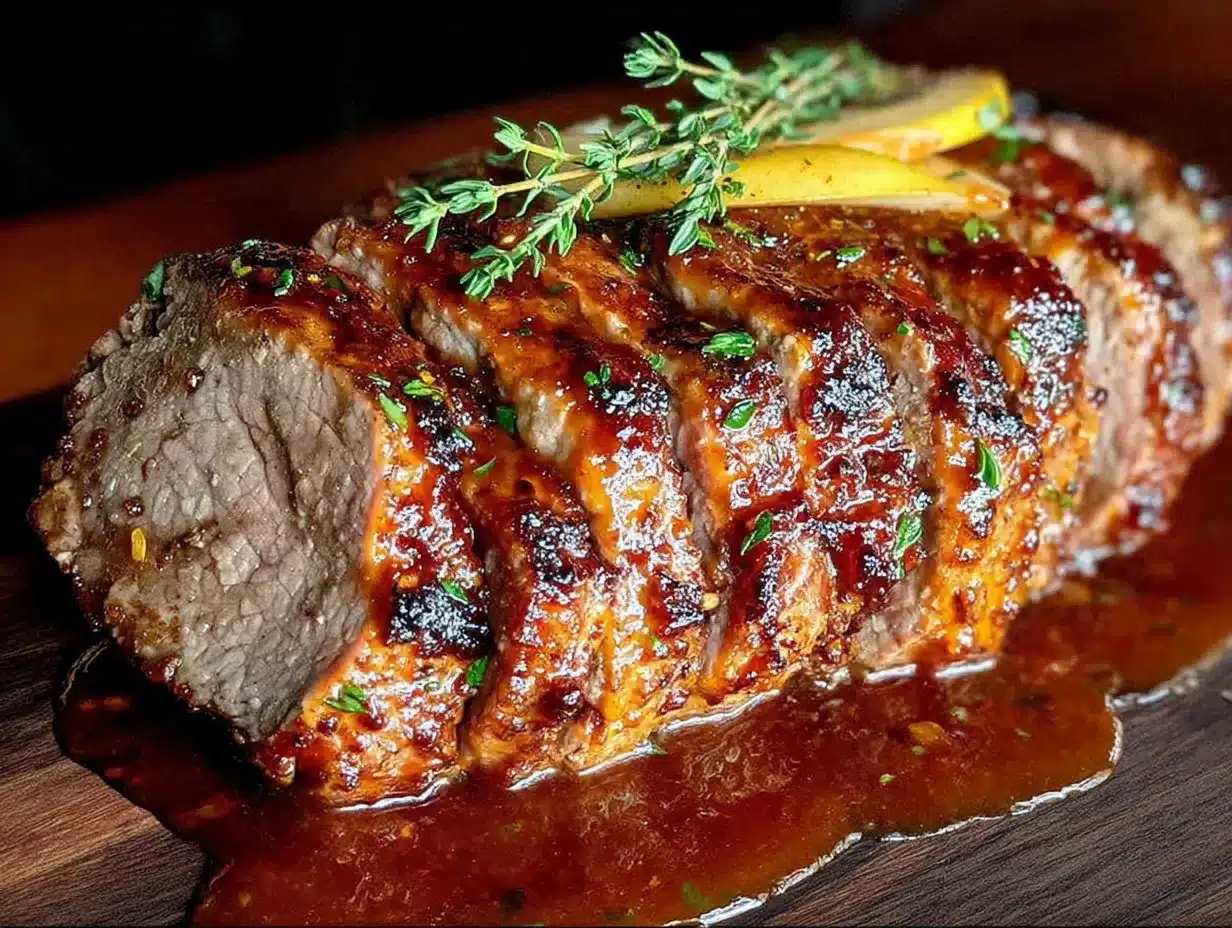
This method is almost embarrassingly simple, but the results are anything but. Follow these steps, and you’ll have a dinner that tastes like you spent hours in the kitchen.
- Preheat your oven to 325°F (163°C). While it heats, take the pork tenderloin out of the fridge and let it sit on the counter for about 20 minutes. This helps it cook more evenly.
- Trim the tenderloin. Use your chef’s knife to remove any silver skin — that thin, shiny membrane on the surface. It gets chewy when cooked, so take your time here. Pat the meat dry with paper towels, then season generously on all sides with salt and pepper.
- Prepare the braising liquid. In your Dutch oven, combine the 2 cups of apple cider, the smashed garlic cloves, and the fresh thyme sprigs. Give it a little stir. The cider should come about halfway up the sides of the pot — if your pot is wider, you might need a splash more cider.
- Add the pork. Place the seasoned tenderloin directly into the cider mixture. It’s okay if the top of the meat isn’t fully submerged — the steam from the covered pot will cook it through. This is the moment where you trust the process.
- Cover and braise. Put the lid on the Dutch oven and place it in the preheated oven. Let it cook for 35 to 45 minutes. Check the internal temperature with your meat thermometer after 35 minutes. You are looking for 145°F (63°C) in the thickest part of the meat.
- Rest the meat. Once the pork hits 145°F, carefully transfer it to a cutting board using your tongs. Tent it loosely with foil and let it rest for 10 minutes. This step is crucial — it lets the juices redistribute so the meat stays moist when you slice it.
- Finish the sauce. While the pork rests, place the Dutch oven on the stovetop over medium heat. Bring the cider mixture to a simmer and let it reduce for 5 to 7 minutes, until it thickens slightly and becomes syrupy. Remove the thyme sprigs and smashed garlic cloves. Whisk in the 2 tablespoons of butter until it melts and the sauce looks glossy. If you are using the Dijon mustard, stir it in now.
- Slice and serve. Slice the rested pork tenderloin into medallions about 1-inch thick. Spoon the warm cider sauce over the top and serve immediately.
Visual cue: The sauce should coat the back of a spoon when it’s ready. If it looks too thin, let it simmer another minute or two. If it gets too thick, add a splash of water or cider to loosen it up.
Cooking Tips & Techniques
I’ve made this Easy Apple Cider Braised Pork Tenderloin enough times to know where things can go sideways. Here are the lessons I learned the hard way so you don’t have to.
Don’t skip the rest. I know it’s tempting to slice right into that beautiful pork, but resting is what keeps it juicy. The first time I made this, I was so excited that I cut into it immediately, and all those lovely juices ran out onto the cutting board. It was still tasty, but nowhere near as tender as it could have been. Set a timer if you have to.
Watch your cider. Not all apple ciders are created equal. Some are much sweeter than others, which can make the sauce cloying. If you end up with a very sweet cider, add a tiny splash of apple cider vinegar to the sauce at the end to balance it out. I keep a bottle of Bragg’s on hand just for this purpose.
Low and slow is your friend. The oven temperature matters here. 325°F is gentle enough to cook the pork through without toughening it. I once tried to speed things up at 375°F, and the pork came out dry on the outside and still a bit raw in the center. Patience pays off with this dish.
Use a shallow pot for better flavor. If your Dutch oven is too tall and narrow, the cider won’t evaporate enough during the braise, and you’ll end up with a watery sauce. A wider, shallower pot allows for better reduction. That’s why I love my 5.5-quart round Dutch oven for this recipe.
Double the sauce if you love it. The sauce is honestly the best part. If you are serving this with mashed potatoes or rice, you’ll want extra. Just use 3 cups of cider instead of 2, and let it reduce a little longer at the end.
Variations & Adaptations
This recipe is a great base for experimentation. Here are a few ways I’ve changed it up depending on what I had on hand or who I was cooking for.
Apple and Onion Version: Slice one medium onion and one apple (Honeycrisp or Fuji work well) into thick rounds. Lay them in the bottom of the pot before adding the cider and pork. The onions get soft and sweet, and the apple chunks break down into the sauce. It adds a lovely texture and extra flavor.
Herb Swap: If you don’t have fresh thyme, try rosemary or sage instead. Rosemary gives the dish a more savory, piney note, while sage adds an earthy warmth that pairs beautifully with apple. Use about 2 sprigs of rosemary or 4 fresh sage leaves.
Spiced Cider Twist: Add a cinnamon stick, 2 star anise pods, and a few slices of fresh ginger to the braising liquid. This turns the dish into something almost festive — perfect for a fall dinner party. The spices infuse the pork with a warm, aromatic flavor that is absolutely incredible.
Mustard-Cider Finish: For a tangier sauce, stir in 2 tablespoons of whole-grain mustard right at the end, along with the butter. The mustard seeds add a pop of texture, and the vinegar cuts through the sweetness beautifully. This is my go-to version when I want something a little more sophisticated.
Slow Cooker Adaptation: You can absolutely make this in a slow cooker. Just place the seasoned pork in the slow cooker, pour the cider over the top, and add the garlic and thyme. Cook on low for 4 to 5 hours or on high for 2 to 3 hours. The sauce won’t reduce as much, so you’ll want to transfer it to a saucepan and simmer it on the stovetop for 10 minutes to thicken it before serving.
Serving & Storage Suggestions
This Easy Apple Cider Braised Pork Tenderloin is wonderful on its own, but the right sides can turn it into a memorable meal.
Serving Temperature: Serve the pork warm, right after resting. The sauce should be hot and glossy when you pour it over the sliced meat. I like to serve it on a warm platter to keep everything at the right temperature.
What to Serve With It: Mashed potatoes are a classic choice — the creamy texture soaks up the cider sauce perfectly. Roasted vegetables like carrots, Brussels sprouts, or butternut squash also work beautifully. For a lighter option, try a simple arugula salad with a lemon vinaigrette to cut through the richness. A side of crusty bread is non-negotiable in my house; you will want to mop up every drop of that sauce.
Storage Instructions: Store leftover pork and sauce together in an airtight container in the refrigerator for up to 4 days. The flavors actually deepen overnight, making leftovers even better. I often make a double batch just for this reason.
Reheating Tips: The best way to reheat is gently on the stovetop. Place the pork and sauce in a small skillet over low heat, cover, and warm for 5 to 7 minutes, turning once. You can also use the microwave, but be careful not to overheat the pork or it will dry out. Add a splash of water or cider if the sauce has thickened too much in the fridge.
Freezer Notes: This dish freezes well for up to 3 months. Let it cool completely, then transfer to a freezer-safe container. To serve, thaw overnight in the refrigerator and reheat gently on the stovetop. The texture of the pork remains surprisingly tender after freezing.
Nutritional Information & Benefits
This dish is a great option for anyone looking for a satisfying meal that doesn’t weigh you down. Pork tenderloin is one of the leanest cuts of pork, making it a smart choice for a balanced diet.
Estimated Nutritional Values (per serving, based on 4 servings):
| Nutrient | Amount |
|---|---|
| Calories | 290 |
| Protein | 32g |
| Fat | 12g |
| Saturated Fat | 5g |
| Carbohydrates | 12g |
| Sugar | 10g |
| Sodium | 480mg |
Health Benefits: Pork tenderloin is an excellent source of high-quality protein, which supports muscle health and keeps you feeling full. It is also rich in B vitamins, particularly B6 and B12, which are important for energy metabolism. Apple cider contains antioxidants and may help with digestion. By skipping the heavy searing oil, this recipe keeps the fat content moderate while still delivering on flavor.
Dietary Considerations: This recipe is naturally gluten-free and can be made dairy-free by using olive oil instead of butter. It is also low in carbs, with most of the carbohydrates coming from the natural sugars in the cider. If you are watching your sugar intake, look for a cider with no added sugar.
Allergen Note: This recipe contains dairy (butter). For a dairy-free version, simply omit the butter or use a plant-based alternative. The sauce will still be delicious, just slightly less rich.
Conclusion
This Easy Apple Cider Braised Pork Tenderloin has become a staple in my kitchen for all the right reasons. It is forgiving enough for a beginner but impressive enough for a dinner party. The fact that it comes together with minimal effort and delivers maximum flavor is something I still can’t quite get over. Every time I make it, I think of Jenna and her simple question that changed the way I cook pork forever.
I encourage you to make this recipe your own. Play with the herbs, add some spices, or double the sauce if you are a sauce person like me. The beauty of this dish is that it welcomes adaptation. Whether you serve it on a busy weeknight or a cozy Sunday, I hope it brings you the same quiet satisfaction it brings me.
If you try this recipe, I would love to hear how it turned out. Drop a comment below and tell me about your own kitchen moments of being pleasantly wrong. And if you share it on social media, tag me so I can see your beautiful creation! Happy cooking, friends.
Frequently Asked Questions
Can I use apple juice instead of apple cider?
You can, but the flavor will be noticeably different. Apple juice is thinner and sweeter, with less acidity. The sauce won’t reduce as thickly, and the taste will be more one-dimensional. If you only have apple juice, add a teaspoon of lemon juice or apple cider vinegar to help balance the sweetness.
How do I know when the pork is done without a thermometer?
I really recommend using a meat thermometer for pork tenderloin — it is the only reliable way to avoid overcooking. However, if you don’t have one, the meat should feel firm but still have a little give when pressed. The juices should run clear when you poke it with a fork. When in doubt, err on the side of slightly undercooked; you can always put it back in the oven.
Can I make this recipe with a pork loin instead of tenderloin?
Yes, but the cooking time will be longer. Pork loin is a thicker cut and takes more time to become tender. You will need to braise it for about 1 hour to 1 hour 15 minutes at 325°F. Check the internal temperature — it should reach 145°F just like the tenderloin.
What if my sauce is too thin?
No problem at all. Simply transfer the sauce to a small saucepan and simmer it over medium-high heat for a few more minutes until it reduces to your desired consistency. You can also whisk in a slurry of 1 teaspoon cornstarch mixed with 1 tablespoon cold water to thicken it quickly.
Can I add vegetables to the pot while the pork braises?
Absolutely! Root vegetables like carrots, parsnips, and potatoes work wonderfully. Cut them into uniform chunks and add them to the pot around the pork before covering. They will cook in the cider and absorb all that wonderful flavor. Just be aware that they will soften quite a bit, so don’t cut them too small.
Pin This Recipe!
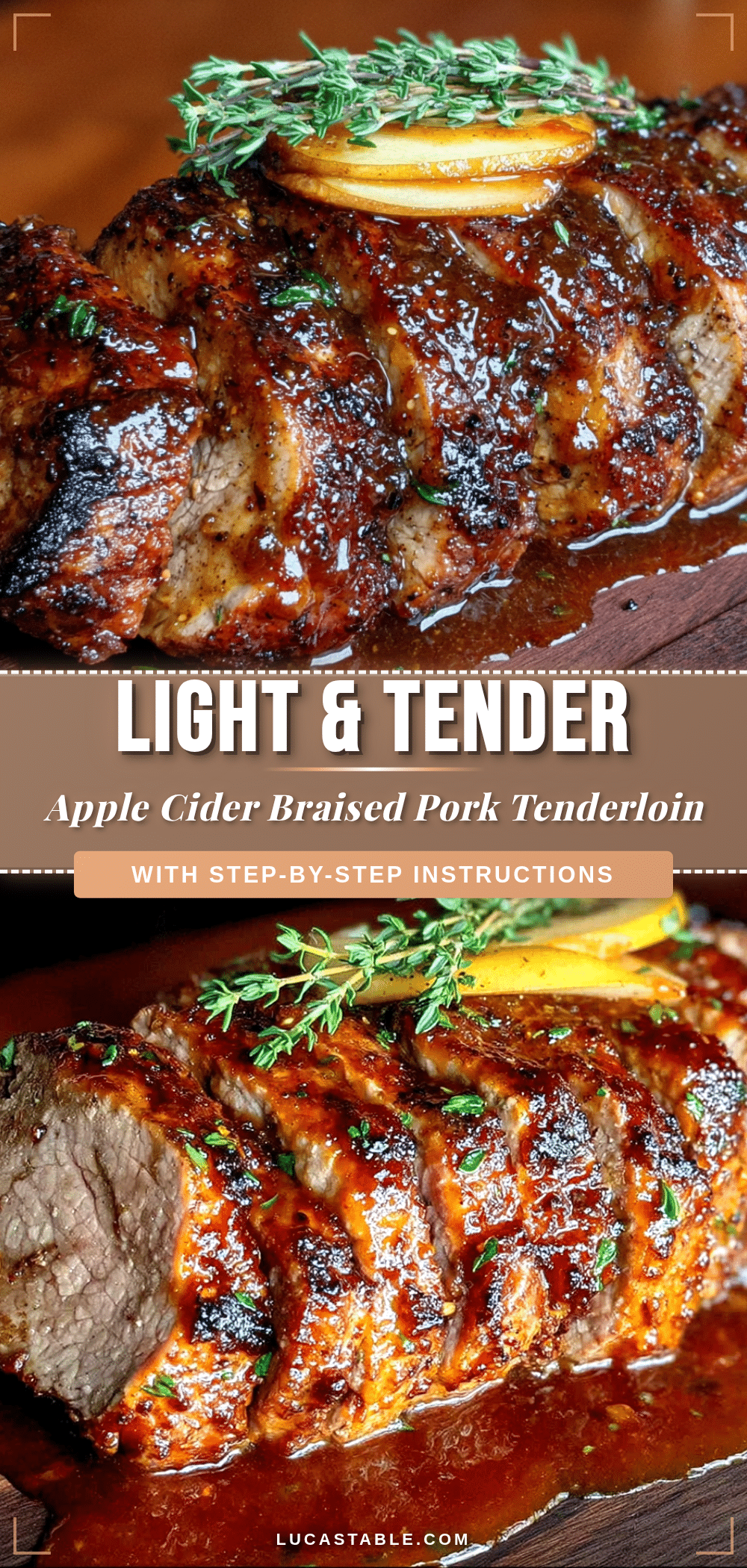
Easy Apple Cider Braised Pork Tenderloin Recipe
This incredibly tender pork tenderloin is braised in apple cider with garlic and thyme, resulting in a silky, lightly sweet sauce. It’s a simple, hands-off weeknight dinner that feels like a Sunday supper.
- Prep Time: 10 minutes
- Cook Time: 45 minutes
- Total Time: 55 minutes
- Yield: 4 servings 1x
- Category: Main Course
- Cuisine: American
Ingredients
- 1 to 1.5 pounds pork tenderloin
- 2 cups unfiltered apple cider
- 4 cloves garlic, smashed
- 4–5 sprigs fresh thyme
- 2 tablespoons unsalted butter
- Salt and black pepper to taste
- 1 teaspoon Dijon mustard (optional)
Instructions
- Preheat your oven to 325°F (163°C). Let the pork tenderloin sit at room temperature for about 20 minutes.
- Trim any silver skin from the tenderloin. Pat dry with paper towels and season generously with salt and pepper.
- In a Dutch oven, combine the apple cider, smashed garlic, and fresh thyme sprigs.
- Place the seasoned pork tenderloin into the cider mixture.
- Cover and braise in the preheated oven for 35 to 45 minutes, until the internal temperature reaches 145°F (63°C) in the thickest part.
- Transfer the pork to a cutting board, tent loosely with foil, and let rest for 10 minutes.
- While the pork rests, place the Dutch oven on the stovetop over medium heat. Simmer the cider mixture for 5 to 7 minutes until slightly thickened and syrupy. Remove the thyme sprigs and garlic cloves. Whisk in the butter until melted and glossy. Stir in Dijon mustard if using.
- Slice the pork into 1-inch medallions, spoon the warm sauce over the top, and serve immediately.
Notes
For best results, use unfiltered apple cider, not apple juice. Let the pork rest before slicing to keep it juicy. If the sauce is too thin, simmer longer; if too thick, add a splash of cider. For a dairy-free version, substitute butter with olive oil.
Nutrition
- Serving Size: 4 servings
- Calories: 290
- Sugar: 10
- Sodium: 480
- Fat: 12
- Saturated Fat: 5
- Carbohydrates: 12
- Protein: 32
Keywords: apple cider braised pork tenderloin, easy pork recipe, fall dinner, braised pork, pork tenderloin