Linda wasn’t trying to impress anyone. I’d stopped by her place on a Saturday morning to borrow a cake pan—mine had mysteriously vanished after a neighbor’s potluck—and the smell hit me before I even got through the screen door. It was rich, savory, and unmistakably breakfasty, with this deep, golden-cheese aroma that made my stomach growl in a way that was honestly a little embarrassing. She was standing there in her slippers, holding a spatula, looking at this bubbling casserole like it was no big deal. “Oh, that?” she said when I asked. “Just something I threw together for the kids’ brunch thing later.”
Let me tell you, that “something” was absolutely incredible. The edges were crispy and browned, the center was fluffy and packed with sausage, and the top was this glorious blanket of melted cheese that stretched with every pull of the fork. I stood there eating a piece straight from the dish—no plate, no shame—while she laughed and told me the recipe was basically “whatever you have in the fridge.” But I watched her make a second one the next weekend, and I took notes. You know that feeling when you taste something and immediately think, I need this in my life forever? That was this casserole.
This isn’t some fussy, complicated breakfast dish that requires a culinary degree. It’s the kind of recipe you make when you have a houseful of hungry people and you want to look like a hero without actually breaking a sweat. It’s become my go-to for every holiday morning, every brunch gathering, and honestly, some random Tuesday nights when I want breakfast for dinner. I’ve tweaked it a bit over the years—added a little more cheese, swapped in different meats, played with the seasonings—but the soul of Linda’s casual, no-big-deal casserole is still right there at the center.
Why You’ll Love This Recipe
Let me be real with you—I’ve tested this casserole more times than I can count. I’ve made it with different sausages, different cheeses, different breads, and even a few disastrous attempts at making it dairy-free (we don’t talk about those). This version is the one that gets requested every single time. Here is why it works so well, especially when you’re cooking for a crowd:
- Make-Ahead Magic : Assemble it the night before, pop it in the fridge, and bake it fresh in the morning. Perfect for holiday mornings when you have a million other things to do.
- Simple, Budget-Friendly Ingredients : Nothing fancy here—bread, eggs, sausage, cheese, milk. You probably have most of it in your kitchen right now.
- Total Crowd-Pleaser : I have yet to meet someone who doesn’t go back for seconds. Kids love it, adults love it, picky eaters love it. It’s like a breakfast peace treaty.
- Scales Beautifully : Need to feed twelve people? Double it. Need to feed twenty? Make two. It’s forgiving and flexible.
- Incredibly Satisfying : The combination of savory sausage, creamy eggs, and gooey cheese is pure comfort food. It’s the kind of dish that makes people close their eyes and sigh happily.
What makes this version different from the dozens of breakfast casseroles out there? It’s the texture. The bread stays soft and custard-like in the center while the edges get perfectly crispy and golden. The sausage is browned first, which adds a deep, savory flavor that you just don’t get from throwing raw meat into the dish. And the cheese—oh, the cheese. I use a combination of sharp cheddar and Monterey Jack, and I don’t skimp on it. This isn’t a diet casserole. This is a feed your soul casserole.
Honestly, this is the recipe I turn to when I want to impress without the stress. It’s the one I bring to potlucks, the one I make for Christmas morning, the one that makes people ask for the recipe every single time. And the best part? It’s almost impossible to mess up.
What Ingredients You Will Need
This recipe uses simple, everyday ingredients that come together to create something truly special. The beauty of this casserole is that you probably already have most of these items in your kitchen, and the ones you don’t are easy to find at any grocery store.
- 1 pound breakfast sausage : I prefer Jimmy Dean’s regular or mild sausage for its classic flavor, but any brand works. You can also use hot sausage for a spicy kick, or even Italian sausage if you want a different flavor profile. Just make sure to remove the casings if you’re using links.
- 8 large eggs : Room temperature eggs blend more smoothly into the custard. If you forget to take them out of the fridge, just place them in a bowl of warm water for 5 minutes.
- 2 cups whole milk : Whole milk gives the richest, creamiest texture. You can use 2% in a pinch, but avoid skim milk—the casserole won’t be as luscious. Half-and-half works beautifully for an extra-indulgent version.
- 1 teaspoon salt : Regular table salt is fine. If you use kosher salt, you might need a bit more—about 1 ½ teaspoons.
- ½ teaspoon black pepper : Freshly ground is always better, but pre-ground works perfectly fine.
- 1 teaspoon dry mustard powder : This is my secret ingredient. It doesn’t make the casserole taste like mustard—it just adds a subtle, savory depth that enhances the cheese and eggs. Trust me on this one.
- ½ teaspoon garlic powder : Not enough to be overpowering, just enough to add a little something extra.
- ¼ teaspoon smoked paprika : Optional, but I love the subtle smokiness it adds. Regular paprika works too.
- 8 cups cubed bread (about 1 loaf) : Day-old bread is ideal because it soaks up the custard without turning into complete mush. I use a crusty French bread or sourdough, but even plain white sandwich bread works in a pinch. Cut it into about 1-inch cubes.
- 2 cups shredded sharp cheddar cheese : Shred your own cheese if you can—it melts so much better than pre-shredded, which has anti-caking agents that prevent smooth melting. Sharp cheddar gives the most flavor.
- 1 cup shredded Monterey Jack cheese : This adds creaminess and that beautiful stretchy texture. You can substitute with mozzarella or even pepper jack for a little heat.
- ¼ cup chopped green onions (optional) : For a pop of color and a mild oniony freshness. Chives work great too.
A note on substitutions : If you’re cooking for someone who can’t have gluten, use a good quality gluten-free bread. I’ve had success with Udi’s and Canyon Bakehouse brands. For a lower-carb version, you can substitute the bread with frozen hash browns (thawed and patted dry), though the texture will be different—more potato-y and less custard-like. And if you want to make it dairy-free, I won’t lie to you—it’s tricky. The cheese is really the star here. But you can try using dairy-free cheese alternatives and unsweetened almond milk. Just know that the texture won’t be quite the same.
Equipment Needed
You don’t need a lot of fancy equipment for this recipe, which is part of its charm. Here is what you’ll need:
- 9×13-inch baking dish : This is the standard size for a breakfast casserole that serves 8-10 people. A metal or glass dish works fine. If you’re using glass, you might need to add 5-10 minutes to the baking time.
- Large skillet : For browning the sausage. A 12-inch skillet gives you plenty of room to break up the meat evenly.
- Large mixing bowl : For whisking the eggs and milk together. Any large bowl will do—I use my grandmother’s old ceramic one.
- Whisk : A good whisk makes blending the eggs smooth and effortless. A fork works in a pinch, but you’ll have to work a little harder.
- Cutting board and knife : For cubing the bread and chopping the green onions.
- Measuring cups and spoons : For accuracy, especially with the seasonings.
- Aluminum foil : For covering the casserole during the first part of baking to prevent the top from burning.
- Spatula or wooden spoon : For breaking up the sausage as it cooks.
If you don’t have a 9×13 dish, you can use two 8×8 dishes or even a large cast-iron skillet. Just keep an eye on the baking time—smaller dishes will cook faster, and a cast-iron skillet will conduct heat differently. I’ve made this casserole in a disposable aluminum pan for potlucks, and it works perfectly fine. No need to overthink the equipment.
Preparation Method
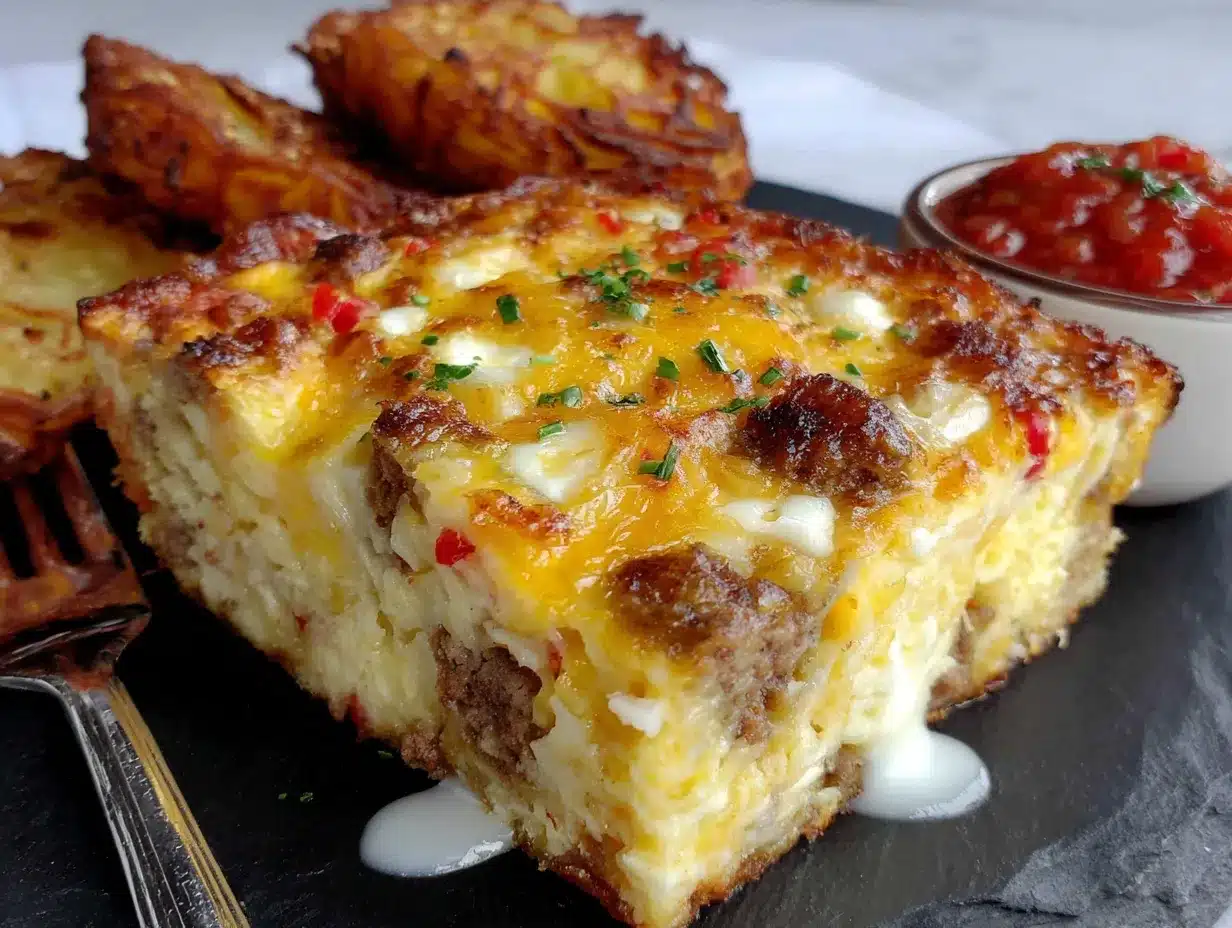
This recipe comes together in about 20 minutes of active prep time, then the oven does the rest. Here is exactly how to make it, step by step.
- Preheat your oven to 350°F (175°C). While it’s heating up, grease your 9×13-inch baking dish with butter or non-stick cooking spray. Don’t skip this step—trust me, you don’t want to be scrubbing baked-on egg later.
- Brown the sausage. Place your 9×13-inch baking dish on a sheet pan to catch any drips during baking. In a large skillet over medium-high heat, cook the breakfast sausage, breaking it up with a spatula as it browns. This should take about 5-7 minutes. You want it fully cooked with some nice browned bits—those little crispy pieces add so much flavor. Drain off any excess grease, but leave a little bit in the pan for flavor. Set the sausage aside to cool slightly.
- Cube the bread. While the sausage is cooking, cut your bread into 1-inch cubes. If you’re using fresh bread, you can toast the cubes in the oven for about 5 minutes to dry them out a bit—this helps them absorb the custard better without getting mushy. Day-old bread doesn’t need this step.
- Whisk the egg mixture. In your large mixing bowl, crack the 8 eggs and add the 2 cups of milk, 1 teaspoon salt, ½ teaspoon pepper, 1 teaspoon dry mustard powder, ½ teaspoon garlic powder, and ¼ teaspoon smoked paprika. Whisk vigorously until everything is completely combined and slightly frothy. This should take about a minute. Make sure there are no streaks of egg white—you want a uniform custard.
- Layer the casserole. Spread half of the bread cubes evenly in the bottom of your prepared baking dish. Sprinkle half of the cooked sausage over the bread. Sprinkle half of the shredded cheddar and half of the Monterey Jack cheese on top. Repeat with the remaining bread, sausage, and cheeses. This layering ensures every bite has a little bit of everything.
- Pour the custard. Slowly pour the egg and milk mixture evenly over the entire casserole. Use a fork or your fingers to gently press down on the bread cubes, making sure they all get soaked. Don’t worry if some bread sticks up above the liquid—those pieces will get wonderfully crispy in the oven.
- Let it rest (optional but recommended). If you have time, let the casserole sit at room temperature for about 15-20 minutes before baking. This allows the bread to absorb more of the custard. For an even better result, cover the dish with plastic wrap and refrigerate it overnight. The flavors meld together beautifully, and the texture becomes even more custard-like.
- Bake. Place the casserole in the preheated oven and bake for 45-55 minutes. After 30 minutes, check the top—if it’s browning too quickly, loosely cover the dish with aluminum foil for the remaining time. The casserole is done when the center is set (it should jiggle just slightly, like a cheesecake) and the top is golden brown and puffy. A knife inserted into the center should come out clean.
- Rest before serving. Let the casserole rest for 5-10 minutes after taking it out of the oven. This allows it to set up properly, making it easier to cut into clean squares. Sprinkle the chopped green onions on top for a fresh finish.
Sensory cues to watch for : When it’s done, the edges will be deeply golden and slightly crispy, the center will be puffed up and barely jiggly, and the whole kitchen will smell like the best breakfast you’ve ever had. The cheese on top should be bubbly and browned in spots. If the center still looks wet and soupy, give it another 5-10 minutes.
Cooking Tips & Techniques
After making this casserole more times than I can count, I’ve learned a few things the hard way. Here are my best tips for getting perfect results every time.
Don’t skip browning the sausage. I know it’s tempting to just crumble raw sausage into the dish and let it cook in the oven, but please don’t. Browning the sausage first develops deep, savory flavors through the Maillard reaction that you just can’t get any other way. Plus, it renders out the fat, which prevents your casserole from becoming greasy. I learned this lesson after one particularly sad, pale casserole that tasted like nothing.
Watch your liquid-to-bread ratio. This is the most common place where breakfast casseroles go wrong. Too much liquid and you get a soggy, soupy mess. Too little liquid and you get a dry, crumbly casserole. The 8 eggs and 2 cups of milk for 8 cups of bread is a ratio I’ve tested extensively—it’s the sweet spot. If you’re using a very dense bread like sourdough, you might need an extra splash of milk. If you’re using a light, airy bread like brioche, you might need slightly less.
Let it rest overnight if you can. I know not everyone plans ahead, but if you have the time, assembling this casserole the night before and letting it sit in the fridge transforms it into something truly special. The bread fully absorbs the custard, the flavors meld together, and the texture becomes incredibly creamy and uniform. It’s like the difference between a good casserole and a great one. Just add about 10 minutes to the baking time if you’re starting from cold.
Use a thermometer for precision. If you’re unsure whether the casserole is done, stick an instant-read thermometer into the center. It should read 160°F (71°C). This takes the guesswork out of it, especially if you’re making a larger or smaller batch.
Don’t overmix the eggs. When you whisk the eggs and milk together, you want them combined but not frothy. Over-whisking incorporates too much air, which can cause the casserole to puff up dramatically in the oven and then collapse into a dense, rubbery mess. Just whisk until the yolks and whites are fully incorporated—about 30 seconds of vigorous mixing.
One mistake I’ll never make again : I once tried to use pre-shredded cheese to save time, and the casserole turned out greasy and the cheese didn’t melt smoothly. The anti-caking agents in pre-shredded cheese (usually potato starch and cellulose) prevent it from melting into that beautiful, cohesive layer. Spend the extra two minutes shredding your own—it makes a real difference.
Variations & Adaptations
This casserole is incredibly versatile, and I’ve tried quite a few variations over the years. Here are some of my favorites.
Spicy Southwest Version : Use hot breakfast sausage or chorizo, swap the Monterey Jack for pepper jack cheese, and add a drained can of diced green chiles and a cup of frozen corn (thawed) to the layers. Top with fresh cilantro and a dollop of sour cream. This version is always a hit at my friend’s annual brunch party.
Vegetarian Option : Skip the sausage and add 2 cups of sautéed mushrooms, 1 cup of chopped spinach (frozen and thawed, squeezed dry), and ½ cup of sun-dried tomatoes. The mushrooms provide that savory, umami flavor that replaces the meat beautifully. I’ve also made this with crumbled veggie sausage, and it works great—just brown it the same way you would regular sausage.
Holiday Brunch Version : Add 1 cup of cubed cooked ham and ½ cup of shredded Swiss cheese along with the other cheeses. The ham and Swiss combination feels extra special for Christmas morning or Easter brunch. I also like to add a teaspoon of dried thyme to the egg mixture for a more aromatic flavor.
Low-Carb Adaptation : Replace the bread with 4 cups of frozen hash browns (thawed and patted very dry) or 4 cups of riced cauliflower (cooked and squeezed dry). The texture is different—more dense and potato-like—but it’s still delicious. You might need to add an extra egg to help bind everything together.
Make It a Meal : For a complete breakfast casserole, add 1 cup of sautéed bell peppers and onions, ½ cup of sliced mushrooms, and a handful of fresh spinach to the layers. It’s a great way to sneak in some vegetables, and the colors make it even more appealing on the table.
One of my favorite variations came about by accident. I was out of cheddar cheese and only had Gruyère and some leftover Parmesan. I used those instead, and honestly? It was probably the best version I’ve ever made. The Gruyère added this nutty, complex flavor that was absolutely incredible. So don’t be afraid to experiment with whatever cheese you have on hand.
Serving & Storage Suggestions
This casserole is at its best when served warm, fresh from the oven. Here is how to make it shine.
Serving temperature : Let the casserole rest for 5-10 minutes after baking, then cut it into squares and serve while it’s still warm. The cheese should be stretchy and the custard should be soft but set. I like to serve it straight from the baking dish for a casual, family-style meal.
What to serve alongside : A fresh fruit salad is the perfect counterpoint to the rich, savory casserole. I usually toss together some berries, sliced oranges, and a drizzle of honey. A simple green salad with a bright vinaigrette also works well. And of course, you can’t go wrong with a side of crispy bacon or breakfast sausages for extra protein. For drinks, mimosas or a big pitcher of fresh orange juice are always crowd-pleasers.
Presentation tips for hosting : If you’re serving this at a brunch gathering, cut the casserole into neat squares and arrange them on a platter. Sprinkle with fresh chopped parsley or chives for a pop of color. You can also garnish with a few extra sausage crumbles on top. For individual servings, use a square spatula to lift each portion cleanly.
Storage instructions : Leftover casserole keeps beautifully in the refrigerator for up to 4 days. Let it cool completely, then cover the dish tightly with plastic wrap or aluminum foil. You can also transfer individual portions to airtight containers for easy grab-and-go breakfasts.
Freezing instructions : This casserole freezes exceptionally well. Bake it completely, let it cool, then wrap the entire dish in a layer of plastic wrap followed by a layer of aluminum foil. It will keep for up to 3 months. To reheat, thaw it overnight in the refrigerator, then warm it in a 350°F oven for about 20-25 minutes, or until heated through. You can also freeze it unbaked—just assemble the casserole, wrap it well, and freeze. Thaw overnight in the fridge, then bake as directed, adding about 10 minutes to the baking time.
Reheating tips : For best results, reheat individual portions in the microwave for about 1-2 minutes, or in a 350°F oven for 10-15 minutes. The microwave is faster, but the oven helps restore some of the crispy edges. If the casserole seems dry after reheating, drizzle a little milk over the top before warming it up.
How flavors develop : Honestly, this casserole tastes even better the next day. The flavors have time to meld and deepen, and the texture becomes even more cohesive. I often make it specifically to have leftovers for the next morning—cold breakfast casserole is a guilty pleasure of mine.
Nutritional Information & Benefits
I’m not a nutritionist, but I’ve done my best to estimate the nutritional values for this casserole. Keep in mind that these numbers will vary based on the specific brands and ingredients you use.
Per serving (based on 10 servings) :
- Calories: Approximately 420
- Protein: 24g
- Fat: 28g
- Carbohydrates: 22g
- Fiber: 1g
- Sugar: 5g
- Sodium: 780mg
Health benefits of key ingredients : Eggs are a fantastic source of high-quality protein and contain important nutrients like choline, which is great for brain health. Sausage provides protein and B vitamins, though it is higher in fat and sodium—so enjoy it in moderation. Cheese is a good source of calcium and protein. If you use whole grain bread, you’ll get some extra fiber and nutrients.
Dietary considerations : This recipe contains gluten, dairy, and eggs. For a gluten-free version, use gluten-free bread. For a dairy-free version, use dairy-free cheese and milk alternatives (though the texture will be different). For a lower-sodium option, use reduced-sodium sausage and cheese, and cut back on the added salt.
My personal perspective : Look, this isn’t a health food. It’s a comfort food, a celebration food, a “feed the people you love” food. I believe in balance—eat your vegetables, drink your water, and absolutely enjoy a big square of this casserole on a special occasion. It’s worth every single calorie.
Conclusion
This cheesy sausage breakfast casserole is more than just a recipe—it’s a solution to so many hosting dilemmas. Need to feed a crowd without spending the whole morning in the kitchen? Done. Want something that looks impressive but is secretly easy? Got it. Looking for a dish that makes people happy and full and maybe a little bit quiet because they’re too busy eating? This is it.
I’ve made this casserole for Christmas morning, for New Year’s brunch, for lazy Sunday gatherings, and for weekday breakfast-for-dinner nights. It never fails. The combination of savory sausage, creamy custard, and melty cheese is just unbeatable. And the fact that you can make it ahead of time? That’s the real magic for anyone who’s ever tried to host a meal and ended up frazzled and stressed.
I’d love to hear how it turns out for you. Did you try a variation? Add something unexpected? Serve it at a memorable gathering? Drop a comment below and let me know—I read every single one, and your ideas might just inspire my next batch. And if you loved it, share this recipe with a friend who needs a little breakfast magic in their life. Happy cooking, friends!
Frequently Asked Questions
Can I use a different type of meat instead of breakfast sausage?
Absolutely! Cooked and crumbled bacon, diced ham, Italian sausage, or even ground turkey all work wonderfully. Just make sure whatever meat you use is fully cooked before layering it into the casserole. Chorizo is another fantastic option that adds a spicy, smoky flavor.
Can I make this casserole gluten-free?
Yes, you can. Simply substitute the regular bread with a good quality gluten-free bread. I’ve had the best results with sturdy gluten-free breads like those from Udi’s or Canyon Bakehouse. Avoid very light, airy gluten-free breads, as they can turn into mush. You might also need to let the casserole rest a little longer to allow the gluten-free bread to fully absorb the custard.
Why did my casserole turn out watery?
This usually happens for one of two reasons. First, you might have used too much liquid relative to the bread. Stick to the 8 eggs and 2 cups of milk for 8 cups of bread ratio. Second, if you added vegetables like mushrooms or spinach without cooking them first, they release water during baking. Always sauté vegetables to remove excess moisture before adding them to the casserole.
Can I freeze this breakfast casserole?
Yes, and it freezes beautifully! You can freeze it either baked or unbaked. To freeze baked casserole, let it cool completely, wrap it tightly in plastic wrap and then aluminum foil, and freeze for up to 3 months. To freeze unbaked, assemble the casserole in a freezer-safe dish, wrap it well, and freeze. Thaw overnight in the refrigerator before baking (add about 10 minutes to the baking time if starting from cold).
How do I reheat leftovers without drying them out?
The best method is to reheat individual portions in the microwave for about 1-2 minutes, which is quick and keeps the texture moist. For larger portions, reheat in a 350°F oven for 10-15 minutes, covered with foil to prevent drying. If the casserole seems dry, drizzle a tablespoon of milk over the top before reheating. Leftovers are also delicious cold—I won’t judge you!
Pin This Recipe!
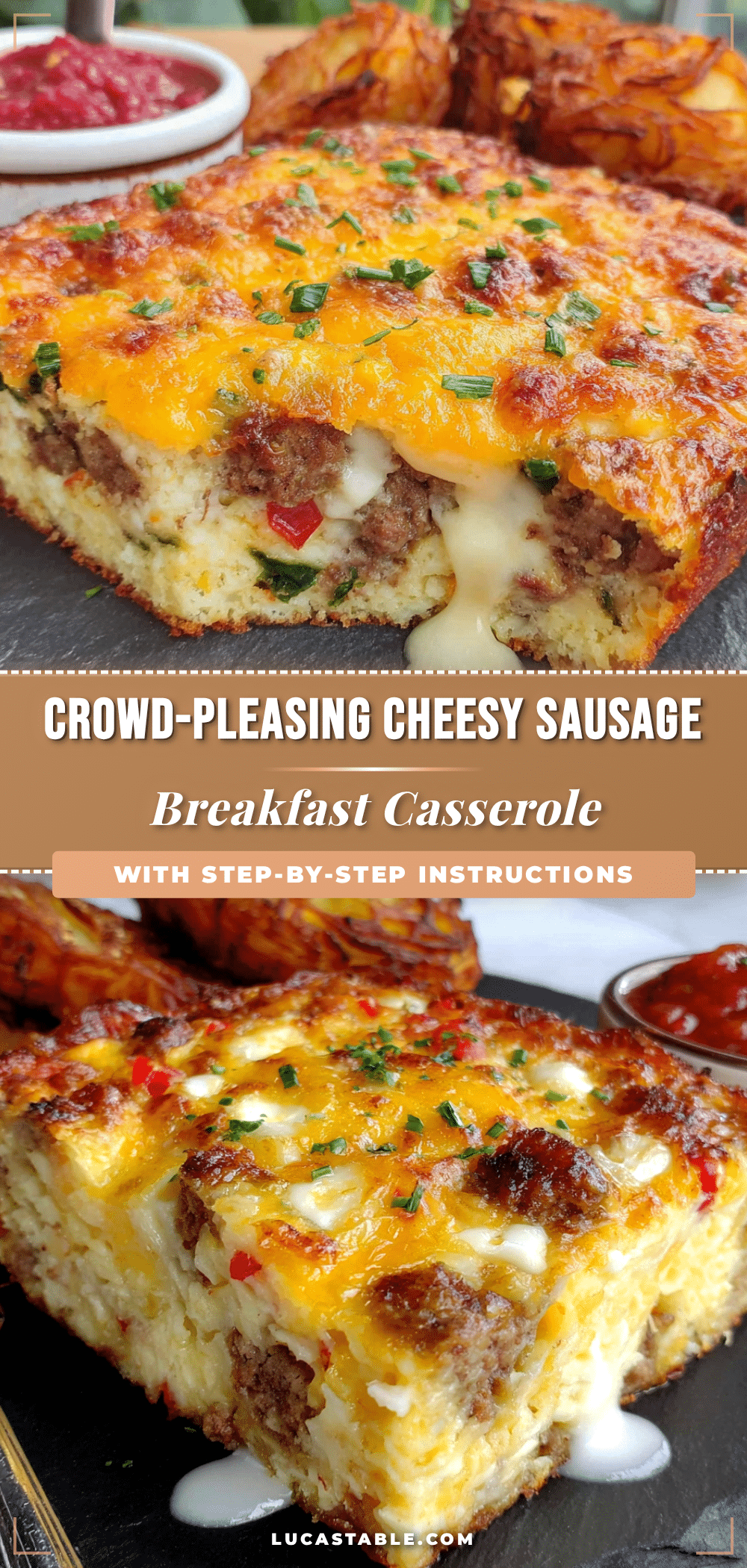
Easy Cheesy Sausage Breakfast Casserole Recipe

A simple, make-ahead breakfast casserole with savory sausage, creamy custard, and melty cheese. Perfect for feeding a crowd on holiday mornings or lazy weekends.
- Prep Time: 20 minutes
- Cook Time: 50 minutes
- Total Time: 1 hour 10 minutes
- Yield: 10 servings 1x
- Category: Breakfast
- Cuisine: American
Ingredients
- 1 pound breakfast sausage
- 8 large eggs
- 2 cups whole milk
- 1 teaspoon salt
- ½ teaspoon black pepper
- 1 teaspoon dry mustard powder
- ½ teaspoon garlic powder
- ¼ teaspoon smoked paprika (optional)
- 8 cups cubed bread (about 1 loaf)
- 2 cups shredded sharp cheddar cheese
- 1 cup shredded Monterey Jack cheese
- ¼ cup chopped green onions (optional)
Instructions
- Preheat your oven to 350°F (175°C). Grease a 9×13-inch baking dish with butter or non-stick cooking spray.
- In a large skillet over medium-high heat, cook the breakfast sausage, breaking it up with a spatula, until fully browned (about 5-7 minutes). Drain excess grease, leaving a little for flavor. Set aside to cool slightly.
- Cut bread into 1-inch cubes. If using fresh bread, toast cubes in the oven for about 5 minutes to dry them out.
- In a large mixing bowl, whisk together eggs, milk, salt, pepper, dry mustard powder, garlic powder, and smoked paprika until fully combined and slightly frothy.
- Layer half of the bread cubes in the prepared baking dish. Top with half of the cooked sausage, then half of the cheddar and Monterey Jack cheeses. Repeat layers with remaining bread, sausage, and cheeses.
- Slowly pour the egg mixture evenly over the casserole. Gently press down on bread cubes to ensure they are soaked.
- Let the casserole rest at room temperature for 15-20 minutes, or cover and refrigerate overnight for best results.
- Bake for 45-55 minutes. After 30 minutes, if the top is browning too quickly, loosely cover with aluminum foil. The casserole is done when the center is set (jiggles slightly like cheesecake) and the top is golden brown and puffy. A knife inserted into the center should come out clean.
- Let the casserole rest for 5-10 minutes before serving. Sprinkle with chopped green onions if desired.
Notes
For best results, assemble the casserole the night before and refrigerate overnight. Shred your own cheese for smoother melting. Let the casserole rest after baking for easier slicing.
Nutrition
- Serving Size: 1 square (1/10 of ca
- Calories: 420
- Sugar: 5
- Sodium: 780
- Fat: 28
- Saturated Fat: 12
- Carbohydrates: 22
- Fiber: 1
- Protein: 24
Keywords: breakfast casserole, sausage casserole, cheesy casserole, make-ahead breakfast, brunch recipe, holiday breakfast