Jen wasn’t trying to impress anyone. I’d stopped by to borrow a ladder on a random Thursday evening, and the smell hit me before I even got past her screen door. It wasn’t a dinner party. She wasn’t showing off. She was just… making dinner on a regular weeknight, in sweatpants, with a kid tugging at her pant leg. But the aroma coming from her kitchen stopped me cold. Salty, sweet, a little funky — it smelled like something you’d pay too much for at a fancy restaurant.
“Oh, that?” she said when I asked, gesturing with a spatula toward the oven. “It’s just squash. I’m trying to use up some stuff in the fridge.” Just squash. Meanwhile, I was practically drooling on her countertop. She pulled it out of the oven — this deeply caramelized kabocha squash, glistening with a glossy, savory-sweet glaze — and I may have audibly gasped. She shrugged and offered me a piece. Honestly, that first bite was a revelation. The squash was creamy and rich, almost like roasted chestnuts, and the glaze was this perfect umami bomb of ginger and miso that somehow felt both cozy and sophisticated.
Maybe you’ve been there — you taste something so unexpectedly good at a friend’s house that you can’t stop thinking about it. That was me. I asked for the recipe, and she gave me some vague instructions involving “a glug of this” and “a spoonful of that.” It took me three tries to get it right, but now this easy ginger miso roasted kabocha squash is my go-to weeknight side dish. It’s the one I make when I’m tired, when I need something on the table fast, and when I want to feel like I’m eating something special without actually trying very hard. Jen’s casual indifference to something so delicious taught me a valuable lesson: the best recipes don’t need fanfare.
Why You’ll Love This Recipe
Let’s be real — most weeknight side dishes are boring. Steamed broccoli again? Another sad salad? This easy ginger miso roasted kabocha squash is none of those things. It’s the kind of side dish that steals the show, and you barely have to work for it.
- Quick & Easy : From start to finish, this comes together in about 35 minutes. The active prep time is maybe 10 minutes. I’m not kidding. You can make this on a Tuesday after a long day at work without breaking a sweat.
- Simple Ingredients : Five ingredients. That’s it. Kabocha squash, white miso paste, fresh ginger, soy sauce, and a little oil. You probably already have most of these in your pantry right now.
- Perfect for Busy Weeknights : This isn’t a weekend project. It’s a “I need something delicious on the table in half an hour” kind of recipe. It roasts while you focus on the main dish.
- Crowd-Pleaser : I’ve served this to picky kids, skeptical in-laws, and foodie friends. Everyone loves it. The miso glaze is that good.
- Unbelievably Delicious : The combination of creamy, roasted kabocha with that salty-sweet, gingery miso glaze is honestly next-level. It’s comfort food that feels a little fancy, but it’s not trying hard.
What makes this recipe different from all the other roasted squash recipes out there? It’s the balance. The miso brings deep umami, the ginger adds a fresh zing, and a touch of sweetness from the squash itself ties it all together. No complicated techniques, no obscure ingredients. Just a perfect, foolproof glaze that transforms humble squash into something you’ll crave. This isn’t just another version — it’s the best version for anyone who values their time and their taste buds.
What Ingredients You Will Need
This recipe proves you don’t need a long shopping list to make something memorable. Every ingredient here pulls its weight, and together they create a glaze that’s greater than the sum of its parts. Here’s what you’ll need:
- 1 medium kabocha squash (about 2-3 pounds) — Look for one that feels heavy for its size with firm, unblemished skin. You don’t need to peel it! The skin is edible and gets wonderfully tender when roasted. I prefer organic when I can find it since we’re eating the skin.
- 3 tablespoons white miso paste — This is the heart of the dish. I recommend Miso Master Organic Mellow White Miso for its balanced, mild flavor. Avoid dark miso here — it’s too intense and will overpower the delicate squash. White miso (also called shiro miso) is fermented for less time, giving it a sweeter, more approachable taste.
- 2 tablespoons fresh ginger, grated — Please, please use fresh ginger here. The jarred stuff won’t give you the same bright, peppery kick. I like to peel it with the edge of a spoon (so much easier than a peeler) and grate it on a microplane. You’ll get about a 2-inch piece of ginger for this amount.
- 2 tablespoons soy sauce — Use a good-quality soy sauce like Kikkoman or San-J Tamari if you need it gluten-free. Low-sodium works fine here since the miso is already salty.
- 1 tablespoon toasted sesame oil — This adds a nutty depth that complements the miso beautifully. Regular vegetable oil won’t give you the same flavor, so don’t skip this. If you absolutely must substitute, use avocado oil, but you’ll lose some of that toasty character.
That’s it. Five ingredients, and you’re ready to make the most addictive roasted squash of your life. If you want to get fancy, you can garnish with toasted sesame seeds or sliced green onions at the end, but honestly, it’s perfect as is.
Equipment Needed
You don’t need a fancy kitchen to pull this off. Here’s what you’ll need:
- Sharp chef’s knife — Kabocha squash is dense. A dull knife is a recipe for frustration (and potentially a trip to the ER). I use my Victorinox Fibrox 8-inch Chef’s Knife — it’s affordable and stays sharp for ages.
- Cutting board — A sturdy one that won’t slide around. Put a damp paper towel under it if needed.
- Large baking sheet — A half-sheet pan (18×13 inches) works perfectly. Line it with parchment paper for easier cleanup — trust me on this one.
- Microplane or fine grater — For grating the ginger. A box grater works in a pinch, but a microplane gives you that fine, almost paste-like texture that melts into the glaze.
- Small mixing bowl — For whisking together the glaze.
- Whisk or fork — To combine the miso, ginger, soy sauce, and oil into a smooth paste.
- Mixing spoon or spatula — For tossing the squash with the glaze.
No special equipment required. If you don’t have a microplane, just mince the ginger as finely as you can with your chef’s knife. It’ll still be delicious — I’ve done it plenty of times when my microplane was in the dishwasher.
Preparation Method
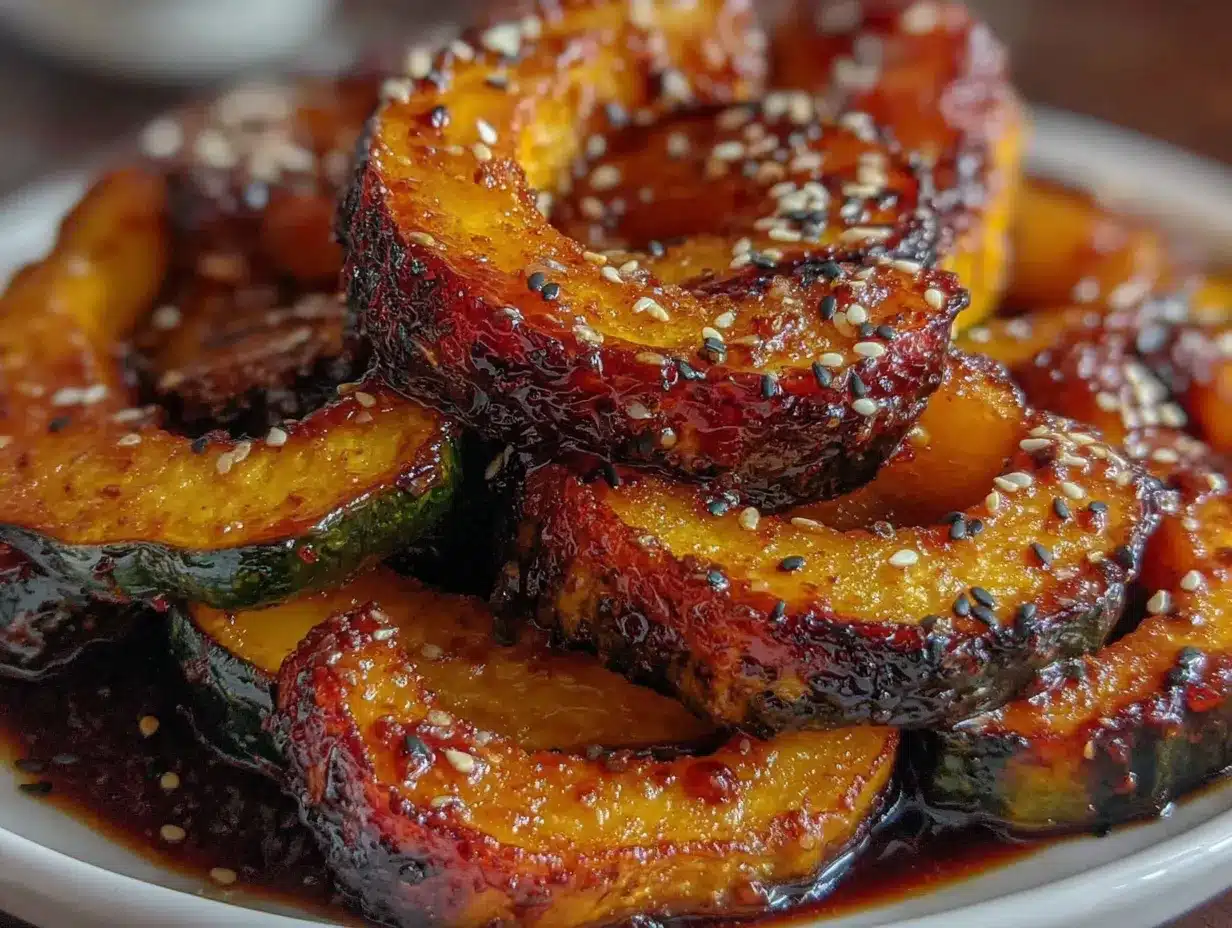
Alright, let’s get cooking. This is straightforward, but I’ll walk you through every step so you get perfect results the first time.
- Preheat your oven to 400°F (200°C). Give it a full 15-20 minutes to come to temperature. A properly hot oven is key for that caramelization we’re after.
- Prepare the kabocha squash. This is the trickiest part, so pay attention. Using your sharp chef’s knife, carefully cut the squash in half from stem to stern. Kabocha is tough, so go slow and use your full arm weight. If it’s really stubborn, you can microwave the whole squash for 2-3 minutes to soften it slightly — just poke a few holes in it first so it doesn’t explode. Once halved, scoop out the seeds and stringy bits with a spoon. You can save the seeds and roast them later if you’re feeling ambitious.
- Slice the squash into wedges. Cut each half into 1-inch thick wedges, about the width of your thumb. You want them roughly uniform in size so they cook evenly. Don’t make them too thin or they’ll burn before the inside is tender. Don’t make them too thick or they’ll take forever to cook. 1 inch is the sweet spot. Leave the skin on — it’s edible and adds a nice texture contrast.
- Make the miso ginger glaze. In your small bowl, combine 3 tablespoons white miso paste, 2 tablespoons grated fresh ginger, 2 tablespoons soy sauce, and 1 tablespoon toasted sesame oil. Whisk until smooth. It should look like a thick, aromatic paste. Give it a taste — it should be salty, funky, and bright all at once. Adjust if needed, but trust the proportions.
- Toss the squash with the glaze. Place your squash wedges on the prepared baking sheet. Pour the glaze over them and use your hands (or a spatula) to toss everything together, making sure each wedge is well coated. Don’t be shy — get in there and make sure every surface has some glaze on it. The miso will caramelize beautifully as it roasts, creating that incredible flavor.
- Arrange in a single layer. Spread the squash wedges out so they’re not touching. Crowding the pan will steam them instead of roasting them, and you won’t get that gorgeous caramelization. If they’re too crowded, use two baking sheets or roast in batches.
- Roast for 25-30 minutes. Place the baking sheet on the middle rack. Halfway through (around the 12-15 minute mark), flip each wedge with tongs. You’ll see the glaze starting to brown and bubble — that’s a good sign. The squash is done when it’s fork-tender all the way through and the edges are deeply caramelized, almost sticky-looking. The skin should be wrinkled and tender, and the flesh should yield easily when pierced.
- Optional: Broil for 2-3 minutes. If you want extra caramelization (and who doesn’t?), switch your oven to broil for the last 2-3 minutes. Watch it carefully — miso burns quickly. You want it bubbly and dark, not black.
- Rest for 5 minutes. Let the squash sit on the baking sheet for a few minutes before serving. This allows the glaze to set slightly and makes the squash easier to handle. The aroma at this point is absolutely intoxicating — salty, sweet, gingery, and deeply savory.
And that’s it. Seriously. You just made a restaurant-quality side dish with five ingredients and about 10 minutes of active effort. The hardest part was cutting the squash, and even that gets easier with practice.
Cooking Tips & Techniques
I’ve made this easy ginger miso roasted kabocha squash more times than I can count, and I’ve learned a few things along the way. Here are my best tips to ensure perfect results every time:
Don’t skip the parchment paper. The miso glaze gets sticky and caramelized, which is delicious but a nightmare to clean off a baking sheet. Parchment paper saves you from a serious scrubbing session. I learned this the hard way after spending 20 minutes chipping burnt miso off a sheet pan.
Grate your ginger finely. Big chunks of ginger can be overpowering and unpleasant to bite into. A microplane gives you a paste that distributes evenly throughout the glaze. If you’re using a box grater, use the finest side and be careful not to grate your knuckles — I’ve been there.
Watch the broiler like a hawk. Miso is basically fermented soybean paste, and it burns faster than you’d think. If you decide to broil for extra caramelization, don’t walk away. Set a timer for 2 minutes and check it. Those last few seconds can mean the difference between perfectly charred and tragically burnt.
Cut the squash into uniform pieces. This is the single most important factor for even cooking. I aim for wedges that are about 1 inch thick at the thickest part. If some pieces are significantly smaller or larger, they’ll cook at different rates, and you’ll end up with some perfectly tender pieces and some that are either undercooked or overdone.
Don’t overcrowd the pan. I know it’s tempting to cram everything onto one sheet to save dishes, but overcrowding leads to steaming, not roasting. The squash needs space for hot air to circulate around each piece. If your squash wedges are touching, they won’t caramelize properly. Use two pans if you need to.
Let it rest. I know you’re hungry, but giving the squash 5 minutes off the heat allows the glaze to set and the flavors to meld. It also makes the squash easier to handle — the pieces will be less likely to fall apart when you transfer them to a serving platter.
Variations & Adaptations
This recipe is wonderfully adaptable. Here are some variations I’ve tried and loved:
Spicy Kick Version: Add 1 teaspoon of sriracha or gochujang to the miso glaze for a spicy-sweet twist. The heat cuts through the richness of the squash beautifully. I made this version for a potluck and it disappeared first.
Maple Miso Variation: Swap the soy sauce for 1 tablespoon of maple syrup and 1 tablespoon of tamari. This gives the squash a sweeter, more caramelized exterior that’s almost like candy. My kids devour this version without complaint.
Garlic Lover’s Adaptation: Add 2-3 cloves of finely minced garlic to the glaze. Roast the garlic along with the squash for a deeper, more savory flavor profile. Just be careful — garlic can burn faster than the squash, so keep an eye on it.
Different Squash Options: No kabocha? No problem. Butternut squash, acorn squash, or even sweet potatoes work beautifully with this glaze. Adjust cooking times as needed — butternut might need a few extra minutes, while acorn squash might cook a bit faster.
Air Fryer Method: If you’re short on time, this works great in an air fryer. Cook at 375°F (190°C) for 15-18 minutes, shaking the basket halfway through. You’ll get even crispier edges in less time. Just don’t overcrowd the basket — work in batches if needed.
Vegan & Gluten-Free: This recipe is naturally vegan. To make it gluten-free, simply use tamari or coconut aminos instead of soy sauce. Double-check that your miso paste is certified gluten-free (most white miso is made from rice and soybeans, but some brands use barley).
Serving & Storage Suggestions
This easy ginger miso roasted kabocha squash is incredibly versatile when it comes to serving. Here’s how I like to enjoy it:
Serving Temperature: Serve it warm, right out of the oven. The glaze is at its glossy, sticky best when fresh. That said, it’s also surprisingly good at room temperature — I’ve been known to snack on leftovers straight from the fridge.
Presentation: Arrange the wedges on a platter in a single layer, overlapping slightly if needed. Drizzle any remaining glaze from the pan over the top. Sprinkle with toasted sesame seeds and thinly sliced green onions for a pop of color and extra flavor. A squeeze of fresh lime juice right before serving brightens everything up.
What to Serve With It: This squash pairs beautifully with grilled chicken, pan-seared salmon, or a simple tofu stir-fry. It’s also fantastic alongside a grain bowl with quinoa, avocado, and pickled vegetables. For a cozy weeknight dinner, I serve it with crispy garlic chicken and steamed rice — the combination is pure comfort.
Storage: Store leftovers in an airtight container in the refrigerator for up to 4 days. The squash will soften slightly as it sits, but the flavor actually deepens and gets even better the next day.
Reheating: The best way to reheat is in a 350°F (175°C) oven for 5-7 minutes, or until warmed through and slightly crisp on the edges. The microwave works in a pinch, but the squash will be softer and less caramelized. For a quick fix, I sometimes toss leftovers into a hot skillet with a splash of water and cover for 2-3 minutes — it steams them back to life.
Freezing: I don’t recommend freezing this dish. The texture of roasted squash changes significantly after freezing and thawing — it becomes watery and mushy. Make what you’ll eat within a few days and enjoy it fresh.
Nutritional Information & Benefits
This easy ginger miso roasted kabocha squash isn’t just delicious — it’s actually good for you. Here’s the breakdown per serving (about 1 cup of roasted squash wedges):
| Nutrient | Amount Per Serving |
|---|---|
| Calories | 185 |
| Total Fat | 7g |
| Saturated Fat | 1g |
| Sodium | 620mg |
| Total Carbohydrates | 28g |
| Dietary Fiber | 5g |
| Sugars | 8g |
| Protein | 4g |
| Vitamin A | 245% DV |
| Vitamin C | 25% DV |
| Potassium | 680mg |
Health Benefits: Kabocha squash is a nutritional powerhouse. It’s packed with beta-carotene (which your body converts to vitamin A), supporting eye health and immune function. The fiber content keeps you full and aids digestion. Ginger is well-known for its anti-inflammatory properties and can help settle an upset stomach. Miso is a fermented food that supports gut health with beneficial probiotics. This dish is naturally gluten-free (if you use tamari), dairy-free, and vegan — it fits into almost any dietary pattern.
Dietary Considerations: This recipe is naturally vegan and dairy-free. For a lower-sodium version, use reduced-sodium soy sauce and cut back slightly on the miso paste. The squash itself is low in calories but high in nutrients, making this a great option for anyone watching their weight without sacrificing flavor.
Conclusion
This easy ginger miso roasted kabocha squash has become a staple in my weeknight dinner rotation, and I think it deserves a spot in yours too. It’s proof that you don’t need a dozen ingredients or hours in the kitchen to make something genuinely memorable. Five ingredients, one baking sheet, and about half an hour — that’s all it takes to transform humble squash into something that tastes like you spent way more effort than you actually did.
I love this recipe because it reminds me of that evening at Jen’s house, when she made something extraordinary without even realizing it. It’s the kind of dish that makes you feel like a great cook, even on nights when you’re tired and just want dinner to be over with. The miso glaze is forgiving, the squash is forgiving, and the whole process is designed for real people cooking on real weeknights.
Try it this week. Customize it with the variations I shared — add some heat, go sweeter with maple, or throw in extra garlic. Make it your own. And when you do, come back and let me know how it turned out. I’d love to hear about your version, your tweaks, and whether you managed to stop yourself from eating the entire pan in one sitting. (I certainly haven’t.)
Happy cooking, and remember — sometimes the best recipes come from the most casual moments.
Frequently Asked Questions
Can I use a different type of squash?
Absolutely! Butternut squash, acorn squash, delicata squash, or even sweet potatoes all work beautifully with this miso ginger glaze. Just adjust the roasting time based on the squash you choose — denser varieties like butternut may need a few extra minutes, while thinner-skinned varieties like delicata will cook faster. The key is to cut them into uniform pieces and check for fork-tenderness.
Do I have to peel the kabocha squash?
Nope! One of the best things about kabocha squash is that the skin is completely edible once cooked. It becomes tender and adds a nice chewy texture contrast to the creamy flesh. Plus, leaving the skin on saves you a ton of prep time. Just make sure to wash the squash thoroughly before cutting it.
Can I make this ahead of time?
You can prep the squash and make the glaze up to a day in advance. Store the cut squash in a bowl of cold water in the fridge (to prevent browning) and keep the glaze in a sealed container. When you’re ready to cook, just drain the squash, toss with the glaze, and roast as directed. The roasted squash is best served fresh, but leftovers keep well for 3-4 days in the fridge.
Is this recipe spicy?
Not at all! The ginger adds warmth and brightness, but it’s not spicy in the way that chili peppers are. If you want to add heat, you can stir in 1/2 to 1 teaspoon of sriracha, gochujang, or red pepper flakes to the glaze. I’d recommend starting with less and adding more to taste — you can always increase the heat, but you can’t take it away.
What can I serve this squash with for a complete meal?
This squash is incredibly versatile. For a complete weeknight dinner, pair it with a protein like crispy garlic chicken, grilled salmon, or pan-seared tofu. Add a simple green salad or steamed rice on the side, and you’ve got a balanced meal that comes together in under 45 minutes. The squash also makes a fantastic addition to grain bowls — try it over quinoa with avocado, pickled onions, and a drizzle of tahini.
Pin This Recipe!
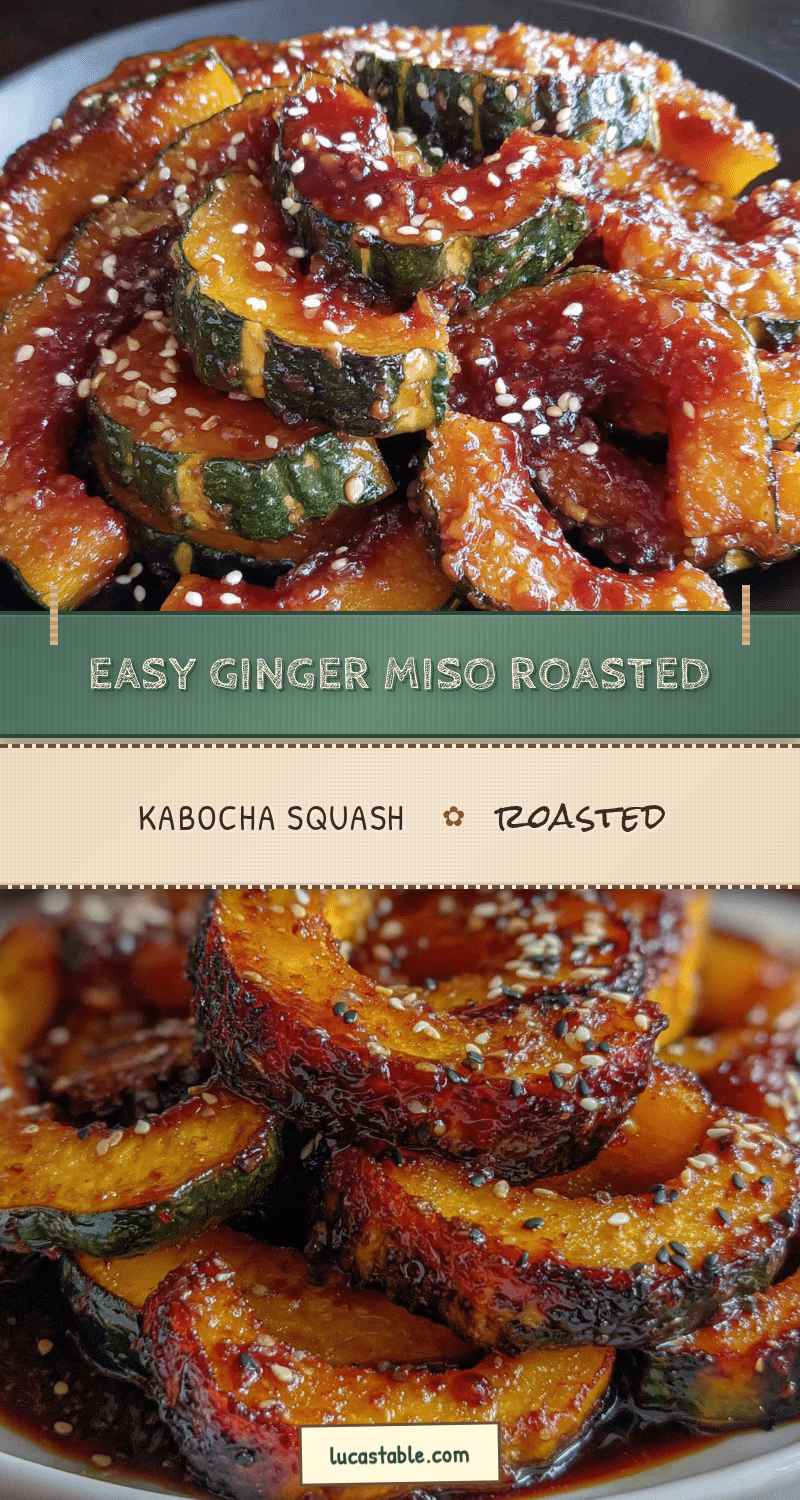
Easy Ginger Miso Roasted Kabocha Squash: Best 5-Ingredient Side
A quick and easy weeknight side dish featuring creamy roasted kabocha squash with a savory-sweet miso ginger glaze. Made with just five ingredients and ready in about 35 minutes, this crowd-pleasing recipe is perfect for busy nights.
- Prep Time: 10 minutes
- Cook Time: 25-30 minutes
- Total Time: 35 minutes
- Yield: 4 servings 1x
- Category: Side Dish
- Cuisine: Japanese-inspired
Ingredients
- 1 medium kabocha squash (about 2–3 pounds)
- 3 tablespoons white miso paste
- 2 tablespoons fresh ginger, grated
- 2 tablespoons soy sauce
- 1 tablespoon toasted sesame oil
Instructions
- Preheat your oven to 400°F (200°C).
- Prepare the kabocha squash: Carefully cut the squash in half from stem to stern. Scoop out the seeds and stringy bits with a spoon.
- Slice the squash into 1-inch thick wedges. Leave the skin on.
- Make the miso ginger glaze: In a small bowl, combine 3 tablespoons white miso paste, 2 tablespoons grated fresh ginger, 2 tablespoons soy sauce, and 1 tablespoon toasted sesame oil. Whisk until smooth.
- Toss the squash with the glaze on a parchment-lined baking sheet, ensuring each wedge is well coated.
- Arrange the squash wedges in a single layer, not touching.
- Roast for 25-30 minutes, flipping halfway through, until fork-tender and deeply caramelized.
- Optional: Broil for 2-3 minutes for extra caramelization, watching carefully to prevent burning.
- Let rest for 5 minutes before serving.
Notes
Don’t skip the parchment paper for easy cleanup. Grate ginger finely for even distribution. Watch the broiler closely to avoid burning. Cut squash into uniform 1-inch wedges for even cooking. Do not overcrowd the pan. Let squash rest for 5 minutes before serving to allow glaze to set.
Nutrition
- Serving Size: 1 cup of roasted squ
- Calories: 185
- Sugar: 8
- Sodium: 620
- Fat: 7
- Saturated Fat: 1
- Carbohydrates: 28
- Fiber: 5
- Protein: 4
Keywords: roasted kabocha squash, miso ginger squash, easy side dish, 5-ingredient recipe, weeknight side, vegan side dish, gluten-free side