My husband asked for this one-pan lemon garlic butter chicken and asparagus three nights in a row without being prompted. That never happens. I mean, he eats what I make, but he doesn’t request it. The first night I made it, I was honestly just trying to use up the asparagus in the fridge and a couple of chicken breasts I’d defrosted without a plan. I figured worst case, we’d have a decent dinner. Best case? Well, I’m writing this, so you can guess how that turned out.
The whole thing comes together in about 25 minutes, and there’s only one pan to wash. That’s the kind of math I can get behind on a Tuesday night. The chicken gets golden and juicy, the asparagus turns tender-crisp, and that lemon garlic butter sauce—honestly, it’s the kind of thing you want to eat with a spoon (or bread, or more bread). It’s not complicated, but it tastes like you tried, you know?
I’ve made a lot of sheet pan dinners that end up dry or bland, but this one is different. The chicken stays moist because it cooks first, then the asparagus goes in at the end so it doesn’t get sad and limp. And that sauce? It’s just butter, garlic, lemon, and a little chicken broth, but it coats everything like it’s been working on it all day. I think what I love most is how forgiving it is. You can swap in broccoli or green beans if that’s what you have. You can use chicken thighs instead of breasts. It still works. It still tastes like something you’d order at a restaurant, but you’re in your sweatpants. That’s a win.
If you’re looking for a quick dinner that feels special without the stress, this is it. I promise you’ll make it more than once.
Why You’ll Love This Recipe
- Quick & Easy: From start to finish, this meal is ready in under 30 minutes. Perfect for those nights when you’re staring at the fridge wondering what to cook.
- Simple Ingredients: You probably already have garlic, lemons, butter, and chicken broth in your kitchen. No fancy grocery store runs required.
- One-Pan Cleanup: Just one skillet to wash. That’s it. No piles of pots and pans staring at you from the sink.
- Perfect for Weeknights & Entertaining: It’s elegant enough for guests but easy enough for a regular Tuesday. I’ve served this for a casual dinner with friends and for a quiet night in.
- Crowd-Pleaser: Even my friend who swears she doesn’t like asparagus ate two servings. The lemon butter sauce is basically magic.
- Unbelievably Delicious: The chicken is juicy, the asparagus is perfectly cooked, and the sauce ties it all together. It’s comfort food that feels light and fresh at the same time.
What makes this recipe different from all the other one-pan chicken recipes out there? It’s the technique. Most recipes throw everything in the oven at once, and you end up with overcooked chicken or soggy vegetables. Here, we cook the chicken on the stovetop first to get that beautiful golden crust, then we add the asparagus at the end so it stays bright and crisp. The sauce comes together in the same pan, picking up all those browned bits from the bottom—that’s where the flavor lives. It’s not just another version; it’s the one you’ll come back to.
What Ingredients You Will Need
This recipe uses simple, wholesome ingredients to deliver big flavor without a lot of fuss. Most of these are pantry staples, which is exactly what I look for on a busy weeknight. Here’s what you’ll need and why each one matters.
For the Chicken
- 2 boneless, skinless chicken breasts (about 1.5 pounds total) – Look for breasts that are roughly the same thickness so they cook evenly. If they’re really thick, you can butterfly them or pound them to an even thickness.
- Salt and black pepper – Don’t skimp here. Season the chicken generously on both sides. I use about ½ teaspoon of salt per breast.
- ½ teaspoon garlic powder – Adds a subtle garlic flavor to the chicken itself, not just the sauce.
- ½ teaspoon paprika – I prefer smoked paprika for a deeper flavor, but sweet paprika works too. It gives the chicken a nice color.
- 2 tablespoons olive oil – For searing the chicken. Avocado oil works too if that’s what you have.
For the Asparagus
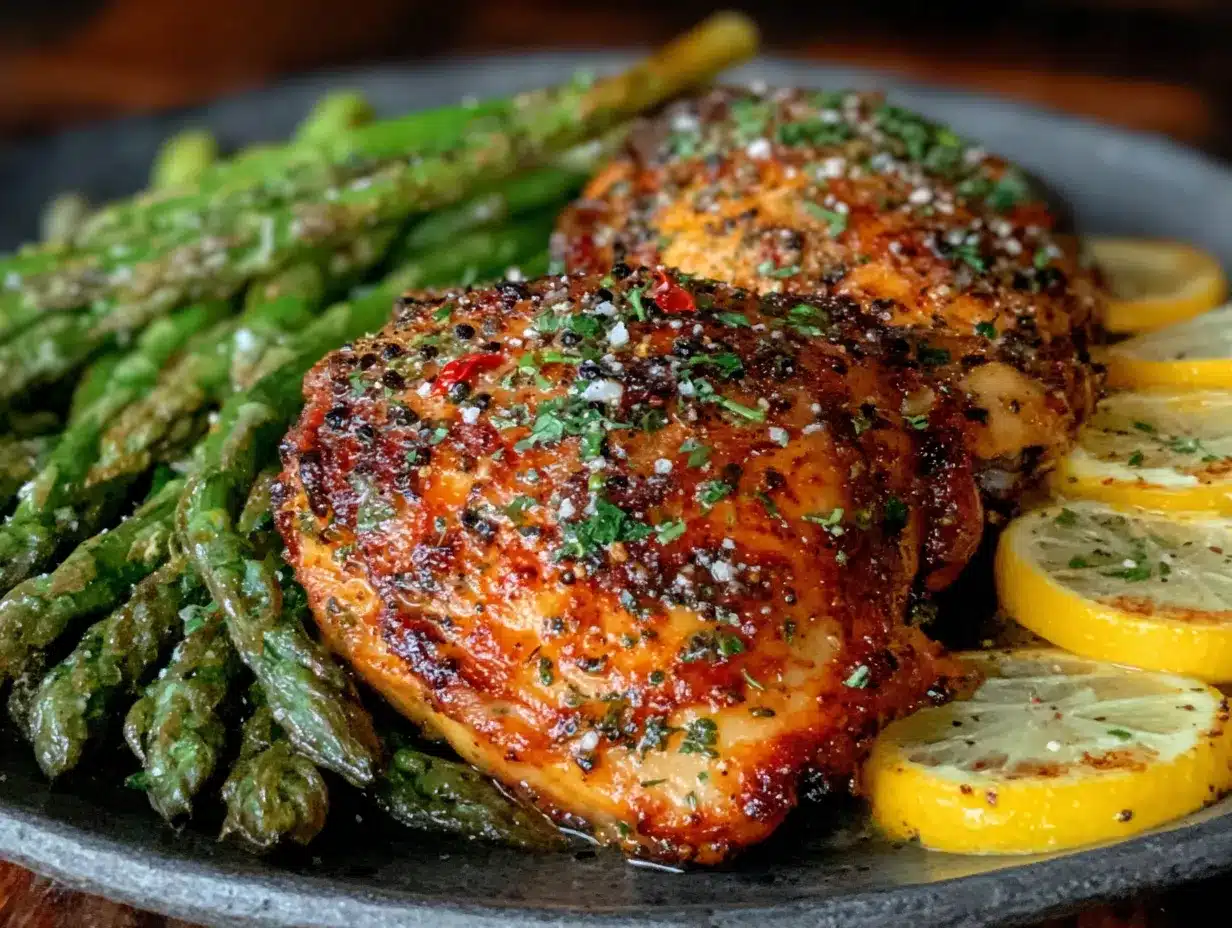
- 1 bunch asparagus (about 1 pound) – Look for spears that are bright green with firm, closed tips. Thicker spears hold up better in the pan, but thin ones work too—just reduce the cooking time. Snap off the woody ends before cooking (they’ll naturally break where the tender part starts).
- 1 tablespoon olive oil – To coat the asparagus before roasting.
- Salt and black pepper – A light seasoning is all you need.
For the Lemon Garlic Butter Sauce
- 3 tablespoons unsalted butter – I use unsalted so I can control the salt level. If you only have salted butter, reduce the added salt in the sauce.
- 4 cloves garlic, minced – Fresh garlic is non-negotiable here. The jarred stuff won’t give you the same punch. I use a microplane for fine mincing.
- ¼ cup low-sodium chicken broth – Helps deglaze the pan and creates the base of the sauce. Vegetable broth works too if that’s what you have.
- 2 tablespoons fresh lemon juice (from about 1 lemon) – Fresh is best. Bottled lemon juice has a flat, metallic taste that I don’t love here.
- 1 teaspoon lemon zest – Adds brightness and aroma that juice alone can’t provide.
- 1 tablespoon chopped fresh parsley (optional, for garnish) – Adds a pop of color and freshness. I always skip this if I don’t have it on hand.
Ingredient Tips & Substitutions
For the chicken, I recommend using breasts that are around 6-8 ounces each. If you’re using chicken thighs, bone-in or boneless both work, but you’ll need to adjust the cooking time (thighs take a few minutes longer). I’ve also made this with chicken cutlets, which cook even faster—about 3-4 minutes per side.
For the asparagus, look for spears that are firm and not wilted. If asparagus isn’t in season, you can swap in green beans or broccolini. The cooking time will be similar. In the winter, I sometimes use frozen asparagus (thawed and patted dry), but fresh is definitely better here.
I prefer using Kerrygold or Plugrà butter for the sauce because they have a higher fat content and richer flavor. But any unsalted butter will work. For the chicken broth, I like Swanson or Kitchen Basics for their clean flavor. If you’re using a high-sodium broth, just be careful with the extra salt you add.
Equipment Needed
One of the best things about this recipe is that you don’t need a ton of fancy equipment. Here’s what you’ll need:
- Large skillet or frying pan (12-inch) – A heavy-bottomed pan works best for even heat distribution. Cast iron, stainless steel, or non-stick all work. I use my Lodge 12-inch cast iron skillet most of the time because it holds heat beautifully and gives the chicken a great sear. If you’re using non-stick, just be careful not to scratch it with metal utensils.
- Tongs – For flipping the chicken and turning the asparagus. Silicone-tipped tongs are great if you’re using non-stick pans.
- Cutting board and sharp knife – For trimming the asparagus and mincing the garlic. A good chef’s knife makes this job so much easier.
- Microplane or zester – For zesting the lemon. A fine grater works too, but a microplane is my go-to.
- Measuring spoons – For measuring the spices and liquids.
- Small bowl – To mix the spice rub for the chicken.
If you don’t have a cast iron skillet, don’t worry. A stainless steel pan will work just as well. Just make sure it’s large enough to hold the chicken in a single layer without overcrowding. If your pan is too small, the chicken will steam instead of sear, and you won’t get that golden crust.
One tip: if you’re using a non-stick pan, avoid using high heat for too long. Non-stick coatings can degrade at very high temperatures. Medium-high heat is plenty for this recipe.
Preparation Method
Let’s get cooking. This recipe moves quickly, so I recommend having all your ingredients prepped and ready to go before you start. Trust me, it makes everything smoother.
Step 1: Prep the Chicken (5 minutes)
Start by patting the chicken breasts dry with paper towels. This is important—moisture is the enemy of a good sear. If the chicken is wet, it’ll steam instead of browning. Season both sides generously with salt, black pepper, garlic powder, and paprika. I like to mix the spices together in a small bowl first, then sprinkle them evenly over the chicken. Rub the seasoning in with your hands so it sticks.
Pro tip: If your chicken breasts are uneven in thickness, place them between two sheets of plastic wrap and gently pound them with a rolling pin or the bottom of a heavy pan until they’re about ¾-inch thick. This ensures even cooking and prevents the thin ends from drying out.
Step 2: Sear the Chicken (6-8 minutes)
Heat 2 tablespoons of olive oil in your large skillet over medium-high heat. You want the oil to shimmer but not smoke. Carefully place the chicken breasts in the pan—they should sizzle when they hit the oil. Don’t overcrowd the pan. If your chicken breasts are large, you might need to cook them in two batches.
Cook the chicken for 4-5 minutes on the first side without moving it. You’re looking for a deep golden-brown crust. Flip the chicken and cook for another 3-4 minutes on the second side. The internal temperature should reach 165°F (74°C) when measured with an instant-read thermometer. If you don’t have a thermometer, cut into the thickest part of the breast—the juices should run clear and the meat should be opaque all the way through.
Once cooked, transfer the chicken to a plate and tent it loosely with foil. Don’t skip this step—resting the chicken keeps it juicy while you cook the asparagus and make the sauce.
Step 3: Cook the Asparagus (5-7 minutes)
While the chicken rests, trim the woody ends off the asparagus. The easiest way is to hold one spear at both ends and bend it gently—it will naturally snap where the tender part begins. Use that as a guide and trim the rest of the bunch to the same length.
Add 1 tablespoon of olive oil to the same skillet (don’t wipe it out—those browned bits from the chicken are flavor gold). Add the asparagus spears in a single layer. Season with a pinch of salt and pepper. Cook for 4-5 minutes, turning occasionally with tongs, until the asparagus is bright green and tender-crisp. You want it to have a little bite, not be mushy. If you’re using thin asparagus, check it at the 3-minute mark—it cooks fast.
Transfer the cooked asparagus to the plate with the chicken.
Step 4: Make the Lemon Garlic Butter Sauce (3 minutes)
Reduce the heat to medium. Add the 3 tablespoons of butter to the skillet. Once it melts, add the minced garlic and cook for about 30 seconds, stirring constantly. You want the garlic to be fragrant but not brown—burnt garlic tastes bitter.
Pour in the chicken broth and lemon juice, and add the lemon zest. Use a wooden spoon or spatula to scrape up all those browned bits from the bottom of the pan—that’s called deglazing, and it’s where a ton of flavor lives. Let the sauce simmer for 1-2 minutes until it thickens slightly. Taste it and adjust the seasoning if needed. I usually add a pinch more salt and a crack of black pepper here.
Step 5: Combine and Serve (2 minutes)
Return the chicken and asparagus to the skillet, spooning the sauce over the top. Let everything warm through for about a minute. Garnish with fresh parsley if you’re using it.
Serve immediately, spooning any extra sauce from the pan over the chicken and asparagus. I like to serve it with crusty bread or over a bed of rice to soak up all that lemony butter sauce. Honestly, the sauce is the best part.
Cooking Tips & Techniques
I’ve made this recipe more times than I can count, and I’ve definitely made my share of mistakes along the way. Here are the tips I wish someone had told me from the start.
Get a Good Sear on the Chicken
The golden crust on the chicken isn’t just for looks—it adds texture and flavor. To get it right, make sure your pan is hot before you add the chicken. If you’re using a cast iron skillet, give it a few minutes to heat up over medium-high heat. Drop a drop of water in the pan—if it sizzles and evaporates immediately, you’re ready to go. Also, don’t move the chicken around once it’s in the pan. Let it sit undisturbed for 4-5 minutes. If you try to flip it and it sticks, it’s not ready yet—give it another minute.
Don’t Overcook the Asparagus
Asparagus goes from perfect to mushy in about 30 seconds. I like to cook it until it’s bright green and just tender when pierced with a fork. If you’re unsure, err on the side of undercooking—you can always cook it a little longer, but you can’t uncook it. Also, thicker asparagus spears hold up better in the pan than thin ones. If you have thin asparagus, reduce the cooking time to 2-3 minutes.
Use Fresh Garlic, Not Jarred
I know it’s convenient, but jarred minced garlic has a different flavor—more pungent and less sweet. Fresh garlic cloves, minced just before cooking, give the sauce a bright, aromatic quality that makes a real difference. If you’re short on time, you can use a garlic press, but I find that mincing with a knife gives you more control over the size.
Deglaze the Pan Thoroughly
After you cook the chicken, there will be browned bits stuck to the bottom of the pan. Those bits are packed with flavor. When you add the broth and lemon juice, use a wooden spoon to scrape them up. If they’re stubborn, let the liquid simmer for a minute and try again. This step is what makes the sauce taste like it’s been cooking for hours, even though it only takes a few minutes.
One Mistake I Made
The first time I made this, I added the asparagus to the pan at the same time as the chicken. Big mistake. The chicken released moisture as it cooked, and the asparagus ended up steaming instead of roasting. It came out limp and sad. Now I always cook them separately—it takes an extra few minutes, but the texture difference is huge.
Variations & Adaptations
This recipe is incredibly flexible. Here are some of my favorite ways to change it up.
Dietary Variations
- Dairy-Free: Substitute the butter with a good-quality vegan butter or use olive oil instead. The sauce won’t be as rich, but it’ll still be delicious. I’ve used Miyoko’s vegan butter with great results.
- Gluten-Free: This recipe is naturally gluten-free as written. Just make sure your chicken broth is certified gluten-free if that’s a concern for you.
- Keto/Low-Carb: This recipe is already low in carbs. Serve it as-is or with a side of cauliflower rice.
Vegetable Swaps
Not a fan of asparagus? No problem. You can swap in broccoli florets (cut into small pieces), green beans, broccolini, or even zucchini slices. Adjust the cooking time based on the vegetable—broccoli takes about 5-6 minutes, while zucchini only needs 2-3 minutes. I’ve also made this with cherry tomatoes added at the end, which burst and create a slightly different but equally delicious sauce.
Protein Variations
Chicken thighs (boneless, skinless) work beautifully here—they’re more forgiving and stay juicy even if you overcook them slightly. Cook them for 5-6 minutes per side. You can also use chicken cutlets, which cook in about 3 minutes per side. If you want to try this with fish, I’d recommend a firm fish like salmon or halibut, but adjust the cooking time accordingly. For a vegetarian version, try thick slices of firm tofu or portobello mushrooms.
Flavor Twists
Add a pinch of red pepper flakes to the sauce for a little heat. Or stir in a tablespoon of capers along with the broth for a briny, Mediterranean twist. I’ve also added a splash of white wine instead of chicken broth when I had an open bottle—it adds a lovely acidity. If you love herbs, try adding fresh thyme or rosemary sprigs to the pan while the chicken cooks. Just remove them before serving.
Serving & Storage Suggestions
This dish is best served fresh, right out of the pan. The chicken is juiciest, the asparagus is crispiest, and the sauce is at its most vibrant. But I’ve also made it ahead of time and it still holds up well.
Serving Suggestions
I love serving this with something to soak up the sauce. Crusty bread is my first choice—sourdough or a good baguette works perfectly. If you want something heartier, serve it over a bed of rice, quinoa, or couscous. Mashed potatoes are also amazing here (the sauce acts like a gravy). For a lighter option, serve it with a simple green salad dressed with lemon vinaigrette.
If you’re looking for a complete meal idea, I’d pair this with my easy 15-minute spaghetti aglio olio for a surf-and-turf kind of night, or keep it simple with just the bread and a glass of white wine. A crisp Sauvignon Blanc or a light Pinot Grigio would be perfect.
Storage Instructions
Store leftovers in an airtight container in the refrigerator for up to 3 days. The asparagus will soften as it sits, but the flavors will meld together beautifully. I actually think the chicken tastes even better the next day—the lemon garlic flavor seeps in overnight.
To reheat, I recommend using the stovetop. Place the chicken and asparagus in a skillet over medium-low heat with a splash of chicken broth or water to loosen the sauce. Cover and heat for 4-5 minutes, until warmed through. You can also use the microwave, but the chicken might dry out a bit. If you’re microwaving, cover the dish with a damp paper towel to add moisture.
I don’t recommend freezing this dish. The asparagus will become mushy when thawed, and the sauce can separate. If you want to freeze it, I’d suggest freezing just the chicken and making fresh asparagus when you reheat it.
Nutritional Information & Benefits
This recipe is a great option if you’re looking for a balanced, wholesome meal. Here’s the estimated nutritional breakdown per serving (based on 2 servings, with 1 chicken breast and half the asparagus each):
| Nutrient | Amount |
|---|---|
| Calories | 420 |
| Protein | 42g |
| Fat | 24g |
| Carbohydrates | 8g |
| Fiber | 3g |
| Sugar | 3g |
| Sodium | 620mg |
Chicken is a fantastic source of lean protein, which helps keep you full and supports muscle repair. Asparagus is packed with vitamins A, C, E, and K, as well as folate and fiber. It’s also a natural diuretic, which can help reduce bloating. Garlic is known for its immune-boosting properties, and lemon juice provides a good dose of vitamin C.
This meal is naturally gluten-free, low-carb, and can be made dairy-free with a simple swap. It’s also relatively low in calories for such a satisfying dish. If you’re watching your sodium intake, use low-sodium chicken broth and go easy on the added salt.
Conclusion
This one-pan lemon garlic butter chicken and asparagus is the kind of recipe that makes you feel like you’ve got it all figured out. It’s quick enough for a busy weeknight, but impressive enough to serve to guests. The chicken is juicy, the asparagus is perfectly cooked, and that sauce—honestly, I could drink it.
What I love most about this recipe is how forgiving it is. You can swap in different vegetables, use chicken thighs instead of breasts, or add a pinch of red pepper flakes for heat. It always works. It always tastes like something special.
I’d love to hear how it turns out for you. Did you try a variation? Did you serve it with something unexpected? Drop a comment below and let me know. And if you’re looking for another quick chicken dinner, you might enjoy my easy 20-minute honey mustard chicken—it’s another one that’s become a regular in my rotation.
Happy cooking, and don’t forget the bread for that sauce!
Frequently Asked Questions
Can I use chicken thighs instead of chicken breasts?
Absolutely. Boneless, skinless chicken thighs work great here. They’re more forgiving than breasts and stay juicy even if you cook them a minute too long. Cook them for about 5-6 minutes per side, or until the internal temperature reaches 175°F (80°C).
What can I use instead of asparagus?
Green beans, broccoli, broccolini, or zucchini all work well. Adjust the cooking time based on the vegetable—broccoli takes about 5-6 minutes, while zucchini only needs 2-3 minutes. Cherry tomatoes added at the end are also delicious.
How do I prevent the chicken from drying out?
Pat the chicken dry before seasoning, cook it over medium-high heat to get a good sear, and don’t overcook it. Use an instant-read thermometer to check for doneness—165°F (74°C) is the target. Let the chicken rest for a few minutes before slicing to keep the juices inside.
Can I make this recipe dairy-free?
Yes! Substitute the butter with a good-quality vegan butter or use olive oil instead. The sauce won’t be as rich, but it will still be flavorful. I’ve used Miyoko’s vegan butter with great results.
How do I reheat leftovers without drying them out?
Reheat on the stovetop over medium-low heat with a splash of chicken broth or water to loosen the sauce. Cover the pan and heat for 4-5 minutes until warmed through. If using a microwave, cover the dish with a damp paper towel to add moisture.
Pin This Recipe!
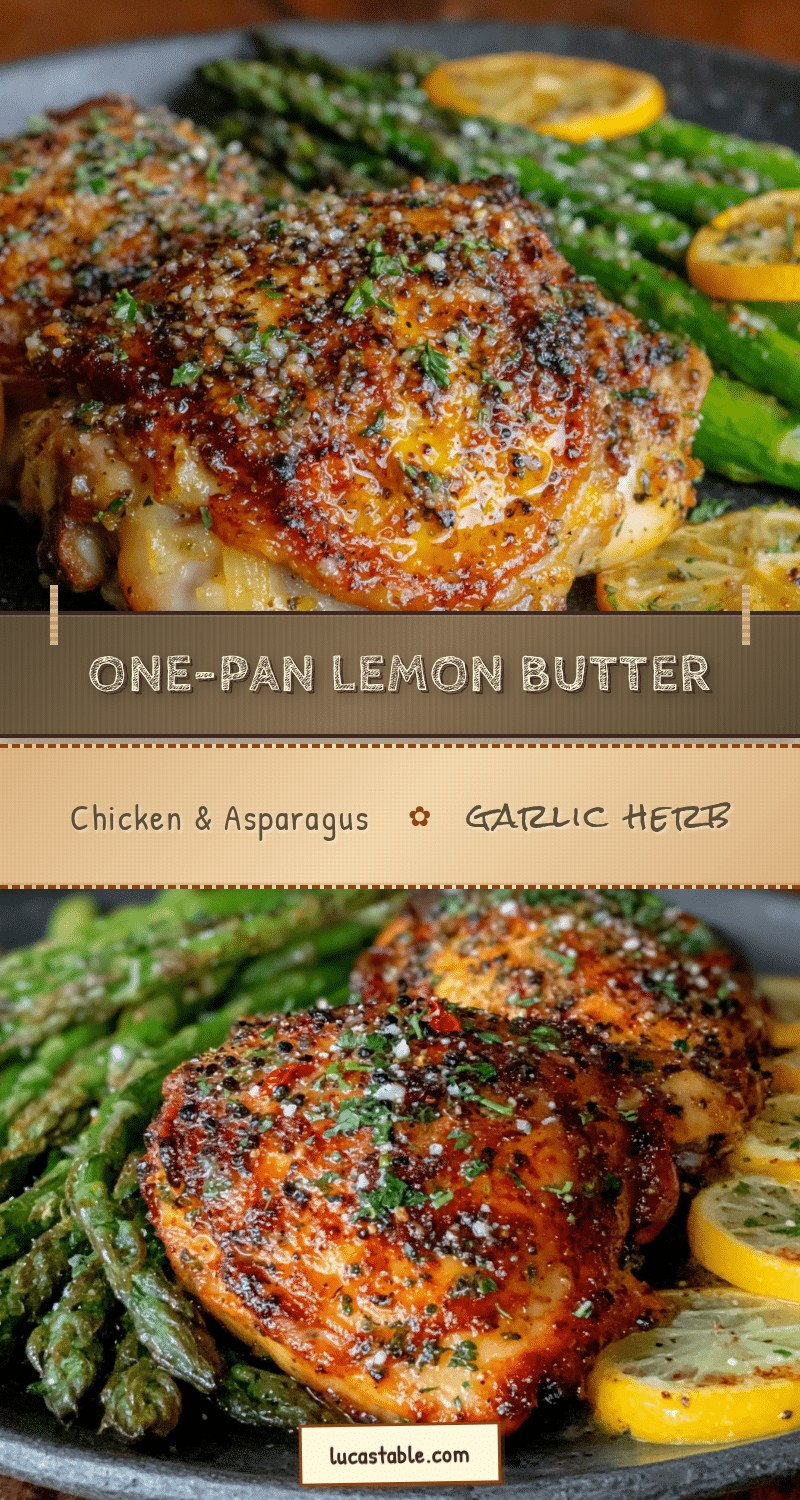
Easy One-Pan Lemon Garlic Butter Chicken and Asparagus
Juicy golden chicken and tender-crisp asparagus come together in a luscious lemon garlic butter sauce, all made in one pan in under 30 minutes. It’s a quick, elegant weeknight dinner that tastes like you tried, but with minimal cleanup.
- Prep Time: 10 minutes
- Cook Time: 15 minutes
- Total Time: 25 minutes
- Yield: 2 servings 1x
- Category: Main Course
- Cuisine: American
Ingredients
- 2 boneless, skinless chicken breasts (about 1.5 pounds total)
- Salt and black pepper, to taste
- ½ teaspoon garlic powder
- ½ teaspoon paprika (smoked or sweet)
- 2 tablespoons olive oil
- 1 bunch asparagus (about 1 pound), woody ends trimmed
- 1 tablespoon olive oil
- Salt and black pepper, to taste
- 3 tablespoons unsalted butter
- 4 cloves garlic, minced
- ¼ cup low-sodium chicken broth
- 2 tablespoons fresh lemon juice (from about 1 lemon)
- 1 teaspoon lemon zest
- 1 tablespoon chopped fresh parsley (optional, for garnish)
Instructions
- Pat the chicken breasts dry with paper towels. Season both sides generously with salt, black pepper, garlic powder, and paprika. Mix spices together first if desired.
- Heat 2 tablespoons olive oil in a large skillet over medium-high heat until shimmering. Place the chicken in the pan in a single layer (cook in batches if needed). Cook for 4-5 minutes on the first side until deep golden brown, then flip and cook for another 3-4 minutes until the internal temperature reaches 165°F (74°C). Transfer chicken to a plate and tent loosely with foil.
- Add 1 tablespoon olive oil to the same skillet. Add the asparagus in a single layer, season with salt and pepper, and cook for 4-5 minutes, turning occasionally, until bright green and tender-crisp. Transfer to the plate with the chicken.
- Reduce heat to medium. Add 3 tablespoons butter to the skillet. Once melted, add minced garlic and cook for 30 seconds, stirring constantly, until fragrant.
- Pour in chicken broth and lemon juice, and add lemon zest. Scrape up any browned bits from the bottom of the pan. Let the sauce simmer for 1-2 minutes until slightly thickened. Taste and adjust seasoning.
- Return the chicken and asparagus to the skillet, spooning the sauce over the top. Warm through for about 1 minute. Garnish with fresh parsley if desired. Serve immediately.
Notes
For even cooking, pound chicken breasts to ¾-inch thickness if uneven. Use fresh garlic for best flavor. Deglaze the pan thoroughly to incorporate all browned bits. Asparagus can be swapped with green beans, broccoli, or broccolini. For dairy-free, substitute butter with vegan butter or olive oil. Leftovers keep in the refrigerator for up to 3 days; reheat on the stovetop with a splash of broth.
Nutrition
- Serving Size: 1 chicken breast wit
- Calories: 420
- Sugar: 3
- Sodium: 620
- Fat: 24
- Saturated Fat: 9
- Carbohydrates: 8
- Fiber: 3
- Protein: 42
Keywords: one-pan chicken, lemon garlic butter chicken, asparagus recipe, quick weeknight dinner, easy chicken dinner, one skillet meal