For a while, I just accepted that homemade elderberry syrup wasn’t going to taste quite right—too bitter, too thin, or oddly spiced. There was always something missing whenever I tried to make it myself or bought a jar off the shelf. I remember one chilly afternoon when I was nursing a scratchy throat, standing over a pot of simmering elderberries and wondering if I’d ever get that balance just right. The taste needed to be comforting, with a little warmth and sweetness, but not over the top. Something simple yet effective.
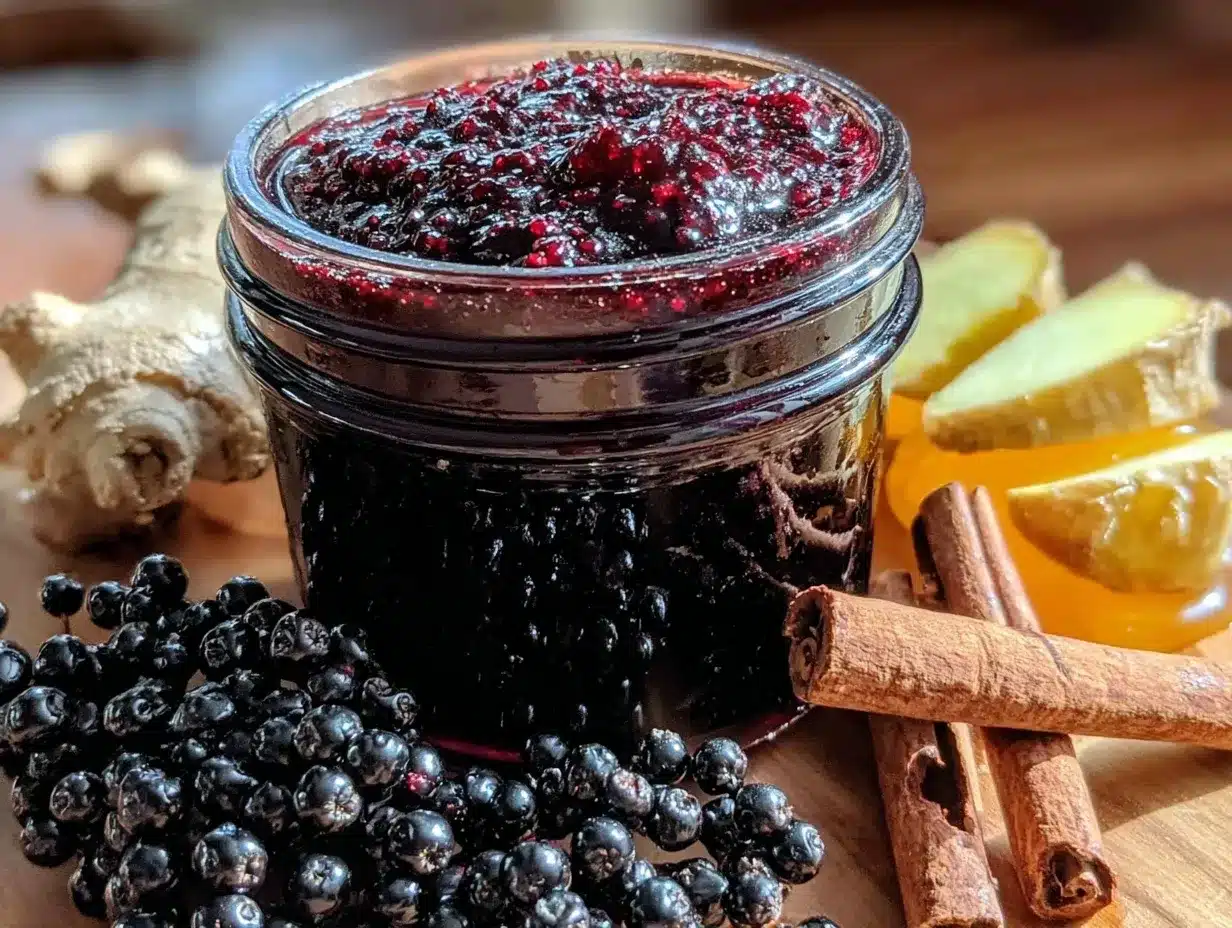
The smell of fresh ginger mingling with cinnamon sticks filled the kitchen, and the syrup slowly thickened into this deep, rich purple liquid that promised more than just flavor — it promised a little relief, a homemade remedy that felt honest. This recipe for healthy homemade elderberry syrup with ginger and cinnamon became my quiet answer to what I was missing. It’s not flashy or complicated, but it’s one I trust to have on hand, especially when the seasons change and a cold seems inevitable.
What stuck with me wasn’t just the taste but the ease of making it and knowing exactly what was going in. There’s a certain satisfaction in pouring a spoonful of syrup made by your own hands, with ingredients you recognize. That’s why this recipe lingered long after the first batch was gone—it’s reliable, natural, and comforting in a way that feels real.
Why You’ll Love This Recipe
This healthy homemade elderberry syrup recipe with ginger and cinnamon is the kind of kitchen staple that quietly earns its place in your routine. Here’s why it stands out:
- Quick & Easy: It comes together in just about 30 minutes, so you won’t feel like you’re spending hours on a homemade remedy.
- Simple Ingredients: You don’t need a specialty store for this one—elderberries, fresh ginger, cinnamon sticks, and a few pantry essentials are all it takes.
- Perfect for Cold Seasons: Whether you’re feeling a tickle in your throat or just want to boost your immune system, this syrup feels like a warm hug in a bottle.
- Crowd-Pleaser: Even picky family members tend to take a spoonful without complaint, thanks to the balanced sweetness and gentle spice.
- Unbelievably Delicious: The syrup has a smooth, rich texture with the perfect hint of ginger’s zing and cinnamon’s warmth, making it easy to mix into tea or drizzle over yogurt.
This isn’t just another elderberry syrup recipe—it’s one that I’ve tuned over several seasons, finding the sweet spot between medicinal and tasty. The trick is in simmering the berries just right and blending fresh ginger with cinnamon sticks, creating a flavor profile that’s comforting without being overwhelming. Honestly, it’s the kind of syrup that makes you pause and appreciate the little things in homemade remedies.
Plus, it feels like a small act of care you can give yourself or your loved ones, quietly powerful without any fuss. If you’ve ever made your own remedies or enjoy cozy, nourishing kitchen projects, this one fits right in.
What Ingredients You Will Need
This recipe uses simple, wholesome ingredients that work together to deliver bold flavor and a satisfying texture without fuss. Most of these are pantry staples, and the fresh components are easy to find at your local market or grocery store.
- Fresh or dried elderberries: 1 cup (fresh) or ½ cup dried (dried elderberries pack more flavor but require longer simmering)
- Fresh ginger root: 2-3 inches, peeled and thinly sliced (adds a bright, spicy kick)
- Cinnamon sticks: 2 sticks (for warmth and subtle sweetness)
- Raw honey: ½ to ¾ cup (adjust to taste; raw honey adds natural sweetness and antimicrobial benefits)
- Water: 4 cups (filtered is best for pure flavor)
- Optional: A pinch of ground cloves or star anise for extra depth (use sparingly)
I personally prefer using dried elderberries from a trusted brand like Starwest Botanicals, but fresh elderberries in season work beautifully too. When using dried, the syrup tends to be richer and more concentrated. If you want to keep it vegan or avoid honey, swap it out with pure maple syrup, which adds a different kind of sweetness but still blends well.
For the ginger, fresh is non-negotiable—you can’t quite replicate that fresh bite with powders here. The cinnamon sticks slowly release their flavor, which is a nicer alternative to ground cinnamon, giving the syrup a rounded, mellow character.
Equipment Needed
- Medium saucepan (at least 2-quart capacity) — I use a heavy-bottomed one to avoid scorching
- Fine mesh strainer or cheesecloth — to strain the elderberries and spices cleanly
- Measuring cups and spoons
- Wooden spoon or heat-proof spatula
- Glass jar or bottle for storing the syrup — sterilized for freshness
- Optional: Microplane grater if you prefer to grate ginger instead of slicing
If you don’t have cheesecloth, a clean cotton kitchen towel works fine for straining. I’ve found that using a fine mesh strainer alone can leave tiny bits behind, so doubling up with cheesecloth gives the clearest syrup. For storage, a small mason jar with a tight lid keeps the syrup fresh and easy to pour.
Preparation Method
- Prepare the ingredients: Peel and slice the ginger root into thin pieces to release its flavor quickly. Measure out your elderberries (fresh or dried) and gather your cinnamon sticks. This should take about 5-7 minutes.
- Combine in saucepan: In your medium saucepan, add the elderberries, sliced ginger, cinnamon sticks, and 4 cups (960 ml) of water.
- Bring to a simmer: Heat over medium-high until it starts to bubble gently, then reduce to low and let it simmer uncovered for 45 minutes to an hour. Stir occasionally to prevent sticking. You’ll notice the water turning a deep purple color and the aroma filling the kitchen.
- Check the consistency: The liquid should reduce by about half, thickening slightly. If it’s too thin, you can simmer a little longer, but watch carefully to avoid burning.
- Remove from heat and strain: Place your fine mesh strainer lined with cheesecloth over a bowl or jug. Pour the mixture through and press gently with a spoon to extract as much syrup as possible without forcing through solids.
- Add honey: Once the syrup has cooled slightly (warm but not hot), stir in ½ to ¾ cup (120-180 ml) of raw honey. Adjust sweetness as you like, but don’t add honey while the mixture is hot—heat can destroy some of its beneficial enzymes.
- Transfer to jar: Pour the finished syrup into a clean glass jar or bottle. Seal tightly and store in the refrigerator.
- Label and date: I always jot down the date on the jar so I know it’s fresh. The syrup keeps well up to 3 weeks refrigerated.
Pro tip: If you want a smoother syrup, you can use a blender before straining, but I prefer the rustic texture and natural color you get without blending.
Cooking Tips & Techniques
When making elderberry syrup, patience is key. Simmering slowly extracts the beneficial compounds and flavors from the berries and spices without turning bitter. One time, I rushed the simmering step and ended up with a watery syrup that tasted bland—lesson learned.
Straining carefully is important too. Pressing the solids gently helps get the most from the mixture without clouding your syrup with pulp. If you leave the solids in, the syrup can ferment or spoil faster.
Adding honey only after the syrup cools a bit preserves its natural enzymes and health benefits. I once added honey to hot syrup and noticed it lost some of its floral notes and felt less vibrant.
Using fresh ginger over powdered makes a huge difference—fresh ginger brings brightness and a gentle heat that warms the throat, perfect for this syrup’s purpose.
Timing-wise, this syrup can be prepped ahead and kept in the fridge ready to spoon out at the first sign of a cold, or just to enjoy stirred into your tea or morning oatmeal. It’s a simple multitasking-friendly remedy you can make while prepping dinner, like when I often throw together a quick lemon chicken or simmer a pot of fried rice.
Variations & Adaptations
This elderberry syrup recipe is a great base for customizing depending on your taste or dietary needs.
- For extra immune support: Add a pinch of ground cloves or a star anise pod during simmering for a deeper spice note.
- Vegan option: Replace raw honey with pure maple syrup or agave nectar—flavor will be slightly different but still delicious.
- Seasonal twist: In late summer, swap some elderberries with fresh blackberries or blueberries for a mixed berry syrup.
- Stronger ginger kick: Double the ginger slices if you prefer a spicier syrup that warms you up faster.
- Alcoholic variation: After straining and cooling, mix in a splash of vodka or brandy for a homemade elderberry tincture.
I’ve tried the maple syrup swap for a vegan friend, and honestly, it was just as good and a little sweeter. Another time, I tossed in a couple of dried rose hips for floral notes, which made it a bit more complex and lovely for sipping in herbal tea blends.
Serving & Storage Suggestions
This elderberry syrup is lovely served at room temperature or warmed gently. I often stir a spoonful into hot water or tea, which mellows the syrup’s intensity and makes a soothing drink.
You can also drizzle it over pancakes, yogurt, or oatmeal for a subtle fruity-spice flavor boost. It’s surprisingly versatile, adding a natural touch of sweetness and warmth.
Store the syrup in an airtight glass jar or bottle in the refrigerator, where it will stay fresh for up to three weeks. For longer storage, freezing in ice cube trays works well—just pop out a cube whenever you want a quick dose.
When reheating, warm gently on the stove or in a microwave-safe container until just warm—don’t boil, as that can break down the honey and alter the flavor.
Over time, the flavors meld and deepen, so if you make it a week ahead, you might notice it tastes even better. Kind of like how a good tuna pasta or aglio olio spaghetti seems to improve after resting a bit.
Nutritional Information & Benefits
This elderberry syrup packs a nutritional punch beyond its comforting flavor. Elderberries are rich in antioxidants and vitamins A, B, and C, which are great for immune system support. Ginger adds anti-inflammatory compounds, while cinnamon contributes to blood sugar regulation and antimicrobial properties.
One tablespoon (about 20 ml) of this syrup contains approximately:
| Calories | 40-50 |
|---|---|
| Sugar | 10-12 grams (from honey) |
| Vitamin C | Moderate amount |
This recipe is naturally gluten-free and can be adapted for vegan diets by swapping honey. Just keep in mind the raw honey content if you’re serving to children under one year old.
I appreciate this syrup as a natural wellness addition—more approachable than supplements, more flavorful than plain teas, and a way to support health through simple, real food ingredients.
Conclusion
This healthy homemade elderberry syrup with ginger and cinnamon is a quiet but powerful addition to any kitchen. It’s easy to make, tastes genuinely good, and offers that kind of comfort you want when you’re feeling under the weather or just want to support your wellbeing naturally.
Feel free to tweak the spices or sweetness to suit your palate—that’s part of what makes this recipe stick with me. It’s practical, honest, and a little reminder that sometimes the best remedies come from the simplest ingredients.
Whether you’re new to elderberry syrup or have tried others before, this version is worth keeping close by, especially during cold and flu season. If you give it a try, I’d love to hear how you make it your own and what little kitchen rituals you pair it with.
Here’s to good health and homemade comforts that feel like a warm handshake from the past.
FAQs About Healthy Homemade Elderberry Syrup with Ginger and Cinnamon
How long does homemade elderberry syrup last?
Kept refrigerated in a sealed jar, elderberry syrup lasts up to 3 weeks. For longer storage, freeze it in ice cube trays and thaw as needed.
Can I use elderberry syrup as a cold remedy?
Yes, elderberry syrup is traditionally used to support immune health and may help reduce the duration of cold symptoms when taken early.
Is fresh elderberry better than dried for syrup?
Dried elderberries tend to have a richer, more concentrated flavor and require longer simmering, while fresh elderberries offer a lighter taste and quicker prep.
Can I skip the honey or use another sweetener?
You can substitute honey with maple syrup or agave for a vegan option, though honey has additional antimicrobial benefits if you tolerate it.
How should I take elderberry syrup daily?
Many take 1 tablespoon (15 ml) daily during cold season as a preventative measure, increasing to 1 tablespoon every few hours at the onset of symptoms, but always consult a healthcare provider if unsure.
Pin This Recipe!
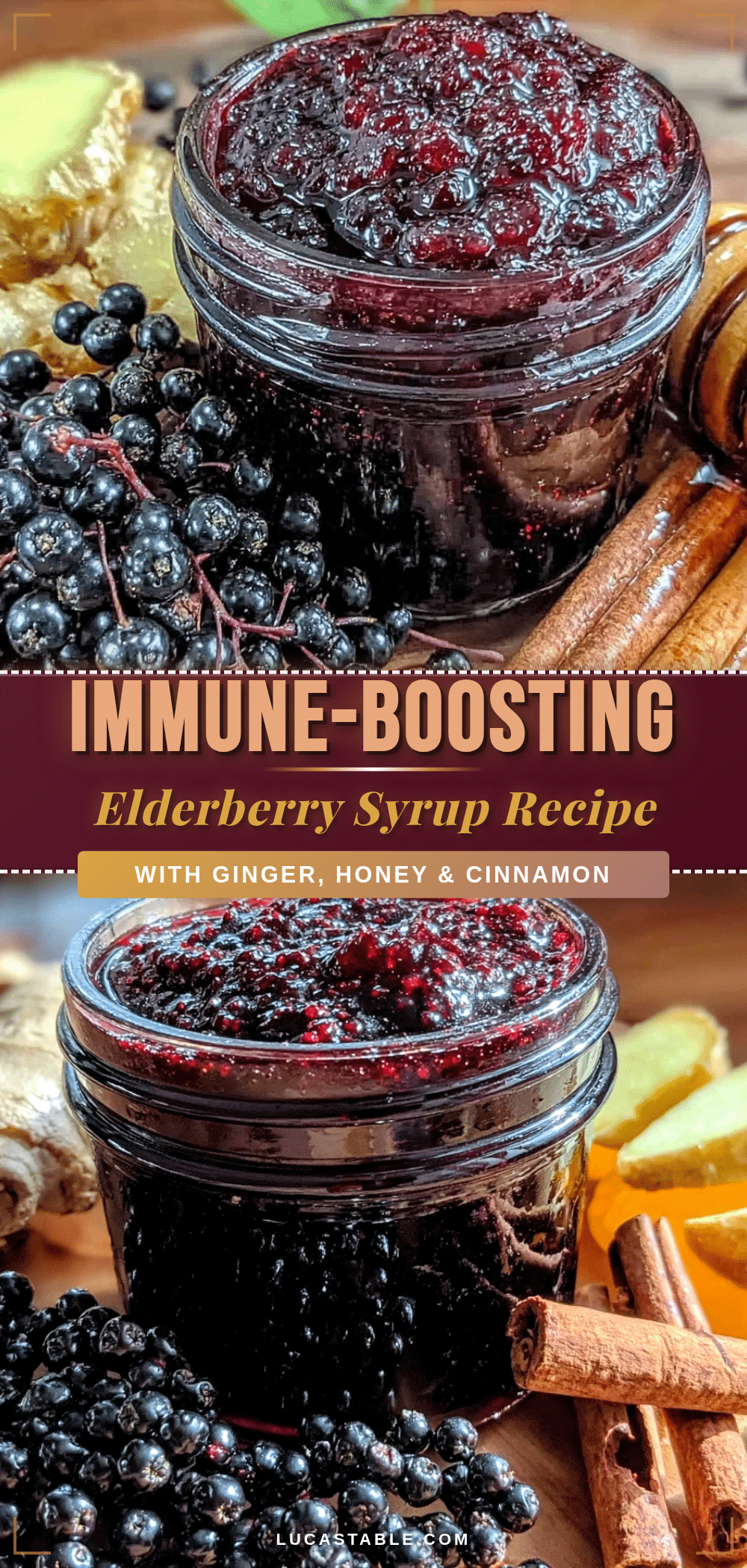
Healthy Homemade Elderberry Syrup Recipe with Ginger and Cinnamon
A simple and comforting elderberry syrup infused with fresh ginger and cinnamon sticks, perfect for immune support and cold seasons. This easy recipe balances warmth and sweetness without being overpowering.
- Prep Time: 10 minutes
- Cook Time: 45-60 minutes
- Total Time: 55-70 minutes
- Yield: About 1.5 cups syrup (approximately 12 servings of 1 tablespoon each) 1x
- Category: Health Remedy
- Cuisine: American
Ingredients
- 1 cup fresh elderberries or ½ cup dried elderberries
- 2–3 inches fresh ginger root, peeled and thinly sliced
- 2 cinnamon sticks
- ½ to ¾ cup raw honey (adjust to taste)
- 4 cups filtered water
- Optional: pinch of ground cloves or star anise
Instructions
- Peel and slice the ginger root into thin pieces. Measure out elderberries and gather cinnamon sticks.
- In a medium saucepan, combine elderberries, sliced ginger, cinnamon sticks, and 4 cups (32 fl oz) of water.
- Bring to a gentle simmer over medium-high heat, then reduce to low and simmer uncovered for 45 to 60 minutes, stirring occasionally.
- Check that the liquid has reduced by about half and thickened slightly. Simmer longer if needed but avoid burning.
- Remove from heat and strain the mixture through a fine mesh strainer lined with cheesecloth into a bowl or jug, pressing gently to extract syrup.
- Allow syrup to cool until warm but not hot, then stir in ½ to ¾ cup raw honey. Adjust sweetness as desired.
- Pour syrup into a sterilized glass jar or bottle, seal tightly, and store in the refrigerator.
- Label the jar with the date. Syrup keeps well up to 3 weeks refrigerated.
Notes
Use dried elderberries for a richer, more concentrated syrup but simmer longer. Add honey only after syrup cools to preserve enzymes. Fresh ginger is preferred over powdered for best flavor. Store refrigerated up to 3 weeks or freeze in ice cube trays for longer storage. For vegan option, substitute honey with pure maple syrup or agave nectar.
Nutrition
- Serving Size: 1 tablespoon (about
- Calories: 45
- Sugar: 11
- Carbohydrates: 12
- Fiber: 1
Keywords: elderberry syrup, homemade elderberry syrup, elderberry remedy, ginger syrup, cinnamon syrup, immune support, cold remedy, natural syrup, elderberry recipe