“You put what in your pasta sauce?” My neighbor Gina peered over my shoulder at the bubbling pot on the stove, her skepticism practically steaming up the kitchen. I had just told her the secret to the deep, sweet, almost smoky flavor filling her house through the open window. Anchovy paste. Just a tiny smear. She shook her head and walked away, muttering something about “ruining a perfectly good jar of marinara.” That was three years ago. Last week, she showed up at my door holding a bag of Roma tomatoes from her garden and a sheepish grin.
This homemade roasted garlic tomato sauce wasn’t born in some fancy restaurant kitchen or passed down through generations of Italian grandmothers. It came from a very practical problem: I had a fridge full of tomatoes that were about two days past their prime and a head of garlic that had started to sprout. Roasting seemed like the obvious answer—it concentrates flavors, softens textures, and makes everything taste like it took way more effort than it actually did. The first batch was good. The second batch, after I figured out the right balance of olive oil and a splash of balsamic, was something else entirely.
I honestly didn’t plan on sharing this recipe. It felt too simple, you know? Like, who needs instructions for roasting vegetables and blending them? But after Gina’s conversion (and the three other neighbors who started “borrowing” cups of it), I realized this homemade roasted garlic tomato sauce had become a quiet staple in our little corner of the street. It’s the kind of recipe you don’t realize you need until you taste it. And then you can’t imagine going back to the jarred stuff.
Why You’ll Love This Recipe
This homemade roasted garlic tomato sauce isn’t just another red sauce recipe floating around the internet. It’s the one you’ll actually want to make on a Sunday afternoon and then hide in the back of your fridge so nobody uses it all at once.
- Deep, Complex Flavor Without the Work : Roasting transforms simple canned tomatoes and fresh garlic into something that tastes like it simmered for hours. The caramelization does all the heavy lifting for you.
- Pantry-Friendly Ingredients : You probably have everything you need right now. Canned whole tomatoes, garlic, olive oil, and a few pantry staples. No trips to specialty stores or expensive imported goods required.
- Incredibly Versatile : Use it on pasta, as a pizza base, spooned over roasted vegetables, or even as a dipping sauce for crusty bread. It’s a workhorse recipe that adapts to whatever you’re making.
- Freezer-Friendly : Make a double batch and freeze half. Future you will be very grateful on a busy Tuesday night when dinner needs to happen fast.
- Better Than Store-Bought : Once you taste this, you’ll notice the difference immediately. No added sugar (unless you want it), no preservatives, no weird textures. Just pure, honest tomato flavor.
What makes this version different from every other roasted tomato sauce? It’s the combination of roasting the garlic whole (not just the tomatoes) and finishing with a tiny splash of balsamic vinegar. That little trick brightens everything without making it taste like salad dressing. Trust me on this one.
This sauce has gotten me through lazy Sundays, frantic weekday dinners, and even a few impromptu dinner parties where I pretended I’d been cooking all day. It’s the kind of recipe that makes you look like you know what you’re doing in the kitchen—even when you’re just following the same simple steps I’m about to share with you.
What Ingredients You Will Need
This recipe keeps things simple, using ingredients that work together to create something much greater than the sum of their parts. Here’s what you’ll need and why each one matters.
- Canned Whole Tomatoes (28 ounces) : San Marzano tomatoes are my preference here—they’re sweeter and less acidic than standard canned tomatoes. But honestly, any good-quality whole canned tomato will work. Don’t use crushed or diced for this; whole tomatoes have better texture after roasting and give you more control over the final consistency.
- Garlic (1 whole head) : Yes, a whole head. Roasting mellows the sharpness dramatically, turning it sweet and buttery. You’ll use the entire thing—don’t be tempted to use less. The roasted garlic is what gives this sauce its signature depth.
- Olive Oil (¼ cup, plus extra for drizzling) : Use a good quality extra virgin olive oil here. It’s a major flavor component, so don’t skimp with the cheap stuff. I like California Olive Ranch for everyday cooking—it’s reliable without being too expensive.
- Yellow Onion (1 medium) : Finely diced. The onion adds a subtle sweetness and body to the sauce. It practically melts into the background after roasting, leaving only flavor behind.
- Dried Oregano (1 teaspoon) : Mediterranean oregano works best. It holds up well to roasting and adds that classic Italian herbaceousness without being overpowering.
- Dried Basil (1 teaspoon) : I know, fresh basil is lovely. But for roasting, dried basil holds its flavor better and won’t turn black in the oven. Save the fresh stuff for garnishing at the end.
- Red Pepper Flakes (½ teaspoon, optional) : Adds a gentle warmth, not outright heat. Leave it out if you’re sensitive to spice, but I think it rounds out the flavor nicely.
- Balsamic Vinegar (1 tablespoon) : This is my secret weapon. A tiny splash at the end brightens the sauce and adds complexity without making it taste vinegary. Use a decent quality balsamic—not the fancy aged stuff, but not the cheapest either.
- Salt and Black Pepper (to taste) : Kosher salt is best for cooking. Season gradually and taste as you go.
- Fresh Basil Leaves (for garnish, optional) : A few torn leaves right before serving add a pop of freshness and color.
Equipment Needed
Nothing too fancy here. You probably already own most of this.
- Baking Sheet or Roasting Pan : A rimmed baking sheet works perfectly. Line it with parchment paper for easier cleanup—trust me, roasted tomato residue can be stubborn.
- Blender or Immersion Blender : A regular blender gives you the smoothest results. An immersion blender works too, but you’ll get a slightly chunkier texture. I actually prefer the immersion blender for a more rustic sauce.
- Large Skillet or Dutch Oven : For finishing the sauce after blending. A heavy-bottomed pot works best to prevent sticking.
- Chef’s Knife and Cutting Board : For dicing the onion and prepping the garlic head.
- Measuring Spoons and Cups : Precision matters less here than in baking, but it’s good to have them handy.
- Wooden Spoon or Silicone Spatula : For stirring and scraping every last bit of goodness from the pan.
I’ve made this sauce with a cheap blender and a beat-up baking sheet, and it still turned out great. Don’t let equipment hold you back. If you have a sheet pan and something to blend with, you’re good to go.
Preparation Method
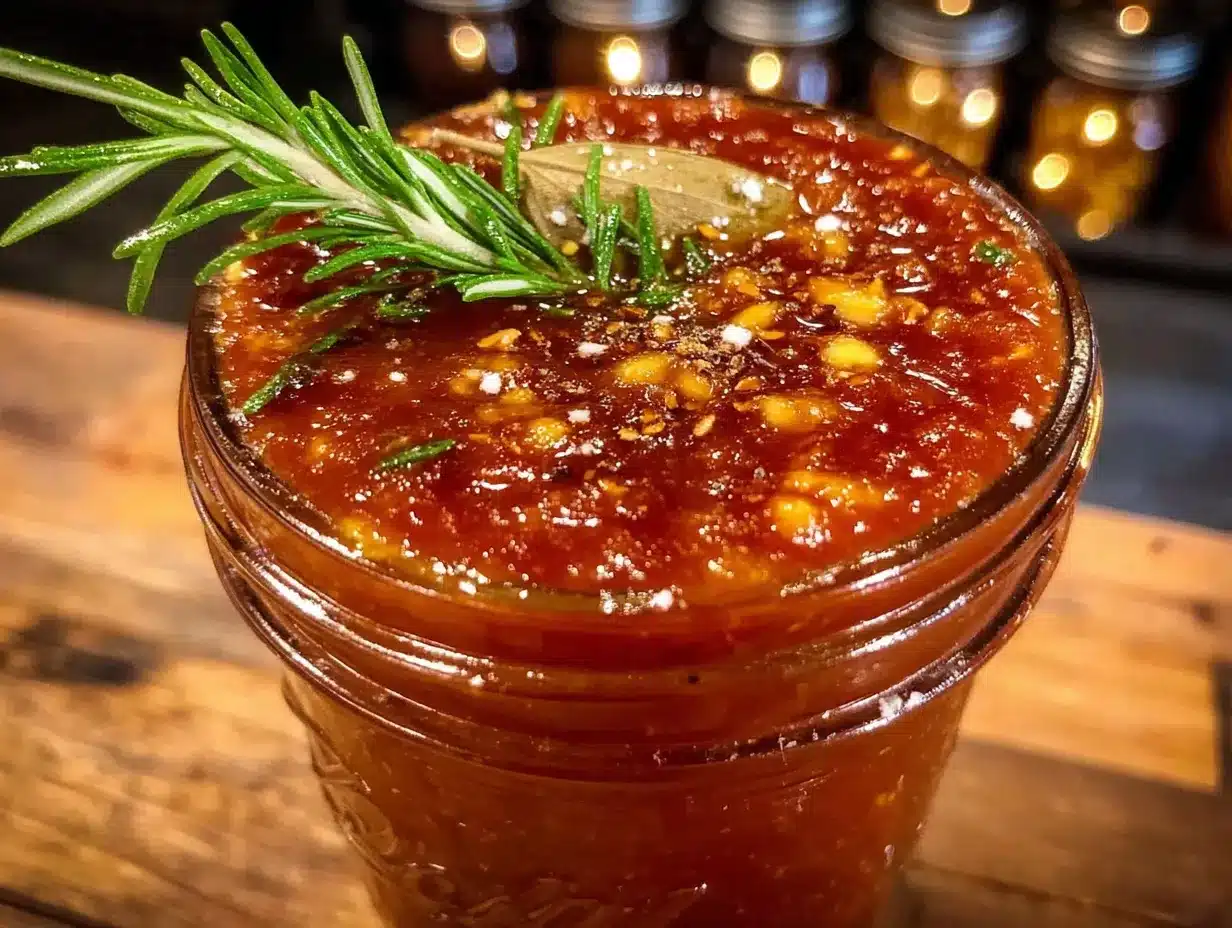
- Preheat your oven to 400°F (200°C). Give it a full 15-20 minutes to come to temperature. A properly hot oven is key for good caramelization.
- Prepare the tomatoes and garlic. Open your can of whole tomatoes and drain them, reserving the juice in a small bowl. You’ll use it later. Place the drained tomatoes on your lined baking sheet. Cut the top off the head of garlic (about ¼ inch from the top) to expose the cloves. Drizzle the cut surface with a little olive oil, wrap the head loosely in aluminum foil, and place it on the same baking sheet.
- Roast everything together. Place the baking sheet in the oven and roast for 40-45 minutes. The tomatoes should look wrinkled and slightly charred around the edges. The garlic should be soft and golden when you squeeze the cloves—they’ll practically ooze out of their skins. Halfway through, give the tomatoes a gentle stir so they roast evenly.
- While things are roasting, sauté the onion. In your large skillet or Dutch oven, heat the ¼ cup of olive oil over medium heat. Add the diced onion and cook for 6-8 minutes, stirring occasionally, until it’s soft and translucent. Don’t rush this step—browned onions add bitterness, not sweetness. You want them soft, not crispy.
- Add the dried herbs. Once the onion is soft, stir in the dried oregano, dried basil, and red pepper flakes (if using). Cook for another minute until fragrant. This blooms the herbs and wakes up their flavors.
- Combine the roasted ingredients. When the tomatoes and garlic are done, let them cool for about 5 minutes. Then, squeeze the roasted garlic cloves out of their skins—they should come out easily. Add the roasted tomatoes and all the garlic cloves to the skillet with the onions. Pour in the reserved tomato juice from the can. Stir everything together and let it simmer for 2-3 minutes.
- Blend until smooth. Carefully transfer the mixture to your blender. Start on low speed and gradually increase to high. Blend for 30-45 seconds until completely smooth. Be careful with hot liquids in a blender—remove the center cap from the lid and cover it with a kitchen towel to let steam escape. Alternatively, use an immersion blender directly in the pot if you prefer a chunkier texture.
- Finish the sauce. Return the blended sauce to the skillet (if you used a blender). Stir in the balsamic vinegar. Season with salt and black pepper to taste. Let it simmer on low heat for another 5-10 minutes to meld the flavors together. The sauce should be thick enough to coat the back of a spoon but still pourable.
- Taste and adjust. This is the most important step. Dip a spoon in and taste it. Does it need more salt? A pinch more balsamic? A tiny bit of sugar if the tomatoes were particularly acidic? Trust your palate here. Every batch of tomatoes is slightly different, so adjust accordingly.
- Serve or store. Use immediately over your favorite pasta, or let it cool completely before transferring to storage containers. The sauce will thicken slightly as it cools.
The whole process takes about an hour, but most of that is hands-off roasting time. It’s the perfect thing to make while you’re doing other Sunday chores.
Cooking Tips & Techniques
I’ve made this homemade roasted garlic tomato sauce more times than I can count, and I’ve definitely learned a few things the hard way. Here’s what I wish someone had told me.
Don’t skip draining the tomatoes. I made this mistake once, thinking more liquid would mean more sauce. It just meant watery sauce that took forever to reduce. The reserved juice gives you control over the final consistency. Add it back gradually if the sauce seems too thick after blending.
Roast the garlic separately if your oven runs hot. Garlic can burn faster than tomatoes, especially if your oven has hot spots. If you’re worried, wrap the garlic in foil and place it on a separate small pan. Check it at 30 minutes—it might be done before the tomatoes.
Let the roasted garlic cool before squeezing. I cannot stress this enough. Hot roasted garlic is basically molten lava in a papery skin. Give it a few minutes to cool, or you’ll be picking garlic-scented burns off your fingers for days. Ask me how I know.
Use the right blending technique. When blending hot liquids, always start on low speed and increase gradually. The steam needs somewhere to go. Remove the center cap from your blender lid and cover the opening with a folded kitchen towel. This prevents pressure buildup and potential explosions. Yes, I’ve cleaned tomato sauce off my kitchen ceiling. It’s not fun.
Season in layers. Add salt at the beginning (with the onions), a little more after blending, and adjust at the end. This builds depth of flavor rather than just surface-level saltiness. The same goes for the balsamic—add it at the end so its brightness doesn’t cook away.
Make extra and freeze in portions. This sauce freezes beautifully. I like to freeze it in silicone muffin trays for single-serving portions. Once frozen, pop them out and store in a freezer bag. Perfect for those nights when you need a quick dinner but don’t want to order takeout.
Variations & Adaptations
This recipe is wonderfully flexible. Here are some ways to make it your own.
Fresh Tomato Version : If tomatoes are in season, use 2 pounds of ripe Roma or San Marzano tomatoes instead of canned. Cut them in half lengthwise, toss with olive oil and salt, and roast cut-side down until the skins wrinkle and the edges char. The flavor is even more intense, and you get that lovely summer sweetness.
Vegan and Oil-Free : Skip the olive oil for sautéing the onions and use vegetable broth or water instead. Roast the tomatoes and garlic without oil on a silicone baking mat. The sauce won’t be as rich, but it’ll still be delicious. Add a splash of balsamic at the end for brightness.
Herb Variations : Swap the dried oregano and basil for fresh thyme and rosemary. Use 2 sprigs of each, add them to the roasting pan with the tomatoes, and remove the stems before blending. The flavor is more woodsy and rustic—perfect for a heartier pasta dish.
Smoky Roasted Tomato Sauce : Add ½ teaspoon of smoked paprika to the onion mixture when you add the herbs. It gives the sauce a subtle smokiness that pairs beautifully with grilled vegetables or a simple crispy chicken parmesan.
Spicy Arrabbiata Style : Double the red pepper flakes and add a finely chopped fresh red chili (like a Fresno or serrano) with the onions. The result is a spicy, vibrant sauce that’s perfect for a quick penne arrabbiata.
Low-Acid Option : If you’re sensitive to tomato acidity, add a pinch of baking soda after blending. It neutralizes some of the acid without affecting the flavor. Start with ¼ teaspoon, stir, and taste. Add more if needed.
Serving & Storage Suggestions
This sauce is incredibly versatile, but here’s how I like to use it most.
Serving Temperature and Presentation : Serve the sauce hot, straight from the skillet. Toss it with al dente pasta (I love it with rigatoni or pappardelle) and finish with fresh basil and a drizzle of good olive oil. A sprinkle of Parmesan or Pecorino Romano on top never hurts either.
Complementary Dishes : This sauce is the perfect partner for so many things. Use it as a base for creamy chicken marsala, spoon it over roasted vegetables, or spread it on homemade pizza dough. It also works beautifully as a dipping sauce for crusty bread or alongside crispy chicken quesadillas for a fun twist.
Storage Instructions : Let the sauce cool completely before storing. Transfer to an airtight container and refrigerate for up to 5 days. The flavors actually deepen after a day or two, so it’s even better on day two.
Freezer Instructions : Freeze in portion-sized containers or silicone muffin trays. Once frozen solid, transfer to a freezer-safe bag or container. The sauce keeps well for up to 3 months. Thaw overnight in the refrigerator or reheat directly from frozen in a saucepan over low heat.
Reheating Tips : Reheat gently on the stovetop over medium-low heat, stirring occasionally. If the sauce seems too thick after freezing, add a splash of water or pasta cooking water to loosen it up. Avoid microwaving if possible—it can make the sauce separate and lose its silky texture.
How Flavors Develop : Like most tomato-based sauces, this one tastes even better the next day. The roasted garlic mellows further, and the herbs meld together into a cohesive background flavor. If you can, make it a day ahead and let it rest in the fridge before serving.
Nutritional Information & Benefits
This homemade roasted garlic tomato sauce is not just delicious—it’s also packed with good-for-you ingredients.
- Calories : Approximately 120 per ½ cup serving
- Total Fat : 8g (mostly from heart-healthy olive oil)
- Saturated Fat : 1g
- Sodium : varies based on added salt, approximately 300-400mg
- Total Carbohydrates : 12g
- Dietary Fiber : 3g
- Sugars : 7g (naturally occurring from tomatoes and onions)
- Protein : 2g
- Vitamin C : 25% of the Daily Value
- Vitamin A : 15% of the Daily Value
- Potassium : 10% of the Daily Value
Tomatoes are rich in lycopene, a powerful antioxidant that becomes more bioavailable when cooked. The olive oil helps your body absorb it even better. Garlic is known for its immune-supporting properties, and onions provide prebiotic fiber for gut health. This sauce is naturally vegan, gluten-free, dairy-free, and nut-free. It contains no added sugars—just the natural sweetness of roasted vegetables.
Conclusion
This homemade roasted garlic tomato sauce has become a staple in my kitchen for good reason. It’s simple enough for a Tuesday night but impressive enough for company. The roasting does all the hard work, transforming basic ingredients into something that tastes like it simmered all day. And honestly, the smell alone is worth making it—your whole house will smell incredible.
I hope you give this recipe a try and make it your own. Add more garlic if you’re a garlic lover. Throw in some fresh herbs from your garden. Adjust the spice level to suit your family. The beauty of this sauce is that it’s forgiving and adaptable. It wants to be customized.
When you make it—and I really hope you do—come back and let me know how it turned out. Did you change anything? Serve it with something unexpected? I genuinely love hearing about your kitchen adventures. Drop a comment below or tag me in your photos. Happy cooking, and remember: the best sauce is the one you make yourself.
Frequently Asked Questions
Can I use fresh tomatoes instead of canned?
Absolutely. Use 2 pounds of ripe Roma tomatoes, cut them in half, and roast them cut-side down until wrinkled and slightly charred. The flavor will be even more intense and sweet, especially during summer when tomatoes are at their peak.
How long does this sauce keep in the refrigerator?
Stored in an airtight container, this sauce stays fresh for up to 5 days in the refrigerator. The flavors actually deepen and improve after a day or two, so don’t be afraid to make it ahead of time.
Can I freeze this sauce?
Yes, it freezes beautifully. Portion it into freezer-safe containers or silicone muffin trays for single servings. It keeps for up to 3 months. Thaw overnight in the fridge or reheat directly from frozen over low heat.
Is this sauce vegan and gluten-free?
Yes! This recipe is naturally vegan, gluten-free, dairy-free, and nut-free. It contains no animal products or gluten-containing ingredients. Just be sure to serve it with gluten-free pasta if that’s a concern.
Can I make this sauce oil-free?
You can. Sauté the onions in vegetable broth or water instead of olive oil. Roast the tomatoes and garlic on a silicone baking mat without oil. The sauce will be lighter and less rich, but still delicious. Add a splash of balsamic at the end for brightness.
Pin This Recipe!
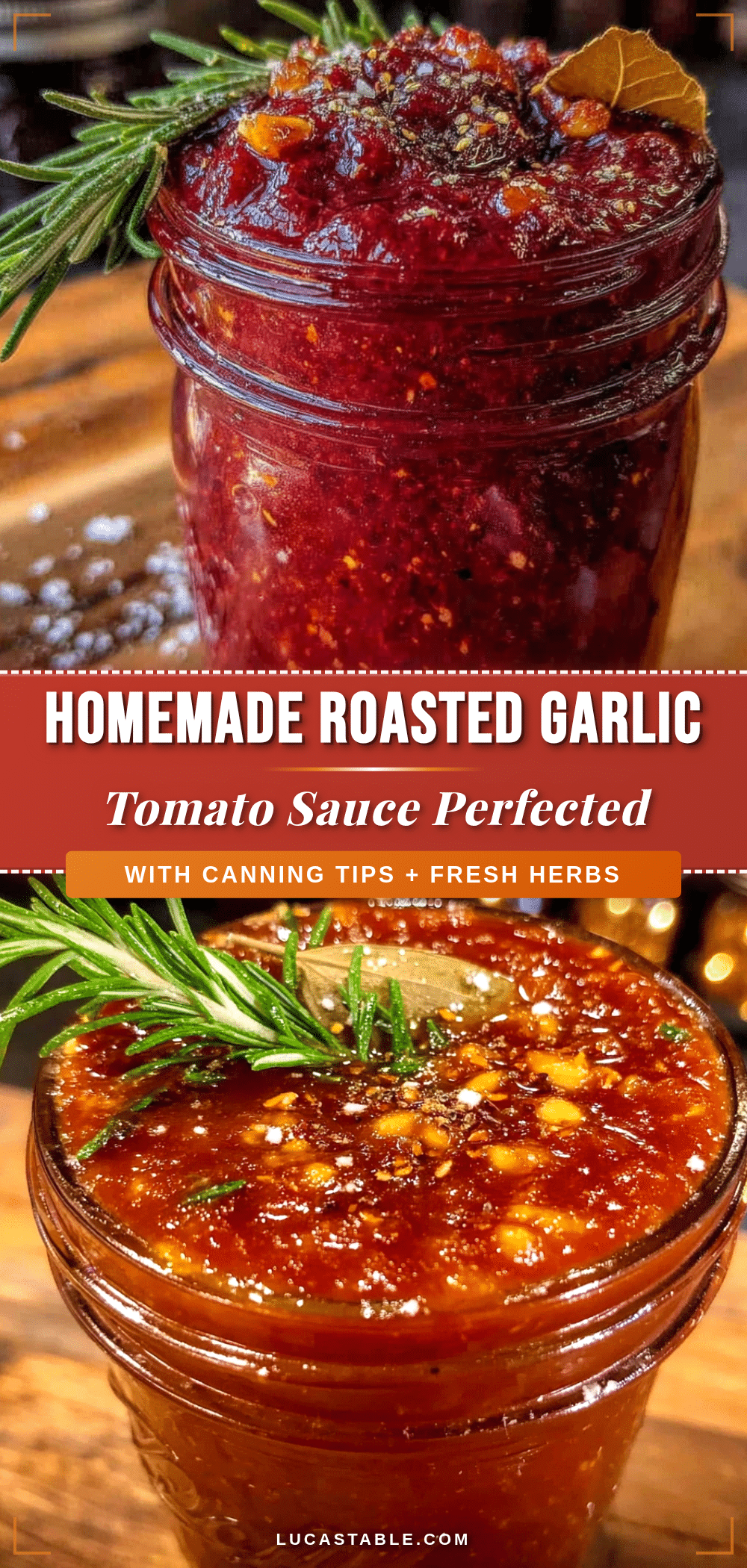
Homemade Roasted Garlic Tomato Sauce (Best Easy Recipe)
This homemade roasted garlic tomato sauce is a simple yet deeply flavorful sauce made by roasting canned tomatoes and a whole head of garlic, then blending with sautéed onions and herbs. It’s perfect for pasta, pizza, or as a versatile base for many dishes.
- Prep Time: 15 minutes
- Cook Time: 45 minutes
- Total Time: 1 hour
- Yield: 4 servings 1x
- Category: Sauce
- Cuisine: Italian
Ingredients
- 28 ounces canned whole tomatoes (preferably San Marzano)
- 1 whole head garlic
- 1/4 cup olive oil, plus extra for drizzling
- 1 medium yellow onion, finely diced
- 1 teaspoon dried oregano
- 1 teaspoon dried basil
- 1/2 teaspoon red pepper flakes (optional)
- 1 tablespoon balsamic vinegar
- Salt and black pepper to taste
- Fresh basil leaves for garnish (optional)
Instructions
- Preheat your oven to 400°F (200°C).
- Drain the canned tomatoes, reserving the juice. Place the drained tomatoes on a lined baking sheet. Cut the top off the head of garlic to expose the cloves, drizzle with olive oil, wrap in foil, and place on the same sheet.
- Roast for 40-45 minutes until tomatoes are wrinkled and slightly charred, and garlic is soft and golden. Stir tomatoes halfway through.
- While roasting, heat 1/4 cup olive oil in a large skillet or Dutch oven over medium heat. Add diced onion and cook 6-8 minutes until soft and translucent.
- Stir in dried oregano, dried basil, and red pepper flakes (if using). Cook 1 minute until fragrant.
- Let roasted tomatoes and garlic cool 5 minutes. Squeeze garlic cloves from skins. Add roasted tomatoes and garlic to the skillet with the onions. Pour in reserved tomato juice. Simmer 2-3 minutes.
- Carefully transfer mixture to a blender. Start on low, increase to high, and blend 30-45 seconds until smooth. (Remove center cap from lid and cover with a towel to let steam escape.) Alternatively, use an immersion blender for a chunkier texture.
- Return blended sauce to the skillet. Stir in balsamic vinegar. Season with salt and pepper. Simmer on low 5-10 minutes until thickened.
- Taste and adjust seasoning as needed.
- Serve immediately over pasta, or let cool completely before storing.
Notes
Don’t skip draining the tomatoes to avoid watery sauce. Roast garlic separately if your oven runs hot. Let roasted garlic cool before squeezing to avoid burns. Season in layers for depth of flavor. Freeze in silicone muffin trays for single-serving portions.
Nutrition
- Serving Size: 1/2 cup
- Calories: 120
- Sugar: 7
- Sodium: 300400
- Fat: 8
- Saturated Fat: 1
- Carbohydrates: 12
- Fiber: 3
- Protein: 2
Keywords: roasted garlic tomato sauce, homemade tomato sauce, easy pasta sauce, roasted tomato sauce, vegan tomato sauce