I was standing in line at the hardware store last October, holding a bag of lightbulbs and a new oven mitt I didn’t really need, when the woman in front of me started telling the cashier about her lasagna. Not just any lasagna—a butternut squash lasagna that she made in a crockpot. I wasn’t trying to eavesdrop, honestly, but she was talking with such enthusiasm that you couldn’t help but listen. She was probably in her sixties, wearing a worn-out flannel shirt, and she kept saying how her family begged for it every fall. I found myself leaning in, pretending to inspect a display of cabinet handles, just to catch the details. She mentioned she used less cheese than traditional recipes, added a pinch of nutmeg, and let it cook all day while she ran errands. By the time she paid, I had already mentally rewritten her recipe in my head. I mean, who expects to find dinner inspiration between the plumbing aisle and the paint samples? That chance encounter stuck with me, and after a few rounds of tweaking and testing, this lightened up version was born. It’s the kind of recipe that makes you wonder why you ever bothered with the fussy, full-fat version. Maybe you’ve been there—looking for a way to get that cozy, layered comfort without spending hours in the kitchen or feeling guilty afterward. This is that recipe.
Why You’ll Love This Lightened Up Crockpot Butternut Squash Lasagna
Let’s be real for a second. Traditional lasagna is a labor of love, but it’s also a labor of time, dishes, and sometimes a heavy feeling afterward. This lightened up crockpot butternut squash lasagna solves all of that. I’ve tested this recipe more times than I can count, tweaking the cheese ratios and the creaminess of the squash sauce until it hit that sweet spot between healthy and indulgent. It’s been family-approved, neighbor-approved, and even picky-eater-approved.
- Quick & Easy: About 20 minutes of prep time, then your crockpot does the heavy lifting. Perfect for busy weeknights or lazy Sunday meal prep.
- Simple Ingredients: Nothing fancy here. You probably already have most of these pantry staples, and the butternut squash is easy to find in the produce section.
- Perfect for Fall: This is the ultimate cozy dinner for crisp autumn evenings, Thanksgiving leftovers, or when you want to impress guests without breaking a sweat.
- Lightened Up: Less cheese, more veggies, and a creamy sauce that doesn’t rely on heavy cream. You get all the comfort with fewer calories.
- Crowd-Pleaser: I’ve served this to everyone from my fitness-obsessed sister to my cheese-loving dad, and they all asked for seconds.
What makes this different from every other lasagna recipe out there? It’s the texture. The butternut squash breaks down into this velvety, almost creamy sauce that coats every noodle perfectly. You don’t miss the extra cheese because the squash brings so much natural sweetness and richness. Honestly, it’s the kind of dish that makes you close your eyes after the first bite. It’s comfort food reimagined—healthier, faster, but with the same soul-soothing satisfaction.
What Ingredients You Will Need
This recipe uses simple, wholesome ingredients to deliver bold flavor and satisfying texture without the fuss. Most of these are pantry staples or easy fall finds, and I’ve included some substitution notes to make it work for you.
For the Butternut Squash Sauce
- 4 cups butternut squash, peeled and cubed (about 1 medium squash, or use pre-cut for convenience)
- 1 tablespoon olive oil
- 1 small yellow onion, diced
- 3 cloves garlic, minced
- 1 cup low-sodium vegetable broth (or chicken broth if not vegetarian)
- 1/2 teaspoon dried sage
- 1/4 teaspoon nutmeg (freshly grated if you have it, adds so much warmth)
- Salt and black pepper to taste
For the Ricotta Mixture

- 1 1/2 cups part-skim ricotta cheese (I prefer Galbani or Whole Foods 365 for consistent texture)
- 1 large egg
- 1/2 cup grated Parmesan cheese (the real stuff, not the green can)
- 2 tablespoons fresh parsley, chopped (or 1 teaspoon dried)
- 1/4 teaspoon salt
- 1/4 teaspoon black pepper
For Assembly
- 9 no-boil lasagna noodles (I use Barilla, they hold up well in the crockpot)
- 2 cups shredded part-skim mozzarella cheese
- 1/2 cup grated Parmesan cheese for topping
- Additional fresh sage or parsley for garnish
Ingredient Tips: Look for a butternut squash that feels heavy for its size and has a firm, tan skin. If you’re short on time, the pre-cubed squash from the grocery store works great—just make sure the pieces are roughly the same size for even cooking. For a dairy-free version, use vegan ricotta and mozzarella shreds, and swap the egg for a flax egg. The texture will be slightly different but still delicious. I’ve also made this with gluten-free lasagna noodles, and while they’re a bit more delicate, they work if you handle them gently during assembly.
Equipment Needed
You don’t need a fancy kitchen to pull this off, which is honestly one of my favorite things about this recipe.
- 6-quart or larger slow cooker: This is non-negotiable. A smaller crockpot won’t fit all the layers properly. I use a Crock-Pot brand, but any brand works as long as it’s oval-shaped for the noodles to fit.
- Large skillet: For sautéing the onion and garlic before blending. A non-stick or stainless steel pan works fine.
- Blender or immersion blender: To puree the squash into a smooth sauce. An immersion blender lets you do it right in the pot, which means fewer dishes.
- Cutting board and sharp knife: For cubing the squash. A sharp chef’s knife makes quick work of it.
- Mixing bowls: One medium bowl for the ricotta mixture.
- Measuring cups and spoons: For accuracy—lasagna is forgiving but measurements matter for consistency.
- Spatula or offset spatula: For spreading the squash sauce evenly between layers.
If you don’t have a blender, you can mash the cooked squash with a potato masher for a chunkier texture. It won’t be as smooth, but it’s still tasty. And if you’re buying pre-cut squash, you can skip the knife work entirely—just make sure the pieces are uniform in size.
Preparation Method
Here’s where the magic happens. Take your time with the prep, and the crockpot will reward you with a perfect, layered lasagna.
- Prepare the squash sauce: Start by heating the olive oil in a large skillet over medium heat. Add the diced onion and cook for 4-5 minutes until it’s translucent and starting to brown around the edges. Add the minced garlic and cook for another 30 seconds until fragrant. Toss in the cubed butternut squash, vegetable broth, dried sage, nutmeg, and a pinch of salt and pepper. Bring to a simmer, then cover and cook for 12-15 minutes until the squash is fork-tender. The squash should be easily pierced with a fork—if it’s still firm, give it a few more minutes.
- Blend the sauce: Carefully transfer the squash mixture to a blender (or use an immersion blender in the pot). Blend until completely smooth and velvety. Taste and adjust seasoning—you might want a bit more salt or another pinch of nutmeg. The sauce should be thick enough to coat a spoon but not watery. If it’s too thick, add a splash more broth. Set aside to cool slightly while you prepare the ricotta mixture.
- Make the ricotta mixture: In a medium bowl, combine the ricotta cheese, egg, grated Parmesan, parsley, salt, and pepper. Mix until smooth and well combined. Give it a taste—it should be creamy and savory with a hint of saltiness from the Parmesan. If you like a stronger herb flavor, add a bit more parsley.
- Layer the lasagna: Spray the inside of your slow cooker with non-stick cooking spray or brush with a little olive oil. Start with a thin layer of the butternut squash sauce on the bottom—about 1/2 cup. This prevents the noodles from sticking. Place 3 no-boil lasagna noodles on top, breaking them slightly if needed to fit the shape of your crockpot. They can overlap a little, but try to keep them in a single layer. Spread about 1/3 of the remaining squash sauce over the noodles. Drop spoonfuls of 1/3 of the ricotta mixture over the sauce and spread gently. Sprinkle about 1/3 cup of shredded mozzarella on top. Repeat this layering process two more times: noodles, sauce, ricotta, mozzarella. For the final layer, place the last 3 noodles on top, spread the remaining sauce, and sprinkle with the remaining mozzarella and the extra 1/2 cup Parmesan.
- Cook low and slow: Cover the crockpot with the lid and cook on LOW for 4 to 5 hours, or on HIGH for 2 to 3 hours. The lasagna is done when the noodles are tender and the edges are bubbling and golden. You’ll know it’s ready when a knife inserted into the center comes out easily and the cheese is melted and slightly browned in spots. Avoid lifting the lid too often during cooking—every time you do, you let out heat and steam, which can affect the cooking time.
- Rest before serving: This is the hardest part, I know. Turn off the slow cooker and let the lasagna rest, uncovered, for 15-20 minutes. This allows the layers to set so you get clean slices instead of a soupy mess. The lasagna will continue to thicken as it sits. Sprinkle with fresh sage or parsley before serving.
Cooking Tips & Techniques
After making this recipe about a dozen times (including a few flops, let me tell you), I’ve learned a few tricks that make all the difference.
Don’t skip the pre-cooking step for the squash. I tried once to just throw raw squash into the crockpot, thinking it would break down during the long cook time. It didn’t. The squash was still crunchy in places, and the sauce was watery. Sautéing and simmering the squash first concentrates the flavor and ensures a smooth, creamy sauce. Trust me on this one.
Watch your liquid levels. No-boil noodles absorb moisture as they cook, so you need enough sauce to keep them hydrated. If your squash sauce seems too thick before layering, thin it with a little extra broth. If it’s too thin, simmer it uncovered for a few minutes to reduce it. The sauce should be the consistency of a thick soup—coating a spoon but still pourable.
Let it rest. Seriously. I know you’re hungry, and the smell filling your kitchen is torture. But if you cut into this lasagna right away, it will slide apart into a messy pile of noodles and sauce. That 15-minute rest is what gives you those beautiful, Instagram-worthy layers. Use that time to set the table, make a salad, or pour yourself a glass of wine.
Multitask like a pro. While the squash is simmering, you can mix the ricotta mixture and shred the mozzarella. That way, when the sauce is ready, you can assemble the lasagna in about 10 minutes flat. I’ve also started prepping the squash the night before—peeling, cubing, and storing it in the fridge—so the morning of, I just need to sauté and blend.
One common mistake: Overfilling the crockpot. Leave at least an inch of space at the top because the lasagna will puff up slightly as it cooks. If you cram it full, the sauce might bubble over, and nobody wants to clean that up.
Variations & Adaptations
This recipe is wonderfully flexible, and I’ve tried several variations over the years. Here are some of my favorites.
Vegetarian and vegan options: The recipe is already vegetarian as written. For a vegan version, use dairy-free ricotta and mozzarella, and replace the egg in the ricotta mixture with a flax egg (1 tablespoon ground flaxseed mixed with 3 tablespoons water, let sit for 5 minutes). I’ve tested this with Kite Hill brand vegan ricotta, and it worked surprisingly well.
Add some protein: If you want to make it heartier, add a layer of cooked, crumbled Italian sausage or ground turkey between the ricotta and mozzarella layers. I’ve done this with spicy chicken sausage, and it adds a nice kick. Just cook the meat fully before layering, since it won’t get hot enough in the crockpot to cook raw meat safely.
Seasonal swaps: In the summer, swap the butternut squash for roasted zucchini or yellow squash. The texture will be a bit different, but the creamy sauce still works. In the winter, you can use frozen butternut squash cubes to save time—just thaw and drain them first to avoid excess water.
Spice it up: Add a pinch of red pepper flakes to the squash sauce for a subtle heat. Or swap the sage for rosemary and thyme for a more earthy flavor profile. I once added a tablespoon of nutritional yeast to the sauce for a cheesy flavor without extra dairy, and it was surprisingly good.
My personal favorite variation: I add a layer of fresh spinach between the ricotta and mozzarella. Just toss a handful of fresh spinach leaves on top of the ricotta before adding the mozzarella. It wilts down perfectly during cooking and adds extra nutrients and color. My kids don’t even notice it’s there.
Serving & Storage Suggestions
This lightened up crockpot butternut squash lasagna is a meal in itself, but a few simple sides make it even better.
Serving temperature and presentation: Serve it warm, straight from the crockpot. Use a large spatula to lift out clean slices, and plate them with a sprinkle of fresh parsley or sage. A drizzle of balsamic glaze on the plate adds a nice touch of acidity and color. I like to serve it in shallow bowls to catch any extra sauce.
Complementary dishes: A simple green salad with a lemon vinaigrette is the perfect contrast to the rich, creamy lasagna. Roasted Brussels sprouts or steamed green beans also work beautifully. For a heartier meal, add a slice of crusty whole-grain bread to soak up any leftover sauce. A glass of dry white wine, like a Sauvignon Blanc, pairs nicely with the squash and sage flavors.
Storage instructions: Store leftovers in an airtight container in the refrigerator for up to 4 days. The flavors actually meld and deepen overnight, so it’s even better the next day. To freeze, let the lasagna cool completely, then cut it into individual portions and wrap each piece tightly in plastic wrap and aluminum foil. Freeze for up to 3 months. Thaw overnight in the refrigerator before reheating.
Reheating methods: For best results, reheat individual portions in the microwave for 1-2 minutes, or in a 350°F oven for 15-20 minutes if you’re reheating a larger piece. The microwave is faster, but the oven helps the edges get crispy again. If the lasagna seems dry after reheating, add a splash of milk or broth before heating.
How flavors develop: The nutmeg and sage become more pronounced after a day in the fridge. The squash sauce thickens as it sits, so leftovers are almost like a lasagna casserole. I honestly look forward to the leftovers as much as the fresh meal.
Nutritional Information & Benefits
This lightened up version of lasagna packs all the comfort with fewer calories and more nutrients. Here’s a rough breakdown per serving (based on 8 servings):
| Nutrient | Amount Per Serving |
|---|---|
| Calories | 345 |
| Protein | 18g |
| Carbohydrates | 38g |
| Fiber | 5g |
| Fat | 14g |
| Saturated Fat | 7g |
| Sodium | 520mg |
Health benefits of key ingredients: Butternut squash is a powerhouse of vitamin A (great for eye health and immunity), vitamin C, and fiber. The ricotta and mozzarella provide calcium and protein, while the garlic and onions offer anti-inflammatory properties. Using part-skim cheeses and less overall cheese than traditional lasagna cuts the saturated fat significantly without sacrificing flavor.
Dietary considerations: This recipe is vegetarian as written. For a gluten-free version, use gluten-free lasagna noodles. For a lower-carb option, swap the noodles for thinly sliced zucchini or eggplant (you’ll need to salt and drain them first to remove excess moisture).
Potential allergens: This recipe contains dairy (ricotta, mozzarella, Parmesan) and gluten (lasagna noodles). It’s also made with eggs in the ricotta mixture. See the variations section for vegan and gluten-free adaptations.
I love that I can serve this to my family knowing it’s packed with vegetables and protein, but they just think they’re getting a treat. That’s a win in my book.
Frequently Asked Questions
Can I use frozen butternut squash instead of fresh?
Yes, absolutely. Frozen butternut squash cubes work great and save you the peeling and chopping time. Just thaw them first and drain any excess water before cooking, since frozen squash tends to release more liquid than fresh. You might need to simmer the sauce a few minutes longer to thicken it up.
Do I really need to use no-boil lasagna noodles?
You can use regular lasagna noodles, but you’ll need to boil them first according to the package directions until al dente. The no-boil noodles are designed to absorb moisture from the sauce as they cook, which makes the process easier and less messy. If you use regular noodles, make sure your sauce is a bit thinner so they have enough liquid to soften properly.
Can I make this recipe in the oven instead of a crockpot?
You can, but it changes the cooking time and texture. Assemble the lasagna in a 9×13-inch baking dish, cover with foil, and bake at 375°F for about 45 minutes. Remove the foil and bake for another 10-15 minutes until bubbly and golden. The crockpot version is more forgiving and yields a creamier texture because of the slow, moist heat.
Why is my lasagna watery after cooking?
This usually happens if the squash sauce was too thin before layering, or if you used frozen squash without draining it. To fix it for next time, simmer the sauce a bit longer to reduce it, or add a tablespoon of cornstarch mixed with cold water to thicken it. If your lasagna is already cooked and watery, let it rest longer—the noodles will continue to absorb moisture as it sits.
Can I prepare this lasagna the night before and cook it the next day?
Yes, this is a great time-saver. Assemble the lasagna completely in the crockpot insert, cover it, and store it in the refrigerator overnight. In the morning, place the insert in the slow cooker and cook on LOW for 5-6 hours (the cold start adds about an hour to the cooking time). You might need to add an extra 1/4 cup of broth to the sauce to account for absorption overnight.
Conclusion
This lightened up crockpot butternut squash lasagna has become a staple in my fall recipe rotation, and I think it deserves a spot in yours too. It’s the kind of dish that proves you don’t need heavy cream, loads of cheese, or hours in the kitchen to create something deeply satisfying. The butternut squash does the heavy lifting, delivering a creamy, velvety sauce that feels indulgent but is actually good for you.
I love how forgiving this recipe is—you can tweak the herbs, swap the cheese, or add extra veggies, and it still turns out delicious. It’s become my go-to for potlucks, family dinners, and those cozy nights when I want comfort without the guilt. Honestly, every time I make it, I think back to that hardware store conversation and smile. Who knew a chance encounter in the lighting aisle would lead to one of my most-requested recipes?
I’d love to hear how this turns out for you. Did you add your own twist? Did your family go back for seconds? Drop a comment below and let me know. And if you’re looking for more easy, lightened-up comfort food, try my lightened up crockpot butternut squash lasagna or check out my healthy fall soup recipes for more seasonal inspiration. Happy cooking, friends!
Pin This Recipe!
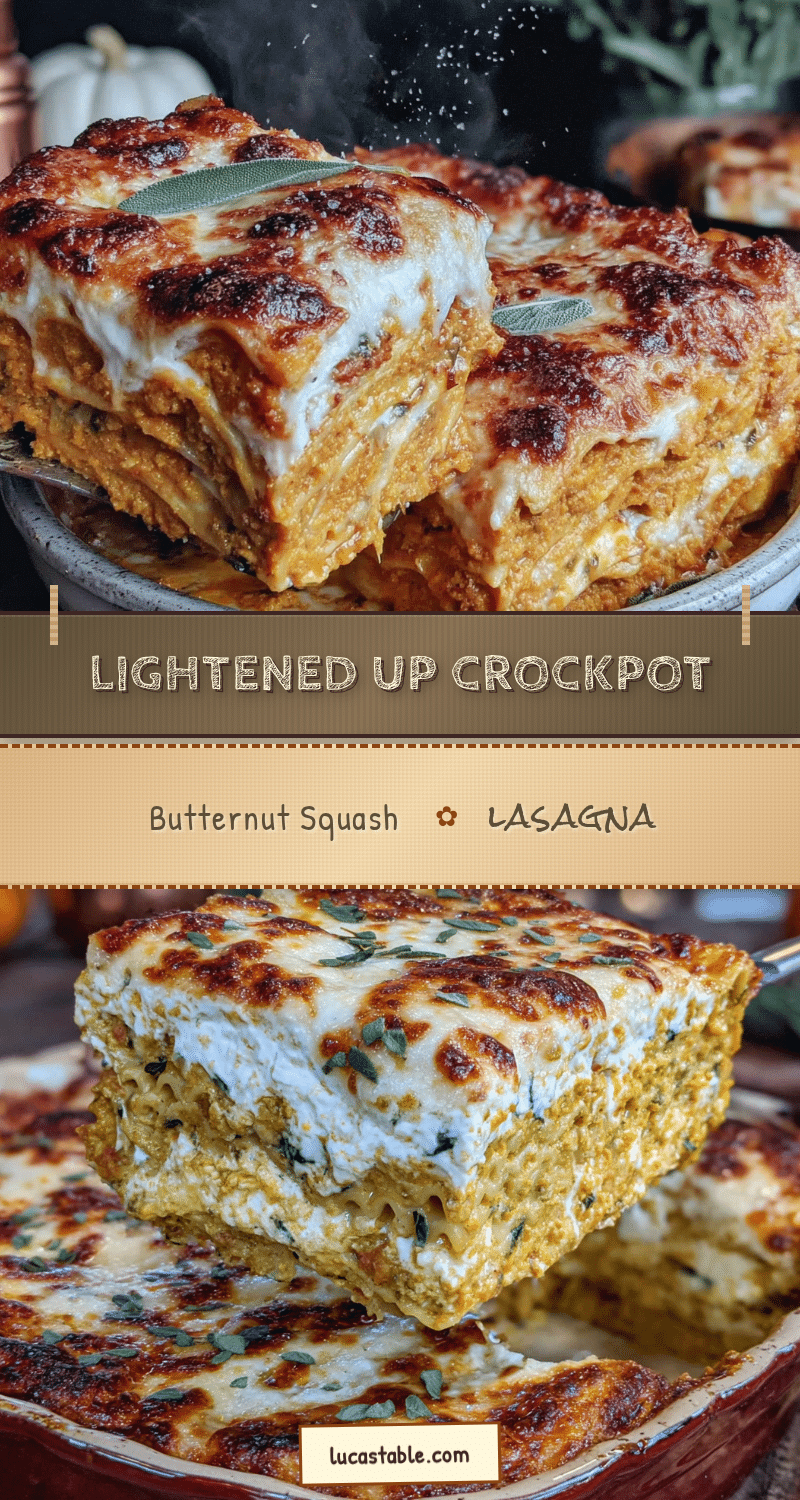
Lightened Up Crockpot Butternut Squash Lasagna Easy Fall Dinner
A lightened up, creamy butternut squash lasagna made in a crockpot with less cheese and more veggies. Perfect for busy weeknights or cozy fall dinners.
- Prep Time: 20 minutes
- Cook Time: 4 hours
- Total Time: 4 hours 20 minutes
- Yield: 8 servings 1x
- Category: Main Course
- Cuisine: Italian
Ingredients
- 4 cups butternut squash, peeled and cubed (about 1 medium squash)
- 1 tablespoon olive oil
- 1 small yellow onion, diced
- 3 cloves garlic, minced
- 1 cup low-sodium vegetable broth
- 1/2 teaspoon dried sage
- 1/4 teaspoon nutmeg
- Salt and black pepper to taste
- 1 1/2 cups part-skim ricotta cheese
- 1 large egg
- 1/2 cup grated Parmesan cheese
- 2 tablespoons fresh parsley, chopped
- 1/4 teaspoon salt
- 1/4 teaspoon black pepper
- 9 no-boil lasagna noodles
- 2 cups shredded part-skim mozzarella cheese
- 1/2 cup grated Parmesan cheese for topping
- Additional fresh sage or parsley for garnish
Instructions
- Prepare the squash sauce: Heat olive oil in a large skillet over medium heat. Add diced onion and cook for 4-5 minutes until translucent. Add minced garlic and cook for 30 seconds. Add cubed butternut squash, vegetable broth, dried sage, nutmeg, salt, and pepper. Bring to a simmer, cover, and cook for 12-15 minutes until squash is fork-tender.
- Blend the sauce: Transfer squash mixture to a blender and blend until smooth. Taste and adjust seasoning. Set aside to cool slightly.
- Make the ricotta mixture: In a medium bowl, combine ricotta cheese, egg, grated Parmesan, parsley, salt, and pepper. Mix until smooth.
- Layer the lasagna: Spray slow cooker with non-stick spray. Spread a thin layer of squash sauce on the bottom. Place 3 no-boil lasagna noodles on top. Spread 1/3 of remaining sauce over noodles. Drop spoonfuls of 1/3 of ricotta mixture and spread gently. Sprinkle 1/3 cup mozzarella. Repeat layers twice. For final layer, place last 3 noodles, spread remaining sauce, and top with remaining mozzarella and 1/2 cup Parmesan.
- Cook low and slow: Cover and cook on LOW for 4-5 hours or HIGH for 2-3 hours, until noodles are tender and edges are bubbling.
- Rest before serving: Turn off slow cooker and let lasagna rest, uncovered, for 15-20 minutes. Garnish with fresh sage or parsley before serving.
Notes
Don’t skip pre-cooking the squash for best texture. Let lasagna rest before serving to set layers. For a dairy-free version, use vegan ricotta and mozzarella and a flax egg. For gluten-free, use gluten-free lasagna noodles.
Nutrition
- Serving Size: 1 slice (1/8 of reci
- Calories: 345
- Sugar: 6
- Sodium: 520
- Fat: 14
- Saturated Fat: 7
- Carbohydrates: 38
- Fiber: 5
- Protein: 18
Keywords: butternut squash lasagna, crockpot lasagna, lightened up lasagna, fall dinner, slow cooker lasagna, healthy lasagna