This was supposed to be a creamy chicken and wild rice soup. I had the wild rice soaking, the heavy cream measured, and I was feeling pretty smug about this whole “planning ahead” thing. But then my neighbor, Carol, knocked on the door with her three kids in tow because her oven had given up mid-bake on a casserole. I spent the next twenty minutes helping her wrangle a backup dinner, and by the time I got back to my own kitchen, the wild rice had turned into a mushy, starchy disaster. I was already late for a meeting, my cream was warm, and honestly, I was this close to just ordering pizza.
But I had this rotisserie chicken sitting on the counter—leftover from the night before—and a bag of egg noodles in the pantry. So I did what any slightly frazzled home cook would do: I threw out the ruined rice, ditched the cream entirely, and started over with whatever was left. I tossed in some extra celery because that’s what I had, skipped the butter for a quick sauté with olive oil, and let the broth do all the heavy lifting. What came out of that pot was nothing like the rich, heavy soup I had planned—and it was honestly better.
It was lighter, cleaner, and somehow more satisfying. The chicken was still tender, the noodles had soaked up just enough broth, and the vegetables actually tasted like themselves instead of being buried in cream. I mean, I sat there eating a bowl at my kitchen counter, still a little annoyed about the wild rice, and realized I had accidentally stumbled onto something I’d make again on purpose. Maybe you’ve been there—when a kitchen disaster forces you to simplify, and the simple version turns out to be the keeper. That’s this soup. It’s the one I keep coming back to, not because it’s fancy, but because it works.
Why You’ll Love This Recipe
Let’s be honest—most chicken noodle soups are either a sodium bomb from a can or a heavy, cream-laden affair that leaves you feeling like you need a nap. This lightened-up version is neither. It’s the kind of soup that feels like a hug but doesn’t weigh you down, and I’ve tested it enough times to know it delivers every single time.
- Quick & Easy: Thanks to the rotisserie chicken, you’re skipping the longest step. This soup comes together in under 30 minutes, which is perfect for those nights when dinner needs to happen yesterday.
- Simple Ingredients: No fancy grocery trips needed. You probably already have carrots, celery, onion, and egg noodles in your kitchen. The rotisserie chicken is the only “special” ingredient, and it’s a time-saver, not a hassle.
- Perfect for Meal Prep: This soup actually tastes better on day two. The flavors meld together overnight, making it an ideal candidate for make-ahead lunches or busy weeknights.
- Crowd-Pleaser: I’ve served this to picky kids, health-conscious friends, and my dad who swears by canned soup. Everyone goes back for seconds. It’s just that comforting.
- Unbelievably Light: The secret is skipping the heavy cream and using a good-quality, low-sodium broth. You get all the flavor without the grease, and the vegetables stay bright and fresh instead of turning into mush.
What makes this different from every other chicken noodle soup recipe out there? It’s the balance. The broth is rich enough to feel indulgent, but it’s not weighed down by butter or cream. The vegetables are cooked just until tender—not boiled into submission. And the rotisserie chicken adds that deep, savory flavor you only get from a properly roasted bird. It’s comfort food reimagined: healthier, faster, and with the same soul-soothing satisfaction. This is the soup you make when you want to feel good about what you’re eating without sacrificing an ounce of flavor.
What Ingredients You Will Need
This recipe relies on a handful of simple, wholesome ingredients that work together to create a broth that’s both light and deeply flavorful. No heavy cream, no complicated spice blends—just real food doing its job.
- Rotisserie chicken: The star of the show. Pick up a pre-cooked rotisserie chicken from the store—I usually grab one from Costco or a local grocery deli. Shred the meat from the breast and thighs, and save the carcass for making stock if you’re feeling ambitious. You’ll need about 3 to 4 cups of shredded chicken for this recipe.
- Olive oil: A light drizzle is all you need to sauté the vegetables. It keeps things lean compared to butter, but still adds a nice richness. I use extra virgin olive oil, but any neutral oil like avocado works too.
- Yellow onion: One medium onion, diced. It forms the aromatic base of the soup. Sweet onions or white onions are fine substitutes.
- Carrots: Three medium carrots, peeled and diced. They add natural sweetness and color. I prefer organic carrots because they tend to be sweeter, but any will do.
- Celery: Two to three stalks, diced. Celery adds that classic savory note. If you’re not a fan, you can reduce it to one stalk or swap in fennel for a milder, slightly anise-like flavor.
- Garlic: Three cloves, minced. Fresh garlic is non-negotiable here—it adds a warmth that powdered garlic just can’t match. I’ve tried both, and fresh wins every time.
- Low-sodium chicken broth: 8 cups (about 2 quarts). This is the backbone of the soup. Using low-sodium broth lets you control the salt level, which is key for a lightened-up recipe. I recommend Swanson or Pacific Foods for a clean, neutral flavor. If you have homemade stock, even better.
- Egg noodles: 8 ounces (about half a standard bag). Wide egg noodles are traditional, but you can use any small pasta shape like ditalini or orzo. For a gluten-free option, use brown rice noodles or chickpea pasta.
- Fresh thyme: 4 to 5 sprigs. Thyme adds an earthy, slightly floral note that pairs perfectly with chicken. If you only have dried, use 1 teaspoon.
- Bay leaf: 1 or 2 leaves. They add a subtle depth that you’ll miss if you skip them. Just remember to fish them out before serving.
- Salt and black pepper: To taste. Start with 1 teaspoon of salt and ½ teaspoon of pepper, then adjust at the end. Remember that rotisserie chicken is already seasoned, so go easy at first.
- Fresh parsley: A handful, chopped, for garnish. It adds a pop of color and freshness right before serving. Optional, but highly recommended.
- Lemon juice: 1 tablespoon, freshly squeezed. This is my secret ingredient. A tiny squeeze of lemon at the end brightens the entire soup and makes it taste lighter. Don’t skip it.
Equipment Needed
You don’t need a fancy kitchen to make this soup—just a few basics that you probably already own.
- Large stockpot or Dutch oven: A 6-quart pot is ideal. I use my trusty Le Creuset Dutch oven, but any heavy-bottomed pot will work. The key is having enough room for the broth, noodles, and chicken without everything boiling over.
- Cutting board and sharp knife: For dicing the vegetables. A good chef’s knife makes the prep go faster and keeps your cuts even, which helps everything cook at the same rate.
- Wooden spoon or spatula: For stirring the vegetables and broth. A wooden spoon won’t scratch your pot and gives you good control.
- Measuring cups and spoons: For the broth, noodles, and seasonings. I like having a set of dry measuring cups and a liquid measuring cup handy.
- Tongs or two forks: For shredding the rotisserie chicken. Tongs work great for pulling the meat off the bone, and two forks make quick work of shredding it into bite-sized pieces.
- Fine-mesh strainer: Optional, but useful if you want to strain the broth for an extra-clear soup. I rarely bother, but it’s nice to have if you’re aiming for a restaurant-quality look.
If you don’t have a Dutch oven, a regular stockpot works just fine. And if you’re short on time, you can even shred the chicken with a hand mixer on low speed—just be careful not to overdo it or you’ll end up with chicken paste (learned that one the hard way).
Preparation Method
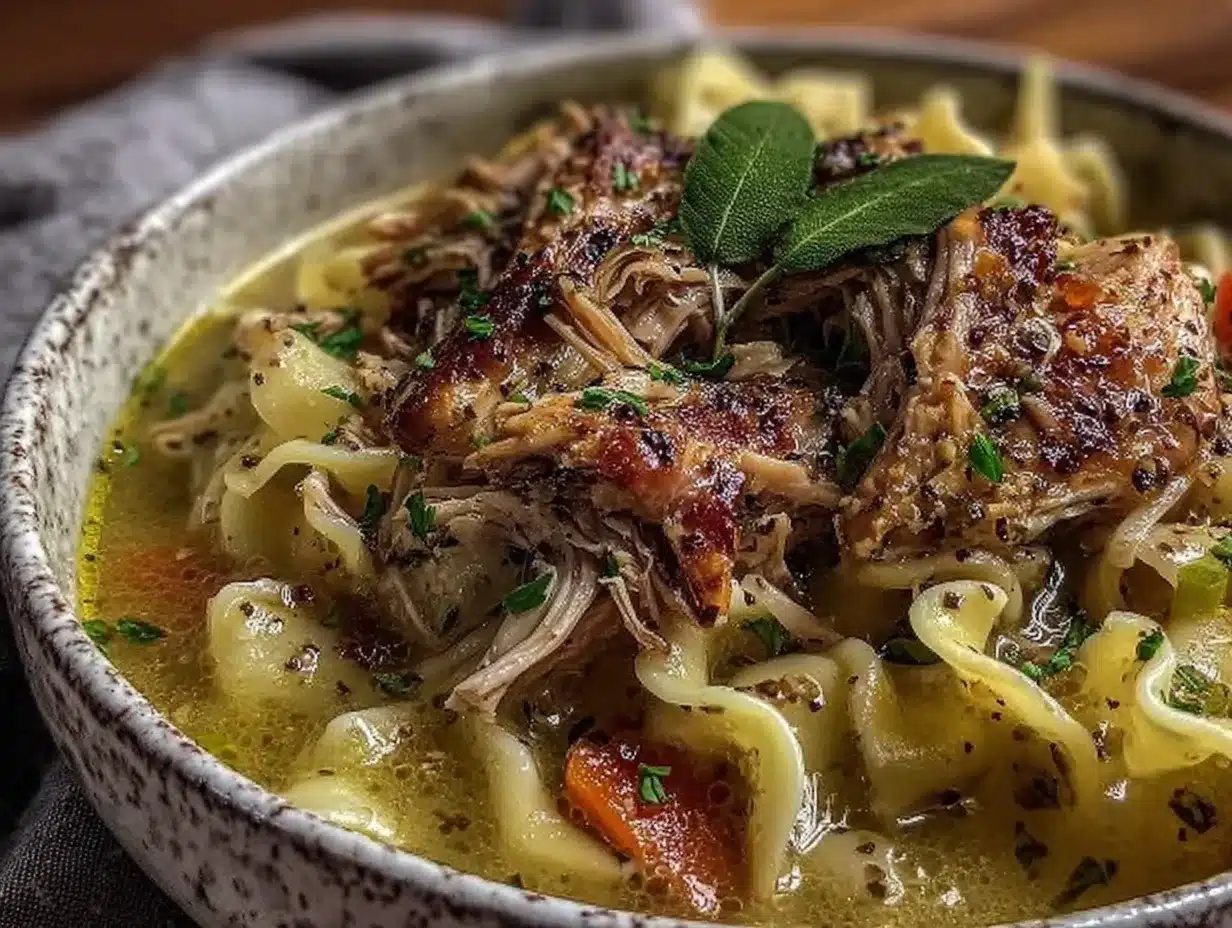
Let’s get cooking. This soup comes together quickly, so I recommend prepping all your ingredients before you turn on the stove. Trust me, it makes everything smoother.
- Shred the chicken. Remove the meat from your rotisserie chicken, discarding the skin and bones. Use your hands or two forks to shred the meat into bite-sized pieces. You should have about 3 to 4 cups. Set it aside.
- Dice the vegetables. Peel and dice the carrots, dice the celery, and dice the onion. Mince the garlic. Try to keep the pieces roughly the same size—about ½-inch cubes—so they cook evenly. This takes about 10 minutes, but it’s worth the effort.
- Sauté the aromatics. Heat 2 tablespoons of olive oil in your large stockpot over medium heat. Add the diced onion, carrots, and celery. Cook, stirring occasionally, for about 5 to 7 minutes, until the vegetables start to soften and the onion turns translucent. You’ll smell that sweet, savory aroma filling your kitchen—that’s the sign you’re on the right track.
- Add the garlic. Stir in the minced garlic and cook for another 30 to 60 seconds, until fragrant. Be careful not to let it burn—garlic turns bitter quickly. If it starts browning too fast, lower the heat.
- Pour in the broth. Add the 8 cups of low-sodium chicken broth to the pot. Toss in the fresh thyme sprigs and bay leaves. Bring the broth to a boil over high heat, then reduce the heat to medium-low and let it simmer for 10 minutes. This allows the flavors from the vegetables and herbs to infuse the broth.
- Cook the noodles. Add the 8 ounces of egg noodles to the simmering broth. Cook according to the package directions, usually about 6 to 8 minutes, until tender but still slightly firm (al dente). Stir occasionally to prevent the noodles from sticking to the bottom of the pot.
- Add the chicken. Once the noodles are cooked, stir in the shredded rotisserie chicken. Let it heat through for about 2 minutes. You don’t want to boil the chicken for too long, or it can become dry and stringy. Just a gentle warm-up is perfect.
- Season and finish. Remove the thyme sprigs and bay leaves. Season the soup with salt and black pepper to taste. Start with 1 teaspoon of salt and ½ teaspoon of pepper, then adjust. Stir in the fresh lemon juice—this is the step that makes the whole soup taste brighter and lighter. Don’t skip it.
- Garnish and serve. Ladle the soup into bowls and top with a sprinkle of fresh parsley. Serve hot, with a side of crusty bread or a simple green salad if you like.
Pro tip: If you’re meal-prepping, cook the noodles separately and add them to individual bowls before pouring the hot broth and chicken over them. This keeps the noodles from soaking up too much liquid and turning mushy when you reheat the soup later. I learned this after a few sad, bloated noodle incidents.
Cooking Tips & Techniques
After making this soup more times than I can count (including a few disasters), I’ve picked up some tricks that make a real difference.
Don’t overcook the vegetables. This was my biggest mistake early on. I used to let the carrots and celery simmer for 20 minutes until they were falling apart. Now I keep the simmer short—just 10 minutes before adding the noodles. The vegetables should be tender but still have a little bite. They’ll continue cooking as the noodles boil, so starting with a shorter simmer keeps everything from turning into baby food.
Season in layers. Add a pinch of salt when you sauté the vegetables, another pinch when you add the broth, and then adjust at the end. This builds flavor step by step instead of dumping it all in at the finish line. The same goes for the pepper—add a little early, and more at the end.
Watch your noodle timing. Egg noodles release starch as they cook, which thickens the broth slightly. That’s a good thing—it gives the soup a silky texture without any cream. But if you let them boil too long, they can turn the broth into a starchy paste. Cook them just until al dente, and if you’re not serving the soup immediately, drain the noodles and add them back when you reheat.
Use the chicken bones for stock. This is a bonus tip for the ambitious cook. After you shred the chicken, toss the carcass, skin, and bones into a pot with water, a halved onion, and a few celery tops. Simmer for an hour, strain, and you’ve got homemade stock that’s even better than store-bought. I do this whenever I have a rotisserie chicken, and it’s a game-changer for future soups.
One failure I’ll never forget: I once tried to speed things up by using a high-sodium broth and then added extra salt at the end. The soup was so salty it was practically inedible. I ended up diluting it with water and adding a whole potato to absorb some of the salt (it kind of worked). Now I always use low-sodium broth and season cautiously, especially because rotisserie chicken is already seasoned. Learn from my mistake—taste as you go.
Variations & Adaptations
This soup is endlessly adaptable, which is one of the reasons I make it so often. Here are a few ways to change it up depending on what you have in the fridge or what your diet requires.
- Make it gluten-free: Swap the egg noodles for gluten-free pasta, like brown rice noodles or chickpea rotini. Cook them separately to avoid them turning to mush in the broth. I’ve used Banza chickpea pasta before, and it holds up surprisingly well.
- Make it vegetarian: Omit the chicken and use a good-quality vegetable broth instead of chicken broth. Add a can of drained chickpeas or white beans for protein, and toss in some extra vegetables like zucchini or spinach. The lemon juice at the end becomes even more important here—it adds brightness that replaces the missing chicken flavor.
- Add a kick of heat: If you like spicy food, stir in ½ teaspoon of red pepper flakes when you sauté the garlic. Or add a dash of hot sauce—like Tabasco or sriracha—right before serving. It cuts through the richness and adds a nice warmth.
- Boost the greens: Stir in a handful of fresh spinach or chopped kale during the last 2 minutes of cooking. The greens wilt quickly and add color and nutrients without changing the flavor much. I do this when I want to feel extra virtuous.
- Try a different herb profile: If you’re out of thyme, use dried oregano or rosemary. Or swap the parsley for fresh dill—it gives the soup a slightly Scandinavian twist that’s surprisingly delicious. I tried this once when I had leftover dill from a salmon dinner, and it was a happy accident.
- Use leftover turkey: This recipe works beautifully with leftover Thanksgiving turkey. Just shred it the same way you would the rotisserie chicken. It’s a great way to use up holiday leftovers without feeling like you’re eating the same meal again.
Serving & Storage Suggestions
This soup is at its best served hot, straight from the pot, with a generous sprinkle of fresh parsley and maybe a squeeze of extra lemon on top. I like to pair it with a slice of crusty sourdough bread for dipping, or a simple side salad with a lemony vinaigrette to keep things light. If you’re serving it for a crowd, set out a bowl of grated Parmesan cheese—it adds a salty, nutty finish that everyone seems to love.
Storage: Let the soup cool completely before transferring it to an airtight container. It will keep in the refrigerator for up to 4 days. The flavors actually deepen and meld together overnight, so day-two soup is often even better than day-one soup. Just be aware that the noodles will continue to absorb liquid, so the soup will thicken as it sits. That’s normal, and you can fix it by adding a splash of broth or water when you reheat.
Freezing: This soup freezes well, but I recommend freezing it without the noodles. Cook the soup base (broth, vegetables, chicken) and freeze it in portions. When you’re ready to eat, thaw the base, bring it to a simmer, and cook fresh noodles directly in the broth. This prevents the noodles from turning into a mushy, unappetizing mess after thawing. I’ve made this mistake—frozen and reheated noodles have a texture that’s best described as “sad.”
Reheating: Reheat the soup on the stovetop over medium-low heat, stirring occasionally. If the soup has thickened too much, add a splash of chicken broth or water to loosen it up. You can also microwave individual portions in a microwave-safe bowl for 2 to 3 minutes, stirring halfway through. Just keep an eye on it so it doesn’t boil over—noodle soups have a tendency to erupt in the microwave (another lesson learned the messy way).
Flavor development: The soup will taste bright and fresh on day one, and more mellow and savory on days two and three. The lemon juice fades a bit over time, so I like to add a tiny squeeze of fresh lemon when I reheat leftovers. It brings back that lightness that makes this soup special.
Nutritional Information & Benefits
This lightened-up soup is not only delicious but also packed with nutritional benefits. Here’s an approximate breakdown per serving (based on 6 servings):
- Calories: ~280
- Protein: 28 grams
- Fat: 8 grams
- Carbohydrates: 28 grams
- Fiber: 3 grams
- Sodium: ~600 mg (varies based on broth and seasoning)
What I love about this soup from a health perspective is that it’s high in lean protein from the chicken, which keeps you full and satisfied. The carrots and celery provide a good dose of vitamin A and fiber, while the broth is hydrating and low in calories. By using low-sodium broth and skipping the cream, we’ve cut out a significant amount of saturated fat and sodium compared to traditional versions. It’s a soup that supports a balanced diet without feeling like a compromise.
If you’re watching your carbohydrate intake, you can reduce the amount of noodles or swap them for zucchini noodles (zoodles) added at the very end. For a lower-sodium option, use homemade stock or a no-salt-added broth and rely on fresh herbs and lemon for flavor. This recipe is naturally dairy-free and can be made gluten-free with a simple pasta swap, making it friendly for a variety of dietary needs.
Conclusion
This lightened-up rotisserie chicken noodle soup is proof that you don’t need heavy cream or complicated techniques to make a bowl of soup that feels like a warm hug. It’s quick enough for a busy weeknight, simple enough for a beginner cook, and satisfying enough to earn a permanent spot in your dinner rotation. The rotisserie chicken does the heavy lifting, the lemon juice brightens everything up, and the whole thing comes together in under 30 minutes.
I honestly make this soup more than any other recipe in my kitchen. It’s the one I turn to when I’m tired, when I’m stressed, or when I just want something that feels good without any fuss. And I love that it’s endlessly customizable—you can toss in whatever vegetables you have, adjust the seasonings to your taste, or make it your own with a pinch of red pepper or a handful of spinach.
I’d love to hear how this soup turns out for you. Did you add your own twist? Did your kids actually eat the vegetables? Drop a comment below and let me know—I read every single one. And if you loved this recipe, please share it with a friend who needs a little comfort in a bowl. Happy cooking!
Frequently Asked Questions
Can I use chicken breast instead of rotisserie chicken?
Absolutely. If you don’t have a rotisserie chicken on hand, you can cook 2 to 3 boneless, skinless chicken breasts directly in the broth. Add them to the pot after sautéing the vegetables, simmer for 15 to 20 minutes until cooked through, then remove, shred, and return to the soup. Just keep in mind that the flavor won’t be quite as rich as rotisserie chicken, so you might want to add an extra bay leaf or a splash of white wine for depth.
How do I keep the noodles from getting mushy in leftovers?
The best trick is to cook the noodles separately and add them to individual bowls when serving. Store the soup base (broth, vegetables, chicken) and the cooked noodles in separate containers in the fridge. When you’re ready to eat, reheat the base and pour it over the noodles. This keeps the noodles from absorbing too much liquid and turning into mush.
Can I make this soup in a slow cooker or Instant Pot?
Yes, with a few adjustments. For a slow cooker, sauté the vegetables on the stovetop first, then transfer them to the slow cooker with the broth, chicken, and herbs. Cook on low for 4 to 6 hours. Add the noodles in the last 30 minutes of cooking. For an Instant Pot, use the sauté function for the vegetables, then add the broth, chicken, and herbs. Pressure cook on high for 5 minutes, then quick-release. Stir in the noodles and let them cook in the residual heat for about 5 minutes.
What can I use instead of egg noodles?
You have plenty of options. Try ditalini, orzo, small shells, or even broken spaghetti. For a low-carb version, use zucchini noodles or shirataki noodles. For a gluten-free option, use brown rice pasta or chickpea pasta. Just adjust the cooking time according to the package directions.
Is this soup freezer-friendly?
Yes, but with a caveat. Freeze the soup base without the noodles for best results. Let the base cool completely, then transfer it to freezer-safe containers. It will keep for up to 3 months. When you’re ready to eat, thaw the base in the refrigerator overnight, reheat it on the stovetop, and cook fresh noodles directly in the simmering broth. This ensures the noodles stay tender and don’t turn into a mushy mess after freezing.
Pin This Recipe!
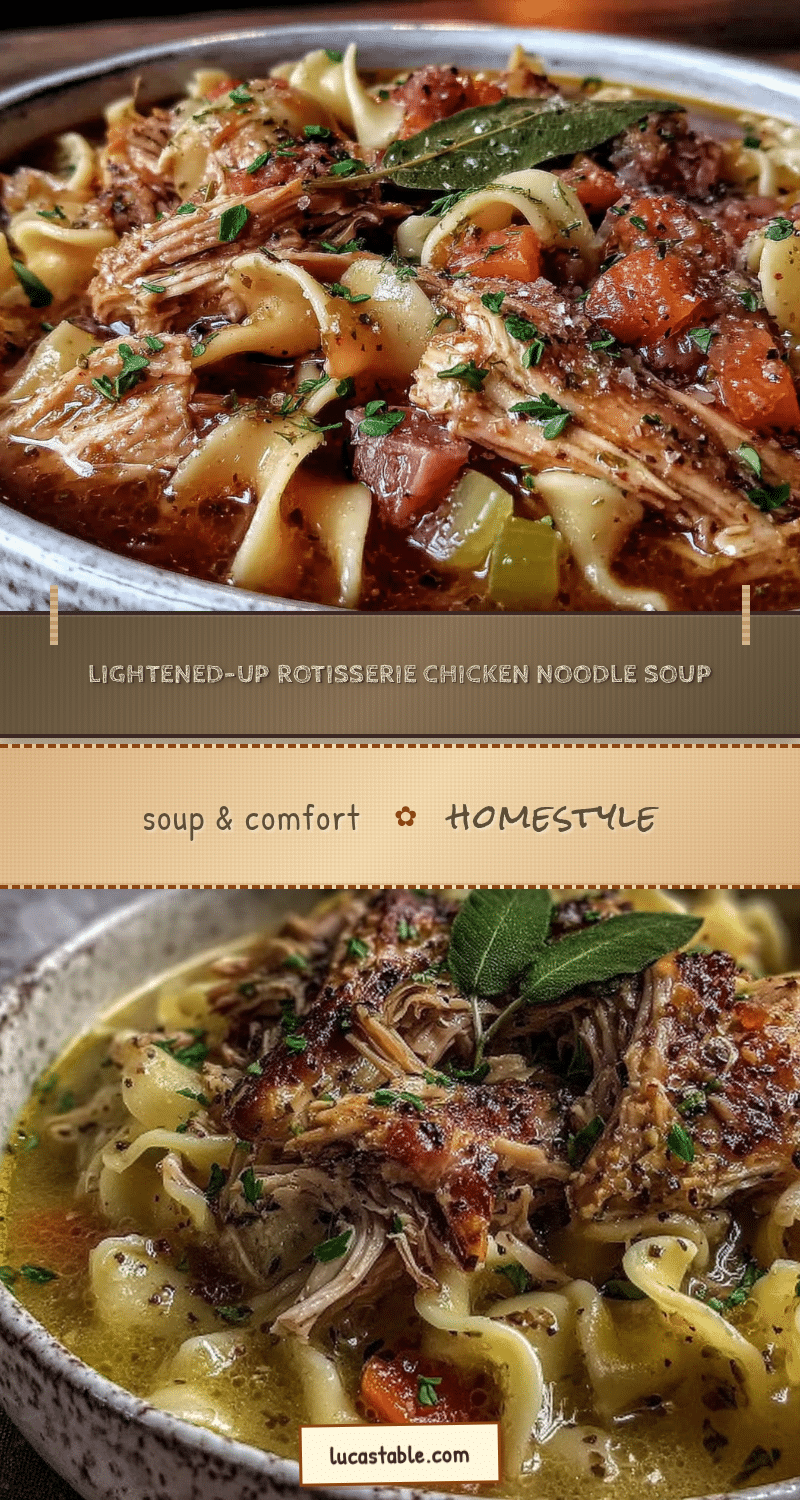
Lightened-Up Rotisserie Chicken Noodle Soup

A quick, healthy, and comforting chicken noodle soup made with rotisserie chicken, fresh vegetables, and a light broth. Perfect for busy weeknights and meal prep.
- Prep Time: 10 minutes
- Cook Time: 20 minutes
- Total Time: 30 minutes
- Yield: 6 servings 1x
- Category: Main Course
- Cuisine: American
Ingredients
- 3 to 4 cups shredded rotisserie chicken
- 2 tablespoons olive oil
- 1 medium yellow onion, diced
- 3 medium carrots, peeled and diced
- 2 to 3 stalks celery, diced
- 3 cloves garlic, minced
- 8 cups low-sodium chicken broth
- 8 ounces wide egg noodles
- 4 to 5 sprigs fresh thyme
- 1 to 2 bay leaves
- 1 teaspoon salt (or to taste)
- ½ teaspoon black pepper (or to taste)
- 1 tablespoon fresh lemon juice
- ¼ cup fresh parsley, chopped (for garnish)
Instructions
- Shred the rotisserie chicken, discarding skin and bones. Set aside.
- Dice the onion, carrots, and celery into ½-inch cubes. Mince the garlic.
- Heat olive oil in a large stockpot over medium heat. Add onion, carrots, and celery. Cook for 5 to 7 minutes until softened and onion is translucent.
- Stir in minced garlic and cook for 30 to 60 seconds until fragrant.
- Pour in chicken broth. Add thyme sprigs and bay leaves. Bring to a boil, then reduce heat to medium-low and simmer for 10 minutes.
- Add egg noodles to the simmering broth. Cook according to package directions (about 6 to 8 minutes) until al dente, stirring occasionally.
- Stir in shredded chicken and heat through for about 2 minutes.
- Remove thyme sprigs and bay leaves. Season with salt and pepper to taste. Stir in lemon juice.
- Ladle into bowls, garnish with fresh parsley, and serve hot.
Notes
For meal prep, cook noodles separately and add to individual bowls when serving to prevent mushiness. The soup tastes even better on day two. Use low-sodium broth and season cautiously as rotisserie chicken is already seasoned.
Nutrition
- Serving Size: 1 bowl (about 1.5 cu
- Calories: 280
- Sugar: 5
- Sodium: 600
- Fat: 8
- Saturated Fat: 2
- Carbohydrates: 28
- Fiber: 3
- Protein: 28
Keywords: chicken noodle soup, rotisserie chicken, healthy soup, light soup, easy dinner, meal prep