There used to be this tiny farm-to-table spot in Woodstock, New York, called The Orchard Table, that made an apple cider braised pork tenderloin that I still dream about. When they closed their doors after the owner retired in 2019, I honestly felt a little panicked. I mean, that dish was my go-to for any dinner party, and suddenly it was gone. After twelve tries — some embarrassingly dry, one that tasted more like a candle than dinner — I finally cracked the code.
I remember the first time I attempted the recreation. I was so confident, and let me tell you, the pork came out tough enough to bounce off the floor. My husband just looked at me and said, “Maybe we order pizza?” But I’m not one to give up. The secret, I discovered, was all in the braising liquid and the patience to let it simmer low and slow. Honestly, the moment I pulled that perfectly tender roast out of the Dutch oven, I knew I had nailed it.
This apple cider braised pork tenderloin has become my signature dish for hosting. It’s the one that makes people close their eyes after the first bite and ask for the recipe before the meal is even over. Maybe you’ve been there — chasing a flavor from a restaurant that just disappeared. This is my success story, and I’m so excited to share it with you. It’s the kind of meal that turns a simple gathering into something truly memorable, and it’s easier than you think.
Why You’ll Love This Recipe
This isn’t just another pork tenderloin recipe. It’s the one that will steal the show at your next dinner party. I’ve tested it for years, tweaked it for consistency, and served it to everyone from picky eaters to foodie friends. It always delivers.
- Incredibly Tender: The slow braising in apple cider breaks down the meat until it’s fork-tender and juicy. No dry pork here.
- Simple Ingredients: You probably have most of these in your pantry right now. No fancy grocery store runs required.
- Perfect for Hosting: This dish is designed to impress a crowd. It’s elegant enough for a holiday table but easy enough for a casual potluck.
- Make-Ahead Friendly: You can braise it a day ahead, and the flavors only get better. This is a lifesaver when you’re hosting.
- Unbelievably Delicious: The sweet and savory combination of apple cider, herbs, and pork is pure comfort food. It’s the kind of meal that makes you slow down and savor every bite.
What makes this recipe different from the rest? It’s the technique. Instead of searing and roasting, we use a low-and-slow braise that guarantees moisture and flavor. The apple cider reduces into a glossy, almost caramelized sauce that coats every slice. This is not your grandma’s dry pork roast. This is the version you’ll make for every special occasion.
This recipe is comfort food reimagined. It’s perfect for impressing guests without stress, or turning a simple Sunday dinner into something memorable. Trust me, after one bite, you’ll understand why it’s my guest-favorite.
What Ingredients You Will Need
This recipe uses simple, wholesome ingredients to deliver bold flavor and satisfying texture without the fuss. Most of these are pantry staples, but a few key players make all the difference.
- Pork Tenderloin (2-2.5 lbs): Look for a tenderloin that’s evenly thick for consistent cooking. I prefer getting mine from a local butcher when I can.
- Apple Cider (2 cups): Use fresh, unfiltered apple cider for the best flavor. Avoid apple juice, which is too sweet and thin.
- Chicken Broth (1 cup): Low-sodium is best so you can control the salt. I use Swanson’s low-sodium broth for a clean base.
- Yellow Onion (1 large, sliced): Adds sweetness and depth as it cooks down.
- Garlic (4 cloves, minced): Fresh garlic is a must here. Don’t use the jarred stuff.
- Fresh Thyme (4 sprigs): Earthy and aromatic, thyme pairs beautifully with apple and pork.
- Fresh Rosemary (2 sprigs): Adds a piney, savory note that balances the sweetness.
- Dijon Mustard (2 tablespoons): This is my secret weapon. It adds tang and helps the seasoning stick to the meat.
- Olive Oil (2 tablespoons): For searing. Use a good quality extra virgin olive oil.
- Salt and Black Pepper (to taste): I use kosher salt for better control.
- Apple Cider Vinegar (1 tablespoon): Adds brightness at the end to wake up all the flavors.
- Butter (2 tablespoons, unsalted): For finishing the sauce and adding richness.
- Cornstarch (1 tablespoon, optional): For thickening the sauce if you prefer it thicker.
For substitutions, you can use apple juice in a pinch, but the sauce won’t be as rich. If you don’t have fresh herbs, use 1 teaspoon dried thyme and 1 teaspoon dried rosemary. Dijon mustard is non-negotiable in my book, but stone-ground mustard works too.
Equipment Needed
You don’t need a ton of fancy gear for this recipe, which is part of why I love it. Here’s what you’ll need:
- Large Dutch Oven: A 5-6 quart Dutch oven is perfect. I use my trusty Le Creuset, but any heavy-bottomed pot with a lid works. If you don’t have one, a large oven-safe skillet with a lid will do.
- Meat Thermometer: This is essential for perfectly cooked pork. I’ve ruined too many tenderloins by guessing. An instant-read thermometer is my best friend.
- Tongs: For searing the meat and flipping it without piercing the surface.
- Cutting Board: A sturdy one for resting and slicing the pork.
- Sharp Knife: A good chef’s knife makes slicing the tenderloin a breeze.
- Measuring Cups and Spoons: For accuracy.
- Small Bowl: For mixing the cornstarch slurry if you use it.
If you don’t have a Dutch oven, you can sear the pork in a skillet and then transfer everything to a baking dish covered with foil. It works, but you’ll lose some of the beautiful fond on the bottom of the pan.
Preparation Method
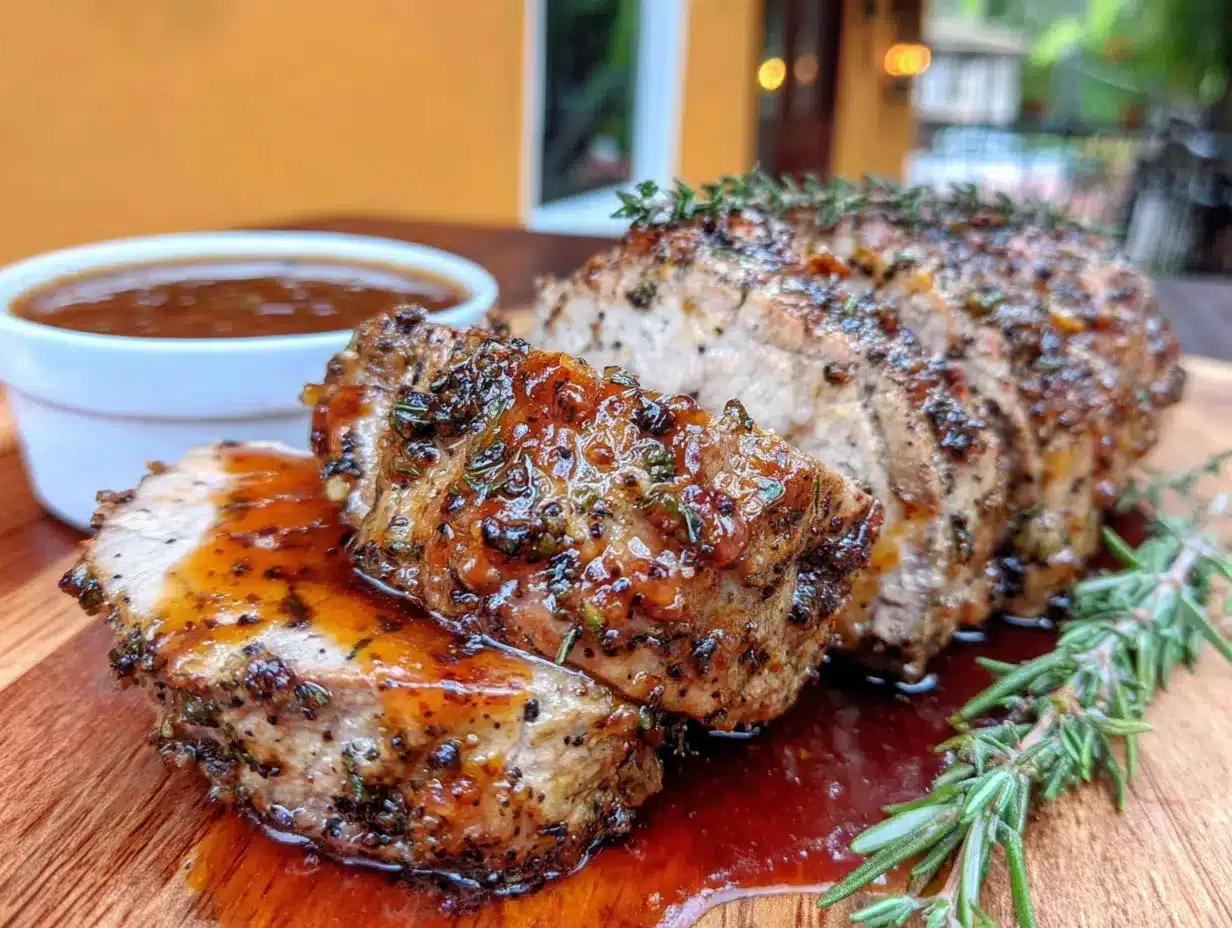
Let’s get cooking! This method is straightforward but requires a little patience. Trust the process, and you’ll be rewarded.
- Prep the Pork (10 minutes): Pat the pork tenderloin dry with paper towels. This is key for a good sear. Season generously on all sides with salt and pepper. Rub the Dijon mustard all over the meat. Let it sit at room temperature for 15 minutes.
- Sear the Pork (10 minutes): Heat the olive oil in your Dutch oven over medium-high heat. When it’s shimmering, carefully place the pork in the pot. Sear for 2-3 minutes per side, until deeply golden brown. Don’t crowd the pan — if your tenderloin is very long, cut it in half crosswise. Remove the pork to a plate and set aside.
- Sauté the Aromatics (5 minutes): Reduce the heat to medium. Add the sliced onions to the pot and cook for 3-4 minutes, scraping up any browned bits from the bottom. Add the minced garlic and cook for 1 minute more, until fragrant.
- Deglaze and Braise (2 hours): Pour in the apple cider and chicken broth, and bring to a simmer. Use a wooden spoon to scrape up all those delicious browned bits — that’s flavor! Add the fresh thyme and rosemary sprigs. Return the pork to the pot, along with any juices that accumulated on the plate. The liquid should come about halfway up the sides of the pork. Cover the pot with the lid and transfer to a preheated 325°F (163°C) oven.
- Braise Until Tender (60-75 minutes): Braise for about 1 hour to 1 hour 15 minutes, or until the internal temperature of the pork reaches 145°F (63°C) for medium. Check with your meat thermometer. The meat should be tender and easily pierced with a fork.
- Rest the Pork (10 minutes): Carefully remove the pork from the Dutch oven and place it on a cutting board. Tent loosely with foil and let it rest for 10 minutes. This lets the juices redistribute, ensuring a moist final dish.
- Finish the Sauce (10 minutes): While the pork rests, place the Dutch oven back on the stovetop over medium heat. Remove the herb sprigs. Whisk in the apple cider vinegar and butter. Let the sauce simmer for 5-7 minutes, until it reduces and thickens slightly. If you want a thicker sauce, mix the cornstarch with 2 tablespoons of cold water and whisk it into the simmering sauce. Cook for 1-2 minutes more.
- Slice and Serve (5 minutes): Slice the pork tenderloin into 1-inch thick medallions. Arrange on a platter and spoon the sauce and caramelized onions over the top. Serve immediately.
A note on timing: The braising time can vary based on the thickness of your tenderloin. Always rely on your meat thermometer, not the clock. The sauce should be glossy and flavorful, not watery.
Cooking Tips & Techniques
I’ve made this recipe more times than I can count, and I’ve learned a few things the hard way. Here are my top tips to make sure yours turns out perfect.
Don’t Skip the Searing: I know it’s tempting to just throw everything in the pot, but that golden-brown crust is pure flavor. It creates the fond that makes the sauce incredible. Take the extra 10 minutes — it’s worth it.
Low and Slow is the Way to Go: Pork tenderloin is lean, so it can dry out quickly if cooked at high heat. Braising at 325°F keeps it tender and juicy. I once cranked the heat to 375°F because I was in a hurry, and the result was a tough, disappointing dinner. Learn from my mistake.
Use a Meat Thermometer: This is non-negotiable for me. Pork tenderloin is perfectly cooked at 145°F. Overcooking it even by 5 degrees can make it dry. I use my Thermapen and check the thickest part of the meat.
Let It Rest: I know you’re hungry, but don’t skip the resting step. If you slice into the pork immediately, all those beautiful juices will run out onto the cutting board instead of staying in the meat. Ten minutes makes a huge difference.
Taste the Sauce: Before serving, always taste the sauce and adjust the seasoning. Sometimes it needs a pinch more salt, or an extra splash of apple cider vinegar for brightness. Trust your palate.
Multitasking Strategy: While the pork is braising in the oven, you can prepare your side dishes. Mashed potatoes, roasted vegetables, or a simple green salad all pair beautifully. This way, everything is ready at the same time.
Variations & Adaptations
This recipe is incredibly versatile. Here are a few ways to change it up based on your needs or what you have on hand.
- Dietary Adaptation — Gluten-Free: This recipe is naturally gluten-free if you skip the cornstarch slurry or use a gluten-free flour like arrowroot powder. Everything else is good to go.
- Seasonal Twist — Fall Harvest: Add some chopped apples, carrots, and parsnips to the pot along with the onions. They’ll braise in the liquid and become tender and sweet. It turns it into a one-pot meal.
- Flavor Variation — Maple-Bourbon: Swap 1/4 cup of the apple cider for bourbon, and add 2 tablespoons of maple syrup. This gives the sauce a deeper, smokier sweetness that’s incredible for winter gatherings.
- Spice It Up: Add a pinch of red pepper flakes or a whole dried chipotle pepper to the braising liquid for a subtle heat that pairs surprisingly well with the apple cider.
- Herb Swap: If you don’t have thyme and rosemary, try sage and marjoram. They have a similar earthy profile that complements pork beautifully.
I once tried a version with pears instead of apple cider, and it was surprisingly good. The pears break down into the sauce and add a delicate sweetness. Don’t be afraid to experiment!
Serving & Storage Suggestions
This dish is a showstopper on any table. Here’s how to serve and store it like a pro.
Serving: I like to serve the sliced pork tenderloin on a large white platter, with the caramelized onions and sauce spooned over the top. A sprinkle of fresh thyme leaves adds a pop of color. It’s beautiful and rustic. Serve it warm, straight from the pot.
What to Serve With It: Creamy mashed potatoes are my go-to — they soak up that gorgeous sauce perfectly. Roasted Brussels sprouts or green beans add a nice contrast. For a lighter option, a simple arugula salad with a lemon vinaigrette cuts through the richness. A crusty baguette is also a must for sopping up every last drop.
Storage: Store any leftovers in an airtight container in the refrigerator for up to 4 days. The flavors actually meld and deepen overnight, so it’s even better the next day. I love making this a day ahead when I’m hosting.
Reheating: The best way to reheat is gently on the stovetop over low heat, with a splash of apple cider or broth to loosen the sauce. You can also reheat it in a 300°F oven, covered, for about 15 minutes. Avoid the microwave — it can make the pork tough.
Freezing: This dish freezes beautifully. Place the cooled pork and sauce in a freezer-safe container and freeze for up to 3 months. Thaw overnight in the refrigerator before reheating.
Nutritional Information & Benefits
While I’m not a nutritionist, I do believe in knowing what’s on your plate. Here’s an approximate breakdown per serving (based on 6 servings).
- Calories: 380
- Protein: 35g
- Fat: 18g
- Carbohydrates: 18g
- Fiber: 1g
- Sugar: 12g
- Sodium: 550mg
Pork tenderloin is a lean cut of meat, packed with protein and B vitamins, especially B12, which supports energy. Apples and apple cider are a good source of antioxidants. This meal is satisfying without being heavy, which I love when I’m hosting a big dinner.
For dietary considerations, this recipe is gluten-free (as written) and can be made dairy-free by using olive oil instead of butter. It’s not low-carb due to the apple cider, but the carb count is moderate for a main dish.
Conclusion
This apple cider braised pork tenderloin is more than just a recipe — it’s a memory in the making. It’s the dish that brings people together, that makes a dinner party feel special without hours of stress. I’ve served it for holidays, birthday dinners, and quiet Sunday nights, and it never fails to impress.
I hope you give it a try and make it your own. Maybe you’ll add a little extra rosemary, or serve it with your family’s favorite side dish. That’s the beauty of cooking — it’s always a little different, always personal.
If you make this recipe, I’d love to hear about it! Leave a comment below and let me know how it turned out. Did you add any twists? Did your guests ask for the recipe? Share your stories — they make my day. And don’t forget to pin this recipe for later! Happy cooking, friend.
Frequently Asked Questions
Can I use pork loin instead of tenderloin?
Yes, but the cooking time will be longer. Pork loin is a larger, thicker cut. You’ll need to braise it for about 2 to 2.5 hours, or until it reaches 145°F internally. The result will be slightly leaner but still delicious.
Can I make this in a slow cooker?
Absolutely. Sear the pork and sauté the aromatics on the stovetop first, then transfer everything to a slow cooker. Cook on low for 6-8 hours or on high for 3-4 hours. Thicken the sauce on the stovetop before serving.
What if I don’t have apple cider?
You can substitute with apple juice, but the sauce will be thinner and less rich. For a deeper flavor, try using a hard apple cider. The alcohol will cook off, leaving a lovely complexity.
How do I prevent the pork from drying out?
The key is using a meat thermometer and not overcooking it. Pull the pork at 145°F and let it rest. Also, make sure the braising liquid covers at least halfway up the meat. The moist environment is what keeps it tender.
Can I double this recipe for a larger crowd?
Yes, but you’ll need a larger pot. If your Dutch oven isn’t big enough, sear the pork in batches and use a roasting pan for the braise. Cover it tightly with foil. The cooking time may increase slightly.
Pin This Recipe!
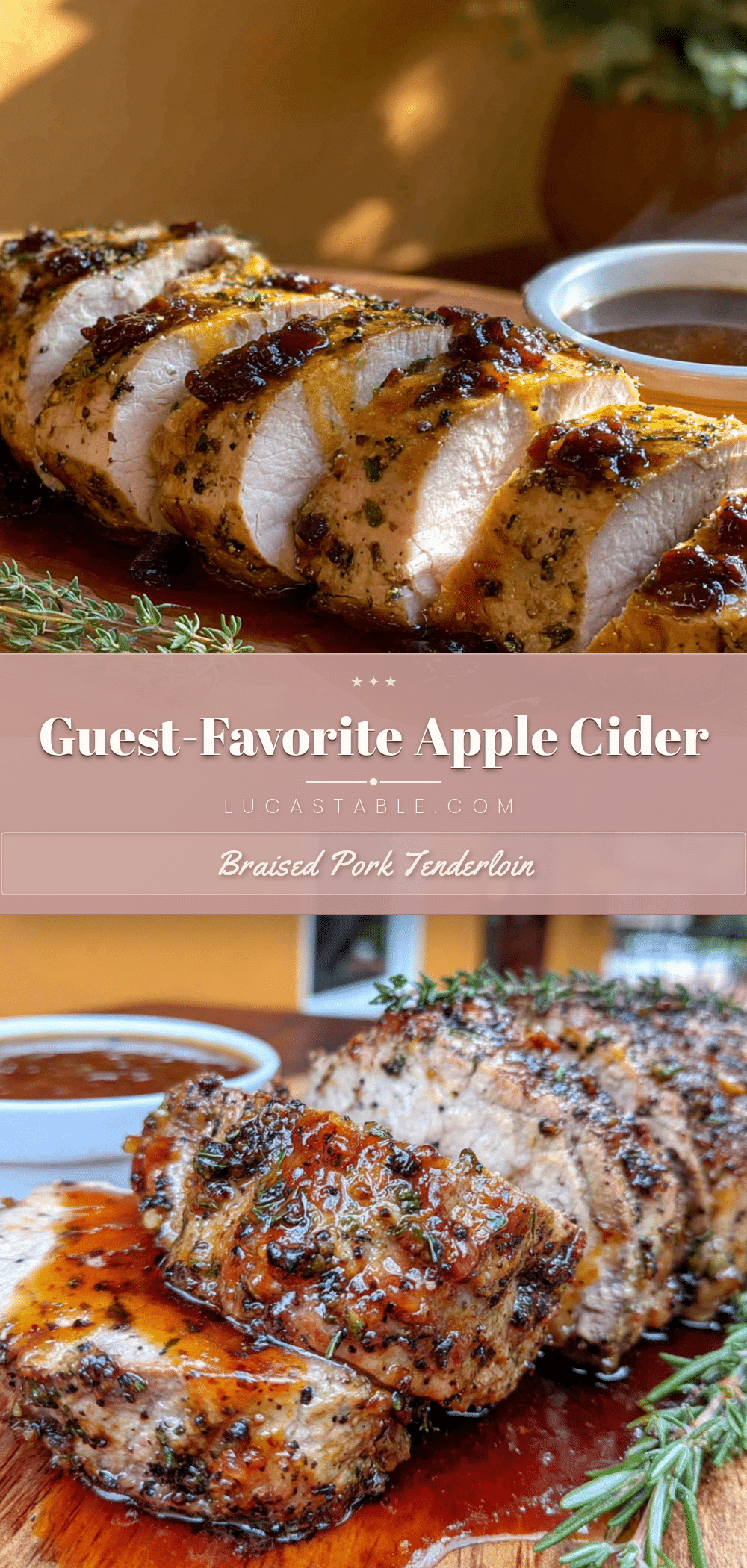
Perfect Apple Cider Braised Pork Tenderloin Recipe

This apple cider braised pork tenderloin is incredibly tender, made with simple ingredients, and perfect for hosting. The low-and-slow braise in apple cider creates a glossy, caramelized sauce that coats every slice.
- Prep Time: 15 minutes
- Cook Time: 1 hour 30 minutes
- Total Time: 1 hour 45 minutes
- Yield: 6 servings 1x
- Category: Main Course
- Cuisine: American
Ingredients
- 2–2.5 lbs pork tenderloin
- 2 cups apple cider (unfiltered)
- 1 cup low-sodium chicken broth
- 1 large yellow onion, sliced
- 4 cloves garlic, minced
- 4 sprigs fresh thyme
- 2 sprigs fresh rosemary
- 2 tablespoons Dijon mustard
- 2 tablespoons olive oil
- Salt and black pepper to taste
- 1 tablespoon apple cider vinegar
- 2 tablespoons unsalted butter
- 1 tablespoon cornstarch (optional, for thickening)
Instructions
- Prep the Pork (10 minutes): Pat the pork tenderloin dry with paper towels. Season generously on all sides with salt and pepper. Rub the Dijon mustard all over the meat. Let it sit at room temperature for 15 minutes.
- Sear the Pork (10 minutes): Heat the olive oil in your Dutch oven over medium-high heat. When it’s shimmering, carefully place the pork in the pot. Sear for 2-3 minutes per side, until deeply golden brown. Remove the pork to a plate and set aside.
- Sauté the Aromatics (5 minutes): Reduce the heat to medium. Add the sliced onions to the pot and cook for 3-4 minutes, scraping up any browned bits from the bottom. Add the minced garlic and cook for 1 minute more, until fragrant.
- Deglaze and Braise (2 hours): Pour in the apple cider and chicken broth, and bring to a simmer. Use a wooden spoon to scrape up all those delicious browned bits. Add the fresh thyme and rosemary sprigs. Return the pork to the pot, along with any accumulated juices. The liquid should come about halfway up the sides of the pork. Cover the pot with the lid and transfer to a preheated 325°F (163°C) oven.
- Braise Until Tender (60-75 minutes): Braise for about 1 hour to 1 hour 15 minutes, or until the internal temperature of the pork reaches 145°F (63°C) for medium. The meat should be tender and easily pierced with a fork.
- Rest the Pork (10 minutes): Carefully remove the pork from the Dutch oven and place it on a cutting board. Tent loosely with foil and let it rest for 10 minutes.
- Finish the Sauce (10 minutes): While the pork rests, place the Dutch oven back on the stovetop over medium heat. Remove the herb sprigs. Whisk in the apple cider vinegar and butter. Let the sauce simmer for 5-7 minutes, until it reduces and thickens slightly. If you want a thicker sauce, mix the cornstarch with 2 tablespoons of cold water and whisk it into the simmering sauce. Cook for 1-2 minutes more.
- Slice and Serve (5 minutes): Slice the pork tenderloin into 1-inch thick medallions. Arrange on a platter and spoon the sauce and caramelized onions over the top. Serve immediately.
Notes
Don’t skip the searing step—it creates the fond that makes the sauce incredible. Use a meat thermometer to ensure the pork reaches 145°F without overcooking. Let the pork rest for 10 minutes before slicing to keep it juicy. The sauce can be thickened with a cornstarch slurry if desired. This dish can be made a day ahead and the flavors will deepen.
Nutrition
- Serving Size: 1 serving (approxima
- Calories: 380
- Sugar: 12
- Sodium: 550
- Fat: 18
- Saturated Fat: 6
- Carbohydrates: 18
- Fiber: 1
- Protein: 35
Keywords: apple cider braised pork tenderloin, braised pork tenderloin, apple cider pork, pork tenderloin recipe, dinner party recipe, fall recipe, comfort food