“Hey, you ever just wake up craving pizza at midnight?” That was me, fumbling in my half-dark kitchen, half-hoping that maybe, just maybe, the sourdough starter I’d been neglecting would come through. I wasn’t really planning to make pizza that night—honestly, I was just avoiding bedtime—but the smell of fermenting dough pulled me in like a magnet.
I’d been dabbling with sourdough for a bit, but pizza dough? That felt intimidating. Yet, in that quiet, slightly chaotic kitchen, I slapped together flour, water, salt, and my bubbly starter. No measuring cups, just instinct and a lot of hope.
The next day, the dough was alive—airy, stretchy, and smelling faintly tangy. That night, after a few tweaks and a lot of patience, I baked what I now call the perfect crispy sourdough pizza dough from scratch. The crust was crackly, with that signature sourdough tang, yet light and chewy inside. I still remember the first bite—the way the crust crunched and yielded, the subtle sour notes tying everything together. It’s the kind of crust that makes you close your eyes and savor every crumb.
What stuck with me was how approachable this recipe actually is, despite sourdough’s reputation for being tricky. It’s forgiving, rewarding, and utterly worth the wait—and it pairs beautifully with any topping, like the quick crispy BBQ chicken pizza I whipped up another night (which you can find here). So, if you’ve got a starter sitting in the fridge or you’re curious about adding a tangy twist to your homemade pizza nights, this recipe might just become your go-to.
Why You’ll Love This Perfect Crispy Sourdough Pizza Dough Recipe
Over many evenings and weekend experiments, I’ve refined this recipe to hit that elusive balance between crispy and tender, tangy yet subtle. It’s not just about making pizza; it’s about crafting a crust that has personality and depth, but without a ton of fuss.
- Quick & Easy: While sourdough needs some time to ferment, the hands-on time is minimal—just 15 minutes of mixing and shaping, perfect for busy weeknights when you want something special.
- Simple Ingredients: Flour, water, salt, and your sourdough starter—no weird additives or fancy flours needed. Chances are, you already have everything on hand.
- Perfect for Any Occasion: Whether it’s an impromptu pizza night, a cozy weekend treat, or impressing friends with your baking skills, this dough delivers every time.
- Crowd-Pleaser: The combination of a crispy crust with a chewy interior is something everyone can agree on. Kids, adults, picky eaters—you name it.
- Unbelievably Delicious: The natural fermentation introduces a subtle sour note and complex flavor that store-bought dough just can’t touch.
What sets this sourdough pizza dough apart from others is the gentle fermentation process that builds flavor without overwhelming. Plus, the technique of folding the dough a few times during the rise helps develop gluten strength, giving you that signature airy texture with a satisfying crunch. Honestly, once you try making your own sourdough dough, you’ll see why it’s so much better than rushing with yeast packets.
It’s the kind of recipe that turns pizza night into a ritual—a moment to slow down, appreciate simple ingredients, and get a little messy in the kitchen. And hey, if you’re ever in a pinch, I’ve found this dough pairs wonderfully with a quick sauce and simple toppings like in the spaghetti aglio e olio night I had once—simple, fast, and deeply satisfying.
What Ingredients You Will Need for Perfect Crispy Sourdough Pizza Dough
This recipe calls for straightforward, wholesome ingredients that come together to create a flavorful, textured crust. The beauty here is in the simplicity—the magic unfolds during the fermentation and baking.
- Active sourdough starter (100g / 3.5 oz) – bubbly and fed within the last 8-12 hours; this is your natural leavening agent and flavor booster.
- All-purpose flour (350g / 12.3 oz) – I prefer King Arthur for its consistency, but any good quality flour works. You can swap half with bread flour for extra chew.
- Water (230g / 8 fl oz), lukewarm – helps activate the starter and hydrate the flour for the right texture.
- Fine sea salt (8g / 1.5 tsp) – balances flavor and tightens gluten.
- Olive oil (optional, 1 tbsp) – adds a slight richness and helps with dough handling, though you can skip this for a leaner dough.
Optional but nice to have:
- Semolina flour for dusting – gives a subtle crunch to the crust’s exterior.
- Herbs or garlic powder mixed into the dough for an herby twist.
If you’re looking to switch things up, you can try using whole wheat flour to add a nutty flavor, or substitute the all-purpose with gluten-free flour blends (though texture will differ). For those sensitive to gluten, swapping regular flour for almond or oat flour can work in a pinch but expect a softer crust.
Equipment Needed
- Mixing bowl: A large, clean bowl for combining and fermenting your dough.
- Dough scraper or bench knife: Super handy for folding and handling sticky dough without tearing your hands.
- Kitchen scale: Critical for accuracy in measuring flour, water, and starter to get consistent results.
- Proofing container or bowl: Something with a lid or covered with a damp towel to keep the dough moist while it rises.
- Baking stone or steel: Highly recommended for heat retention and achieving that crispy bottom crust; if you don’t have one, a heavy baking sheet works too.
- Pizza peel or flat baking tray: To transfer your dough onto the stone or into the oven easily.
If you don’t own a baking stone, no worries. I’ve used a cast-iron skillet preheated in the oven to similar effect. Also, a stand mixer with a dough hook can speed up mixing, but this dough is forgiving enough to mix by hand (which I actually prefer—feels more connected to the process!).
Keeping your equipment clean and dry is key—especially your starter container. I learned the hard way that a neglected starter can throw off your dough’s flavor and rise.
Preparation Method
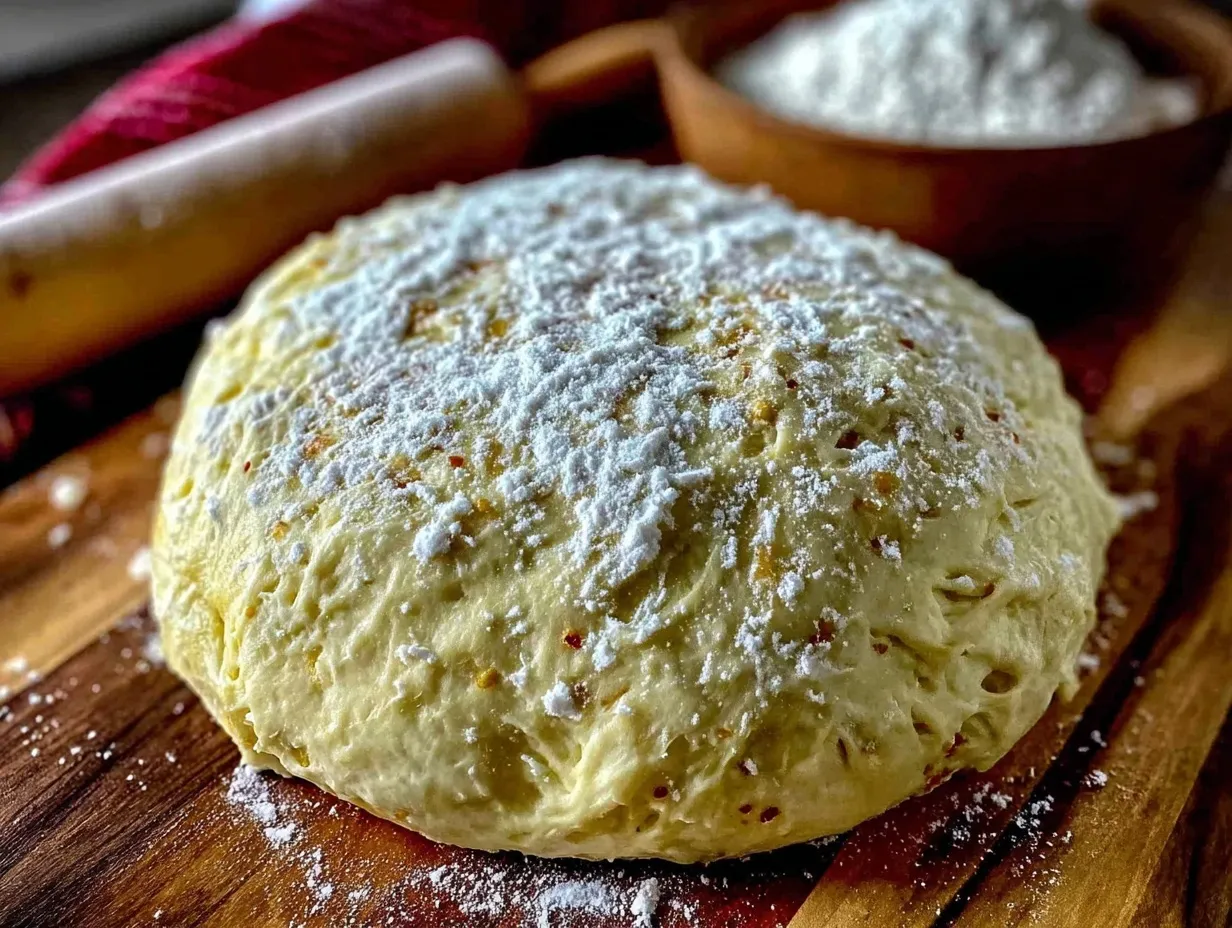
- Feed your sourdough starter: About 8-12 hours before baking, feed your starter to get it bubbly and active. It should double in size and be full of bubbles.
- Mix the dough: In your mixing bowl, combine 350g (12.3 oz) all-purpose flour with 230g (8 fl oz) lukewarm water. Stir until no dry flour remains. Let it rest for 30 minutes (this autolyse phase helps gluten develop).
- Add starter and salt: Add 100g (3.5 oz) active starter and 8g (1.5 tsp) salt to the dough. Mix thoroughly until sticky dough pulls away from the bowl but remains tacky.
- First rise (bulk fermentation): Cover the dough with a damp towel or plastic wrap and let it rest at room temperature (about 70°F / 21°C) for 4-6 hours. Every 30 minutes for the first 2 hours, perform a stretch and fold: wet your hands, gently lift one side of the dough and fold it over itself, repeating on all sides. This strengthens gluten and traps air for a light crust.
- Shape the dough: After bulk fermentation, turn the dough onto a lightly floured surface. Divide into two equal portions if making smaller pizzas. Shape into tight balls by folding edges underneath. Let rest 20 minutes.
- Final proof: Place dough balls in lightly oiled bowls, cover, and refrigerate for 12-24 hours. This slow fermentation deepens flavor and improves texture.
- Preheat your oven: About 45 minutes before baking, preheat your oven to 500°F (260°C) with your baking stone or steel inside.
- Stretch and assemble: Remove dough from fridge, let it warm for 30 minutes. On a semolina-dusted surface, gently stretch dough into a 10-12 inch (25-30 cm) circle, careful not to deflate the air bubbles.
- Bake: Transfer dough to a pizza peel, add your favorite toppings, and slide onto the hot stone. Bake for 7-10 minutes until crust is golden and crisp. Rotate halfway for even baking.
Watch for signs like a puffed-up crust with golden blisters and a crackly bottom. If the crust feels floppy after baking, your oven might need a higher temperature or longer preheat.
One trick I swear by: letting the dough rest uncovered for 10 minutes before baking gives the surface a slight skin that crisps beautifully.
Cooking Tips & Techniques for Crispy Sourdough Pizza Dough
Making sourdough pizza dough can feel like balancing science and art. Here’s what I’ve learned from a few messy batches and some surprisingly tasty happy accidents:
- Hydration matters: Don’t be afraid of a slightly wetter dough—this leads to a softer crumb inside. I usually keep it around 65% hydration (water weight relative to flour), but feel free to tweak depending on your flour and humidity.
- Don’t rush fermentation: The slow rise (especially the cold proof) is key for flavor and texture. Trust the process, even if it means waiting a day.
- Stretch, don’t roll: Rolling pins can push out precious air bubbles. Use your hands to gently coax the dough into shape, preserving those lovely pockets that puff up in the oven.
- Preheat your oven and stone: A blazing hot surface is what gives you that crackly bottom. I leave mine in for at least 45 minutes before baking.
- Use semolina or cornmeal for dusting: This prevents sticking and adds a subtle crunch to the crust base.
One lesson I learned the hard way was underbaking the dough. It looked golden but was still doughy underneath. Patience and oven temperature monitoring are your friends here.
Also, multitasking works well—while dough ferments, I often make a quick sauce or whip up a salad. You can find a fast, flavorful pairing in the zesty lemon chicken I often serve alongside for a full meal.
Variations & Adaptations
- Whole wheat twist: Substitute half the all-purpose flour with whole wheat for a nuttier flavor and heartier texture. You might need a little extra water to compensate.
- Herbed dough: Add a teaspoon of dried oregano or garlic powder to the flour for an aromatic crust—great if you want extra flavor without extra toppings.
- Gluten-free adaptation: Use a gluten-free flour blend and xanthan gum. This dough will be softer and less elastic but still tasty.
- Quick-rise option: If you don’t have time for long fermentation, add a pinch of instant yeast to speed things up. The flavor won’t be as complex, but the texture can still be satisfying.
- Alternative cooking methods: Try grilling your pizza dough on a preheated grill for smoky flavor and crispy charred spots.
Personally, I love experimenting with topping combinations, but the dough itself holds up beautifully to just about anything—from classic margherita to the quick crispy chicken fried rice-inspired pizza I once improvised after a long day (try that recipe if you want a fun twist!).
Serving & Storage Suggestions
Serve your perfect crispy sourdough pizza straight from the oven, ideally still warm with the crust crackling as you slice. A slight cooling for 3-5 minutes lets the cheese set and flavors meld.
Pair with a fresh, crisp salad or a simple garlic olive oil drizzle for dipping. A cold beverage (beer, sparkling water, or a light red wine) complements the tangy crust beautifully.
To store leftover dough, wrap it tightly in plastic wrap and refrigerate for up to 3 days. For longer storage, freeze dough balls separately in freezer bags for up to 3 months. Thaw overnight in the fridge before using.
Leftover baked pizza keeps well in the fridge for 2-3 days. Reheat in a hot skillet or oven to bring back crispness without drying it out.
Over time, the flavors in the dough deepen thanks to the fermentation, making it even more delicious if you prepare it a day ahead.
Nutritional Information & Benefits
This sourdough pizza dough recipe is a wholesome alternative to commercial doughs thanks to its natural fermentation process. Here’s a rough estimate per serving (1/4 of dough):
| Calories | 220 kcal |
|---|---|
| Carbohydrates | 45g |
| Protein | 6g |
| Fat | 1.5g |
| Fiber | 2g |
Sourdough fermentation can improve digestion by breaking down gluten and increasing beneficial bacteria. Using minimal ingredients also means fewer additives and preservatives.
For those mindful of dietary needs, this recipe can be adapted to gluten-free or whole-grain versions. Just watch for potential allergens like wheat and adjust toppings accordingly.
From a wellness perspective, making your own dough connects you with natural food preparation and helps avoid processed alternatives.
Conclusion
This perfect crispy sourdough pizza dough recipe is a testament to the beauty of simple ingredients and a little patience. It’s approachable enough for everyday cooks but impressive enough to turn pizza night into something special.
Feel free to tweak hydration, flour blends, and fermentation times to suit your kitchen rhythm and taste buds. For me, this dough remains a comforting project that brings joy no matter the day.
Whether you’re topping it with fresh mozzarella and basil or a spicy BBQ chicken, this crust holds its own with crackly edges and tender, tangy crumb. And if you’re ever looking for a quick homemade dinner idea to accompany it, the quick creamy tuna pasta is a perfect sidekick.
Give this recipe a try, share your tweaks, and enjoy every crispy, chewy bite!
Frequently Asked Questions
How long does sourdough pizza dough take to rise?
The bulk fermentation usually takes 4-6 hours at room temperature, followed by a cold proof in the fridge for 12-24 hours to develop flavor and texture.
Can I use store-bought yeast instead of sourdough starter?
Yes, but the flavor won’t be the same. Using yeast will speed up the rise, but the natural tang and complexity from sourdough fermentation will be missing.
How do I know if my sourdough starter is active enough?
It should double in size within 6-8 hours after feeding and be bubbly with a pleasant sour smell. If it sinks or smells off, it needs more feedings to revive.
What’s the best way to stretch pizza dough without tearing it?
Use your fingertips and gravity, letting the dough gently stretch as you rotate it. Avoid rolling pins since they press out the air bubbles that give the crust its texture.
Can I freeze sourdough pizza dough?
Absolutely! Divide into balls, wrap tightly, and freeze for up to 3 months. Thaw overnight in the refrigerator before shaping and baking.
Pin This Recipe!
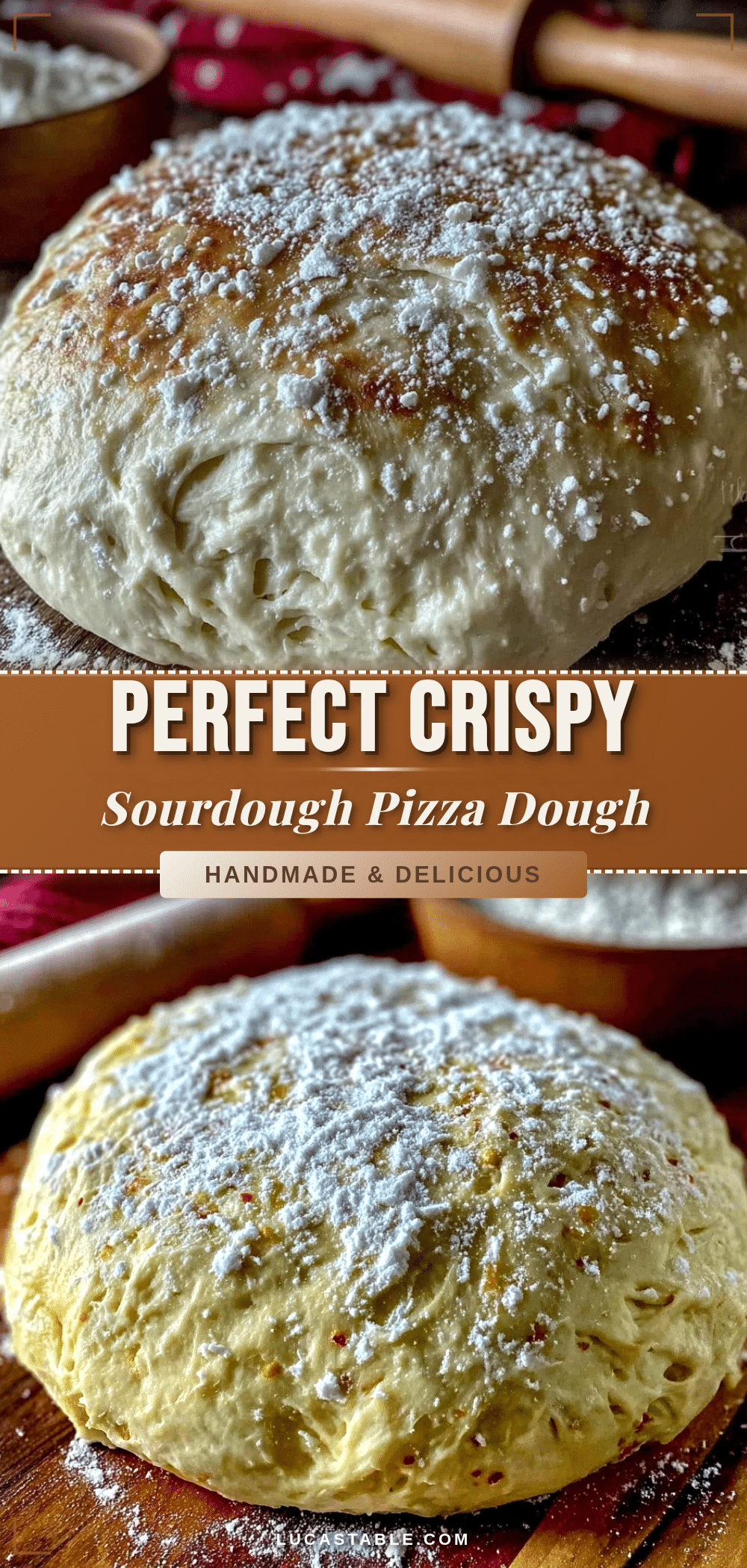
Perfect Crispy Sourdough Pizza Dough Recipe Easy Homemade from Scratch
This recipe creates a perfect crispy sourdough pizza dough with a crackly crust and chewy interior, featuring a subtle tangy flavor from natural fermentation. It’s approachable, forgiving, and pairs well with any toppings.
- Prep Time: 15 minutes
- Cook Time: 7-10 minutes
- Total Time: 17 hours (including fermentation and proofing times)
- Yield: 2 pizzas (about 8-10 inch each) 1x
- Category: Main Course
- Cuisine: Italian
Ingredients
- 100g (3.5 oz) active sourdough starter, bubbly and fed within the last 8-12 hours
- 350g (12.3 oz) all-purpose flour (can substitute half with bread flour for extra chew)
- 230g (8 fl oz) lukewarm water
- 8g (1.5 tsp) fine sea salt
- 1 tbsp olive oil (optional)
- Semolina flour for dusting (optional)
- Herbs or garlic powder (optional, for an herby twist)
Instructions
- Feed your sourdough starter about 8-12 hours before baking to get it bubbly and active; it should double in size and be full of bubbles.
- In a mixing bowl, combine 350g (12.3 oz) all-purpose flour with 230g (8 fl oz) lukewarm water. Stir until no dry flour remains. Let rest for 30 minutes (autolyse phase).
- Add 100g (3.5 oz) active starter and 8g (1.5 tsp) salt to the dough. Mix thoroughly until sticky dough pulls away from the bowl but remains tacky.
- Cover dough with a damp towel or plastic wrap and let rest at room temperature (about 70°F / 21°C) for 4-6 hours. Every 30 minutes for the first 2 hours, perform a stretch and fold to strengthen gluten.
- Turn dough onto a lightly floured surface. Divide into two equal portions if making smaller pizzas. Shape into tight balls by folding edges underneath. Let rest 20 minutes.
- Place dough balls in lightly oiled bowls, cover, and refrigerate for 12-24 hours for final proof.
- Preheat oven to 500°F (260°C) with baking stone or steel inside about 45 minutes before baking.
- Remove dough from fridge and let warm for 30 minutes. On a semolina-dusted surface, gently stretch dough into a 10-12 inch (25-30 cm) circle, careful not to deflate air bubbles.
- Transfer dough to pizza peel, add toppings, and slide onto hot stone. Bake for 7-10 minutes until crust is golden and crisp, rotating halfway for even baking.
- Let dough rest uncovered for 10 minutes before baking for a slight skin that crisps beautifully.
Notes
Use semolina or cornmeal for dusting to prevent sticking and add crunch. Do not rush fermentation; slow rise improves flavor and texture. Stretch dough by hand to preserve air bubbles. Preheat oven and stone for at least 45 minutes. Dough can be frozen for up to 3 months; thaw overnight in fridge before use.
Nutrition
- Serving Size: 1/4 of dough (one pi
- Calories: 220
- Fat: 1.5
- Carbohydrates: 45
- Fiber: 2
- Protein: 6
Keywords: sourdough pizza dough, crispy pizza crust, homemade pizza dough, sourdough starter, easy pizza dough, fermented dough, chewy pizza crust