Last November, I was at the farmers’ market, clutching a bag of sad-looking carrots and trying to remember if I needed parsley. The woman next to me—maybe seventy, with hands that had clearly been in dirt for decades—watched me stare at the dill. “You’re not sure what to do with that, are you?” she asked, not unkindly. I admitted I usually just sprinkled it on fish and called it a day. She laughed, a real laugh that made the vendor smile too, and said, “Come winter, that dill belongs in your chicken soup. It’s the only way I make it.” She didn’t give me a recipe. She just told me to stop being shy with the herb and to let it be the star, not the garnish. I bought three bunches of dill that day, mostly because I didn’t want to disappoint her.
That conversation stuck with me. For weeks, I kept thinking about how confident she was that dill could transform something as simple as chicken noodle soup. Honestly? I was skeptical. Dill felt like a summery thing, all pickles and potato salad. But winter was creeping in, and the idea of a cozy chicken noodle soup that smelled like something more than just broth and celery was oddly compelling. So I tried it. I threw a generous handful of fresh dill into my standard pot of chicken noodle soup, and let me tell you—I nearly dropped the ladle. That herb did something magical. It didn’t just add flavor; it brightened the whole pot, making the broth taste both richer and lighter at the same time. I’ve been making it this way ever since, and I honestly can’t go back.
Maybe you’ve been there—stuck in a soup rut, making the same version your mom made, which is fine but maybe a little predictable. This cozy chicken noodle soup with fresh dill is the upgrade you didn’t know you needed. It’s still familiar enough to feel like a hug in a bowl, but that pop of fresh dill makes it feel intentional, like you actually planned dinner instead of just throwing things together. It’s the kind of soup that makes you slow down and notice the steam rising off the spoon. And honestly, after that conversation with the dill lady, I keep making it because it reminds me that sometimes the best cooking advice comes from a stranger who just knows their herbs.
Why You’ll Love This Recipe
This isn’t just another chicken noodle soup recipe. I’ve tested this version more times than I care to count, tweaking the herb ratio and the noodle timing until everything clicked. Here’s why this one stands out:
- Quick & Easy: From fridge to table in just 30 minutes. This is a weeknight lifesaver when you need something warm and satisfying without spending hours at the stove.
- Simple Ingredients: No fancy grocery trips required. Chicken, carrots, celery, onion, noodles, and that generous bunch of fresh dill—that’s it. You probably have most of this in your kitchen right now.
- Perfect for Cold Season: Whether it’s a snowy Tuesday or you’re fighting off a stuffy nose, this soup delivers comfort exactly when you need it most.
- Crowd-Pleaser: I’ve served this to picky kids, soup snobs, and my dad who claims he “doesn’t like dill.” Everyone went back for seconds. The dill is subtle enough to charm but bold enough to notice.
- Unbelievably Delicious: The fresh dill takes this from basic to memorable. It adds a subtle anise-like sweetness that plays beautifully with the savory chicken and earthy carrots. It’s comfort food that actually tastes like you tried—without trying too hard.
What makes this recipe different from every other chicken noodle soup out there is the timing and technique for the dill. Most recipes treat it as an afterthought, tossing it in at the end as a garnish. Here, I add it in two stages: some early to infuse the broth, and the rest right before serving to keep that bright, fresh flavor intact. It’s a small tweak, but it makes a world of difference. Plus, I use a quick-cooking method that builds deep flavor in half the time—no simmering for hours required. This is the kind of soup that makes you close your eyes after the first bite, not because it’s fancy, but because it just feels right.
What Ingredients You Will Need
This recipe uses simple, wholesome ingredients that come together to deliver a broth that tastes like it simmered all day—even though it didn’t. Most items are pantry staples, and the fresh dill is the one ingredient worth seeking out. Here’s what you’ll need:
- Olive Oil – 2 tablespoons, for sautéing the vegetables. A good extra virgin olive oil adds a subtle richness to the base.
- Yellow Onion – 1 medium, diced. Sweet yellow onions melt into the broth beautifully. White onion works too, but yellow gives a milder, sweeter flavor.
- Carrots – 3 medium, peeled and sliced into half-moons. I like using rainbow carrots when I can find them—they make the soup look prettier and taste slightly sweeter.
- Celery Stalks – 2 large, sliced. Don’t skip these. They add that essential savory backbone. I leave the leaves on for extra flavor.
- Garlic Cloves – 3 cloves, minced. Fresh garlic is non-negotiable here. The jarred stuff just doesn’t deliver the same punch.
- Chicken Broth – 8 cups, low-sodium. I prefer Swanson or Kitchen Basics for consistent flavor, but homemade broth takes this over the top if you have it on hand.
- Chicken Breast – 1 pound, boneless and skinless. You can also use boneless thighs for a richer flavor. Just shred them after cooking.
- Egg Noodles – 8 ounces, wide or medium. I’m partial to Reames or Mueller’s for that classic, slightly chewy texture. Gluten-free pasta works too, just adjust cooking time.
- Fresh Dill – 1/4 cup, finely chopped, plus more for garnish. This is the star. Look for dill that’s bright green and perky, not wilted or yellowing. Dried dill won’t give you the same result—trust me on this.
- Bay Leaves – 2 dried. These add a subtle herbal depth that you’ll miss if you leave them out.
- Salt and Black Pepper – To taste. I use about 1 teaspoon of salt and 1/2 teaspoon of pepper, but adjust based on your broth’s saltiness.
- Lemon Juice – 1 tablespoon, freshly squeezed. This is optional but highly recommended. A tiny squeeze at the end brightens everything and makes the dill pop.
Substitution Guidance: For a gluten-free version, use rice noodles or gluten-free egg noodles. For a dairy-free option, this recipe is already dairy-free. If you’re out of fresh dill, you can use 1 tablespoon of dried dill, but add it early in the cooking process to rehydrate. Just know the flavor won’t be quite as vibrant. For a vegetarian version, swap the chicken for a can of chickpeas and use vegetable broth—it’s a different soup, but still delicious.
Equipment Needed
You don’t need a fancy kitchen to make this soup. Here’s what I use:
- Large Dutch Oven or Stockpot – A 5- to 6-quart pot is ideal. I use my trusty Le Creuset, but any heavy-bottomed pot works. The key is even heat distribution to prevent scorching.
- Chef’s Knife – A sharp 8-inch knife makes dicing veggies a breeze. Dull knives are more dangerous than sharp ones—I learned that the hard way after a celery-related incident.
- Cutting Board – Wood or plastic, just make sure it’s stable. I put a damp paper towel underneath to stop it from sliding.
- Wooden Spoon – For stirring. Metal can scratch your pot, and plastic might melt. Wood is the Goldilocks choice.
- Measuring Cups and Spoons – For accuracy. I’m usually a “pinch of this” cook, but for this recipe, measuring the dill and broth ensures consistency.
- Tongs – For removing the cooked chicken breast before shredding. Two forks work in a pinch.
- Ladle – For serving. A deep, wide ladle gets you a good mix of broth and solids.
If you don’t have a Dutch oven, a regular stockpot is fine—just keep an eye on the heat and stir a bit more often. No ladle? Use a measuring cup. Cooking is about making it work with what you’ve got.
Preparation Method
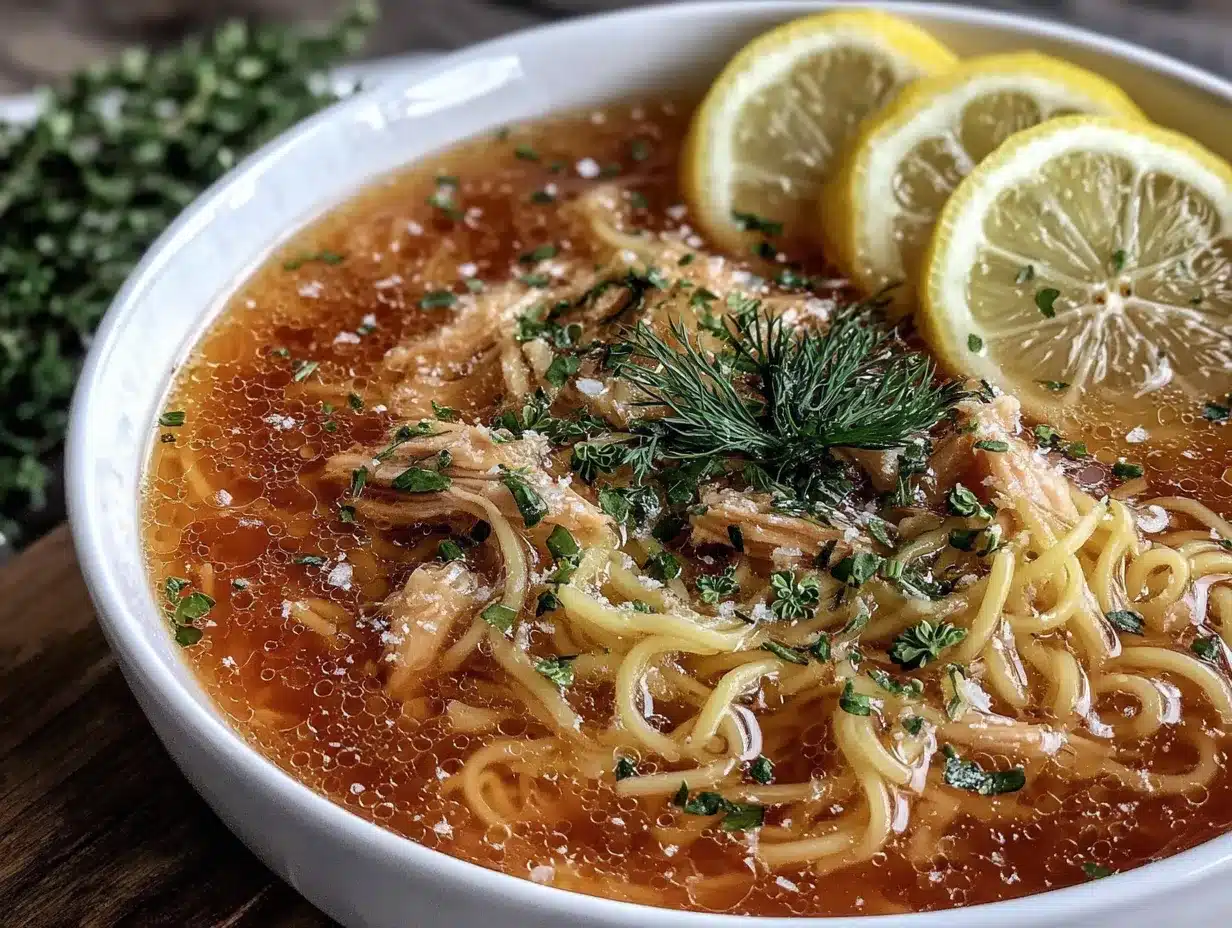
- Prep Your Vegetables – Dice the onion, slice the carrots into half-moons, and slice the celery. Mince the garlic. Chop the fresh dill and set it aside. This takes about 10 minutes, but it makes the cooking process smooth. I like to do this while the pot is heating up.
- Sauté the Aromatics – Heat 2 tablespoons of olive oil in your large pot over medium heat. Add the diced onion, carrots, and celery. Cook for 5-7 minutes, stirring occasionally, until the onions are translucent and the carrots start to soften. The kitchen should smell sweet and savory at this point. If it smells burnt, your heat is too high.
- Add Garlic and Half the Dill – Stir in the minced garlic and half of your chopped fresh dill. Cook for 1 minute until fragrant. This early addition of dill infuses the oil and creates a subtle herbal base for the broth. Don’t skip this step—it’s where the magic starts.
- Pour in the Broth – Add 8 cups of low-sodium chicken broth and 2 bay leaves. Increase the heat to high and bring the broth to a gentle boil. Once boiling, reduce the heat to medium-low so it’s at a steady simmer. The bubbles should be lazy, not frantic.
- Cook the Chicken – Place the 1 pound of chicken breasts into the simmering broth. Make sure they’re fully submerged. Cover the pot and let them cook for 12-15 minutes, or until the internal temperature reaches 165°F. If you don’t have a thermometer, cut into the thickest part—it should be white all the way through with no pink.
- Remove and Shred the Chicken – Use tongs to transfer the cooked chicken to a cutting board. Let it rest for 2-3 minutes (this keeps it juicy), then shred it using two forks. Don’t over-shred—you want nice, chunky pieces that feel substantial in the soup.
- Cook the Noodles – While the chicken rests, add 8 ounces of egg noodles to the simmering broth. Cook according to package directions, usually 6-8 minutes, stirring occasionally to prevent sticking. The noodles will absorb some broth, so don’t worry if the soup looks a bit thick at this stage.
- Return the Chicken and Add Remaining Dill – Once the noodles are tender, return the shredded chicken to the pot. Stir in the remaining fresh dill and 1 tablespoon of lemon juice (if using). The lemon juice isn’t traditional, but it brightens everything and makes the dill taste even fresher. Taste and adjust salt and pepper—I usually add about 1 teaspoon of salt and 1/2 teaspoon of pepper at this stage.
- Let It Rest – Remove the bay leaves and let the soup sit off the heat for 5 minutes before serving. This allows the flavors to meld and the noodles to finish absorbing the broth. The soup will continue to thicken as it sits.
Sensory Cues: The broth should be golden and slightly opaque, not clear. The carrots should be tender but not mushy—you want a slight resistance when you bite into them. The dill should smell bright and almost grassy, not cooked-down and flat. If you taste the broth and it’s bland, add another pinch of salt and a squeeze of lemon. Salt and acid are your best friends here.
Cooking Tips & Techniques
I’ve made this soup more times than I can count, and I’ve definitely made my share of mistakes. Here’s what I’ve learned:
Don’t Overcook the Noodles – This is the number one mistake. Noodles that are cooked to death become mushy and bloated, and they’ll break apart in the soup. Cook them just until al dente, and remember they’ll continue to soften as the soup sits. If you’re meal prepping, cook the noodles separately and add them to individual bowls before pouring the hot broth over them. This keeps them from turning into a sad, soggy mess by day three.
Season in Layers – Add salt at the beginning when you sauté the vegetables, then again when you add the broth, and finally adjust at the end. Seasoning only at the end makes the soup taste flat. I learned this the hard way after serving a batch that tasted like salty water instead of actual soup.
Use a Heavy Hand with the Dill – Most people are too timid with fresh herbs. A quarter cup might sound like a lot, but dill wilts down significantly in hot liquid. Be generous. The dill lady at the market would be disappointed if you skimped. I speak from experience—I once used half the amount and the soup was fine, but it wasn’t memorable. The dill is what makes this recipe special, so don’t hold back.
Skim the Foam – When you first add the chicken to the broth, you might see some foam rise to the surface. This is just proteins and impurities. Skim it off with a spoon for a clearer, cleaner-tasting broth. It takes 30 seconds and makes a noticeable difference.
Timing Strategy: Start the vegetables while you chop the dill. While the chicken cooks, shred it. While the noodles cook, set the table. This soup comes together in 30 minutes, but active time is only about 15 minutes. The rest is just waiting and smelling.
Variations & Adaptations
This cozy chicken noodle soup is a great base recipe that welcomes tweaks. Here are some variations I’ve tried and loved:
- Lighter Version: Use zucchini noodles or spaghetti squash instead of egg noodles. Add them in the last 2 minutes of cooking—they just need to warm through. The broth is still rich and satisfying, but you cut the carbs significantly.
- Spicy Twist: Add 1/2 teaspoon of red pepper flakes along with the garlic. The heat pairs surprisingly well with the cool, fresh dill. I made this version when I had a cold and wanted something that would clear my sinuses—it worked.
- Herb Swap: If you don’t have dill, use fresh parsley and a teaspoon of dried tarragon. Tarragon has a similar anise-like quality that mimics dill’s brightness. It’s not the same, but it’s still delicious.
- Creamy Version: Stir in 1/2 cup of heavy cream or full-fat coconut milk at the end, just before serving. This turns the soup into a creamy, luxurious version that feels like a hug in a bowl. I make this on extra-cold nights when I need maximum comfort.
- Add Greens: Throw in a handful of fresh spinach or kale during the last 2 minutes of cooking. They wilt into the broth and add color and nutrients without changing the flavor much.
I once tried a version with lemongrass and ginger—inspired by a Thai chicken soup I love—and while it was tasty, it didn’t feel like cozy chicken noodle soup anymore. It felt like something else entirely. Sometimes the classic is classic for a reason.
Serving & Storage Suggestions
Serving: Ladle the soup into deep bowls while it’s piping hot. Garnish with an extra sprinkle of fresh dill and a crack of black pepper. I like to serve it with crusty bread or buttered toast for dipping. A side salad with a simple lemon vinaigrette cuts through the richness nicely. For a heartier meal, serve with grilled cheese sandwiches—my kids call this “the ultimate comfort combo.”
Storage: Let the soup cool completely before transferring to airtight containers. Store in the refrigerator for up to 4 days. The flavors actually deepen overnight, so day-two soup is often even better. However, the noodles will continue to absorb broth and soften. If you’re planning leftovers, consider undercooking the noodles slightly or storing them separately.
Reheating: Reheat gently on the stovetop over medium-low heat, adding a splash of water or broth to thin it out if needed. The microwave works in a pinch, but the stovetop gives you better control. Avoid boiling—it can make the noodles mushy and the chicken tough.
Freezing: This soup freezes well, but with one caveat—freeze it without the noodles. The noodles turn into a sad, grainy mess after thawing. Make a batch of soup base, freeze it in portions, and cook fresh noodles when you’re ready to eat. The soup base keeps for up to 3 months in the freezer. Thaw overnight in the refrigerator before reheating.
Flavor Development: The dill flavor will mellow as the soup sits. If you’re eating leftovers, consider adding a tiny pinch of fresh dill when reheating to revive that bright, fresh taste. The lemon juice also fades, so a quick squeeze before serving day-old soup makes a big difference.
Nutritional Information & Benefits
This cozy chicken noodle soup isn’t just comforting—it’s genuinely good for you. Here’s an approximate breakdown per serving (based on 6 servings):
- Calories: 320
- Protein: 28g
- Carbohydrates: 32g
- Fat: 8g
- Fiber: 3g
- Sodium: 680mg (varies based on broth and added salt)
Health Benefits: Chicken provides lean protein that helps keep you full and supports muscle repair. Carrots are packed with beta-carotene, which your body converts to vitamin A for immune health. Celery offers hydration and a good dose of vitamin K. And fresh dill? It’s rich in antioxidants and has been used traditionally to aid digestion. The warm broth itself is hydrating and soothing, especially when you’re feeling under the weather.
Dietary Considerations: This recipe is naturally dairy-free and nut-free. For gluten-free, use certified gluten-free noodles. For lower sodium, use homemade broth or a no-salt-added version and season carefully. The lemon juice adds vitamin C without any extra calories.
I personally love that this soup feels like self-care in a bowl. It’s warm, nourishing, and doesn’t pretend to be anything other than what it is—simple, honest food that makes you feel better.
Conclusion
This cozy chicken noodle soup with fresh dill is proof that small changes make big differences. One herb, added with intention, transforms a familiar classic into something worth writing about. It’s quick enough for a Tuesday night, comforting enough for a sick day, and impressive enough to serve to guests who think they’ve had every chicken soup imaginable.
I hope you’ll make this your own. Maybe you’ll add extra carrots or skip the celery. Maybe you’ll use thyme instead of dill one day. That’s the beauty of a good base recipe—it welcomes your personality. But if you take one thing from this post, let it be this: don’t be shy with the fresh dill. That woman at the farmers’ market knew what she was talking about.
I’d love to hear how it turns out for you. Drop a comment below and let me know if you tried any variations, or tag me in your soup photos. There’s something special about knowing this same cozy soup is simmering in kitchens everywhere. Happy cooking, friends—and don’t forget the crusty bread.
Frequently Asked Questions
Can I use dried dill instead of fresh?
You can, but the flavor won’t be as bright. Use 1 tablespoon of dried dill and add it earlier in the cooking process to let it rehydrate. Fresh dill really makes a difference here, so I recommend seeking it out.
How do I keep the noodles from getting mushy in leftovers?
Cook the noodles separately and store them in a different container. When reheating, add the noodles to the hot broth. If you’ve already combined them, undercook the noodles slightly so they have room to absorb broth without turning to mush.
Can I make this in a slow cooker or Instant Pot?
Absolutely. For a slow cooker, sauté the vegetables first, then add everything except the noodles and final dill. Cook on low for 6-8 hours. Add noodles 20 minutes before serving. For Instant Pot, use the sauté function for vegetables, then pressure cook on high for 10 minutes. Quick release, add noodles, and cook on sauté until tender.
What’s the best way to shred chicken?
Use two forks to pull the meat apart while it’s still warm. For really easy shredding, use a hand mixer on low speed in a separate bowl—it takes about 30 seconds. Just be careful not to overmix or you’ll end up with chicken paste.
Is this soup freezable?
Yes, but freeze it without the noodles. The soup base freezes beautifully for up to 3 months. When you’re ready to eat, thaw overnight in the fridge, reheat, and cook fresh noodles. This keeps the texture perfect.
Pin This Recipe!
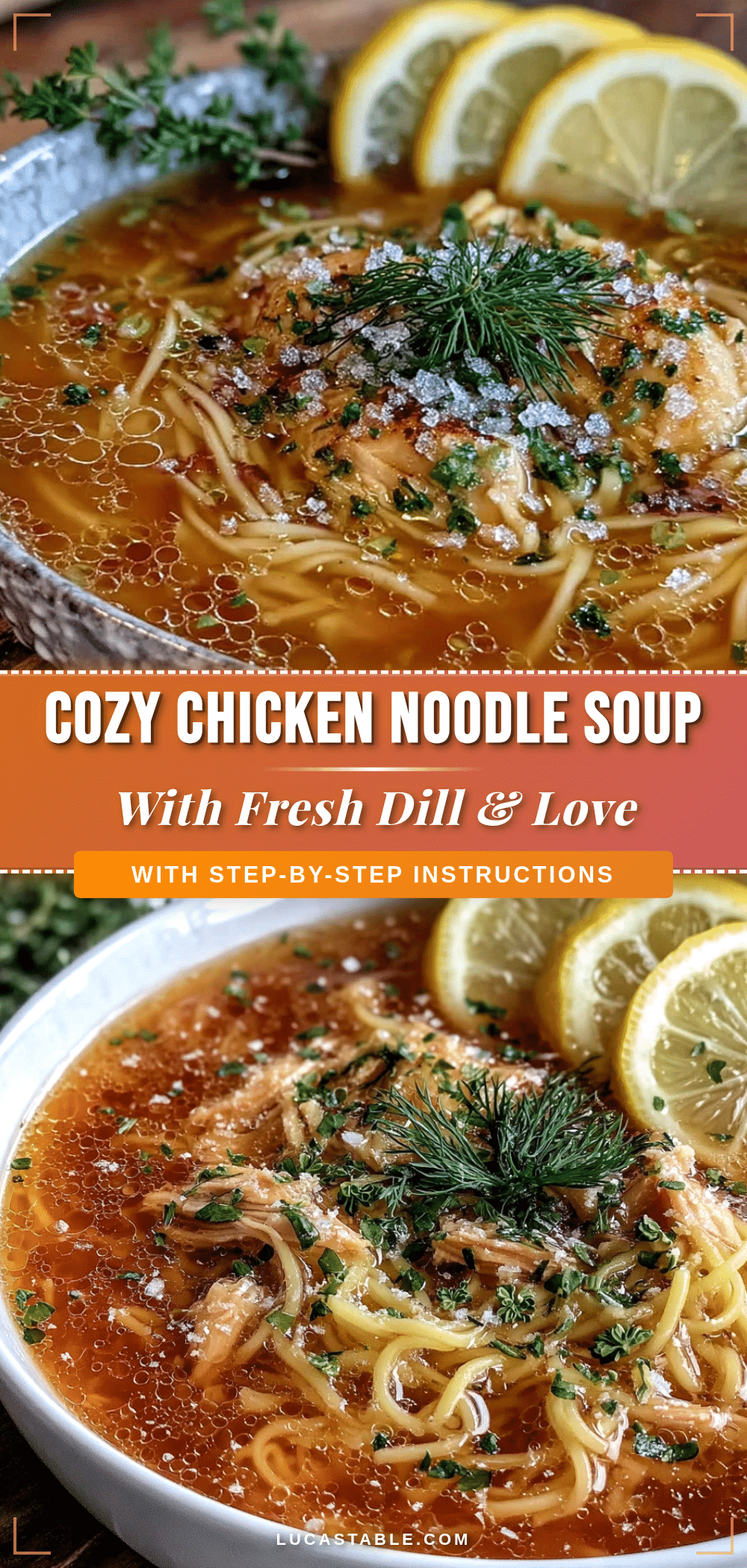
Cozy Chicken Noodle Soup with Fresh Dill: Easy 30-Minute Dinner

This cozy chicken noodle soup with fresh dill is a quick and easy 30-minute dinner that transforms a classic comfort food into something special. The fresh dill brightens the broth, making it taste both richer and lighter at the same time.
- Prep Time: 10 minutes
- Cook Time: 20 minutes
- Total Time: 30 minutes
- Yield: 6 servings 1x
- Category: Main Course
- Cuisine: American
Ingredients
- 2 tablespoons olive oil
- 1 medium yellow onion, diced
- 3 medium carrots, peeled and sliced into half-moons
- 2 large celery stalks, sliced
- 3 cloves garlic, minced
- 8 cups low-sodium chicken broth
- 1 pound boneless, skinless chicken breast
- 8 ounces wide or medium egg noodles
- 1/4 cup fresh dill, finely chopped, plus more for garnish
- 2 dried bay leaves
- 1 teaspoon salt (or to taste)
- 1/2 teaspoon black pepper (or to taste)
- 1 tablespoon freshly squeezed lemon juice (optional)
Instructions
- Prep your vegetables: dice the onion, slice the carrots into half-moons, slice the celery, mince the garlic, and chop the fresh dill. Set aside.
- Heat 2 tablespoons of olive oil in a large pot over medium heat. Add the diced onion, carrots, and celery. Cook for 5-7 minutes, stirring occasionally, until the onions are translucent and the carrots start to soften.
- Stir in the minced garlic and half of the chopped fresh dill. Cook for 1 minute until fragrant.
- Add 8 cups of low-sodium chicken broth and 2 bay leaves. Increase heat to high and bring to a gentle boil. Reduce heat to medium-low to maintain a steady simmer.
- Place the chicken breasts into the simmering broth, ensuring they are fully submerged. Cover and cook for 12-15 minutes, or until the internal temperature reaches 165°F.
- Use tongs to transfer the cooked chicken to a cutting board. Let rest for 2-3 minutes, then shred using two forks.
- While the chicken rests, add 8 ounces of egg noodles to the simmering broth. Cook according to package directions (usually 6-8 minutes), stirring occasionally.
- Once the noodles are tender, return the shredded chicken to the pot. Stir in the remaining fresh dill and 1 tablespoon of lemon juice (if using). Season with salt and pepper to taste.
- Remove the bay leaves and let the soup sit off the heat for 5 minutes before serving. Garnish with additional fresh dill if desired.
Notes
For best results, add dill in two stages: half early to infuse the broth, and the rest right before serving to keep the fresh flavor. Don’t overcook the noodles; cook them al dente as they will continue to soften in the soup. For meal prep, cook noodles separately and add to individual bowls when serving. The soup base freezes well for up to 3 months without noodles.
Nutrition
- Serving Size: 1 serving (about 1.5
- Calories: 320
- Sugar: 6
- Sodium: 680
- Fat: 8
- Saturated Fat: 2
- Carbohydrates: 32
- Fiber: 3
- Protein: 28
Keywords: chicken noodle soup, fresh dill, easy dinner, 30-minute meal, comfort food, winter soup, chicken soup